“All men want peace; but they do not know how to attain it. Paissy the Great, having lost his temper, begged the Lord to deliver him from irritability. The Lord appeared to him and said, ‘Paissy, if thou dost not wish to get angry, desire nothing, neither criticize nor hate any man, and thou wilt have no anger.’ Thus every one who renounces his own will before God and other people will always be at peace in his soul; but the man who likes to have his own way will never know peace. The soul that has surrendered herself to the will of God bears every affliction and every ill with ease, because in times of sickness she prays and contemplates God, saying: ‘O Lord, Thou seest my sickness; Thou knowest how weak and sinful I am. Help me to endure my sufferings and to thank Thee for Thy goodness.’ And the Lord relieves her pain, and the soul feels God’s help and is glad in the sight of God, and gives thanks. If some misfortune befalls you, reflect in this wise: ‘The Lord sees my heart, and if this is His will all will be well, both for me and for others.’ And thus your soul will always be at peace. But if a man murmurs against his fate he will never have peace in his soul, even though he fast and spend much time in prayer. The Apostles were deeply attached to the will of God. In this manner is peace preserved. All the great Saints likewise bore with every affliction, submitting themselves to the will of God.” Staretz Silouan, Wisdom from Mount Athos
Month: May 2012
Heaven & Hell Are Not Places
“We are made whole (healed) by the grace of God, and brought into a relationship with Him that is our true inheritance. Heaven and hell are not places created by God for those who were good, or bad, but rather about relationship. The Fire of God is heaven for those who have responded to God’s love, and hell for those who have remained in the darkness of sin (sickness), and whose ego has shut out God, for self. Heaven and hell are not places, but all about relationship.” Abbot Tryphon
I’ve written about this before, but it’s worth revisiting. Our culture’s understanding of heaven and hell is severely distorted. Too often, heaven and hell are viewed as future destinations either to reward the good or punish the bad.
However, as Fr Stephen Freeman is fond of saying, “Jesus did not come to make bad men good, but dead men alive.” What is at stake is the transformation of human nature, which is so fractured, distorted and sick that it’s dead. And in this dead state, we shut out God. That is hell. In our brokenness, we constantly live in hell.
So the issue isn’t ethics or morality. You can’t tell a corpse to behave better. The only hope is Resurrection. For the Resurrection is the inauguration of God’s Renewed Creation. And the power of the Resurrection brings life to all of us who are dead. This is the point of Ezekiel 37 and Jesus’ retelling of that vision in the Story of the Prodigal Son. The son wasn’t restored because he “got his act together” or because he apologized to the Father. He experienced Resurrection. He returned from exile and back into relationship with his father and his household.
When a person experiences the Resurrection, the process of transformation begins. And this is heaven. Heaven is being loved by God and being able to love him back, regardless of circumstance. Heaven is loving and living God’s will regardless of the pain or sacrifice one experiences. Heaven is being transformed into Christ’s likeness from the inside-out.
As Jesus hung upon the cross absorbing the world’s sin and evil upon himself, he was in heaven. In the midst of hell, he was in heaven.
So heaven and hell are descriptions primarily of our relationship with God. But are there future destinations of heaven and hell? I believe so. It’s called the New Creation. One day, God will renew his Creation. He will set all things right. Jesus’ prayer will fully be answered as heaven and earth finally overlap and God’s reign will be on earth (the human realm) as it is in heaven (God’s realm). And in the New Creation, God’s glory will cover the earth as the water covers the seas. This will be the ultimate and eternal experience of heaven and hell.
 And on that day when God renews his Creation and drenches it with his undiminished glory, his very love and presence will be like an eternal inextinguishable lake of fire for those who shut him out. And that same love and presence will be indescribable joy for those who have been transformed into his likeness and live only for his will.
So heaven and hell begin now. Each of us is on that journey every day.
Dad, When I Grow Up…
 “Dad, when I grow up, I want to be a pastor and a hockey player.” That’s what my oldest son told me when he was in elementary school years ago. I’m not sure where the hockey player reference came from. But telling me that he wanted to be a pastor was his small expression of love for me and desire to be like me.
That moment fills my mind when I read Ephesians 5:1-2:
“Be imitators of God, therefore, as dearly loved children and live a life of love, just as Christ loved us and gave himself up for us as a fragrant offering and sacrifice to God.”
I’ve been reflecting on this passage for the last couple of weeks. But every time I try to write something, it feels like I’m pinning this Scripture to a laboratory table. This is one of those portions of Scripture in which we must fully immerse ourselves rather than dissect with an expositor’s words.
So perhaps the only thing worth saying is, “Father, when I grow up, I want to love just like you.”
The Humble Soul
“The soul of the humble man is like the sea: throw a stone into the sea — for a moment it will ruffle the surface a little, and then sink to the bottom. Thus do afflictions disappear down in the heart of the humble man because the strength of the Lord is with him.” Staretz Silouan, Wisdom From Mount Athos
Resurrection of the Prodigal
The parable of the prodigal son in Luke 15 is one of my favorite parables. Not only does it contain levels of interpretation and application, but it depicts our Heavenly Father in such an intimate way. He is the Father who graciously concedes to his younger son’s outrageous request for his portion of the inheritance. And rather than holding a grudge against his son or even maintaining the cultural detachment of a patriarch, he sees his returning son from a distance, runs to greet him, and compassionately restores him.
I am moved virtually every time I reflect on this parable. It strikes a deep and unspoken place within me.
This parable has meant even more to me as I’ve come to realize that this is a resurrection passage. Twice the Father says, “For this son of mine/brother of yours was dead and is alive again; he was lost and is found.” You can almost hear the faint echoes of Ezekiel 37.
 In Ezekiel 37, the prophet receives a vision of Israel’s return from exile. Israel is depicted as a valley of bones. God tells Ezekiel that he will open their graves and bring them back to the land of Israel (Ezek 37:12). This is the first primary image of resurrection in the Old Testament and it represents Israel’s return from exile. They were dead and are alive.
In the time of Jesus, while Israel had returned geographically to the land, they had not spiritually returned from their long exile. Through this parable, Jesus is putting an intimate face on Ezekiel 37. Israel is the younger son, dead and lost in exile. But by simply returning to the Father’s house, Israel meets the compassionate and intimate Father, who is quick to restore. They are resurrected, alive once again.
As a parable of salvation, the prodigal son enforces the fact that our “problem” is not a legal, moral or ethical breaking of some abstract code or law. In other words, the prodigal son didn’t do something wrong or bad and then needed to be expunged of the guilt of his crime. Rather, the son was dead. Life and hope were gone. An apology like he had planned would not solve the problem. He needed to be resurrected and restored.
And this resurrection takes place in relationship with the Father. The son simply hoped for a place as a servant in his Father’s house. But the life he needed was in the restored relationship with his Father. The Father states, “For this son of mine was dead and is alive again.”
And the resurrectional relationship isn’t just a “God and me” thing. The Father tells the embittered elder son, “Everything I have is yours. But we had to celebrate and be glad, because this brother of yours was dead and is alive again.” The older brother also has a role in the resurrection of his brother. Everything in the Father’s house belongs to the older brother. While he views the resources of the Father’s house as potential personal blessings, the Father implies something more in the statement “Everything I have is yours.” These resources should not only flow to the older brother, but through the older brother. The older brother should use these resources as the Father uses them. So the Father encourages him to celebrate and in so doing, the resources of restoration will flow to the younger brother. The Father is inviting the older son into the “ministry of reconciliation,” to practice resurrection and thus to be a blessing rather than expecting only to receive a blessing.
In other words, blessings are not intended to simply flow to a person but through a person to others.
But Jesus leaves the parable hanging. In some ways the fate of the older brother is more at stake than his younger sibling’s who is now alive and restored. And we realize that the older brother, despite never having left his Father’s house, is like Israel currently occupying the Land. He too is still in exile. He is also dead and in need of resurrection.
Abbot Tryphon & “The ER for the Soul”
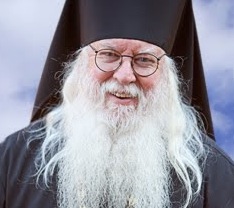 Abbot Tryphon posts a great summary on how the Orthodox Church functions like a hospital in the therapeutic process of salvation. His opening paragraph is a good reminder that simply joining the Orthodox Church does not guarantee that we have entered the healing process. We must engage in the life of the Church in order to enter into communion with God and thus “work out our salvation” (Phil 2:12) and “train ourselves to be godly” (1Tim 4:7).
“Orthodoxy offers a very precise way in which to enter into communion with God. It is a way that must be learned, for simply “becoming Orthodox” will not lead the seeker into an inner life that will transform, and enlighten. Membership in the Church is simply not enough, for the Church is not about beautiful services, icons, or mystical theology. As a hospital for the soul, the Church is a place wherein we can receive healing for that which ails us. It is the place where we can be cured, and made whole.”
Read the rest HERE.
Fr Stephen & “All Dogs Go To Heaven”
 Fr Stephen Freeman recently adopted a puppy, which has compelled him to post a wonderful reflection about creation, fallenness, prayer, and human nature. Wow!
Here’s an excerpt:
“Do dogs pray (does creation pray)? Absolutely! “Let everything that has breath praise the Lord” (Psalm 150:6). But how do they pray? Their very existence is prayer. Every created nature is made to live in communion with God. Human nature itself lives in communion with God. Our fall does not consist in becoming something other than human – we have yet to become truly human.”
You can read the rest HERE.
 Journeying Home