 I was listening to Radiolab this morning. (BTW, Radiolab has to be my favorite podcast!) They were talking about Wilson Bentley. Bentley was the first person to actually photograph snowflakes.
Bentley’s interest in snowflakes began as a teenager. At the age of 15, he would peer at snowflakes through a microscope and attempt to draw the complex images before they melted. By the age of 20, he had attached a camera to the microscope and spent the rest of his life capturing and photographing what he called “tiny miracles of beauty.” Mind you, this was 1885 and way before our modern era of digital photography.
Tragically, Bentley died of pneumonia after walking six miles in a blizzard in order to photograph more snowflakes.
Bentley’s life made me think about beauty. First, here’s a man who spent his entire life enraptured by a beauty that most would rarely ever notice. And he was not only enraptured, but dedicated to endure the hardships necessary to document this beauty. It has made me pause and reflect about what beauty has captured my attention and allegiance.
Second, beauty is not everlasting. Bentley’s snowflakes are the perfect example. Within minutes these “tiny miracles of beauty” evaporate and vanish forever. The vibrancy of a sunset quickly darkens as the sun slips below the horizon. The gleam in a lover’s eye dims with age or sickness.
Third, considering the gazillion unseen snowflakes that have fallen to earth through the ages, there is beauty that will always go unseen by any human eye. There are flowers on a mountain somewhere that will bloom and die, unwitnessed by any terrestrial being. And then I think of the untold beauty throughout our cosmos. Images from the Hubble Telescope can only hint at the beauty that lies far beyond our reach.
Our world has been intentionally infused with beauty, everything from a snowflake, a flower, a sunset to a smile and a caring hand. It makes me grateful that our Creator loves his world so much that he sent his Son. God came into our world to save it and renew it. And this makes me long for that ultimate Day of Renewal when Heaven and Earth will fully merge, all things will be made right and beauty will no longer be fleeting.
 In my previous youthful zeal and optimism, it was so easy to proclaim my love of God as though it were a grand thing. My worship was a spiritual facsimile of Tom Cruise jumping up and down on a couch. But the older I become, the more I realize that the truth quoted above is woven into the very fabric of reality. And it has tempered my immature exuberance with what I hope is humility. For my love for God is not something that needs to be proudly proclaimed in public but humbly practiced in silence.
 Many people believe tradition to be a dead thing. Movies portraying a young man or woman kicking over the traces have become cliche. Tradition is depicted as the tool of the old or entrenched trying to retain social or political power over the young or disenfranchised.
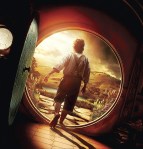 I’ve seen about every trailer and clip for The Hobbit: An Unexpected Journey. And yet I’ve remained a bit skeptical of the entire project. I loved The Lord of the Rings trilogy. But the thought of turning The Hobbit into another trilogy smacked of corporate greed more than artistic vision.
 Journeying Home