 The more I read and reflect on Revelation, the more excited I become about its story. I’m not excited because I believe I’ve unravelled all of its symbols and nuances. In fact, the opposite is true. I feel as if a vast ocean of mysterious imagery and allusions lays before me to explore and learn. But rather, my excitement for Revelation is that it calls me and every Jesus-follower to participate in God’s unfolding plan for his good creation.
Remember John’s vision of God’s throne room in Revelation 4 and 5? This is an awesome revelation of heaven’s perspective of present earthly circumstances. Yet too often we domesticate this revelation into the simple platitude, “God’s on his throne, so he’s in control.” While this is true and can comfort us in overwhelming circumstances, it is almost a caricature of the real vision.
Revelation 4 and 5 reveal far more than God “being in control.” He is the Center of all and the worship of all! And in his covenantal faithfulness, he is achieving a wonderful plan for the good of his creation!
Unfortunately, no one is worthy to “open the scroll,” to take on God’s project. Humanity, God’s image-bearers and caretakers of his creation, have failed. Israel, the family through whom God would rescue creation, have failed. No one is left.
Except the Lion of Judah! Jesus, who is both Israel’s kingly human representative as well as Israel’s God in person, is worthy! But wait! When John turns to view the Lion of Judah, he sees a sacrificial lamb.
Israel’s King (the Lion), ascends his throne when he is nailed upon the cross (the Lamb). At the crucifixion, “Jesus of Nazareth — the King of the Jews” as Pilate’s sign proclaimed, is truly enthroned. The principalities and powers are overcome. God is King!
On that fateful Friday, the sixth day, God fulfills Israel’s Story — through Israel, God would rescue creation from the clutches of corruption and evil. “It is finished!” declares Israel’s King, the Lion-Lamb upon the cross. And on the seventh day, God rests in the tomb.
Jesus’ victorious enthronement on the cross now allows God to begin the next phase of his good plan for creation. On the “first day of the week” according to John’s Gospel, God resurrects Jesus and thus launches his New Creation. For Jesus’ resurrection and the New Creation it inaugurates are the immediate results of the victory accomplished by Israel’s King.
Jesus’ victory accomplishes a second result. It also makes us “kingdom of priests to serve his God and Father” (Revelation 1:6). We are now a royal priesthood who will continue to implement the victory Jesus won in the manner as he won it. N.T. Wright states:
“The Messiah [Israel’s King and representative] is to come into his kingdom through a horrible death; and those who not only follow him, but are called to implement his work must expect that their royal task – for such it is – will be accomplished in the same way, by the same means.” How God Became King
Through our sacrificial love, even to the point of martyrdom, God is enthroned, the powers are overcome, and New Creation is birthed in this present creation. In other words, the plan successfully implemented by Jesus not only established God as the True King and inaugurated New Creation, but rescued us so that we would continue to implement this victory through our faithful lives and sacrificial love.
Revelation excites me because it reminds me that Jesus didn’t rescue people FROM this world. He rescues people FOR this world. Revelation isn’t a story about how God will rescue me away from this world one day. I’m an active cooperative participant in God’s plan for this world, not a passive helpless spectator that’s whisked away. My life and how I live actually matters. Revelation’s story is relevant for the hear-and-now of everyday living, not a projection of some weird far-fetched future.
Revelation excites me because it tells a story that Jesus is King and is rescuing people, including me, to carry out his plan to renew this world. And even if my small part in that story is to love, suffer and perhaps die in faithfulness to King Jesus, God will be faithful and renew this world and complete his project and will rescue me even from death so I may live with him in his completed New Creation.
Revelation excites me because it reminds me that Jesus’ reconciling death and the new world order launched at his resurrection gives me a new human vocation to practice wherever I am and will carry me into and then onward in God’s final New Creation.
My daily responsibility is to be a faithful member of God’s royal priesthood, engaging and winning the world not with the love of power, which is the world’s strategy, but with the power of love, which is God’s strategy.
Who wouldn’t be excited about that?


 In my early years as a Christian, it was easy for me to dismiss liturgy as being ritualistic. Unfortunately, there are too many anecdotes that validated my belief. As I matured over the years, I observed two things. First, many who dismissed liturgy as ritualistic only replaced one form of liturgy with another, albeit a much simpler one. For example, at the Vineyard, we had an unspoken liturgy that we followed at virtually every service — 30-45 minutes of singing, announcements, sermon, altar call, and then prayer time. Similar liturgies were performed in other churches and denominations I attended.
 Christian history is replete with this type of misguided zeal. A serious problem occurs when protecting the fidelity of the Faith eclipses the actual values of the Faith. While we may not literally call down fire, we resort to other tactics. We’ll label ourselves and others so that it creates an “us” vs “them” dichotomy. We’ll denounce others who are not in our group while we exalt ourselves as being genuine Christians. We’ll resort to “straw man” tactics or compare our group’s best with their group’s worst.
 “I urge you, brothers and sisters, by our Lord Jesus Christ and by the love of the Spirit, to join me in my struggle by praying to God for me. Pray that I may be kept safe from the unbelievers in Judea and that the contribution I take to Jerusalem may be favorably received by the Lord’s people there.” -Romans 15:30-31
 The other day I was reading Acts 1:21-26. This is the episode when the Apostles replace the fallen Judas as one of The Twelve.
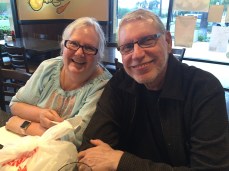 Around 6pm tonight, Debbie, Chris and I watched our family’s best and dearest friends, Mark and Barbara Feliciano, drive away to begin a new phase in their lives in Idaho Falls. I’ve been dreading this day since October 1, 2015 when Mark and Barb shared with us the potential of moving to Idaho.
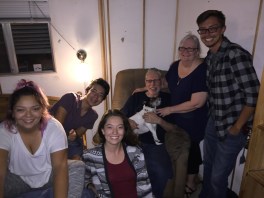 Mark and Barb’s home was like a second home to our family. My children were always welcome and enjoyed authentic adult friendships from an early age. Our families have shared more meals, conversations, dreams, laughs and tears than I can count. And our family has benefited in untold ways from Mark and Barb’s wisdom, generosity, compassion, mercy, encouragement, and prayers. They have been such a constant source of love in our lives. Even as the last boxes were being loaded onto the trailer by the moving company, we shared a final meal filled with laughter and joy in their empty living room.
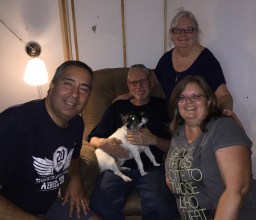 As we helped Mark and Barb pack their last few belongings into their car, hugged them good-bye and watched them drive away, I was crushed by the reality that they will no longer be a few minutes away. Their home that was once filled with warmth and love is now an empty husk. There will be no more times of sharing stories from the past week, no more talking face-to-face about God’s activity in our lives, no more impromptu dinners, no more Super Bowl parties, no more hanging out and just being together.
 A beautiful piece of our lives drove away today. There is a gaping hole in our hearts and I am sad beyond belief. We will miss them dearly.
 “Roundabouts” by Zeb Andrews
 This past weekend, I took a walk in Glendora and passed by Finkbiner Park. This park is filled with great memories of my children playing together. It reminded me of how much I loved watching my kids play when they were younger. I remember them playing tag at local parks or gobbling down their food and rushing to play on the slides, tubes and ball pit at McDonalds.
 I enjoyed joining them on these excursions. Debbie and I would walk with them, watch them scooter ahead to scout for Pokemon and come zipping back with excitement.
 “Forgiveness is more like the air in your lungs. There’s only room for you to inhale the next lungful when you’ve just breathed out the previous one. If you insist on withholding it, refusing to give someone else the kiss of life they may desperately need, you won’t be able to take any more in yourself, and you will suffocate very quickly. Whatever the spiritual, moral and emotional equivalent of the lungs may be (we sometimes say ‘the heart’, but that of course is a metaphor as well), it’s either open or closed. If it’s open, able and willing to forgive others, it will also be open to receive God’s love and forgiveness. But if it’s locked up to the one, it will be locked up to the other.”
 “A Christian is: a mind through which Christ thinks, a heart through which Christ loves, a voice through which Christ speaks, and a hand through which Christ helps.” -St Augustine
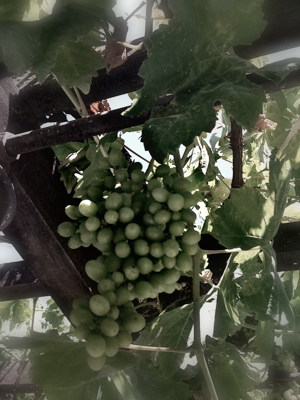 In this light, right or wrong is either the path toward eternal being or non-being. Or to borrow Jesus’ imagery, it’s either remaining connected to the vine and naturally thriving or being cut off and naturally withering.
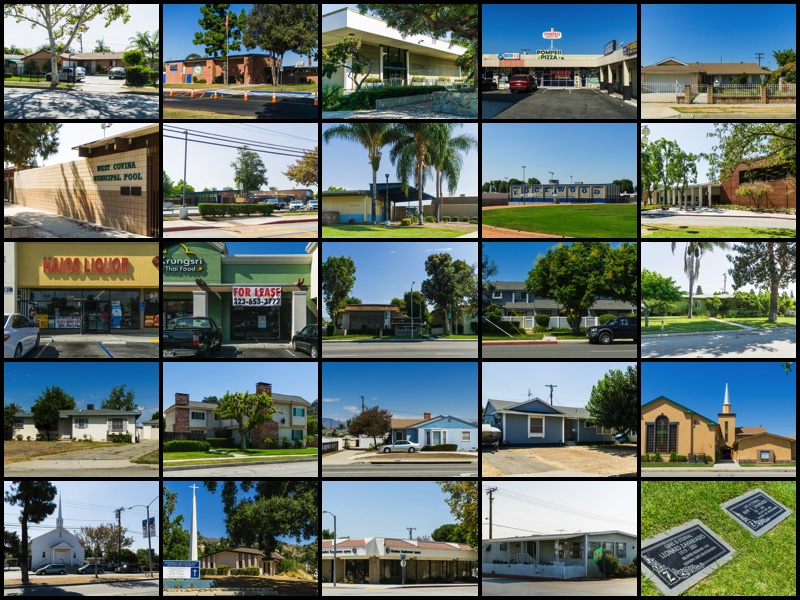 Last week for my 50th birthday, I took on a personal project. On my birthday, I took a vacation day and visited several of the important locations from my past. For three hours, I visited my old homes, schools, churches and other important places.
 One of the beautiful aspects of Eastern Orthodoxy are the icons of the saints. The saints are those whom the Church recognizes to have lived a full life of actually enduring to the likeness of Christ. Most are apostles, martyrs, church fathers, and monastics. But for every recognized saint, there are thousands upon thousands of unknown and unmentioned saints.
 This post concludes a short series that includes the following posts:
 As my time at the Vineyard and professional ministry drew to an end in 2003, I began blogging. Originally, several of us who left the Vineyard and started a faith community started blogging through our new community’s website, “The Offramp.”
 The recent activity on this blog is the expression of those two facets. I’m making room to pray and reflect. The activity and noise from daily life easily obstructs the internal currents of the soul. Writing clears the debris and increases my sensitivity to my inner life. It’s not always a pretty picture. But it is a necessary task.
 “The groanings of the believer are not only expressive of sorrow—but also of hope, of the intensity of his spiritual desires, of his panting after God, and his yearning for the bliss which awaits him on high (2 Corinthians 5:2, 4).”
 The largest amount of time I lived in one place was in Glendora. Debbie and I moved to Glendora when Michael was about a year old. We lived in the same four-unit complex for almost 20 years. We started in a two-bedroom 1-1/2 bath unit from mid-1993 until late 1999. Then we moved into a three-bedroom 2-1/2 bathroom unit until February 2012. This home and city will always hold a dear place in my heart.
 I remember our moving day on January 28, 2012. It had been difficult packing twenty-plus years of life into boxes and then a truck. It was simultaneously exciting and sad.
 As a young girl, I loved watching her run around the house, her curly hair bouncing with each step. Her young infectious giggle made me laugh. Her tears broke my heart. She loves her sister and brothers. As you can see from an early family portrait, she absolutely bursts with personality.
 Dani is an incredibly strong and courageous person. I don’t know if people ever see how the occasional stress and heartbreak chip away until there are tears. And then the resolve returns. But I do. And God does.
 I first saw this icon in a Facebook post by
  This October marks the ten-year anniversary of one of the most remarkable moments of my life — the day I baptized my kids.
 The second is Debbie. I cannot state enough how rock-solid she has been throughout the years. While each year brings challenges and changes, she has remained a continual source of strength, love and joy.
 Today is our 27th anniversary. Twenty-seven years ago, I cried in front of a couple hundred people as the church doors opened and this amazing woman walked down the aisle to join her life with mine.
 As the hymn draws to an end, the iconostasis doors open and the Great Procession begins. The priest carries Jesus’ body and blood into our midst. HE IS PRESENT RIGHT HERE, RIGHT NOW!
 I read somewhere that there are two groups of photographers.
 I want to ask a tough question. “What’s God doing in and saying to you right now in your life?” I told you it’s a tough question. I’m not sure I could provide a stellar answer right now.
 But may all who seek you rejoice and be glad in you; may those who love your salvation say continually, “Great is the Lord!” -Psalm 40.16
 Here’s a quote from Archbishop Anastosios worth mulling over:
 This is another post in a short series that began
  “Theology without love is the theology of the demons.” -St Simeon the New Theologian
 One of the things I dislike is “insider talk.” These are words and phrases that people in groups use to communicate with each other. Most of the time, these words and phrases simply become rote to those inside the group and confusing to those outside of the group.
 I enjoy rereading books. Even though I know how it will climax, the journey is so enjoyable that I return over and over. And sometimes knowing the ending enhances subsequent readings.
 This the second post that began


 A telephone rings and a man answers, “Hello.” The voice on the other end asks, “Hi, is your refrigerator running?” “Uh… yes it is.” “Well, you should go catch it.”
 In exactly one month I turn 50 years old. Good God, that’s a half century. Although Scripture says that a thousand years is like a day to God. So that’s only about one hour and 12 minutes for God.




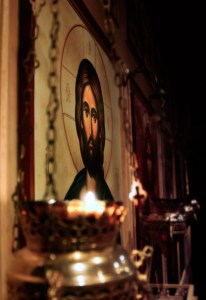 The other day on Facebook I posted a homily by Fr Barnabas Powell called
  Yesterday, my oldest child, Michael, was in a car accident. At 7:30 am, he was sitting at a stoplight when a car slammed into him from the rear. The force of the collision propelled Michael’s truck across the intersection. Fortunately, Michael kept his wits about him and quickly steered left to avoid a trash truck perpendicular to him in the intersection and then quickly steered right to avoid the cars facing him on the other side of the intersection. Michael walked away from that accident very sore but safe.
 Michael’s truck has some history. It belonged to my Grandpa, who bought it new. When my Grandpa passed in 2001, it was handed down to my Dad. And he recently handed it down to Michael earlier this year. Michael loves the truck, even though it’s older and the air conditioner doesn’t work. He loves driving a piece of family history. I don’t blame him. It’s the last tangible piece of my Grandpa that remains.
 When I was beginning my journey away from professional ministry, I came across the phrase, “for the sake of the world,” which I believe is attributed to Karl Barth. This phrase became a centerpiece of my reconstructed theology. Later, as I was beginning to explore Eastern Orthodoxy, I came across a similar phrase, “for the life of the world.” Not only is it the title of a quintessential book by Fr Alexander Schmemman, but more importantly, it’s also a line from one of the priest’s prayers during Divine Liturgy, “On the night when He was delivered up, or rather when He gave Himself up for the life of the world…”
 Today the Eastern Orthodox Church celebrates the Feast of Pentecost. The following excerpt by NT Wright is longer than what I would normally post. But it’s a clear and succinct summary of Pentecost. The takeaway for me is the quote, “It’s about God giving to his redeemed people the way of life by which they must now carry out his purposes.”
 I encountered a jarring story this morning in Henri Nouwen’s The Wounded Healer. It’s a great reminder that even with the best intentions we can completely fail to see people.
 As Jesus’ apprentices, we are called to embody his life into our world. However, in order to embody Christ, we must walk the long journey of transformation into Christ’s likeness — to become by grace what God is by nature. This doesn’t occur automatically, but in communion and cooperation with God’s presence in our life.
 Journeying Home