 Earlier this week, Danielle tried out for her school’s show choir and made it! I’m so proud of her. This past year, she’s been a member of her school’s choir and has really enjoyed it. Now she moves to the more advanced group where she’ll learn choreographed moves and perform at shows. My baby girl is growing up!
Author: Jason Zahariades
I Look for the Resurrection of the Dead and the Life of the World to Come.
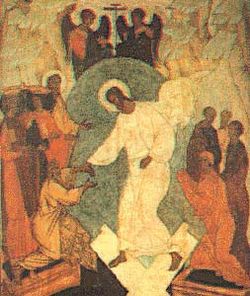
“I look for the resurrection of the dead and the life of the world to come.”
In my personal opinion, I think the Symbol of Faith, or the Nicene-Constantinopolitan Creed, is one of the most beautiful works of theology. I absolutely love the Christological, pneumatological and ecclesiological affirmations within the Creed. And I’m deeply moved whenever I think of the men and women who have valiantly lived and died for what the Creed affirms against paganism and heresies.
But my favorite line in the Creed is the last one. Being an eschatological affirmation, it resides properly at the end of the Creed. But because it comes at the end and also stands as a single simple statement alongside the larger complex formulations about Christ, the Holy Spirit and the Church, it almost seems like an afterthought. Yet, I know it isn’t and I anticipate stating this wonderful affirmation every time I recite the Creed at Church or in my personal prayers.
When I was an Evangelical Protestant, I had discovered that my eschatology was severely distorted. If I had even read the Creed back then, I would have equated “the resurrection of the dead and the life of the world to come” simply as “going to heaven when I die.” The goal of my Christian life was a non-temporal, non-spatial, disembodied existence called “heaven” after I died or after being raptured, just before God destroyed the planet. But that is not the biblical eschatological image within the New Testament.
Rather, the biblical image of the “life of the world to come” is God, through Christ, renewing this creation. This image is communicated in a variety of ways — God’s kingdom coming from heaven to earth (Matt 6:9-10), God gathering all things existing in the two dimension of heaven and earth back together (Eph 1:10), God leading creation in a new Exodus from its bondage into freedom (Rom 8:20-21), God reconciling all things within the two dimensions of heaven and earth (Col 1:19), and God’s city and throne moving from the heavenly dimension to make its ultimate home in the earthly dimension (Rev 21:1-2; 22:3-5).
And it’s within this renewed creation that redeemed humanity will be bodily resurrected and animated by God’s Spirit in order to realize the fullness of our vocation through our resurrected bodies — to fully gather creation and offer it to God and to fully reflect God into creation by our wise stewardship.
Why is this eschatological vision so important? A proper eschatological framework is just as essential as a proper Christological, pneumatological and ecclesiological framework for our life in Christ in the here and now. Proper living in the present requires the proper vision of the future. Knowing and understanding, as best as possible, the telos or goal of God’s Creation, humanity and our personal life generates both the impulse and direction to move in the proper trajectory towards that future. It’s what we’re living for.
Let me use a simple, and albeit weak, metaphor. Let’s say I’ve decided to join a workout club. An essential component of exercising toward a healthy life is to learn how to use the equipment correctly .
Similarly, the Church provides us with many viable resources to train and enter into the life of Christ. The majority of the Creed instructs us how to properly engage in all that the Church offers. In other words, the proper understanding of Christ, the Holy Spirit and the Church provided by the Creed is necessary for correctly entering into and participating in the sacramental, ascetical, and communal life of the Church, which is the life of Christ. And by participating in the life of Christ through the life of the Church, we commune with God and are transformed by him.
But the last affirmation of the Creed — “I look for the resurrection of the dead and the life of the world to come” — is the reason why I “joined the workout club” in the first place. It’s the ultimate reason why I want to commune with God and thus enter into the life of the Church as reinforced by the Creed — to become competent at dwelling and serving properly in God’s renewed world as he always intended for humanity. The last line of the Creed reminds me that my present participation in the life of the Church is training me to breathe, see, think, talk, relate, work, play and live in God’s coming renewed world. And by training towards it now, I’m actually beginning to live it now. Perhaps slowly at first, but hopefully with ever-increasing proficiency.
As we journey through Lent, the eschatological vision of God’s renewed creation appears on the horizon of my imagination and draws me forward. It is the reason why we journey through Lent. It is the vision that Jesus carried with him throughout Israel and ultimately to the cross in order to trample down death by death. It is the vision that Jesus inaugurated with his prototypical resurrection from the dead and continues to implement throughout history. And it is the vision he offers us as we follow him, commune with him, live in him, train to be like him and participate with him in the continual renewal and reconciliation of God’s creation. And, God helping, I will valiantly embody and affirm this vision as all those who have come before me.
The Human Vocation
I’ve been rereading parts of Bishop Kallistos Ware’s The Orthodox Way, specifically the chapter entitled “God as Creator.”
There are some ideas and quotes in this chapter that keep pinging around in my head. Ware states that God has formed two levels of created things: the “noetic” or “spiritual” level and the “material” or “bodily” level. He then states, “Man, and man alone, exists on both levels at once.” This is fascinating to me. In all of God’s vast creation, humanity alone is created to exist and interact on both levels of creation.
Ware then states that by being designed to participate on both levels of creation, humanity is a microcosm of the entirety of creation. And as such, humanity is also the mediator of creation:
“It is his [humanity’s] God-given task to reconcile and harmonize the noetic and the material realms, to bring them to unity, to spiritualize the material, and to render manifest all the latent capacities of the created order… As microcosm, then, man is the one in whom the world is summed up; as mediator, he is the one through whom the world is offered back to God.”
I love what this implies. At the ontological level, humanity is created uniquely to live and play simultaneously on both dimensions of creation. At the operational level, humanity’s vocation is, in Ware’s words, “to manifest the spiritual in and through the material.”
I am designed to manifest the spiritual in and through all of the details and activities of my material life. Talk about “fear and trembling!” How I talk, relate, work, think, eat, drive, pray, write, listen, play, rest, and much more are to be ways in which I manifest the spiritual in and through the material. That means I must learn to live every part of my life beyond the material or bodily level of my existence — beyond passions, reason, and even will.
But wait there’s more! Not only are humans designed to be miniature creations, the places where the two dimensions of creation — heaven and earth — come together and are offered back to God, but we are also made in God’s image. Ware states, “Man is the finite expression of God’s infinite self-expression.” My life is to reflect the life and character of God.
In other words, we are not only the image and expression of creation to God, we are also the image and expression of God to creation.
There is so much that can and should be said beyond the scope of this simple post. However, my intention was to refocus my own vision back onto what human life and vocation are all about.
I’m ashamed to admit that I’m easily distracted. I too easily let busyness, worries, fears, desires and other “bright and shiny things” distract me. So I’m hoping that during this Great Lent, my Lord takes me a couple of small steps closer to realizing my vocation in his kingdom. My life is to be both the image of creation and the the image of God. My life is to be the place where heaven and earth are stitched back together. My vocation is to participate in Christ’s ultimate vocation of bringing together and reconciling all things in heaven and earth (Eph 1:10 & Col 1:19-20). And my life is to be his life, the very life of Christ surging and spilling out of me like rivers of living water (Gal 2:20 & John 7:38).
Thru-You.com
HT to Jason Evans for this one. Check out Thru-You.com. This guy mixed a bunch of unrelated Youtube videos into new music. It’s very cool and creative.
Lenten Reflection
Steve Robinson points to a great Lenten reflection worth reading. Take a few moments and enjoy it HERE. Here’s a little sample.
“This Lent I am going to attempt to walk through life like I walk through church in hard soled shoes, or in the kind of shoes that squeak on the polished wood floor. I am going to try to walk softly, deliberately, prayerfully aware of the noise I am making, prayerfully aware of how my actions resonate with and disturb others; I will be quietly ashamed and a little embarrassed.”
Theology, Photography and Reflection
This weekend has been such an exciting one. As I mentioned in my last post, I was gifted with a new Nikon D40x this past week. So I’ve spent the last couple of days shooting with this camera. And the experience has infused me with a renewed enthusiasm to develop my skills in digital photography. So much so that I started a simple photoblog to post my personal images.
Posting my images is more than just showcasing my limited abilities. No, I’ve learned that images speak in ways that words cannot. For the last six years, I have reflected personally and theologically on this blog through words. I enjoy writing. I love taking an idea and crafting words to express that idea. And I hope to continue with this endeavor, especially as I become more immersed and formed by the life of Christ in the Orthodox Church.
But I’ve discovered that theological thought is very different in Orthodoxy than my training and experience in western Protestantism. Theological reflection has been more of a conceptual exercise. Sure, personal reflection and practice have always been intimately connected with theology proper. But the order has been primarily idea first, then practice. This was constantly reinforced with the priority of study as the ever-present backdrop to all theological reflection. I think it also explains why much of my theological study has been accompanied with a constant battle with pride. These were my ideas and conclusions that I worked hard to discern, unravel and formulate.
Yet, in Orthodoxy, only those with deep lives of prayer are considered capable of being theologians. That’s because a life of prayer is a humble life in communion with God. I think it’s safe to say that I have a looong ways to grow. That’s not to say that I’ll stop studying, writing or thinking theologically. But it does mean I need to re-prioritize my spiritual life so that I’m reformed inwardly. It’s much easier to study, write and think than it is to pray. Just like it’s easier to “proclaim” the Gospel than it is to live it, or to go even further, to embody it.
Prayer is difficult not because it takes time, but because if practiced properly, it places us in constant vulnerability before God. We are exposed. We’re not asking for things as much as presenting our sin-filled, broken selves to a merciful God. As grateful as we are for the availability of God’s salvation, we are brutally aware of our constant need to actually be saved. As we pray in Divine Liturgy:
“I believe, O Lord, and I confess that Thou art truly the Christ, the Son of the Living God, Who camest into the world to save sinners, of whom I am first.”
The more I pray with the Orthodox Church, the more these words shift from a nice spiritual sentiment to the actual cry of my sin-filled heart.
That’s why photography is a wonderful medium of expression, reflection, and even prayer. My eye is being trained to “look for shots.” But it’s more than just capturing light, color and texture. There are shots that stir something deep within me. I don’t know why. I can look at a series of shots of the same subject and one will leap out, grab my attention and sometimes take my breath away.
Even though my eye is focused on a subject outside of myself, it’s actually reflecting something from within me. Something within me is responding to the beauty or truth expressed in that moment, in that image. And it’s something that escapes words.
For example, yesterday, I walked around the perimeter of my apartment complex and took a series of shots of things I see everyday. There were a number of shots that I looked at and immediately hit the delete button. There were several that I’m keeping to look at, reflect upon and develop further. And there are a couple that immediately struck at the depth of who I am.
One was the shot of the bricks that I posted on my photoblog. Another is an image of a trash dumpster that I want to develop and post soon. And another was this photo of a fence formed from distressed wood.

The knotted and scarred planks remind me of the saints, the men and women throughout history that experienced untold hurt, discipline and pain. And yet, the scars became intimate communion with God. The discipline was transformed into holy dispassion. These wooden planks remind me of the icons I venerate. Faithful lives that weathered the storms of adversity, eventually to be revealed as lives perfected in Christ for all of us to emulate.
And it stirs the longing to be found faithful in my life, to live a life worthy of my Lord. As Fr Patrick preached about on Sunday, I am stained with gluttony and lust and a variety of other sins. I am still shaped by my pleasure-seeking culture and scarred by my past participation. So I pray, “Lord, have mercy on me a sinner.” And as I pray, I am aware of the convergence of contradictions — the holy mercy of God and the absolute despair of my condition. As the two meet and kiss, there is not immediate relief. Nor should there be. For the injury goes too deep. It requires continual therapy, healing beneath the scarred surface. For the remedy is nothing less than the transformation of who I am. And that is Christ in me, the hope of glory of which St Paul wrote.
Perhaps that is why in Orthodoxy theology flows from prayer. One must become right in order to live and think right. Glory to God!
New Photoblog
I love looking at good photography. Images can communicate in ways that words cannot. A few years ago I bought a Canon PowerShot A620 with the intention of developing basic skills in digital photography. I admit that I’m not great, but I’ve had a lot of fun taking pictures. Recently, I was gifted with a Nikon D40x. The move from a point-and-shoot to a DSLR is very exciting for me and has injected me with a lot of enthusiasm to take my basic skills to the next level.
So… in anticipation of the photos I’ll be taking, I’ve started a simple photoblog. I’ve already posted a couple of images that I took over the last couple of years on my PowerShot. I’ll probably be posting several more of these older shots during this time that I learn to use my Nikon as well as learn to use Pixelmator and Capture NX2.
Myrrh-Streaming Icon
 This evening, our family had the incredible opportunity to visit St Luke’s in Garden Grove to venerate the Holy Hawaiian-Iveron Icon. This icon is a myrrh-streaming icon. Although this icon is simply made of wood and paper, it miraculously began emitting myrrh in 2007.
The history of this icon is absolutely amazing. This icon is actually a printed copy of the Montreal myrrh-streaming icon of the Theotokos, which miraculously began emitting myrrh in 1982. And that icon was a hand-painted copy of the original Iveron Icon of the Theotokos, which according to Orthodox tradition, was painted by the Apostle Luke. Yes, the same Luke who wrote the Gospel of Luke and the Acts of the Apostles.
The amazing history is lengthy, so I’ll just post links. Click HERE to read the history of the original and Montreal myrrh-streaming icons. And then click HERE to read the history of the Holy Hawaiian-Iveron Icon.
So what do you do with a miraculous myrrh-streaming icon? I struggled with this question all week in anticipation of our visit. I’ve long since gotten past my old Protestant hang-ups about icons. The Seventh Ecumenical Council declared, “Icons do with color what Scripture does with words.” (By the way, Fr Stephen has just posted a good blog post entitled, “Icons and Scripture” that is worth reading.)
I love icons. They are windows into heaven. They constantly remind me of the communion of the saints and their intercessions on my behalf. They spur me to live a godly life. I can’t imagine ever going back to worship or daily life without icons. They are a significant part of the wealth and fullness of the faith that I’ve discovered in Orthodoxy.
But, icons that leak aromatic myrrh? At this point, all I can say is God’s grace is beauty shrouded in mystery. Grace is not some disembodied force floating around somewhere nor comes to us in a vacuum. Grace is God’s activity, his energies. And he anchors it in his creation. He offers his grace through water, through incense, through bread and wine, through oil, through paint, paper and wood, through words, through prayers, through my priest. Grace and creation go hand-in-hand. In fact, creation is truly being creation as God destined when it’s the means of God’s grace.
So, I don’t have any rational explanation why God would choose to anchor and offer his grace through an icon that streams myrrh. But it’s absolutely beautiful. The myrrh smells like roses. And the icon is of the tender Mother of God, the premiere disciple who is praying for our salvation. I was deeply moved when Fr Michael brought the icon up the aisle and laid it upon the analogion.
Hmmm…. A humble, unpretentious 7 x 9 inch plank of wood with a printed copy of the Holy Mother of God directing our attention to Christ and miraculously emitting a heavenly fragrance. Now that I think about it, it seems to be the typical way God reveals himself and offers his grace. And my response is to acknowledge it, to honor it, to pray and to worship a God who lavishes grace in such beautiful and mysterious ways.

The Limits of Spontaneous Prayer
 I am so amazed at how Orthodoxy is such a treasure house of resources for spiritual growth. One of these resources that I’m enjoying is written prayers. Throughout my entire Christian life, spontaneity was valued as being truly spiritual. This was especially true with prayer.
However, in his book, Beginning to Pray, Met Anthony Bloom states that while spontaneous prayer is a valid form of prayer, it’s only really possible in two situations. That’s because spontaneous prayer is a kind of prayer that “gushes out of our own souls.” Therefore, spontaneous prayer is only possible either in situations when we are vividly aware of God and that awareness calls forth a response of worship and joy or we are suddenly aware of our desperation and despair and cry out to God to save us. In this light, Met Bloom states:
“It [spontaneous prayer] comes from the depths of our soul, from either wonder or distress, but it does not come from the middle situation in which we are neither overwhelmed by the divine presence nor overwhelmed by a sense of who we are and the position in which we are. So that, at those moments, to try to use a spontaneous prayer is a completely illusory exercise.”
But Met Bloom also says it’s not enough to learn and use existing prayers, but also to live them. “A prayer makes sense only if it is lived.” He advises that when we discover a phrase in a prayer that makes sense, “you must try to apply it in the course of the day ruthlessly, for as long as you can.”
All of these thoughts on prayer came to a point when I read Shawn Ragan’s newest post, called “A Hymn of St Ephraim.” (Click on the link and take a moment to read the whole prayer.)
There is no way in my most creative and spiritual moments of spontaneity that I could have ever said anything like this. This is a prayer with which I resonate. It communicates the repentance I desire to experience, yet do not have the words to express. Orthodoxy is filled with such beautiful and powerful prayers as these.
Another prayer that we pray and with which Shawn ends his blog post is, “Through the prayers of our holy fathers, O Lord Jesus Christ have mercy on us and save us. Amen.” In this prayer, I’m not only asking for the intercessions of the Saints, who are in the presence of Christ, for my salvation, but I’m also asking that my own use of their prayers — both through my voice and my life — will be unto my salvation as well.
Fr Stephen & “Kalomiros on the Orthodox Life”
Fr Stephen has posted a wonderful excerpt from Dr. Kalomiros’ book, Nostalgia for Paradise. These thoughts on the Orthodox life are so balanced and come to me at such an appropriate time. Just a couple of nights ago, Debbie and I were talking about my self-imposed spiritual disciplines as a Protestant. And just the other day, Fr Patrick was reminding me of our family’s need to spend time learning a new rhythm of being Orthodox.
Now I read Dr. Kalomiro’s words and quite frankly, I just want to cry. I want to cry out of repentance for the pride and hardness created by imposing practices upon myself that were beyond the measure of grace given to me. I want to cry out of joy for the beautiful vision of what a true human life in Christ looks like. And I want to cry out of thankfulness for now being a member of a Church that can actually nurture me with wisdom into the life in Christ for which I have longed.
There is so much in this short excerpt that grips me. If I were to cut and paste good quotes, I would need to simply paste the entire excerpt. But this one paragraph is the clincher for me. I dream of living this kind of life:
“It is a modest soul that is out of its waters in the limelight of men but blooms in solitude and quiet. It is a heart free to its very roots, impervious to every kind of pressure, far from every kind of stench, untouched by any kind of chains. It distinguishes truth from falsehood with a certain mystic sense. Its every breath offers gratitude for all of God’s works that surround it and for every joy and every affliction, for every possession, and for every privation as well. Crouching humbly on the Cornerstone which is Christ, it drinks unceasingly of the eternal water of Paradise and utters the Name of Him who was and is ever merciful. Such a soul is like a shady tree by the running waters of the Church, with deep roots and a high crown where kindred souls find comfort and refuge in its dense branches.”
Icon New Media Network

“At the center of the Icon New Media Network, we believe that Orthodox Christianity is the future of American Spirituality. Our desire is to introduce Orthodox Christianity to emergent, post-evangelical and non-Christian audiences. Through the use of new media (blogs, podcasts, video, etc.) we aim to create environments where Orthodox Christians and those interested in this radical ancient faith can converse about and collaborate on resources that lead to a fuller understanding of Christianity. This is done by providing places for people to gather and communicate both online and offline about the relevance and necessity of our 2000-year-old Church.”
The quote is from the Icon New Media Network website, a site in which I’m very interested. Although I haven’t explored the site in any depth, I’m excited about an Orthodox ministry dedicated to speaking to “emergent, post-evangelical and non-Christian audiences.” I love environments that are conducive to conversations. Call it rebellion, but I hate being told what I have to believe or do without a chance to talk, think and process.
For me, my association with the Emerging Church was a wonderful transition to explore the richness and fullness of Orthodox Christianity. I believe the same might be true for others in the Emerging Church. In addition, our culture is in a weird place. Whether we call it “postmodernity” or “liquid modernity” or some other label, our culture is not where it was thirty years ago. So any engagement that the Orthodox Church has with western culture will need to involve relationship and conversation.
Personally, I believe Jesus is still our best example. He is the Truth. His very being defines what Truth is. And one of the primary things we observe in Jesus is the relational nature of Truth. Truth is not cold, impersonal or abstract as western culture has tended to define it. Truth, as defined by Jesus, is personal and gives birth to true Life, Love and Reality. And the Orthodox Church has preserved the fullness of the Truth within its life and Tradition for centuries. One of the most amazing things I discovered about Orthodoxy this past year was how vibrant, Spirit-filled and life-giving its Tradition can be.
So, I’m excited about Icon New Media Network and any other Orthodox ministry that is willing to share the beauty, life and fullness of the Faith with those hungering for Christ and His Church.
Sealed!!
This morning, ten of us, including my family, were received into the Holy Orthodox Church. It was such an amazing moment. Here are several reasons:
- Knowing our family and friends were there to support us. Thank you Mom and Dad H, Mom & Dad Z, Linda, Steve, Maribeth, Caleb, Jennifer, Fr Michael & Kh Kyra, Mic & Ginny, and David. And thank you David H. for filming the entire service.
- Seeing the excitement on our friends’ faces from St Peters. Thank you to each person at St Peters who has prayed for us, encouraged us and supported us this past year. And a special thanks to our family’s sponsors — Dn Rico, Kh Christina, Aaron, Elly, Lisa & Robert.
- Watching my best friend, Mark, be baptized.
- Hearing the beautiful and spiritually rich prayers.
- Holding my candle as a symbol of my heart becoming illuminated.
- Being signed with the chrism (Holy Oil) as Fr Patrick made a sign of the cross on my forehead, eyes, nostrils, mouth, ears, chest, hands and feet, while each time saying, “The Seal and Gift of the Holy Spirit” to which the entire congregation responded by saying “Sealed!”
- Receiving the real Body and Blood of Christ in the Eucharist for the very first time. Absolutely awesome!!
- Receiving the cross on a chain around my neck as a constant sign of my life in Christ.
- Being encouraged to invoke the prayers of our patron saints.
- Knowing that from this day forward my family and friends will live and grow in the fullness of Christ’s life through the nurturing care of the Church.
A lot more can and must to be said about today. It was momentous in ways that I’m still trying to fathom. All day, I have been sensing something deep, and to this point beyond words, simmering inside of me. It’s similar to what I remember experiencing after other life-changing events, like my wedding day or my children’s birth. Each of those events marked the end of a specific journey and the beginning of a new journey that would prove far greater and life-impacting than I could have anticipated. I have been sensing the same thing since this morning’s service. We’re Orthodox and I suspect it will change everything. And I love it.
You can view photos from the event on the St Peter’s website by clicking HERE.

Coming Home
 Back in April, I posted my reflections about my friends’ reception into the Holy Orthodox Church. One of the most moving moments was when Fr Patrick whispered into the ear of one of my friends and said “Welcome home.” Even as I write this eight months later, I still remember the ache in my heart at hearing those words. It seems my entire Christian journey, which began back about 25 years ago, has been one of searching for “home.” As much as I have encountered the Living Christ throughout the various stages of my journey, I’ve always known that he has been leading me somewhere.
My family’s experiences during the Paschal season at St Peters convinced me that Holy Orthodoxy was the “home” I’ve been searching for, even though I never would have envisioned it as such through most of my journey.
And now this coming weekend, a new phase of my journey begins as our family and our best friends, Mark and Barbara, are received into the Holy Orthodox Church. My entire family is very excited and a bit nervous. In some ways, I feel like the prodigal son finally coming home. And the warmth and love from our friends at St Peters and St Lukes, as they anticipate our reception this weekend, has embodied the Father running to meet me and my family and to usher us into his home.
But coming home isn’t the end of the story. It never is. Life, even New Life, goes on. The story will continue as we learn to live in the Father’s home with our brothers and sisters, fully communing with the Living Christ. Knowing the depths of my own heart, I know I will make mistakes and offend. And I know I will be offended. I learned long ago that when two or more Christians gather… someone’s going to get hurt. But everything we will experience — the joys, the sorrows, the forgiveness, the thrills, the pains — is for our salvation if experienced and processed properly. Fortunately, our family is part of a larger family with the same desire to commune with Christ and to grow into his likeness. Now in our new larger family we will worship together, commune together, fast together, pray together, serve together, and love together, as we are guided by a wise and caring priest who embodies Christ, aids in our confession, gives us spiritual direction, teaches us, and extends God’s grace through His holy Mysteries and as we are joined by the entire Body of Christ as they are made known through the icons, hymns and stories.
And the ones of whom I am the proudest and most moved are my family. Debbie’s courage at the unknown and her embracing of the various disciplines of prayer and fasting have continually inspired me. My children’s quick receptivity of Orthodox theology and practice, such as venerating the icons, led me into a fuller practice and experience of Christ’s life. And although I was the one that initiated our one-year commitment to attend St Peters, it has been my family that has quietly encouraged me to stay connected when all of my wounds and fears from the past screamed for me to remain disconnected at best or to pull me away at worst. I really believe I have been the “weakest link” in my family’s journey to Orthodoxy. And I am very thankful for their living example of strength and courage, especially in my weakness.
I cannot express how thrilled I am as I anticipate standing with my wife and children and friends in our “Chrismation whites” with our sponsors to be received into the Father’s home and to fully eat at his table. And while I am painfully aware of my unworthiness, I am even more grateful for the overabundance of my Savior’s and God’s grace.
I’m finally home. Glory to God!
Happy Birthday, Debbie!
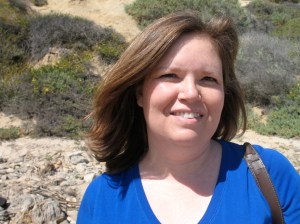 Today is Debbie’s birthday. I really believe that my wife is the greatest thing I have going for me in life. Everyday I’m filled with amazement that she chose to take my name and give me her life. She is truly God’s gift to me and I cherish her with everything I have. She’s my best friend and there isn’t another person on this planet with whom I would rather spend time. I love her humor, her intelligence, her compassion, and her wit. And, boy, is she a Looker! We have shared the greatest moments of our lives together. We’ve cried, laughed, yelled and whispered as husband and wife, now going on twenty years. And God willing, we will journey together and grow more deeply in love for decades to come.
There’s a commercial on TV that shows a young couple strolling past an elderly couple, who are slowly walking and holding hands. That’s my vision of a life well-lived. I want to be holding hands with my best friend and lover when we’re old and wrinkly. I want to see her look at me and smile with that twinkle that is for me alone.
I love you, Debbie. Happy Birthday!
Not of This World
“My kingdom is not of this world.” -Jesus of Nazareth
During this Nativity Fast, I was reminded of a quote made by N.T. Wright that goes something like “Jesus’ kingdom is not of this world, but it is for this world.” What a wonderful summary of the Incarnation! Jesus’ kingdom doesn’t originate from nor is fueled by the same energies and economies of this world’s kingdoms.
And yet, his otherly-world kingdom is God’s remedy for the transformation and healing of this world. It spills over from God’s heavenly dimension into this broken earthly dimension. And it reconciles the great divorce between these two dimensions of God’s creation. It goes about stitching, as it were, the two layers of creation back together again until one day Jesus’ and the Church’s prayer will be ultimately realized in God’s New Creation when his kingdom will truly come on earth as it is in heaven.
My hope is that the two layers are being stitched together in my own life so I’m able to participate in God’s larger project in the world as well as become a person who will live naturally in his new world.
Anthony Bloom on Weakness & Humility
I’ve started reading Beginning to Pray by Metropolitan Anthony (Bloom) of Sourozh and I’m really enjoying what he has to say. Most Protestant books on prayer that I’ve read seem too mechanistic as if what we do or say will somehow invoke God’s presence or response. Not so with this book. So far, this book is about plowing the soil of our own hearts, learning to become true pray-ers. Two quotes stand out, one about weakness and the other about humility.
Here’s the one on weakness:
“Weakness is not the kind of weakness which we show by sinning and forgetting God, but the kind of weakness which means being completely supple, completely transparent, completely abandoned in the hands of God… You could think of that [weakness] also in terms of a sail. A sail can catch the wind and be used to maneuver a boat only because it is so frail. If instead of a sail you put a solid board, it would not work; it is the weakness of the sail that makes it sensitive to the wind.”
And here’s the one on humility:
“The word ‘humility’ comes from the Latin word ‘humus’ which means fertile ground… Humility is the situation of the earth. The earth is always there, always taken for granted, never remembered, always trodden on by everyone, somewhere we cast and pour out all the refuse, all we don’t need. It’s there, silent and accepting everything and in a miraculous way making out of all the refuse new richness in spite of corruption, transforming corruption itself into a power of life and a new possibility of creativeness, open to the sunshine, open to the rain, ready to receive any seed we sow and capable of bringing thirtyfold, sixtyfold, a hundredfold out of every seed.”
There used to be a saying about prayer, “Prayer changes things.” Nowadays, I’m hoping prayer changes me as well. I hope I learn to embrace the proper weakness in which God’s power is manifested by making me humble.
Lord, may my life become like the dirt and soil of the earth; an ordinary, unobtrusive place where the pain and poison of this broken world silently fall, are absorbed, and miraculously transformed into new life.
Happy 40th Birthday, Mouse!
I just read on Lifehacker that today is the 40th birthday of the computer mouse. Considering that my hand is on a mouse most of my day, this a milestone worth noting. I wish I had a picture of all the mice I’ve owned. My favorite so far is the wireless Mighty Mouse by Apple (pictured below).
Update: Click HERE to see pictures of the original mouse.

Fr Stephen & “It Is But a Small Thing”
Fr Stephen posts a great reminder of how the small thoughts, attitudes and actions in our daily lives are so important. When I was a younger man, my goal was to do great things for God. I dreamt of leaving a magnificent legacy that would far outlive my earthly life. My sight was always straining toward the horizon, waiting for that moment when I would do something big for God.
Now I’m a bit older and hopefully a bit wiser. And with some age, my goals have changed. I strive to be a good husband, a good father, a good friend and hopefully a good man. And this is lived out not by great momentous deeds, but by the many small, insignificant moments in my life. An encouraging smile. An attentive ear. A compassionate hand. And as my gaze shifts from the horizon to the present moment, I can better see what Fr Stephen describes in his closing thought:
“This is the day of salvation. It may come in a thousand discreet moments, every one of which is alive with the fire of God.”
May I learn more and more to be warmed and ignited by the fire within these moments.
Fr Gregory’s Reflection on the Walmart Tragedy
I’m sure everyone who has heard about death of the Walmart employee on Friday morning is sickened by what happened. I had originally decided not to blog about it because, while I had some thoughts forming, I felt I had nothing substantial to offer but my own sadness and revulsion at what happened.
This morning, Fr Gregory posted a thoughtful reflection on that event that I believe is worth reading. We simply can’t shake our heads at this tragedy as if we’re innocent and then go on with our consumerist lives as usual. Sure, we can tell ourselves that we would never have participated in such an atrocity. But we all participate in the same spirit of the age that caused Friday’s event. That’s why Fr Gregory’s call to both contemplation and action must be heard, especially during the Nativity season. For it is this very darkness and death that resides in all of us that Christ came to conquer.
Met. Kallistos Ware & “The Cosmic Christ”
Fr Stephen posts a meditation offered by Met. Kallistos Ware. You can read the entire post HERE. The quote below contains the final thoughts of that meditation:
“Do we reflect sufficiently, I wonder, upon the environmental implications of our Lord’s Incarnation, upon the way in which Jesus is ecologically inclusive, embedded in the soil like us, containing within His humanity what has been termed ‘the whole evolving earth story’?
“Do we allow properly for the fact that our Savior came to redeem, not only the human race, but the fullness of creation? Do we keep constantly in mind that we are not saved from but with the world?
“Such, then, is our Orthodox vision of creation; such is our vocation as priests of the created order; such is our Christian reponse to the ecological crisis. Such is the deeper meaning implicit in the words that we say daily at the beginning of Vespers: ‘Bless the Lord, O my soul’.”
I love the thought of Jesus being “ecologically inclusive, embedded in the soil like us.” I am so thrilled that Orthodoxy has such a vibrant understanding of Creation. The Church’s understanding of Christ’s Incarnation provides the ultimate framework for a sound theology of and ministry toward Creation.
In fact, since 1989, much of the Orthodox Church observes September 1, the first day of the Church’s liturgical year, as the Feast of Creation. In a paper called, “Orthodox Liturgy and the Care for Creation,” Bishop Irineu offers the following thought:
“The vocation of humanity, as shown in liturgical theology, is not to dominate and exploit nature, but to transfigure and hallow it. In a variety of ways – through the cultivation of the earth, through craftsmanship, through the writing of books and the painting of icons – humanity gives material things a voice and renders the creation articulate in praise of God.”
Christ’s Incarnation fulfills humanity’s divine mandate in Genesis to be the stewards and caretakers of Creation. He is the ultimate steward of Creation, rescuing both his eternal family of co-stewards and Creation itself from the clutches of brokenness, sin and death. Jesus tramples down death and offers his life, which enables us to embrace our true vocation as Creation’s cultivators and craftsmen that gives it a voice of praise to God.
Visit to Oak Glen
This past weekend, Debbie attended a Women’s Retreat in Santa Barbara. David called me up and asked if I wanted to take the kids out to Oak Glen with him. We agreed and am I’m glad we did! The weather was beautiful and we had a fun time. Click HERE to view pictures in my MobileMe Gallery.
And if you want to see the kids making Apple Cider, click HERE.
Saying “Good-bye” and “Hello”
Since tomorrow is a holiday (Veteran’s Day), I decided to take today as a vacation day and thus extend my weekend. This afternoon both closed a chapter in my life and revisited another.
 About five years ago, upon leaving full-time pastoral ministry, a few of us in our newly-founded faith-community decided to start a wedding video business called inFocus Video Productions. This endeavor was to provide supplemental income for us as well as to provide a way to incarnate Christ’s presence through our lives and skills. Earlier this year, we decided to close our business. We filmed our last wedding in late October and officially closed our virtual doors early this month. Today, I cleaned and packed all of my video equipment to sell on Ebay. While being a wedding videographer was physically demanding and took me away from my family on many Saturdays, I enjoyed the last five years. I got to work closely with two of my best friends, hone my creative skills, and quietly serve and pray for the various couples on their wedding day. Now, as I type this, there is a vacant spot in a small corner of my bedroom where I stored my video equipment. I’m glad we decided to close our business, but today I’m also a bit sad that it’s over.
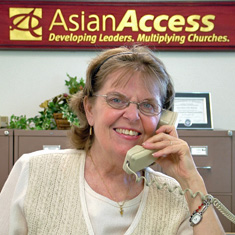 After packing my video equipment into my car, I drove to the Asian Access offices where I worked for three years after leaving professional ministry. Today, the office staff celebrated 25 years of wonderful service of the office receptionist, Ellen Hale. Ellen is an incredible person and is literally the voice of Asian Access as she answers the office phones. She has impacted hundreds, if not thousands, of people by incarnating Jesus’ life through her joy, her gentle disposition and her faithful prayer. I am so glad I was able to celebrate this great milestone with her. I was moved as I watched a video of Asian Access missionaries personally thank Ellen for her impact in their lives and ministry. This past year, I have missed my Asian Access friends. This afternoon was a nice time visiting with them as well as meeting Dana, who replaced me as the Staff Accountant, Joe, Silk and Margaret.
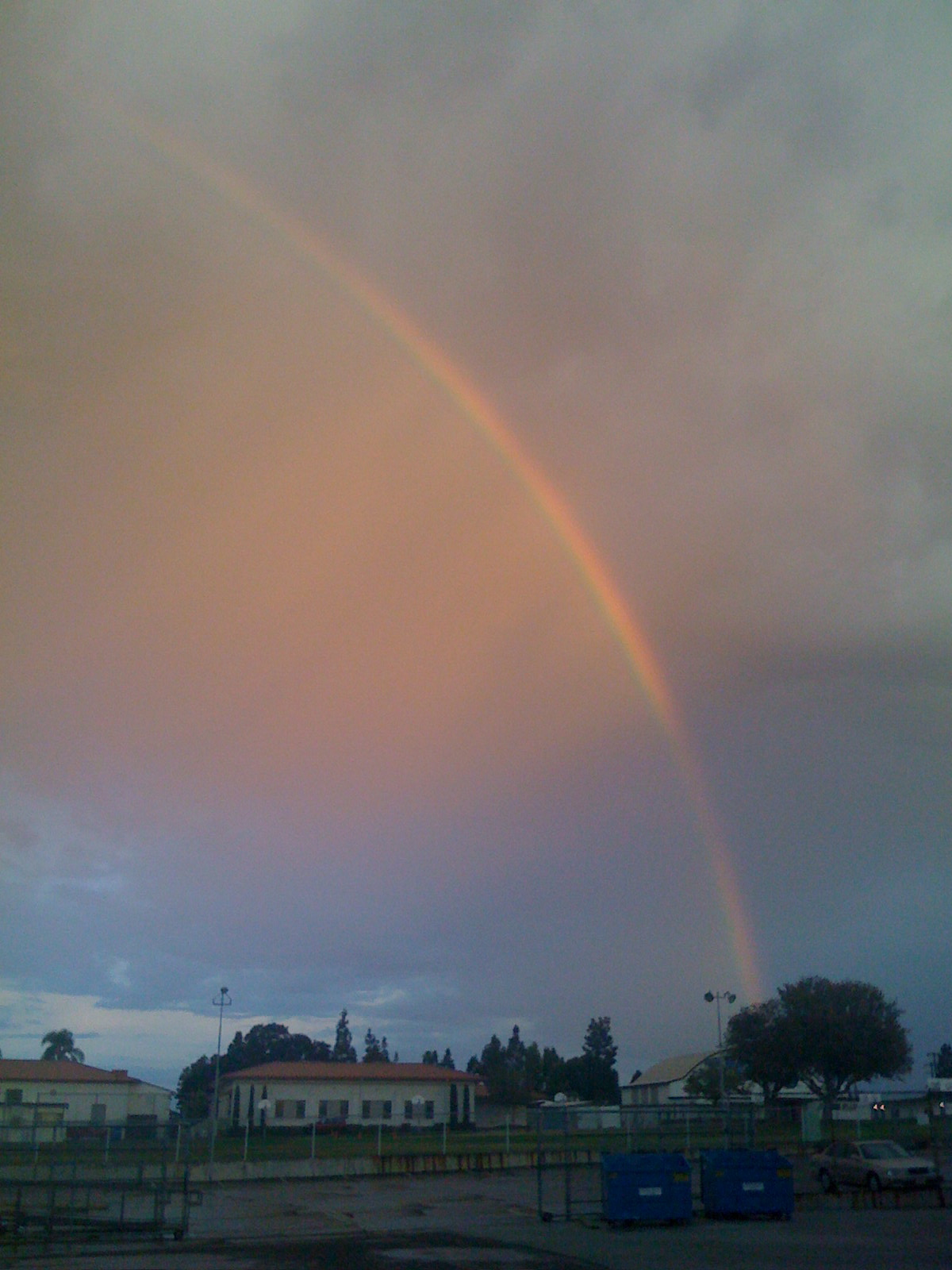
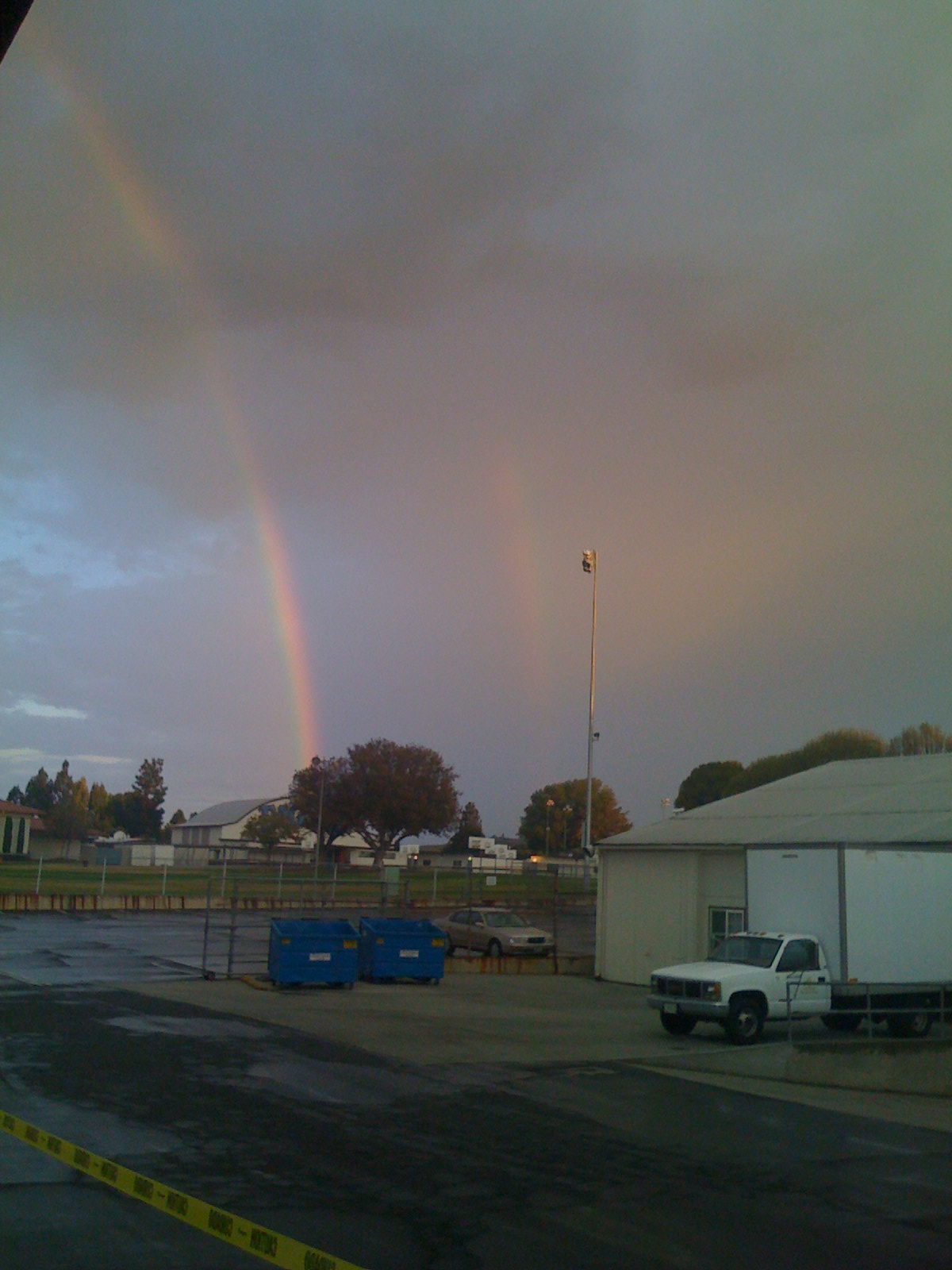
Rainbow at Work
Life Statement
I came across this line from an Orthodox funeral service and I think I found my new life statement:
“I am the image of Your inexpressible glory, even though I bear the wounds of sin.”
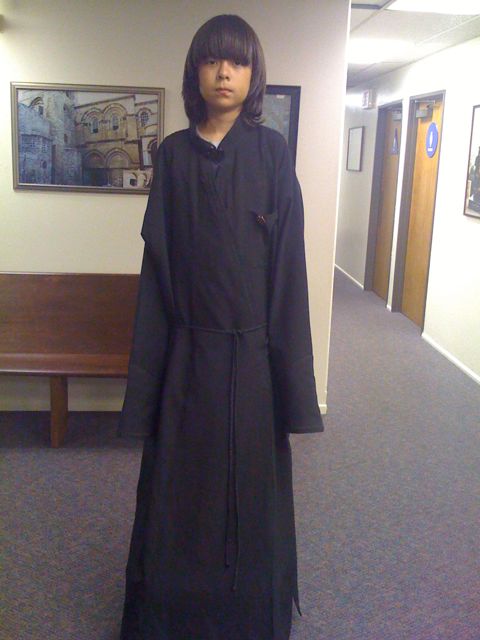
The Future?

Bummer!
Yesterday, a seventh-grade boy tripped Danielle at lunch and the fall broke her wrist. Fortunately, she was able to get the bright green cast she wanted.

Thankful for the Whole Journey
This weekend, Debbie and I had a good conversation about our journey to Orthodoxy. And as I reflected on our dialogue, I’ve become more aware of a few things.
God is truly leading our family in our journey to Orthodoxy. I have longed for a Christianity that is historically, spiritually and theologically rich and vibrant. And as I have mentioned in previous posts, we truly believe we have found it. Fr Thomas Hopko communicated the fullness of life and faith that we’re experiencing in Orthodoxy in his lecture, “When is Armageddon?” when he said:
“The Orthodox Church has nothing except everything we need… What we need is God the Father, the Son Jesus Christ, and the Holy Spirit and the Scriptures, the sacramental life of the Church, the liturgical services of the Church and the teachings, the witness and the blood of the saints.”
As a father, it is moving when I listen to my children recite the Nicene-Constantinopolitan Creed or pray the Lord’s Prayer, or when I watch them cross themselves or venerate an icon. We have found a place where our children will be raised in the fullness of the Faith.
I wish I could explain how utterly awe-inspiring and humbling it is to participate in a virtually unchanging Divine Liturgy that Christians globally and historically have used for centuries, a Divine Liturgy that faithfully has escorted millions of Christians to a moment that transcends time and space into God’s kingdom and communion with our Lord, God and Savior Jesus Christ.
And it’s a wonderful thing to know that unlike my evangelical experience, there will never be a need for “trends” or “movements” (i.e. charismatic movement, Purpose-driven life movement, spiritual warfare movement, church growth movement) because we have and will always have everything we need to journey into Christ’s life and likeness. Everything we need is here. In Orthodoxy, to borrow again from Fr Hopko, we have “The Holy Spirit, who lives in the life of the Church through the Scriptures, the Sacraments, the Services and the Saints.” While there surely is room for further reflection, study, and adaptation, there is absolutely no need for additions or supplements to our faith and practices.
Now having said this, I’m also aware that everything I have experienced beforehand has been God-ordained. I am eternally grateful for the churches and movements I’ve participated in during my journey with Christ.
In Calvary Chapel, I came to know Christ as my Lord and Savior and to cultivate a love for the Scriptures.
In Youth With a Mission, I explored and confirmed my calling into ministry, participated in overseas missions, and learned how to live in Christian community.
At the First Baptist Church in Azusa, I was entrusted with my first youth ministry and opportunities to preach and teach.
At the San Gabriel Valley Japanese Christian Church, I experienced a vibrant Christian community and was given further room to grow in various ministries, including worship, youth, and preaching.
In the Vineyard, I experienced God’s intimacy and learned to live with risk-taking faith. It was there that I learned all of the aspects of local church ministry and honed my personal and ministerial values.
In the Emerging Church, I enjoyed the freedom of theological and missional exploration, the creativity of making theology accessible and relevant to everyone, and the camaraderie of theological conversation where everyone learned from one another without agenda and power struggles.
So as my family and I stand on the threshold of entering the Orthodox Church, I recognize that my being here is the natural and logical destination of my journey in and through all that I have mentioned. I can see God’s hand in each place in the journey as he used different people and movements to “tutor” me into a more vibrant and well-rounded faith that ultimately has led me here. I hold many fond memories and valuable lessons dear to me and know that I would not be here if not for God leading me in and through Calvary Chapel, YWAM, the Baptist Church, the Japanese Church, the Vineyard, the Emerging Church, as well as Azusa Pacific University, Fuller Theological Seminary and many other people and influences along the way. I admit that all of my experiences have been a mingling of joy and pain. But I truly love where I have been.
As I affirm the fullness of the Orthodox Church, it is not to discredit or disparage those in my past, but to thank and appreciate all who have contributed to my journey. Because of them I am here. Aware of this, my zeal for the Orthodox faith is not a renunciation of all I have learned and experienced as it is the affirmation of all the good I have learned and experienced. With deep thankfulness and gratefulness, I pray I am able to bring all of that good with me into my Orthodox faith.
This is very important to me because I’m also very aware that one brings his or her baggage into the Orthodox faith. An angry Protestant Christian simply becomes an angry Orthodox Christian. An insensitive Roman Catholic Christian simply becomes an insensitive Orthodox Christian. I bitter Emerging Church Christian simply becomes a bitter Orthodox Christian. Recently, I’ve heard Orthodox Christians on a few occasions speak with anger or mockery about the Protestant faith from which they have converted. And this saddens me. It contributes to the perceived superiority and exclusivity of Orthodoxy held by many. There is absolutely no grace in that kind of behavior. And being fully aware of the wounds and anger still residing in my own heart, I know I can easily become like this as well.
So I hope and pray for grace, for generosity, for the ability to listen to another’s perspective, for understanding, and ultimately for love. My goal in converting to Orthodoxy is that I would become a better man, to become like Jesus so that I would learn to love God, people and creation better as time goes on.
Fr Hopko & “When is Armageddon?”
Shawn Ragan points to a wonderful two-hour video by Fr Thomas Hopko called “When is Armageddon?” I converted it into an audio file and listened to it yesterday during my commute to work. I’ve always enjoyed Fr Hopko’s teaching and this gem of a lecture encapsulates a lot of why I enjoy him. In many ways, a lot of what Fr Hopko teaches in regard to the Gospel, the Incarnation and eschatology aligns with what I enjoyed in N.T. Wright’s teaching, but from a distinctly Orthodox perspective. Here is a nugget from the first half of the lecture:
“This world, as we know it, is not destroyed and the New Creation is not made out of nothing. The renewed creation is this world saved, redeemed, sanctified, deified, glorified by the risen Christ, who in the Apocalypse is the Son of God, the Son of Man, and 38 times, the Lamb of God who is slain, who is dead and is alive again and is fighting against the Beast, which is the symbol of Babylon, this world that is not only against God, but in place of God.”
That one quote alone is absolutely awesome. One of the major popular evangelical doctrines I abandoned years ago (with N.T. Wright’s influence) was the distorted eschatology that God will one day destroy this world. This doctrine is intimately linked with the popular doctrine of the rapture, which I also abandoned years ago, and contributes to the false idea that God is only interested in saving souls, which he would someday extract from this creation that was destined for destruction. But that’s not the biblical image. God created this world and placed humans as the caretakers of this world to govern and nurture this world as his image-bearers. As humanity goes, so creation goes. When we plunged ourselves into disobedience and distortion, we dragged creation with us. And as St Paul says in Romans 8: 19-21:
“For the creation waits with eager longing for the revealing of the children of God; for the creation was subjected to futility, not of its own will but by the will of the one who subjected it, in hope that the creation itself will be set free from bondage to decay and will obtain the freedom of the glory of the children of God.”
Creation isn’t yearning for its own destruction. It’s yearning for its freedom and renewal that will be realized through the life of Christ in and through God’s children. That’s because creation isn’t an afterthought nor simply the backdrop to the human drama. Look at the relationship between Christ and creation that St Paul describes in Colossians 1:15-16:
“He is the image of the invisible God, the firstborn of all creation; for in him all things in heaven and on earth were created, things visible and invisible, whether thrones or dominions or rulers or powers — all things have been created through him and for him.”
Christ is the firstborn of all creation. This world is his and is not destined for destruction. This world was created in him, through him and for him. And it will be re-created in him, through him and for him.
As Christ renews humanity, creation’s caretakers, he renews creation. That’s why I love the words Fr Hopko uses to describe the renewed creation — saved, redeemed, sanctified, deified and glorified by the risen Christ. Those words are normally associated with humanity, but he uses them to describe the renewed creation. And ultimately, when we jump to the end of Revelation, it is this renewed earth that finally becomes the place where God’s throne dwells. Jesus’ prayer, “Your kingdom come, your will be done on earth as it is in heaven” is finally fulfilled in the renewed creation.
Eschatology is extremely important to me. Christians are to be eschatological people. We are to learn how to live in the present in anticipation of God’s future. So how we understand God’s future determines how we live right now. If we believe that God is going to destroy this world once he’s extracted all of his redeemed people from it, ala the Left Behind series, then we don’t need to live with any kind of impulse toward issues such as environmental responsibility and social responsibility since “it’s going to burn anyways.” But if we believe that we are truly God’s ordained stewards of his creation and that he is saving, redeeming, sanctifying, deifying and glorifying this world by Christ and through us as Christ’s people and followers, then we will live very differently right now.
I’ve been thrilled to discover that the Orthodox Church is very eschatologically-aware. The Divine Liturgy is eschatological. Here’s a quote from a recent blog post by Fr Stephen Freeman:
“Christianity is inherently eschatological – it is precisely about the end of things and about a very specific end. The meaning of Orthodox worship is found in the fact that we believe ourselves to be standing in the very end of all things as we celebrate the Divine Liturgy. Even the Second Coming is referred to in the past tense. The End has come and Christ is victorious and as His people, Baptized into His death and resurrection, that End is our hope and our own victory.”
In Orthodoxy, eschatology shapes everything — our worship, our daily living and our mission. We follow Christ, obey his commands, wait in vigil, participate in the Divine services, ask for intercession from the saints, and pray in anticipation of the eschaton — the age to come when the world is fully renewed in Christ and flooded with God’s glory as God’s throne is finally established on earth as it is in heaven.
We are Catechumens!
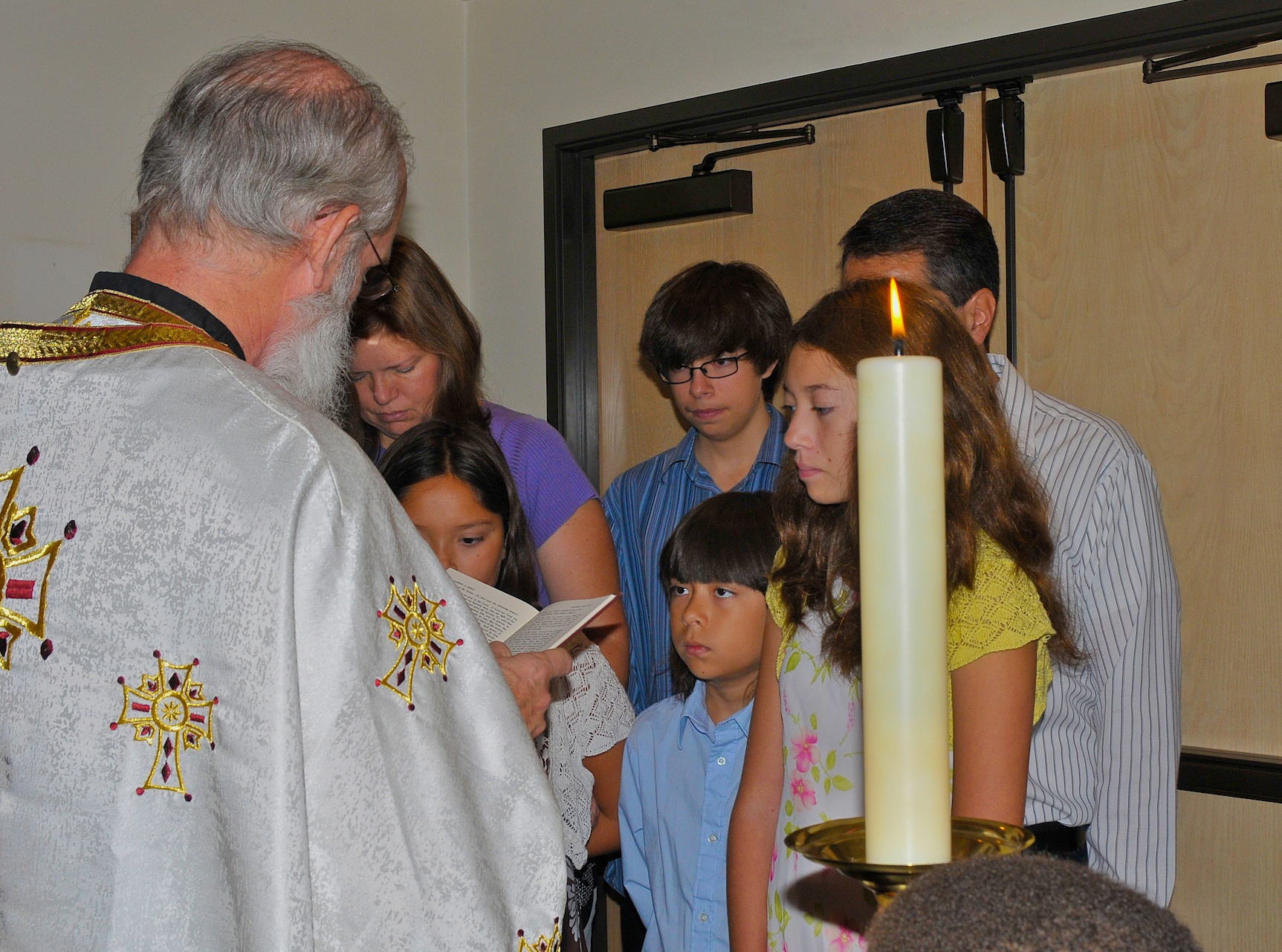

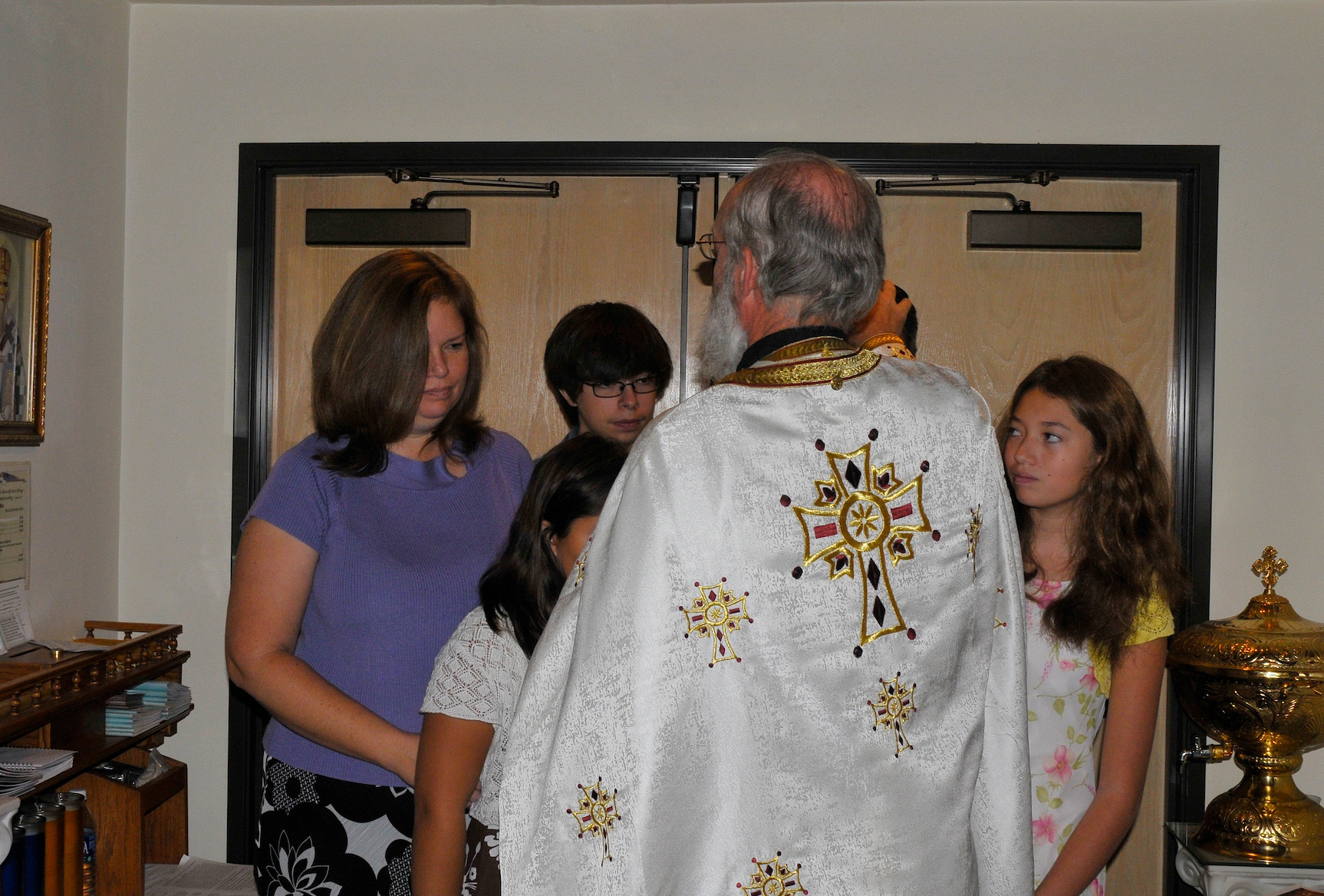


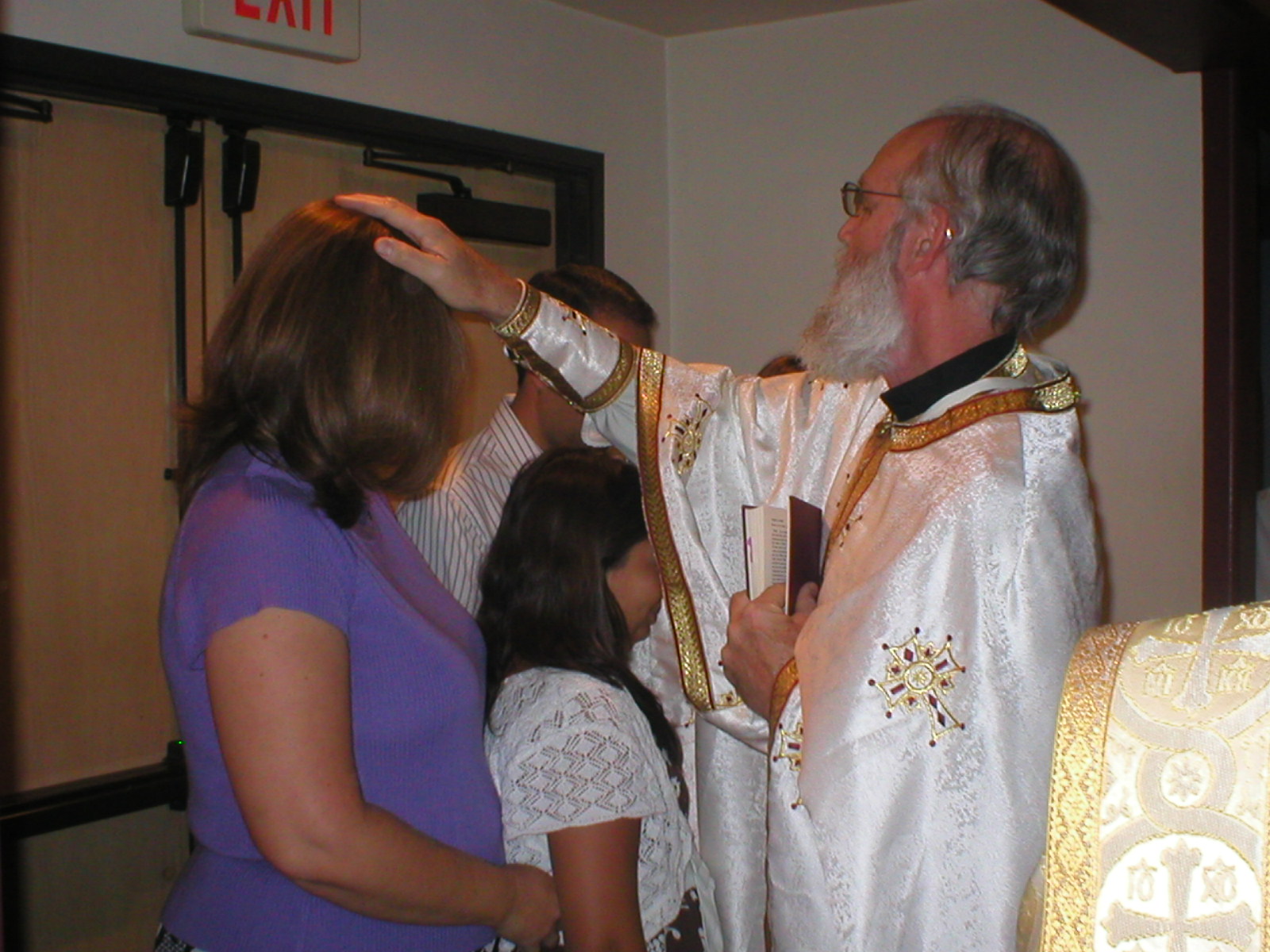
This morning, our family was enrolled as catechumens at St Peter’s. While it was a fairly short moment, it was filled with much significance and meaning. Several years ago as an Evangelical, I read the following quote from St Cyprian of Carthage, who lived in the early 3rd century:
“He cannot have God for his Father who has not the Church as his Mother.”
At the time, I was learning the incredible value of spiritual formation and spiritual community and this quote rang true. However, I had a problem. I didn’t know what to do with it practically. Theologically I had been formed to understand the Church as consisting of everyone who called Jesus “Lord and Savior.” Did that mean this large ambiguous and amorphous group of people with vastly different beliefs, values and practices was to spiritually nurture and form me as my “Mother?” If so, did that mean I would have to “pick and choose” which elements would form me and my family?
As my family and left professional ministry, I began constructing a somewhat eclectic Christian spirituality drawing from sources I thought were important. N.T. Wright formed my theological foundation. Dallas Willard and others constructed an individual rule of life for my spiritual formation. The Vineyard shaped my practice of worship and spiritual gifts. The Emerging Church formed a vision for relevant mission. Our house church filled the need for deep spiritual community.
But as I journeyed further with my family and friends, I sensed significant gaps in my eclectic spirituality. Would my own ability to gather and meld these various elements together really develop the fullness of Christ’s life in me, my family and my community? As much as I wanted to believe it would, deep down I knew that I was not smart enough, creative enough, knowledgeable enough or spiritual enough to lead myself and others into the genuine life of Christ. I’m talking about the deep authentic life of Christ in which the core of who we are is radically transformed so that we consistently think and act naturally like Jesus. Everything I did seemed so… shallow.
So while I was much further along than I had been my entire Christian life, I knew myself well enough to admit that my abilities created a very low ceiling. I did not have what I or my family needed to lead and train us ultimately into the deep wellspring of Christ’s life and likeness.
Over the last nine months, our family has been exploring Orthodox Christianity. And while there are elements that are still very strange and foreign and even difficult to accept, I am convinced that we have finally found what our hearts have been longing for. I truly believe that in the Orthodox Church, we have found the very fullness of Christ’s life. There is absolutely nothing lacking in Orthodox worship and life. No assembly or batteries required.
I want to say this again. We have found FULLNESS. Nothing needs to be added or changed or supplemented or created or re-envisioned or recaptured.
During my 20+ years as an Evangelical, I have never experienced this before. Instead, I have witnessed wave upon wave of spiritual fads and enthusiasms washing over us — worship, Church growth, spiritual warfare, spiritual gifts, renewals, spiritual formation, leadership models, books, and conferences.
But not anymore; not for me and my family. We have found Christ’s Church — the fullness of his life embodied throughout the ages and generations from Christ himself to the present. And today, our family is one step closer to living in the reality of St Cyprian’s quote. The Church will be our Mother, truly nurturing and forming us to embody the life and likeness of Christ as she has unchangingly through the ages.
Taking the Plunge
On Monday night, Debbie and I met with Fr Patrick and Kh Christina to let them know that our family is ready to become catechumens. For those unfamiliar with the process, catechumens are those whom the Orthodox Church receives as now preparing to join the Orthodox Church through baptism or chrismation. Up to this point, we have been recognized as inquirers, those interested in and learning about the Orthodox Church. But this coming Sunday morning, we turn a major corner in our journey into Orthodoxy as we officially enter the catechumenate.
Fr Patrick told us that the major distinction between inquirers and catechumens is a shift from information to formation. As inquirers we have been gathering information about the Orthodox Church. Now that we have decided to bring our family and lives into Orthodoxy, the process changes to preparing us to enter and engage in the full life of the Church. Our preparation during this time will focus primarily on preparing for confession and receiving our first Eucharist.
Why these two area? First, confession prepares us to fear the Lord and to enter into a life of humility. The foundation to spiritual growth is authentic repentance and humility before God. Confession is the sacrament and spiritual discipline that will help us learn by grace this valuable trait.
Second, the Eucharist is THE center of worship and life. It is THE moment when we truly have communion with the living God, taking his actual presence into our bodies and thus becoming his Body in the world.
So after spending nine months at St Peter the Apostle Antiochian Orthodox Church, we are ready to take the plunge into Holy Orthodoxy. In many ways, what our family has been doing can be likened to the journey a couple takes toward marriage. Our time as inquirers was like dating, spending lots of time getting to know both Orthodoxy and the people at St Peter’s. This Sunday, we will be “engaged.” Having gotten to know Orthodoxy and St Peter’s these several months, we are convinced that this is where Christ has been leading our family. And like any newly engaged couple, we’re excited, but also a bit nervous. As Fr Patrick told us Monday night, Orthodox Christianity is invasive (as authentic Christianity should be). It fills and transforms every part of our lives. As we anticipate our new life as Orthodox Christians, we still have many questions that will be answered further along in our journey. But we know we have made the right decision and look forward to our full reception into the Orthodox Church in the next several months through baptism or chrismation.
Laser-Tagging

The Last Single-Digit Birthday!
Today, my youngest child, Christopher, turned NINE YEARS OLD! Happy Birthday, Chris!
Chris is such a charming, witty and observant young man. He has always had an incredible comedic timing and I love laughing at his humor. And there are times when we’re talking that I forget he’s only nine. I have enjoyed watching him grow up and I’m proud to be his dad.
Below is a video I took of him about five years ago. He had such a cute lisp when he was four.
And in a flash, he’s nine!

To help celebrate his birthday, Debbie worked late into the night baking cupcakes. Then she and the kids worked hard this morning transforming them into “hamburger” cupcakes to take to Chris’ class. They turned out great.

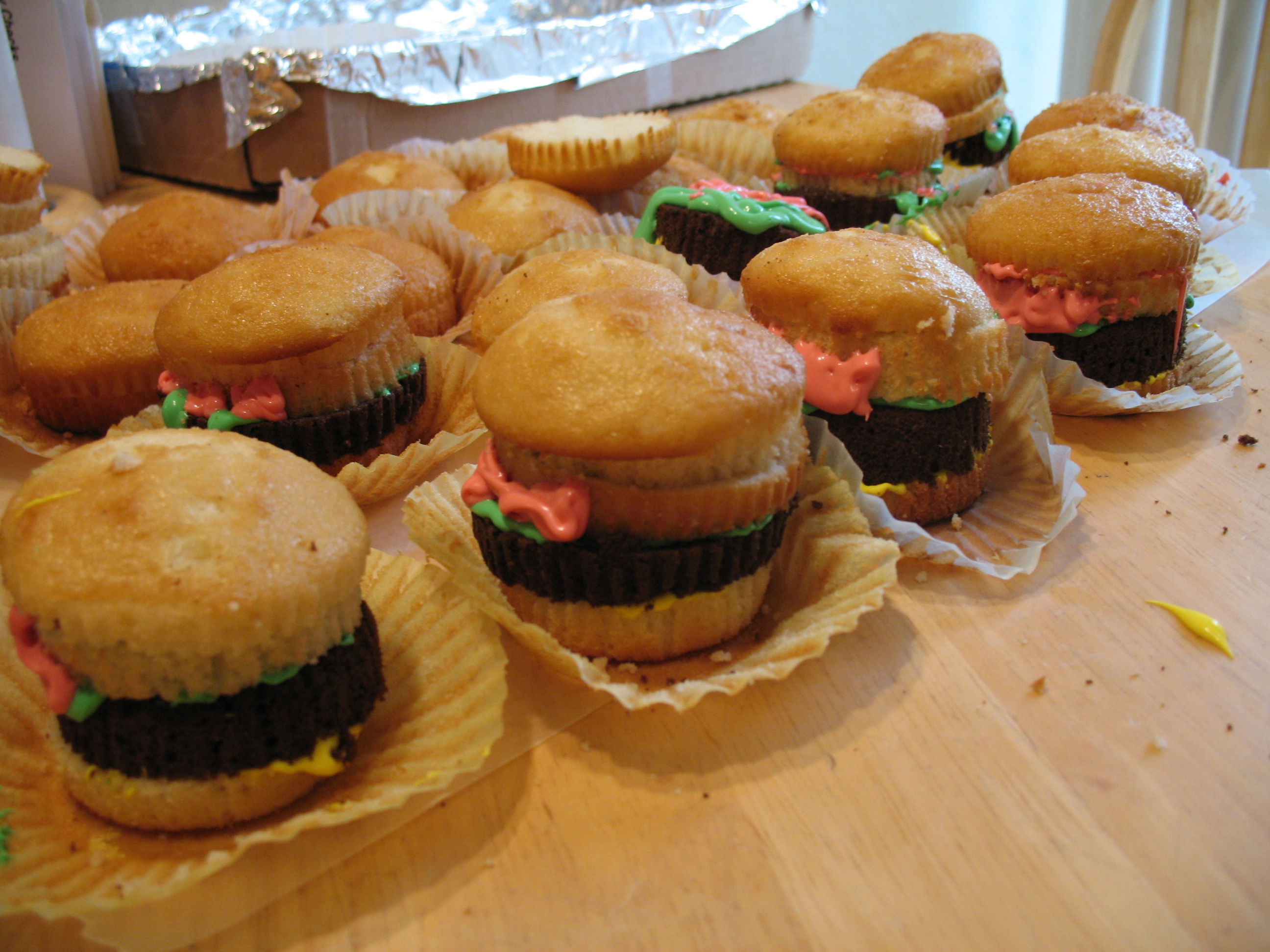
Next year, all of my kids will be in the double-digits. I miss my babies. But I love my kids and I’m so thrilled by the kind of wonderful men and women they are growing into.
Monrovia Canyon Park
We just got home from hiking at Monrovia Canyon Park. It was a very nice time despite the muggy weather. The trail was only about 3/4 mile, ending at a small waterfall. Below are a few photos.
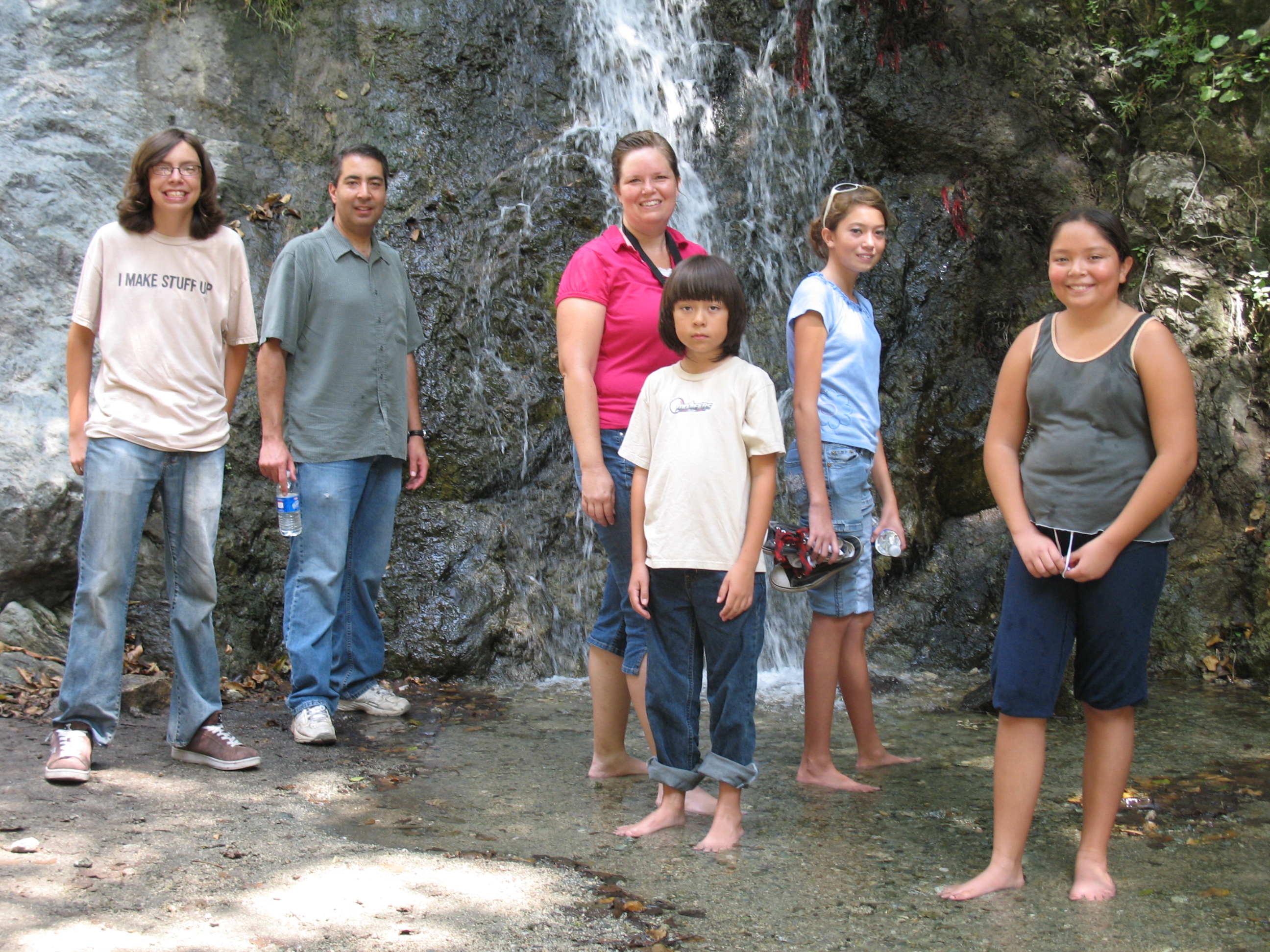
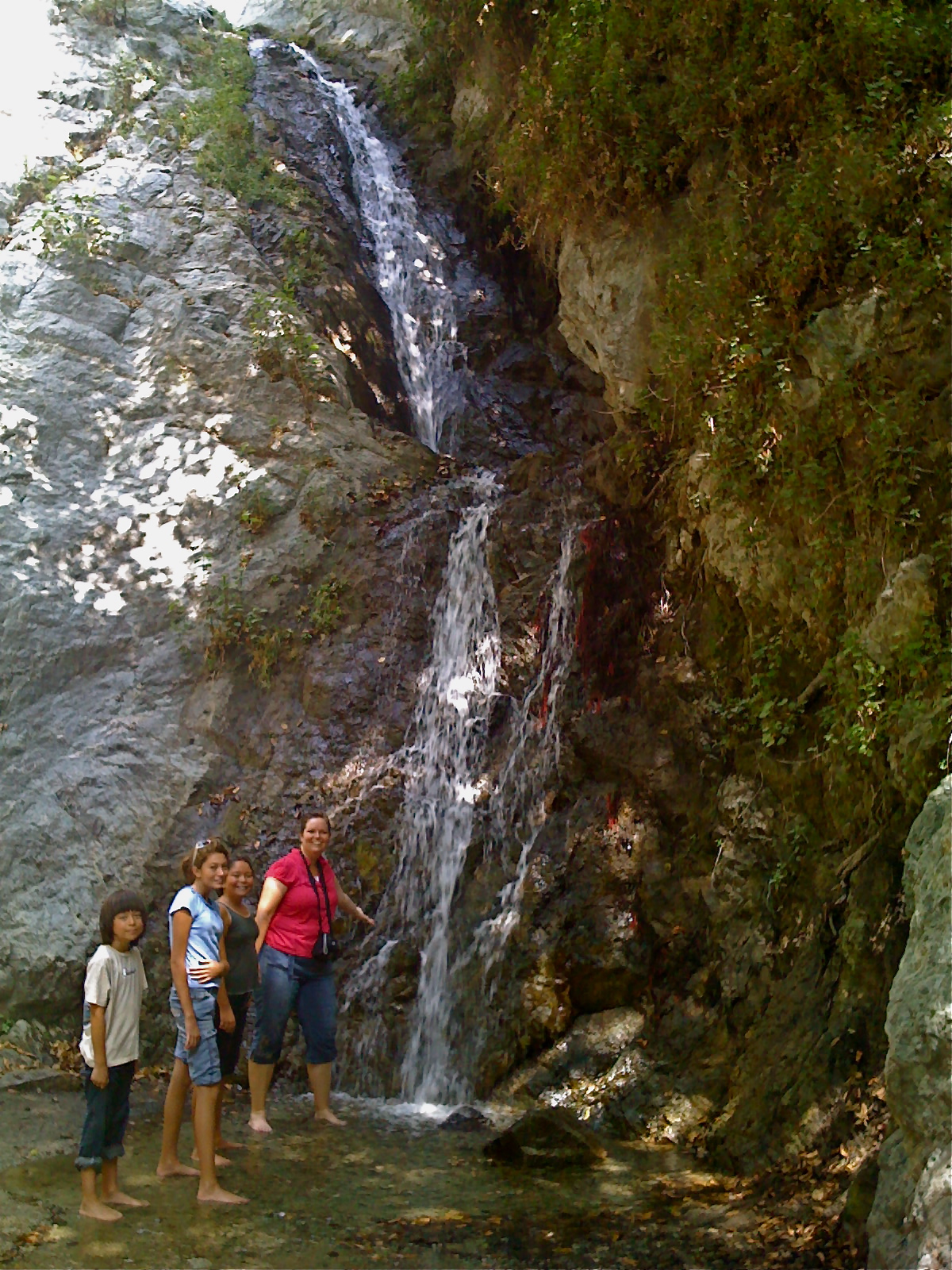
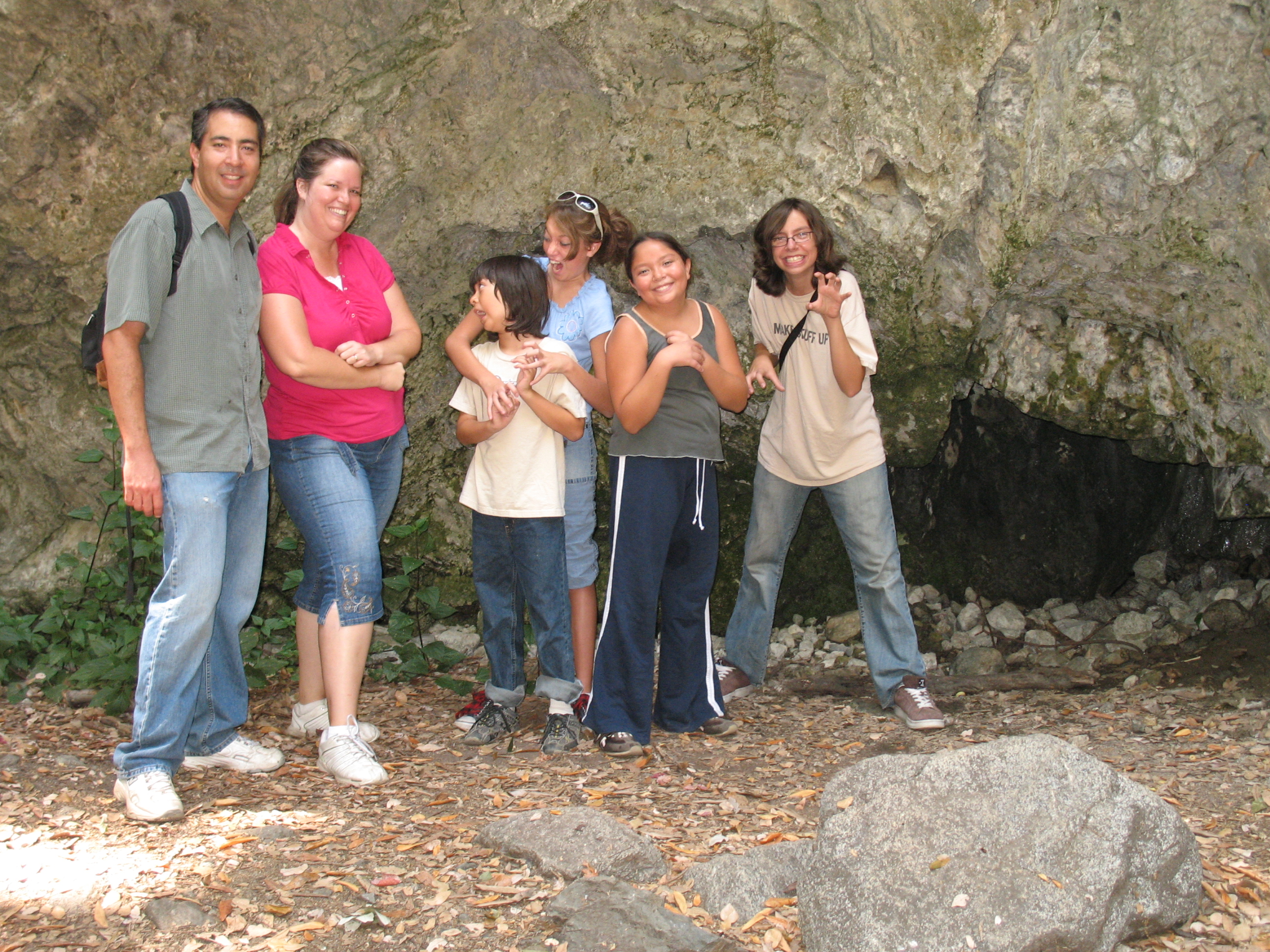
We had to be careful because there was a lot of poison oak and poison ivy on the edges of the trail.

After our hike, we had lunch at the picnic area. There were a few families doing the same. When we had finished eating, we heard Dani yell, “There’s a bear.” Sure enough, down by the flimsy fence acting as a perimeter for the picnic area was a young brown bear. The family nearest the bear got up in shock. And then Christopher, our youngest, runs at full speed towards the bear. We started yelling, “Chris, get back here!” And he yells back, “It’s okay, there’s a fence.”
What he didn’t know was that there was a hole in the fence about six feet from where the bear was. I was able to get a video clip of the bear coming through the fence. That’s when Chris panicked and started running away. So in the clip you can hear people telling him to stop running.
The bear was only interested in rummaging through the trash and eventually made its way across the parking lot and into another area of the woods.
What a fun and exciting day!
Happy Birthday, Danielle!
 Today, my youngest daughter, Danielle, turned eleven years old! She is such a wonderful young girl. She loves to design clothes and cooking. And she has an infectious giggle.
We celebrated her birthday with a Pizza & Pool Party for her and a few of her friends. And her birthday cake was a yummy Black Forest Cake topped with relighting candles. We’re so mean. 😉
We love you, Danielle! We’re so proud of you!
Happy Anniversary!
Today, Debbie and I celebrate nineteen years of marriage! She is not only my wife and mother of our children, but my best friend. There isn’t a person in this world I’d rather be with than Debbie. I miss her every morning when I leave for work and look forward each day to reuniting with her in the afternoon. Because of Debbie, I’m a better man. And I’m daily amazed at how she can bear the wounds of my insensitivity, selfishness and sin and still give herself wholly to me for the rest of her life. She is truly God’s gift to me. She incarnates beauty, compassion, wisdom, courage and so many other tremendous qualities. I love you, Deb!
The following picture was taken when we were dating about twenty years ago. (Yeah, I know I had big hair back then.)


Quote from Our Church’s Bulletin
There are a lot of little details that I thoroughly enjoy about Orthodoxy in general and our local parish, St. Peter’s, specifically.
One of the things I enjoy at St. Peter’s is our church bulletin. Each week, the bulletin is about seven pages long and contains that Sunday’s Gospel and Epistle readings, congregational responses, information about upcoming events, fasts and feasts, information about the lives of specific saints and thought-provoking and challenging articles and quotes.
Debbie read me one of the quotes from this week’s bulletin that was tucked away on the back cover:
“The reason [that we don’t all become saints] is within us. Firstly, due to our bad intent. Secondly, due to our neglect and laziness. Thirdly, due to the lack or complete absence of love for God and the things of heaven. Fourthly, due to our complete love of money, our devotion to material things, and our low-mindedness.”
Elder Philotheos of Paros
This quote struck me like something a coach would say to an aspiring athlete who, though full of potential, had grown complacent. In fact, it reminded me of something St. Paul said in 1 Corinthians 9:24-27:
“Do you not know that in a race all the runners run, but only one gets the prize? Run in such a way as to get the prize. Everyone who competes in the games goes into strict training. They do it to get a crown that will not last; but we do it to get a crown that will last forever. Therefore I do not run like a man running aimlessly; I do not fight like a man beating the air. No, I beat my body and make it my slave so that after I have preached to others, I myself will not be disqualified for the prize.”
And in 1 Timothy 4:7, he tells St. Timothy, “Train yourself to be godly.”
Yes, we are called to be saints in the Bible. But the Bible also calls to train into actually becoming saints. It’s great to be part of a church community that takes this call very, very seriously.
Changing Our Lifestyle
Our family is gradually learning that living a Christ-following life in the Orthodox Church requires a significant change in lifestyle. There are daily rhythms, weekly rhythms as well as extended spiritual seasons that we observe.
For example, our family’s daily rhythm is being restructured around times of prayer, especially morning and evening prayers. When school was in session, Debbie was leading the kids in the morning prayers and usually every night I try to lead the kids in the evening prayers. These include crossing ourselves as well as performing the metania, a bow with the right hand grazing the floor followed by crossing oneself.
Also each week our family is learning to observe fasting with the Church every Wednesday and Friday. During these days, we refrain from any meat (including eggs), any dairy products, wine and olive oil. I didn’t realize how especially tough fasting on Fridays would be. Also, Orthodox Christians observe a total fast from all food and drink and practice silence and contemplation from Saturday night to Sunday morning in preparation to receive the Holy Eucharist. (Since we’re not Orthodox Christians yet and cannot receive the Eucharist, we’re not observing this total fast.)
The entire weekly rhythm in Orthodoxy centers around the Eucharist. At that moment in the Divine Liturgy, the bread and wine actually transfigure into the Body and Blood of Jesus. It’s a moment when heaven and earth absolutely and truly intersect. I like how Frederica Mathewes-Green describes it in her book, “On the Corner of East and Now”:
“In a few hours, heaven will strike earth like lightning on this spot. The worshippers in this little building will be swept into a divine worship that proceeds eternally, grand with seraphim and incense and God enthroned, ‘high and lifted up, and his train filled the temple’ (Isaiah 6:1). The foundations of that temple shake with the voice of angels calling ‘Holy’ to each other, and we will be there, lifting fallible voices in the refrain, an outpost of eternity. If this is true, it is the most astonishing thing that will happen in our city today.”
By receiving the very Body and Blood of Jesus, the Church, Christ’s Body, communes with Christ and takes his presence into itself and then into the world. So this moment is the climax of the Orthodox Christian’s week and therefore, the weekly rhythm of individual and corporate fasting, prayers and other spiritual disciplines sweep the Church up like a wave catches a surfer to the shore.
And there are seasonal rhythms in the Orthodox Church. We were amazed at the journey through Lent and Pascha. And beginning August 1, we enter another season of fasting in anticipation of the Dormition of the Theotokos. This fast lasts two weeks and will be our family’s first extended fast together. We’ve been gradually including our kids in the various fasts so far. We think they’re ready. So beginning on Friday, we will fast together — no meat and eggs, no dairy, no olive oil and no wine.
In many ways, these rhythms are like athletic training. They tone us and strengthen us by teaching us to die to ourselves through small things like food and by teaching us to commune with God through small things like morning and evening prayers. I love this about Orthodoxy. It’s in the small things that we actually grow into Christ. Spiritual formation into Christ’s likeness or theosis is accomplished not by staggering spiritual moments, but by faithfulness and obedience to Christ in daily life. And having daily, weekly and seasonal rhythms provide the framework for this work.
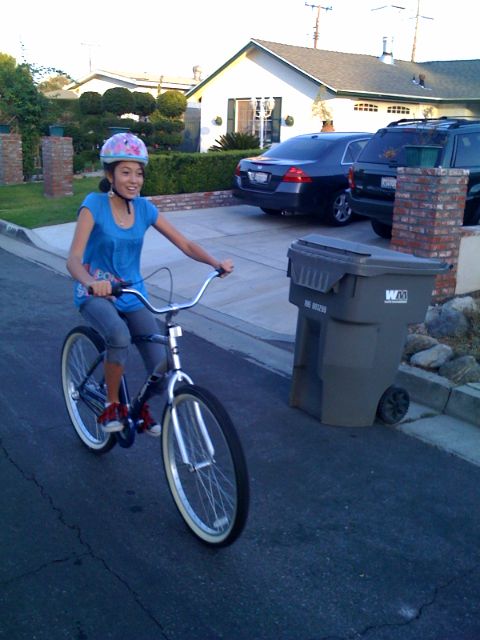
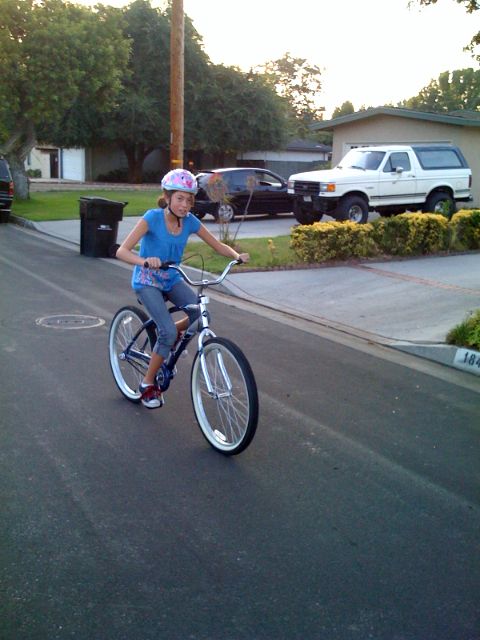
Riding Bikes
We had a nice relaxing evening with dinner and then letting the kids ride bikes and scooters at Deb’s parents’ home. I like summer.


Posting from My iPhone
WordPress released their iPhone app, allowing blog posts from iPhones. With that and Twittelator, I can post my thoughts and activities from virtually anywhere, which I’m doing right now.

Fr Stephen & “The Habit of Prayer”
Ahhh… prayer. Who doesn’t struggle at prayer? And underneath that struggle are all sorts of motivations and compulsions, most of them probably unhealthy and distorted.
Fr Stephen has a great post about prayer. But those who read this blog know that I love virtually everything Fr Stephen posts. I was going to post an excerpt from the post below, but all of it was so good and I couldn’t decide what part to post here. So… go read it HERE. Enjoy.
Happy Independence Day!
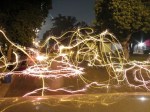
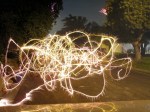
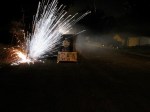
It’s about 11 pm and we just arrived home from a full day. We spent the morning relaxing. Then we drove out to my parents’ home to pick up Michael, who has spent the last few days with them. Then we drove home and went swimming at Debbie’s sister’s home. Then we cleaned up, bought food and headed over to Debbie’s parents’ home for a BBQ with them and Deb’s sister’s family. We followed up the BBQ with fireworks!
I’ve posted several photos of the pyrotechnic action below.






Mandles!
My wife found a great Youtube video. It’s a mock-commercial for Mandles — candles for men. These babies are 1% wax and 99% testosterone. Check out the video below.
Only Begotten Son
I absolutely love singing this song during Divine Liturgy. I always look forward to it and my heart soars every time we sing it. There is so much beauty, history and faith in this confession.
Aaahhh… Summer!
Debbie’s already posted a couple of times about how summer is progressing for our family. (You can read them HERE and HERE.) I am so glad that she gets a few weeks off this summer. She’s worked so hard non-stop for the last few years. I know she has missed spending leisurely time with our kids. And I know they have missed it with her as well.
I am also enjoying the slower pace. I feel that as I age, my body quickly acclimates to a more relaxing schedule than when I was younger. Yesterday was a good example. I got home from work about 4:30 pm. Debbie and the kids were swimming at their cousins’ home, so I exercised and went for a nice walk. Later, I took Debbie out for Garden Burgers at one of the family-owned restaurants in Glendora. We’ve gotten to know the owner’s wife, who is Greek Orthodox. So while waiting for our burgers, we had a nice conversation with her about fasting (we’re currently in the Apostle’s Fast) and how to help our kids learn the spiritual importance about fasting. During dinner, Debbie and I had a nice relaxing conversation. After we arrived home from dinner, I went out to water the grass in front of our apartment complex. For some reason, the sprinklers haven’t been turning on, so the grass and bushes are like crispy bacon without the cool bacon aroma. So I spent a nice time in the cool evening, watering the lawn and listening to John Grisham’s Playing for Pizza. Then later, Debbie, Michael and I watched a good cowboy movie called Crossfire Trail, which is based off of a Louis L’amour novel.
No stress. No rush. No scurrying to finish homework or scrambling to get to a meeting.
And as I thought about the slower rhythm of summer, it reminded me that we’re also experiencing a slower rhythm at Church. The Paschal season ended on Pentecost a couple of weeks ago. And as wonderful as Lent, Holy Week and Pascha were, I am enjoying the slower rhythm of the Church. It’s as if the Church is making room for all of us to take the victory and beauty of Pascha and to live it out in the world personally — in our normal rhythms of prayer, fasting, family, friends, work, and play. For me, this is what being a Christ-follower is all about — learning to grow into and embody Jesus’ fullness in real life, to become by grace what Christ is by nature. That’s salvation. That’s mission. That’s life. It really is that simple because Jesus is my salvation, my mission and my life. And being in a Church where this is just normal life for everyone is absolutely awesome!
So, I feel like I’m walking through life more thoughtful and contemplative right now. And while there are things I’d like to write about, even feel compelled to write about at times, to do so without restraint would risk engaging in a flurry that is alien to what is best for this moment and season.
Facebook & Twitter
N.T. Wright on The Colbert Report

 I just found out that N.T. Wright will be a guest on Comedy Central’s The Colbert Report tonight, June 19, 2008. I probably won’t be able to catch it, so I’d love to hear from anyone who does.
Fr Stephen & “Sacraments: The World as Mystery”
Fr Stephen has a wonderful post on a sacramental worldview. Here’s a quick excerpt:
“Without a truly “sacramental” world-view, the presence of God and of all things holy remain alien to our life and are reached only occasionally and with great difficulty (if at all)…
“There is a vast difference and distinction between a world-view which allows for such things as sacraments and a world-view which understands that all of creation is a sacrament. With the first, one can be religious from time-to-time. With the latter, communion with God is a way of life and the whole of life.
Everything is changed in such an understanding. It is in just such a context (and quoting from Scripture) that we can understand that the Church not only reads the Scriptures, but is itself the Scriptures (see my earlier series on an Orthodox hermeneutic). In the same way we not only eat the Body of Christ, we also are the Body of Christ.”
You can read the entire post HERE.
Orthodoxy, Reconciliation & the Environment
 Last night at St Peter’s, Debbie and I attended the last class in a series on the Eastern Orthodox perspective of salvation. Over the last six weeks, Fr Patrick has been answering three basic questions: 1) What is salvation?, 2) How are we saved?, and 3) Why are we saved? He concluded his series last night by examining the last question. I’m hoping to blog more about it in a future post, but let me give you a teaser — our participation in mission must flow from our salvation. In other words, we are being saved (i.e. transfigured by God’s energies into God’s likeness) in order to be co-laborers and co-creators with God. But again, that topic is for a future post.
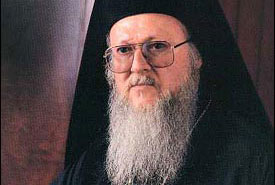
Last night, Fr Patrick handed out an address delivered by His All Holiness Ecumenical Patriarch Bartholomew, who was awarded the Oslo Sophie Prize in 2002. (A quick sidenote: Patriarch Bartholomew is the Patriarch of Constantinople, and is the “first among equals” in the Eastern Orthodox Communion.) In the address, Patriarch Bartholomew speaks to the global environmental issues with profound clarity, demonstrating that Eastern Orthodoxy provides both a proper theological framework and relevant experiential foundation to address the issues of our natural environment (and by extrapolation, other issues of reconciliation and justice within our world).
You can read Patriarch Bartholomew’s full address HERE.
A Little Color and Life to My Workspace
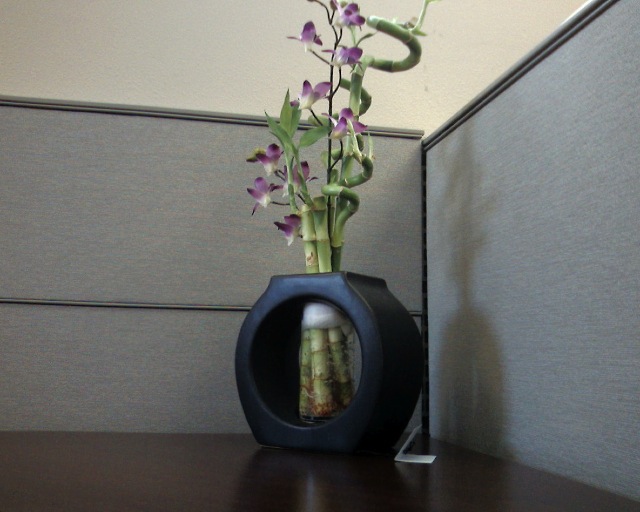

Debbie and the kids bought me a very thoughtful Father’s Day gift. About a month ago, our technology department moved into a new location. I like my area to be sparse. However, it was a bit too sparse. So Debbie and the kids bought a bamboo plant in a cool vase for me. It’s brought a nice sense of balance, color and life to my cubicle.
Full & Satisfying Weeks
The kids’ last day of school was this past Thursday. So, the last couple of weeks have been very full. On top of our “normal” weekly routine, we had a band performance, a choir performance, a birthday party, finals, end-of-year trips and parties, and an eighth grade promotion.
Yup. Cathy is moving up to high school. She’s done such a great job in Jr. High and, as you can tell from the pictures, we are all very proud of her.

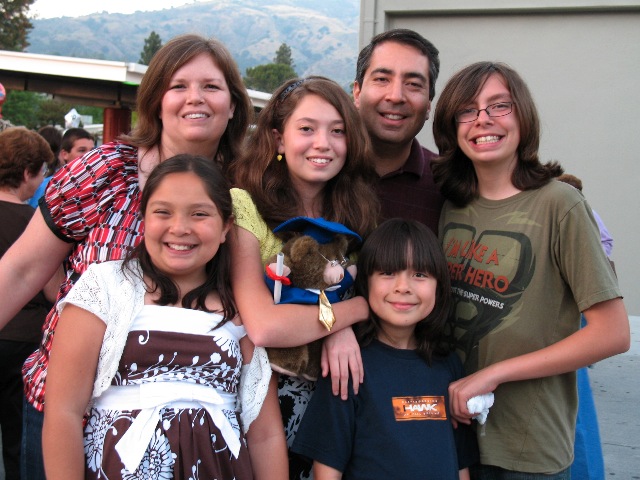
 Journeying Home