Debbie and I are going to be grandparents again! Wyatt and Danielle shared the good news with us a couple of weeks ago. We have been keeping the news under wraps until they could share the news in person with my parents.
So last night Debbie and I got together with my parents, Wyatt and Danielle, and Cathy for a dinner to celebrate both a belated Mother’s Day and Cathy’s birthday. After ordering dinner, Wyatt and Danielle shared the news with my folks, who were very happy with the news.
Wyatt and Danielle also brought a cake to celebrate Cathy’s birthday. So after dinner, Danielle connected with Chris and Samantha in Texas via FaceTime. We brought out the cake and sang “Happy Birthday” to Cathy. As Cathy cut the first slice of cake, she shouted, “It’s a boy!”
You see, unbeknownst to us, Wyatt and Danielle conspired with Cathy to have her birthday cake also be the baby’s gender reveal cake. Chris and Samantha were in on the secret as well. Needless to say, we were all excited by this wonderful surprise as well as the news that they’re having a baby boy!
“Therefore, I urge you, brothers and sisters, in view of God’s mercy, to offer your bodies as a living sacrifice, holy and pleasing to God—this is your true and proper worship. Do not conform to the pattern of this world, but be transformed by the renewing of your mind. Then you will be able to test and approve what God’s will is—his good, pleasing and perfect will.” Romans 12:1-2
Romans 12:1-2 also forms a good framework for specific spiritual training. Like we discussed in the last post on general spiritual training, we will also focus on spiritual disciplines and renewing our mind.
And like last time, these are ideas, not a prescription or shortcut to transformation. These specific suggestions should work in tandem with our general spiritual training with Jesus.
If I were training with Jesus for contentment, here are some spiritual disciplines I might discuss with him about practicing.
I would devote regular prayer specifically targeted at my discontentment. As part of my prayer, I would also do an inventory on the areas of discontentment. Remember, discontentment isn’t always about material things or about a single item. It could be discontentment about my education, my intelligence, my reputation, my marital status, my friendships, my job, my creativity, my physique, etc. I would pray about when this discontentment may have started and see if God reveals a conversation, relationship, or situation that may have triggered it. I would record everything and prayerfully revisit this inventory on a regular basis.
I might have an extended time of solitude so I can discuss with Jesus why my discontentment seems so out of control in certain situations and what triggers it. Maybe it’s time I need to finally confess my fear that God cannot or will not provide for me in times of great need. Perhaps I’m afraid that I will slip through God’s fingers, or he doesn’t notice me and my plight, or he just doesn’t care. Perhaps I’m not willing to trust him to provide what I need and believe I must take matters into my own hands to acquire what I want to feel alive or worthy. Perhaps this is an issue of how I want to look in front of people or what makes me feel secure or desirable. Or perhaps I just can’t stand the thought of someone else, in this case God, determining for me what is good and what I actually need. These issues take some time to emerge from all the spiraling thoughts and feelings in our minds.
I would continue to practice an unhurried life as discussed in the last post. Many of our issues, like discontentment, are forged through hurriedness and the accompanying stress and anxiety. We then do things to mask our discomfort, creating habits that reinforce our discontentment. So I would keep asking Jesus how to live an unhurried life. I might try practices like always driving in the slow lane, taking slow walks, or choosing the longest line at the store.
I would eliminate those things that feed my discontentment. For example, I would unsubscribe from email and magazine subscriptions that fuel my discontentment. Likewise, I would limit my exposure to social media, which is designed to foster discontentment through thoughts and images. I would stop watching YouTube videos or shows that make me think I need something else to be content. I would also replace what I eliminate with new content that fosters contentment, peace, joy, and generosity.
I would try fasting a meal or two a week. The goal of fasting is to feast on God and his kingdom. So, when I fast, each time I feel a hunger pang, I would thank God for his provisions and pray for someone in my life.
I would ask Jesus how I could serve and give to others. And when I was able to serve or give, I would thank God and rejoice for the opportunity. On a similar note, I would decide beforehand that if I am asked to serve or give to someone, I would agree to do it without thinking about it or calculating the cost. I would decide beforehand to immediately serve and give generously and joyfully. As Paul says in 2Corinthians 9:7, “God loves a cheerful giver.” In Acts 20:35, Paul quotes Jesus, saying, “It is more blessed to give than to receive.” I would intend to trust Jesus that this is actually real and true and practice it as such.
Confession is also a good spiritual practice, if done in appropriate relational contexts. I am a part of men’s group that has intentionally fostered an environment that welcomes vulnerable sharing of our struggles. So I would confess situations of discontentment that I found particularly troublesome or sinful.
I might incorporate regular times of worship and thanksgiving. These don’t have to be lengthy times. Perhaps I would listen to a favorite worship song or hymn on YouTube or Spotify. Or maybe it’s training myself to thank God the moment I wake up every morning, before I even put my feet on the ground. Or perhaps training myself not to leave the house until I’m happy. Or I might go and spend time doing something that brings me joy, since contentment is rooted in joy.
I might spend time during the day reflectively praying Psalm 23 or the Lord’s Prayer in my own words. This could be done while driving, pausing during your breaks at work, or a few minutes before bed.
So those are some spiritual practices that I might talk with Jesus about incorporating into the routine of my life that would target discontentment. That’s how I would offer my body as a living sacrifice to God.
Next are some ways I might try to renew my mind under Jesus’ guidance.
I might make a list of all the benefits of following Jesus into the natural always-present contentment that Paul describes in Philippians 4:11-13. This list may include:
I’m completely safe in him
I lack nothing in him
Who I am becoming eternally in Jesus far outweighs anything I desire
I experience greater love, joy, and peace
I naturally give and can be a source of blessing to others
I am completely free of wanting anything
I experience a peaceful satisfaction regardless of the situation
Fear and anxiety are gone
I am free from manipulating people and outcomes to get what I want
Dallas Willard says it’s sometimes valuable to consider the “cost of non-discipleship.” I might create a list of the consequences of ongoing discontentment that might include:
I’m not sure I’m safe in him if I’m pursing my own wants and desires
I feel like I lack what I need or want
My eternal identity is being formed by what I desire
I’m hesitant to give and bless others
Situations trigger a burning desire to get what I want
I’m worried and obsessed about not having what I want
I’m can’t get free of the fear and anxiety
I’m preoccupied with how to control people and situations to get what I want
The point of these lists is to fill our minds with the vision of how our lives can eternally flourish under Jesus’ leadership. Here’s a quote from Dallas Willard about a vision of freedom we can obtain through Jesus in God’s kingdom:
“Can we envision being freed to the point where not a single thing on earth, above the earth, or below the earth could cause dread to creep into our hearts?”
The Divine Conspiracy Continued
I might also target the renewing of my mind with Scripture. I would read, reflect upon, and even memorize some Scriptures that remind me of God’s faithful and abundant provision, especially that focus on contentment. I would place these Scriptures in places where I could naturally read and reflect upon them such as taped to the bathroom mirror or an open tab on my web browser. Such Scriptures might include Psalm 23, Matthew 6:33, 1Timothy 6:6-11; Philippians 4:11-13; and Hebrews 13:5
I might also spend regular time meditating on my well-being in God. I would reflect on how the one who easily created this universe and has full knowledge and control over every aspect of this universe has promised that we are completely safe in him regardless of any trial, struggle, or loss. I would think about how this world is a perfectly safe place to be, how God’s love and goodness will always prevail, and how every tragedy, suffering and loss is redeemable by God.
I might also reflect on what living and reigning with Jesus in God’s universe will be like in 1,000 years or 10,000 years or 10,000,000 years. That’s what awaits Jesus’ apprentices! This puts my tiny wants and desires into perspective.
I know all of this sounds like a lot of effort. Again, all of these are ideas. It’s Jesus who needs to lead each of you into his lifestyle and practices for your specific life. He will show you how to gently offer your body through spiritual disciplines and how to renew your mind. It’s not about how many of these spiritual disciplines you do or how rigorously you practice them. It’s God who transforms you, not the spiritual disciplines. But the spiritual disciplines Jesus guides you to practice are essential. The point is to follow Jesus and let him guide you into the proper practices so you can interact with God’s kingdom. While God does the lion’s share of the work, your cooperative effort is necessary in following Jesus into spiritual formation. And the rewards of a transformed life are indescribably thrilling and fulfilling! Because you are becoming the kind of person God always intended you to be!
When I started the discussion about Paul’s secret in Philippians 4:12-13 a few posts ago, the context of that passage was how he had learned contentment. Since I believe many modern western people struggle with being content, I would like to circle back and discuss how we can apply Paul’s secret and train with Jesus in this area.
As we begin our discussion about spiritual training with Jesus, I need to make several points. First, what I’m about to outline is neither a prescription nor a one-size-fits-all detailed plan. Spiritual practices provide the space for us to interact and cooperate with God. Only God brings transformation. Spiritual disciplines help make space in our thoughts, feelings, body and will for him to work.
This leads to the second point. Spiritual disciplines do not directly cause transformation. Heroic efforts in spiritual practices will not result in quicker transformation. Nor is the goal to master the spiritual disciplines.
Third, anyone who has read or listened to Dallas Willard will realize that I lean heavily on his insights. I believe that he offers the most thoughtful insights and recommendations into spiritual formation in the modern church. So a lot of what follows is deeply influenced by him.
Fourth, when we talk about spiritual training, it is interactive training in cooperation with Jesus. He is alive and with us right now. He is the master of life and offers to teach us his life in the kingdom to experience the transformation from God we seek. Therefore, communication and guidance from Jesus in these areas are essential. Spiritual formation is not a DIY project. We are novices who can only learn from the master.
Fifth, this post will be broken into two separate posts. I will use this post to discuss general spiritual training and the next post to discuss specific spiritual training for contentment.
The apprentice of Jesus should be engaged in the lifeline process of spiritual training. This is what I mean by general spiritual training. We are following Jesus in the overall transformation of our lives into the likeness and quality of his life. This provides the general backdrop for specific spiritual training that we can use for particular areas of our lives, such as discontentment, anger, lust, or unforgiveness.
To discuss general spiritual training, I want to use another one of Paul’s popular passages:
“Therefore, I urge you, brothers and sisters, in view of God’s mercy, to offer your bodies as a living sacrifice, holy and pleasing to God — this is your true and proper worship. Do not conform to the pattern of this world, but be transformed by the renewing of your mind. Then you will be able to test and approve what God’s will is—his good, pleasing and perfect will.” Romans 12:1-2
The first thing Paul mentions is offering our bodies as a living sacrifice to God. This is done through spiritual disciplines. Every spiritual discipline incorporates the body. They allow us to create space for God through bodily activity, thus following Jesus into his practices. Jesus practiced spiritual disciplines such as solitude, silence, prayer, fasting, giving, Scripture study, fellowship, celebration, and sabbath.
As I start training with Jesus, I would spend time discussing with him how to gently incorporate some spiritual disciplines into the routine of my life. Some spiritual disciplines could be daily routines, some weekly, monthly or quarterly. Again, it’s not about working harder or performing heroic effort. It’s about gently making space for God under Jesus’ guidance. And the more these become part of your routine throughout the day, the better. We want to have relational space with God throughout the day so we become accustomed to moment-by-moment interaction with him.
If Jesus is directing me to fast, perhaps I try fasting a meal a week. If he’s leading me to pray, maybe it’s three five-minute moments worked into the natural transitions of my day. If he’s directing me to solitude, I might try a 30-minute slow and unhurried walk at a local park once a week. And whatever he’s leading me to do, I continue to dialogue with him and adjust as needed.
Through the spiritual disciplines, Jesus is going to teach us his lifestyle. And his lifestyle was unhurried, relaxed, and confident in God. I truly believe that an unhurried life is crucial for deep spiritual formation. Many of our sins, addictions, and dysfunctions are the result of habits forged by our constant hurry, stress, and anxiety. Until that changes, much of the transformation that God wants to impart to us will not experience significant traction until we learn to adopt Jesus’ unhurried lifestyle.
The goal is not to add spiritual disciplines on top of an already busy life. Instead, through gentle adoption of spiritual practices, Jesus is going to teach us how to become less hurried. And this may result in dropping some things if our schedule is past capacity.
In Romans 12:1-2, Paul then says, “Do not conform to the pattern of this world, but be transformed by the renewing of your mind.” The default formation of our minds is to conform to the ideas and values of our culture at large. Imagine our culture is like a river. By default we are carried along, drifting wherever the current of ideas and values takes us.
The root of renewal and transformation is our mind. Both thoughts and feelings reside in the mind. Every thought has feelings associated with them. And every feeling is directed by a thought. We deal with feelings through our thoughts. Our thoughts are the primary area we have access to change.
As I train with Jesus, I would talk with him about my mind — what I think and feel — especially concerning the following four general areas. Again, these will form the mental backdrop to then dealing with specific thoughts and feelings around contentment.
God and his nature — how God is endlessly abundant in all love, joy, peace, power, knowledge and how his goodness for all his creation will prevail.
The world he has created — how God’s character and purposes are reflected within his good world so that it is a perfectly safe place for us to be.
The availability God’s kingdom — how God’s kingdom is a present, immediate, and powerful reality available to us through Jesus.
How my life would flourish — how my life would look by abandoning my agenda and following Jesus into his lifestyle, practices and purposes.
The goal is to interact with God in these four areas in order to retrain how we think, and thus how we feel. We’re training our minds to keep turning back to these four areas by default — when we’re at a stoplight, taking a walk, standing in line at the store, waiting in a doctor’s office, etc. Our minds learn to naturally rest on these four areas. Or to use a biblical term, we abide in them and in the immense goodness and love induced by contemplating on them.
The outcome is then stated in Romans 12:1-2, “Then you will be able to test and approve what God’s will is—his good, pleasing and perfect will.” Being trained in Jesus’ lifestyle, practices and thoughts, we become like him in character, power, and faith and are able to live like him.
Let this quote from Dallas Willard inspire you:
“To live and lead like Jesus, we need to think like Jesus. He knew who he was speaking of. He knew to whom he was introducing others. He knew Elohim’s capabilities, purposes and priorities. Jesus knew and acted on the fact that Yahweh is limitless, boundless, and unrestrained in power, grace, mercy, peace, joy, hope and love. All things are possible. All things. Jesus knew his Father’s name, and he knew when to invoke it to do his will, creatively, adventurously, and joyfully, for himself, for the well-being of others, and ultimately for the entire world.”
Imagine that quote speaking about you. Because that is what Jesus has offered to teach us, “Take my yoke upon you and learn from me.”
The renewal of our minds should work hand-in-hand with the spiritual disciplines we are gently incorporating into our life routines. The interactive space we’re creating through these bodily practices allows us to adopt Jesus’ unhurried and relaxed lifestyle and to interact with God to become saturated with his boundless goodness and love.
This is the trajectory of our general spiritual training as we follow Jesus. Next time, let’s discuss specific spiritual training into contentment.
When I read Paul’s words in Philippians 4:12-13 and other passages where he describes the flourishing life and character of Jesus’ apprentices, I wonder how long it took him to grow into such a life.
Then I think about the short span of time from Jesus calling his disciples to releasing them into the greater world with his world-transforming assignment. In approximately three years, Jesus was able to teach, demonstrate, and impart the interactive life in God’s kingdom to the extent that his original disciples were able to embody it, grow in it, and replicate it in others. In just three years, they had assimilated Jesus’ lifestyle and practices enough to allow them to embody and implement his mission.
Granted, they weren’t perfect. Not even close. Mistakes were made. A lot of mistakes, both while Jesus was physically present with them and after he commissioned them and ascended to his Father.
Yet, the new life Jesus imparted to them, by reshaping their thinking, feelings, bodily habits, daily practices, and relational posture so they could regularly engage with God’s activity, provided enough forward momentum to carry them into a wild and unknown future. And this wild and unknown future had been radically redefined and reshaped through the crucifixion and resurrection. Evil’s back had been irrevocably broken and God’s New Creation had launched in the midst of the old creation. So in three years, Jesus gave his first apprentices what they needed to successfully experience ongoing transformation and to replicate it in others in this new world.
Along with the life he imparted and the world-altering events of the crucifixion and resurrection, Jesus also promised his apprentices two other significant components that would carry them onward into lifelong transformation. The first was the empowering of the Holy Spirit. The Spirit brings an energy that allows us to “keep in step with the Spirit.” This collaborative life with God’s Spirit is outwardly demonstrated in two ways — through the gifts of the Spirit and the fruit of the Spirit. The gifts of the Spirit enable us to perform specific functions with effects beyond our own abilities. And the fruit of the Spirit is the very character of the Trinity, formed into the apprentice’s life through ongoing character formation.
The other component that Jesus promised was trials. “In this world you will have trouble. But take heart! I have overcome the world.” Daily life in the real world, especially trials and suffering, form the natural environment for transformation for both Jesus’ individual apprentices and the community of apprentices as a whole. The Book of Acts is full of these trials — persecution, deception, divisiveness, accusations, confusion, frustrations, difficult decisions, and controversies. These were a constant experience for the early community of Jesus’ friends. And counter-intuitively, each trial seemed to provide more momentum rather than stalling the ongoing formation of Jesus’ apprentices and their impact upon the world around them.
The ongoing interactive life in God’s kingdom is lived in the midst of our real lives in the real world. We retrain our thoughts, feelings, body, will, soul and relationships through embracing Jesus’ unhurried lifestyle and practices. We do this under the guidance and power of the Holy Spirit. And it’s experienced in the heat and stress of normal daily trials. And all of it is done imperfectly, but faithfully, as Jesus’ apprentices and collaborators. And while it takes a lifetime and beyond, the transformation can start immediately and the benefits experienced in a fairly short time.
“In every possible situation I’ve learned the hidden secret of being full and hungry, of having plenty and going without, and it’s this: I have strength for everything in the one who gives me power.” Philippians 4:12-13
In my last post, I mentioned how Paul’s secret to learning contentment was relying on Jesus to strengthen him.
For many years, I clung to the promise of Philippians 4:13, “I can do all things through Christ who strengthens me.” Actually, I clung to my version of the promise.
There’s a scene in the original Avengers movie where Iron Man is battling Thor. During the battle, Thor strikes Iron Man with a bolt of lightning. The suit’s AI then informs Tony Stark that the suit was now charged to 400% capacity, allowing him to attack with far greater power than the suit’s design.
That’s how I viewed Philippians 4:13’s promise. “Lord, zap me so I can do something beyond my means, something I’m not designed or prepared to actually do.”
Lord, give me strength to forgive that person who has hurt me.
Lord, empower me to stop over-eating.
Lord, help me to be content with what I have.
Lord, restrain me from saying the wrong thing.
Lord, stop me from being impatient when I drive.
I think you get my drift. My prayer was that God would overload me with his power and grace so I could supernaturally operate at 400% capacity and instantaneously do things in the moment I naturally was not prepared to do.
Don’t get me wrong. Sometimes God wonderfully answers those prayers and infuses us with such grace that we’re stunned at what we’re able to accomplish in the moment. Those situations are amazing!
But that is not the moment-by-moment life in God’s kingdom that Jesus invites us to enter or that Paul is describing in Philippians 4:13. Just a sampling from Paul’s letters makes this clear:
“Train yourself to be godly.” 1Timothy 4:7
“I discipline my body and bring it under complete control.” 1Corinthians 9:27
“Do not conform to the pattern of this world, but be transformed by the renewing of your mind. Then you will be able to test and approve what God’s will is.” Romans 12:2
“Fix your thoughts on what is true, and honorable, and right, and pure, and lovely, and admirable. Think about things that are excellent and worthy of praise.” Philippians 4:8
“Always be joyful. Never stop praying. Be thankful in all circumstances, for this is God’s will for you who belong to Christ Jesus.” 1Thessalonians 5:16-18
“Whatever you have learned or received or heard from me, or seen in me — put it into practice. And the God of peace will be with you.” Philippians 4:9
Paul’s experience of kingdom life as Jesus’ apprentice was one of moment-by-moment interaction and cooperation with Jesus, learning from him how to actually be like him, from the inside-out. By doing so, we are strengthened by Christ to become like him and thus have the ability to “do all things in Christ”.
Then the things that used to be beyond our means and for which we prayed God to zap us in the moment so we could supernaturally do, have over time become within our means to naturally do. Through daily interaction and practice with Jesus, we have trained with him and have been strengthened by him to now be like him and to think and act like him in all circumstances.
Or to put it another way, Paul learned to embrace Jesus’ lifestyle to learn how to grow into Jesus’ life — to grow into Jesus’ knowledge, faith, character, power and action — within Paul’s own life. In this way, Paul could say:
“I am, however, alive — but it isn’t me any longer, it’s the Messiah who lives in me. And the life I do still live in the flesh, I live within the faithfulness of the son of God, who loved me and gave himself for me.” Galatians 2:20
“I can do all things through Christ who strengthens me.” Philippians 4:13
So declares St Paul in a statement resonating with such hope and encouragement that over 2000 years later, Christians still encourage each other with it. And while this declaration is applied to virtually every obstacle we encounter, goal we set, and dream we undertake, its context for Paul was very specific. Here are the two verses preceding it:
“For I have learned in whatever state I am, to be content: I know how to be abased, and I know how to abound. Everywhere and in all things I have learned both to be full and to be hungry, both to abound and to suffer need.” Philippians 4:11-12
Paul has learned how to be content in any circumstance through Christ who strengthens him. Contentment. It’s neither valued nor practiced in our consumeristic society of limitless choices, instant gratification, and insatiable consumption. The moment I experience any kind of impulse or craving, I can hop on any number of apps and services to get what I want when I want it. The only thing that limits me is my credit limit. Hungry? Get food delivered now. Bored? Get entertained now. Want the newest gadget or fashion? Order it now with expedited delivery.
My heart shrieks with Bob Wiley’s plea from the movie What About Bob?, “Gimme! Gimme! Gimme! I need! I need! I need! I need! Gimme! Gimme! Please!”
Technology has caused the interval between impulse and fulfillment to shrink so much, we rarely have time to think. Years ago, we dealt with impulse shopping when we stood in line at the grocery store. Stood in line. For several minutes. That at least gave us enough time to have the internal conversation that might dissuade us from buying the magazine or candy bar. Now we deal with impulse consumerism with multiple apps on our phone. Watch a YouTube video or commercial featuring some new item and it’s ordered in less than a minute. Read an online review, tap the embedded link, and in moments you’re eagerly awaiting delivery.
And while there used to be some time for an internal conversation with reason, it is still a far cry from the contentment of which Paul speaks. Through constant interaction with God’s grace and strength, Paul has learned not to even have the impulse. Instead, he experiences what Dallas Willard calls a pervasive, overall sense of well-being. At the core of Paul’s being is peaceful satisfaction in all circumstances. When he has little, he doesn’t long for more. When he has much, he doesn’t strategize how to keep it or amass more. And he doesn’t have to work himself into a state of contentment. It’s not something he has to muster up. Rather it is easy and natural, like breathing.
I like how NT Wright translates this passage:
“In every possible situation I’ve learned the hidden secret of being full and hungry, of having plenty and going without, and it’s this: I have strength for everything in the one who gives me power.”
Paul has learned from Jesus the “hidden secret” to contentment. Paul knows he has strength for everything in Jesus who gives him power. Paul has learned how to lean into the reality of Jesus’ good news, “Repent, for the kingdom of heaven is at hand.” God’s kingdom has arrived in Jesus, who has mastered living in it. By trusting Jesus through life-long apprenticeship to him, Paul has embraced Jesus’ lifestyle and practices and thus experiences Jesus’ life — his faith, character, and power. He has learned from Jesus how to be like Jesus in his own life. And a core aspect of that life is deep, peaceful contentment.
And while the specific context that Paul expresses his contentment is in financial provision, contentment touches on many more aspects of human life. As Jesus’ apprentices, we learn contentment with possessions, dreams, relationships, reputation, accomplishments, career, the past, the future and other facets of life. We learn that because of who God is, his world is a perfectly safe place to be and his love and goodness will prevail through any and all disappointment, tragedy, loss, pain, sorrow and even death. We are safe in and with him.
And this sense of well-being permeates us, so that over time it extinguishes our distorted desires and impulses so we are peacefully satisfied in God at all times.
That’s what Paul was learning to experience as he interacted with Jesus’ strength through the moments of his daily life. It was his hidden secret that he shared with everyone.
“Look at the remarkable love the father has given us—that we should be called God’s children! That indeed is what we are. That’s why the world doesn’t know us, because it didn’t know him. Beloved ones, we are now, already, God’s children; it hasn’t yet been revealed what we are going to be. We know that when he is revealed we shall be like him, because we shall see him as he is. All who have this hope in him make themselves pure, just as he is pure.” 1John 3:1-3
This was the passage I was reading this morning. God’s love is so tremendous that he has embraced and adopted us as his children! This is amazing, startling, almost scandalous, and worthy of all the adoration and worship our eternal lives can generate.
Earlier this week, I was watching a video about the Euclid telescope. This is a space telescope with a 600-megapixel camera that was developed by the European Space Agency. As part of a six-year mission, it has taken images of three small regions of our sky. The image at the top of this post is of one of the areas. And each of those points of light in that image is a galaxy! With only one scan of each region, the Euclid telescope has already spotted 26 million galaxies, of which the farthest is 10.5 billion light years away! The vastness of this universe is mind-boggling!
God easily and joyfully created this immense universe. He now fills and plays within it so that every component and event is within his direct knowledge and control. This God loves us with an even greater immensity, making us his children who will ceaselessly enjoy him and his creation! There aren’t words to express how astounding this is!
But now look at verse 2. We are currently God’s children. But it hasn’t yet been revealed what we are going to be. Wait! What? There’s more? As incredible as it is that God makes us his children, something far grander and more magnificent is awaiting us. All we know is that when Jesus is revealed, we shall be like him. Why? Because we shall see him as he is. We will gaze face to face upon his loving and glorious presence and know him in the deepest, unbridled, unhindered way. And it will transform us into his likeness. We shall be like him!
In light of this inconceivable hope and future, St John states, “All who have this hope in him make themselves pure, just as he is pure.” In other words, since our hope is that we shall be like him in the future, God’s children start learning in the present how to be like him. It all circles back to Jesus’ Gospel, his good news. Jesus invites us to become his apprentices, learning from him how to be like him as if he were living our lives in our place. In this context, we make ourselves pure by learning from him how he is pure.
Here’s the hint that unlocked my understanding of apprenticeship to Jesus. We can have Jesus’ life – his faith, knowledge, character, and power – only by embracing Jesus’ lifestyle. In a nutshell, that’s what it means to be his apprentice. We learn to 1) know God, his world, and his activity in his world, 2) adopt Jesus’ confident, unhurried and unworried posture toward life, and 3) implement the various practices that shaped his life in God, all under the power and guidance of the Holy Spirit and within a community of other apprentices learning and practicing together.
I know, that was a mouthful. But this is the Gospel! And it’s completely doable! Jesus’ true apprentices have been doing it successfully for two thousand years and it’s still possible in our world and lives. It’s our hope in the present and prepares us for our hope of the future.
Dallas Willard was fond of saying, “We are ceaseless spiritual beings with an eternal destiny in God’s great universe.” That’s just another way of saying what St John is saying. When I stop and think about our future as God’s eternal children fully formed into the Jesus’ likeness and ready to reign with him in God’s universe, I think about another Dallas Willard quote, “The aim of God in history is the creation of an all-inclusive community of loving persons, with Himself included in that community as its prime sustainer and most glorious inhabitant.”
As I imagine the future, I picture myself and my loved ones who have followed Jesus together as part of this vast community of love with Jesus at the center. We’re gazing upon the billions of galaxies in God’s universe spread out before us, filled with joyful thrill and anticipation. An expectant silence falls upon all of us. Then Jesus says, “Let’s go!” And the real adventure begins!
Sometimes the process of spiritual formation can be discouraging. One can spend years intentionally following Jesus through spiritual exercises, suffering, and moment-by-moment attention to seeking his kingdom. And yet, despite our best intentions, our selfishness, desires, and rebellion cause us to fail. It is easy to ask why in the world am I even doing this when it seems nothing is changing?
I was encouraged through a podcast with John Mark Comer called Practicing the Way. (Thanks, Mark, for sharing this podcast with me.) In episode 2, he said that in his own journey of spiritual transformation into Christ’ likeness, he’s a 1000 miles away from where he wants to be but he’s also a 1000 miles away from where he used to be. That exactly captures how I feel after intentionally apprenticing myself to Jesus for 25 years. Spiritual formation is a “slow-drip” process that takes decades.
Failure is part of apprenticeship to Jesus. And we will fail again and again. And our failures will hurt the people we love. Thank God for his forgiveness and the forgiveness of those around us.
I am also reminded that no one drifts or defaults into Christ’s likeness. That is why Jesus came. Left on our own, we will drift toward further corruption and destruction. Jesus’ gospel, his good news, is to invite us to enter an interactive life in God‘s ongoing activity through apprenticeship to him. So giving up isn’t an option. As Dallas Willard used to discuss, while the cost of discipleship is high, the cost of non-discipleship is far greater.
So we get up and keep walking the long obedience in the same direction with Jesus. I’m encouraged by what God has done in my life over the past 25 years. And I remain hopeful that he will complete this work so I may love and serve him for the billions upon billions of years that remain before me in his incredible and grand universe.
This past Sunday, our priest made an interesting observation. The Gospel reading was from Luke 5, the familiar story of Jesus telling Peter to let down his nets into deep water. Peter and his companions had fished all night in vain. It was now mid-morning or later, definitely not the time to fish. And the nets had been washed and stowed away. Most, if not all, know how this story plays out. Peter complies and he and his partners catch so much fish, the volume threatens to break the nets and sink the boats. Peter’s reaction to this incredible event was to proclaim to Jesus, “Go away from me, Lord, I’m a sinful man!” Peter knew he was in the presence of someone great and his reaction was to tell Jesus to leave.
Now contrast this with a similar fishing episode three years later. Jesus has been crucified. Everything Peter had hoped for in Jesus was gone. And to make matters worse, Peter is simmering in the shame of having denied Jesus three times during Jesus’ “trials”. So he and his friends have gone back to fishing. But similar to what happened three years earlier, they fished the night in vain. Then a figure on the shore tells them to lower their nets. Complying, they catch a large number of fish.
Here’s our priest’s observation. When Peter realizes it’s Jesus on the shore, his response is completely different than the first fishing episode. Peter dives into the water and swims to Jesus. Three years ago, he wanted Jesus to leave. Now, in the midst of his pain and shame, he rushes to Jesus. This observation made me think about what had happened to Peter in those three years.
Peter is often portrayed by modern preachers as a constantly brash and impetuous man who gets himself into trouble. He rushes into situations and conversations with both feet first. Oftentimes, one of those feet ends up finding its way into his mouth. And because of this approach to situations, he’s constantly corrected by Jesus. While this portrayal is accurate, I truly believe something is taking place deep within Peter through all of these missteps we see in the Gospels. And it’s something so life-altering that within three years, he changes from a sinful man who begs Jesus to leave him into a man that can’t get close enough to Jesus, even while haunted by his darkest moment of failure.
Below the surface of a brash and impulsive personality, formation has been occurring. All those moments of impetuous speech and behavior, followed by Jesus’ caring correction, has made Peter trust Jesus. He knows Jesus is safe, even during the worst mistakes and harshest correction. I mean imagine being called “Satan” by Jesus.
But through his impulsive mistakes and Jesus’ corrections, Peter is growing, changing, and transforming. He is a constant “work in progress” throughout the Gospels. Peter’s growing interactive experience with Jesus has convinced him that Jesus is the master of life.
So when many other disciples ultimately abandon Jesus, Peter will remain close and keep learning. He tells Jesus, “Master, to whom would we go? You have the words of real life, eternal life” (John 6:68). Peter had grown. When others walked away from Jesus, he proved that he could and would stay with Jesus.
Maybe it was this event — remaining with Jesus when the teaching and circumstances caused others to leave — that filled Peter with confidence to declare prior to Jesus’ arrest, “Even if all fall away on account of you, I never will! Even if I have to die with you, I will never disown you.”
But now, Peter’s confidence overreached his current state of formation. Jesus knew that even though Peter had been growing, he still did not have what was necessary to fulfill his confident declaration of loyalty and faithfulness. So he tells Peter, “Simon, Simon, Satan has asked to sift all of you as wheat.But I have prayed for you, Simon, that your faith may not fail. And when you have turned back, strengthen your brothers.”
Perhaps all of this was going through Peter’s mind during that second fishing episode. He failed terribly. When Jesus needed him the most, he’d proven himself to be a coward, disloyal, and unfaithful. Why? When others left before, Peter had stayed. So why did he cower and deny Jesus this time?
But somehow, Jesus, knew Peter would fail. As always, Jesus seemed to know Peter better than Peter did. In fact, during Peter’s overconfident bragging during that final meal, Jesus predicted his failure. Those words, like most of Jesus’ correction over the past three years, stung and hurt. But while they stung, Jesus also told him that he had prayed for him. And that Peter would turn back. Jesus knew Peter. Jesus truly was the master of life!
Interrupting his thoughts, a figure on the shore tells Peter and his companions to put out their nets. They catch a tremendous amount of fish. And three years of mistakes, correction, growth, and forgiveness, culminating in his most shameful failure so far, flood Peter. He launches himself into the water and sprints to the shore. It’s Jesus! And the greatest place in life is with him.
After they all eat together on the beach, Jesus takes Peter on a walk. He addresses Peter’s threefold denial. It’s embarrassing, awkward, and cutting. Jesus goes to Peter’s heart, his love and loyalty. But again, as always, the corrections are filled with forgiveness, love, and restoration.
For the rest of his life, Peter remains a “work in progress.” But there is always progress. He will continue to make mistakes. For example, in Galatians, Paul records that he had to confront Peter for his betrayal of the Gospel. Intimidated by some Jewish Christians from Jerusalem, Peter withdrew from table-fellowship with Gentile believers. And by doing so, he caused other Jewish believers, including Barnabas, to do the same.
But Peter stays close to Jesus and keeps learning and growing. And over more time, we discover an older and wiser man who pens 1Peter and 2Peter. Over the years of living his daily life with Jesus, Peter’s faith in Jesus has matured and transformed into the faith of Jesus. He knows God to be good, kind, compassionate, caring and always faithful. There seems to be less impulsiveness and a more relaxed and gentle wisdom. We can hear in his words, the Spirit of Jesus shining through.
All because, he chose to remain a work in progress.
The house is quiet this morning. It’s quiet almost every morning. But today, the silence seems a little deeper. That’s because this morning is the first morning without Lucy, our family dog.
Lucy died yesterday in our backyard. She had been fighting congestive heart failure for a little over a year. And yesterday morning, her little heart finally gave in.
Prior to 2012, our family of six lived in an apartment. The kids always wanted a dog, but I told them that we couldn’t get a dog until we lived in a house. In 2012, our family moved into a house. A few months later, while driving past the church around the corner from our house, the kids started yelling, “Dad! There’s a puppy tied to the fence at the church!” After we parked at home, the kids went to go see the puppy. The puppy had somehow untied herself and was trotting down the sidewalk to our kids. And that’s how Lucy joined our family.
A few months later, one of our daughter’s friends told her she found a little puppy abandoned behind a hamburger joint and asked if we wanted to adopt her. And that’s how Biscuit joined our family.
Both Lucy and Biscuit filled something our family needed. And for over a decade, both brought fun, excitement, laughter, joy and love in new dimensions to our family. Biscuit died in June 2023. And now Lucy is gone as well.
They were our family’s dogs. They were part of our lives and memories for a long time. Our family has experienced significant change over the last several years. We lost Debbie’s mom in 2019. Our children grew, got jobs, found love, got married and moved out. Yet Lucy and Biscuit seemed to anchor us to a phase in life that was quickly disappearing.
And now both of them are gone.
So as I sit in the silence of our home this morning, I keep waiting to here the jingle of Lucy’s collar, her bark from outside to be let in, the click of her claws as she walked down the hall. And in this morning’s silence, I also keep waiting to hear one of my children yell, “Hey, Dad!” or “Dad, could you…” or just the noisy bustle of everyone getting ready for a new day. But there’s only silence.
I miss our kids and our dogs and the life we all had together in our home.
Yet while I feel sadness this morning, I’m not feeling sorry for myself. In fact, just the opposite. Debbie and I are friends with all four of our adult children. We love spending time together with them and their spouses. Whenever we get together, there are plenty of hugs, story-telling, laughter, and genuine love. I’m a very rich man! But to get to this phase in my life, I’ve had to let go of the previous phase of my life — one that I’m deeply missing this morning.
Soon, Debbie will wake up and we’ll start our day together. The silence will transition into conversation, laughter, and we’ll enjoy a love built over a lifetime. I cherish her and our life together, through all the changes. And I’m excited by the future we face together, whether the days are filled with either silence or noise.
Recently I was reading a book by a popular Christian astrophysicist discussing how everything from the vast components of the universe to the features of our planet demonstrate fine-tuning to support advanced life. The book was filled with times, distances and masses of immense values — billions of years, millions of light years, billions of solar masses, and other measurements that far exceed my understanding. My takeaway is that the universe is marvelous and tremendously awe-inspiring.
Soon after reading that book I listened to Dallas Willard’s final lectures before his passing in 2013. He made the following statement:
“Creation was an act of joy, of delight in the goodness of what was done.”
That stopped me and I had to rewind and listen again and again and again.
This immense universe — the one I had been reading about and was overwhelmed by its sheer size — its creation and ongoing growth is an act of sheer joy and delight.
Theologically, I’ve always viewed the cosmos’ creation as an act of power, not an act of joy.
Joy. Such a small word. Frankly it’s never been a significant part of my spiritual journey. This is probably due to the fact that I’ve often defined it as an enhanced version of the fleeting emotion of “happiness,” even though intellectually I know joy is not primarily an emotion.
So I’ve been reflecting on joy as part of who God is. Here’s another quote by Willard from his book, The Divine Conspiracy:
“Central to the understanding and proclamation of the Christian gospel today, as in Jesus’ day, is a re-visioning of what God’s own life is like and how the physical cosmos fits into it. . . . We should, to begin with, think that God leads a very interesting life, and that he is full of joy. Undoubtedly he is the most joyous being in the universe. The abundance of his love and generosity is inseparable from his infinite joy. All the good and beautiful things from which we occasionally drink tiny droplets of soul-exhilarating joy, God continuously experiences in all their breadth and depth and richness.”
Read that again. “Undoubtedly, he [God] is the most joyous being in the universe.” My head struggles with the idea of God being the happiest being in the universe and that the moment he created the universe wasn’t an exertion of power as much as it was a moment of sheer joy.
Willard defines joy as “the sense of pervasive well-being.” Everything, from every quark to every galaxy cluster, is permeated with the sense of well-being. Everything is well and good. Everything is easily held together by God’s activity and Word. God isn’t sweating or struggling to keep everything moving properly. Creating and holding together the universe is such a small part of God’s activity.
And God’s “abundance of love and generosity is inseparable from his infinite joy.” Infinite joy. Infinite well-being. And God’s love and generosity is inseparable from that infinite well-being.
No wonder Jesus could say, ““Therefore I tell you, do not worry about your life, what you will eat or drink; or about your body, what you will wear. Is not life more than food, and the body more than clothes?Look at the birds of the air; they do not sow or reap or store away in barns, and yet your heavenly Father feeds them. Are you not much more valuable than they?” Matthew 6:25-26
We are surrounded by God’s infinite joy, his infinite well-being. We are completely safe in him. This doesn’t mean that sorrow, loss or tragedy won’t touch us. But it does mean that even in the midst of such darkness, we are still surrounded by God’s infinite well-being. We are safe and well in the pain, in the loss, and even in death.
The universe’s age is currently measured at 13.8 billion years old. And all of that time was used to prepare the universe and earth to support humans, who are created in God’s image and have an incredibly unique eternal purpose in God’s kingdom. And those billions of years are just a drop in infinity. What we experience in our short 80-90 years, God willing, is nothing compared to the billions upon billions of years and beyond that we will experience in a universe renewed and filled with God’s glorious presence and infinite well-being, love and generosity.
We really are safe in God’s good world!
That’s why Paul could write abundant encouragement like this passage:
“Rejoice in the Lord always. I will say it again: Rejoice! Let your gentleness be evident to all. The Lord is near. Do not be anxious about anything, but in every situation, by prayer and petition, with thanksgiving, present your requests to God. And the peace of God, which transcends all understanding, will guard your hearts and your minds in Christ Jesus.” Philippians 2:4-6
Notice the progression from joy to the awareness of God’s intimate presence, to the encouragement to stop being anxious, then to prayer and thanksgiving, and then to transcendent peace.
Or another passage from Paul:
“Rejoice always, pray continually, give thanks in all circumstances; for this is God’s will for you in Christ Jesus.” 1Thessalonians 5:16-18
Again notice the similar progression. Joy moves to prayer, which then moves to thanksgiving.
Or take the list of spiritual fruit, the very character of God being formed in us:
“But the fruit of the Spirit is love, joy, peace…” Galatians 5:22
Notice the progression — love flows to joy, joy then flows to peace.
Throughout the New Testament, there are similar, though not exact, progressions that incorporate love, joy, prayer, thanksgiving and peace. But joy is usually in the midst of the progression. As Willard said, “The abundance of his [God’s] love and generosity is inseparable from his infinite joy.”
Joy. Such a small word. But it is more immense than our universe because it is as infinite as the God from whom it springs.
Like most children, I loved Dr Seuss books when I was young. But one book, The Foot Book, disturbed me. Because the illustrations focused on the feet of whimsical creatures, the illustrations would often show a foot while the rest of the creature’s body was beyond the border of the page. This creeped me out. So much so, that I can recall those feelings decades later.
Movies tend to use this technique as well. Many horror, fantasy and sci-if directors build mystery or suspense by only showing a fleeting glimpse of part of the monster or alien. I have been re-watching the Hobbit trilogy and noticed that Peter Jackson makes use of this technique a lot.
This technique works. It generates a lot of dissonance and anxiety in me as the viewer. But in any photo or video, what lies within the frame is only a small percentage of what is beyond the frame. Even take the magnificent images from the James Webb Space Telescope. At this point, it provides us the greatest field of view of the universe. But there is still so much more that lies outside that field of view. And we hardly know anything about what lies within our view.
This is true in life. Our perspective in any given situation is limited. I like to know as much as possible about the situation I face. When I don’t have the details, my mind starts worrying and forming worst-case scenarios. When I was younger, I thought this internal process was a strength because it allowed me to anticipate unseen circumstances that might arise. But the older I’ve become the more I realize this was a significant weakness and not a strength.
My desire for knowledge and information was an attempt to control situations. And we all know that any sense of control we might have is mostly an illusion. Control becomes an idol. Ironically, our attempt to control ends up controlling us. The idol demands sacrifices of anxiety, manipulation, deceit and a host of damaging behaviors to ourselves and others.
In my retirement, I have a new part-time job instructing elementary school students in an afterschool program. This is very much out of my comfort zone… and control. I haven’t worked directly with students in over 20 years and there are a lot of unknown aspects of this job. Every day requires me to show up and face a host of unknown circumstances. The need for control generates anxiety in me. But recognizing this idol and knowing the sacrifices it’s demanding from me allows me to resist and overcome it.
So one of my goals is to learn to be comfortable with the unknowns that lie beyond the border. I will still do my due diligence to gather as much information as I can. But that information is not to be in control. Rather, I’m trying to use it as springboard from which I can jump into the unknown and enjoy the experience that unfolds around me. That’s difficult for me. Very difficult. But the option of only enjoying what is within the borders is too limiting and unrealistic.
Jesus calls us into the unknown. The paths of image-bearing vocation on which he leads us will invariably take us into the valley of the shadow of death (Psalm 23:3-4). These places of the unknown, the darkness, the ambiguity, and even the pain are the landscape upon which we travel and live with Jesus. He is with us as much in the darkness as he is in the light. And that’s the point. He is always with us and nothing can separate us from his love. So we don’t have to be in control. We can enjoy both what lies within and beyond the borders.
Warning: This is going to be a very personal post and thus a bit vulnerable. I don’t think I have shared some of the following details in my blog. I rarely talk about them. However, I believe sharing some of the details might provide any reader an understanding of why I made certain decisions, my mindset over the past 15 years, and why this lesson was so difficult for me to learn. I can honestly say that I have no anger toward anyone nor do I see myself as a victim in anyway. I think everyone involved was simply doing the best they knew at that time.
This lesson has taken me almost 15 years to learn. And I’m still learning it. Let me give some background.
When I became a serious Christian around 1985, I soon began sensing a call to become a pastor. I spent some time speaking with different pastors and church leaders. I later attended a discipleship training school to receive training in Christian discipleship and evangelism. Upon completing the course, I started a youth group in a local church and attended a Christian university. During all of this, I received confirmation after confirmation that I should be a pastor. I was certain that God’s will for my life was to be a pastor.
I soon joined the staff of a small church. Six years later, I joined the staff of a slightly larger church. In total, I spent fourteen years in professional ministry. Confident in my calling as a pastor, it became my identity. I viewed professional ministry to be a very special and unique calling, different from the general will that God had for others. This was enforced by certain passages in Paul’s Epistles, where Paul spotlighted Christian leaders as having a special and unique place in God’s Church and therefore required to live by a higher standard than other Christians.
I soon started believing that I was saved to be a pastor. While most people were saved to be ordinary Christians, I believed that those who received a pastoral calling were saved for a greater purpose. Why else would there be such a special focus on and higher standard for pastors.
Then in 2002, our senior pastor announced his retirement. For the previous few years, he had been telling the congregation that when he retired, I would become the senior pastor. My family and I were excited to live in and serve this church community for years to come. But when he announced his retirement, he also created a new Elder Board to assume leadership of the church and to choose the next senior pastor.
The Board asked about my vision for the church. When I shared it, they told me it would not attract enough new people to pay for the new building we had just completed. Their assessment was correct. So they decided to search for someone else to become the new senior pastor. I was told to seek God about what he had next for my ministry since my family and I could no longer be part of this church.
Hurt by my experience and disillusioned by the consumerist nature of many churches, I decided to leave professional ministry. Several families joined together to explore a home church model with decentralized leadership. Also, I was soon hired by a Christian mission organization. So while not in professional ministry, I felt I was still remaining true to my calling as a pastor.
This endeavor went on for a few years. During this time, I had applied for the senior pastor position at a couple of churches. Both times, I withdrew from the hiring process. Both positions would have required our family to move away. Debbie and I didn’t want to move our young children away from friends and family, especially from their grandparents. In addition, I was not sensing God’s approval to accept either of these positions.
By God’s providence, I left the mission organization to accept a job at a local school district as a computer technician. Eventually our family and our best friends decided to join the Eastern Orthodox Church in 2009.
Joining the Eastern Orthodox Church closed the door on my pastoral calling. I was informed by our priest that I was no longer allowed to perform pastoral functions. Also, only the priest could teach and pastor. I’m not sure if this was unique to our local parish, but this was my experience. One thing was sure from the moment I entered the Eastern Orthodox Church, I was not called to be a priest.
So for the past 15 years, I have struggled with the certainty of my pastoral calling in the one hand and leaving professional ministry and the subsequent inability to pastor in the other hand. You may wonder why didn’t I leave the Orthodox Church and return to the evangelical church in order to return to professional ministry. Believe me, I thought about this frequently during the past 15 years. But I never felt any direction from God to make such a move.
So for 15 years I wrestled with doubts, depression, and regrets. For some time, a small voice would tell me that I was going to hell because I rejected my calling and was out of God’s will for my life. Remember, I believed I was saved to be a pastor, a uniquely special call. And I had rejected it. I had said “No” to God regarding his will and purpose for my life.
During these years, I have tried to “pastor” those who would let me, such as my kids, my friends, my co-workers. But I could not shake the sense of doom from walking away from my calling.
So, here is what I have been learning over the past year: There’s a difference between God’s will, purpose and plans for our lives. While the distinction between these three categories may not be found in Scripture, making the distinction has been helpful in detangling my understanding of my pastoral calling.
First, God’s will for us is to be God’s image-bearers, true human beings who reflect God’s character, compassion, and love into his world. This was the original vocation of human beings in Genesis. While we are corrupt and broken, it has remained God’s will for humankind. And Jesus’ campaign and unique work through his life, teaching, crucifixion, resurrection and outpouring of the Spirit was to show us what a true image-bearing human looked like, to break the powers that have prevented us from being that kind of human, and to enable all those who trust and follow him to learn from him how to become that kind of human. God’s will is to learn from Jesus how to be like Jesus — true image-bearing humans in his likeness.
We are to live and dwell deeply in Christ so that his life, nature, character, thoughts, values and confidence in and loyalty to God become ours so we may become genuine image-bearing human beings like him just as God intended for every man, woman, and child.
Second, God’s purpose for us is to work for God’s kingdom. Jesus’ campaign was also to make God King in a new way and launch God’s New Creation. By becoming and living as image-bearing humans, we continue to implement the New Creation launched by Jesus’ resurrection. The community of image-bearing humans form God’s new Temple, the place where heaven and earth overlap, the place where God’s will — his kingdom — may be on earth as it is in heaven. As N.T. Wright has said many times, Jesus said that his kingdom was not of this world, but it is definitely for this world. And we get to live in and work for this kingdom within this world.
Third, God’s plans are for us to live in God’s will and purpose in the specific contexts of our lives. We make decisions and go through changing circumstances. As we do so, we experience the providential plans of God in our lives. We may choose a career and then change it after several years. We may be single and then get married. We may have children. We may experience success and promotion. We may experience loss and ruin. We may suffer failure and even rebellion. We may move to a different city or country. We may change churches. Those circumstances are the providential plans of God. And through the changes, we continue to live God’s unchanging will and purpose. While God’s will and purpose for my life don’t change. God’s plans for my life do change as the context of my life changes.
My pastoral calling fits into this third category of God’s plans. I was not saved to be a pastor. I know that now. Sure the role of pastor is unique and special, and requires a higher standard as described by Paul. But the role of pastor is neither God’s will nor purpose and therefore, not my identity as a human being. My identity is that I am saved and being saved so I can be a follower of Christ, learning to be an image-bearing human in his likeness. As I live as such in his world, heaven and earth may overlap and God may become king in anticipation of the full New Creation he will one day bring.
Retiring this year has helped me understand this. Circumstances change and so God‘s plans change. When I was a pastor, the church that I thought would be our home shifted in leadership and priorities. I no longer fit there. There was nothing wrong with that. Nor was I willing to change my values to accommodate their new priorities. Again, there was nothing wrong with that. The result was that I needed to leave. There was nothing wrong with that.
If I didn’t experience it then and had remained in professional ministry all these years, I would have experienced it when I eventually retired from professional ministry. What would have happened to my pastoral calling and identity then?
So I think I have come to terms with walking away from my pastoral calling. In hindsight, I think if I had stayed in professional ministry, I would have succumbed to some of the pressures prevalent in many evangelical churches today. And I think I could’ve done severe damage to my marriage, my family, and any church I was pastoring. I think I have become a better person and apprentice to Christ, by leaving professional ministry. I also think I have learned to be a better pastor by leaving professional ministry. By not having a title and position to entangle my identity, I have learned just to be with people, to see them, to hear them and hopefully to love them.
I am not certain what God‘s plans are for me as I transition into retirement. But one thing is certain. I will continue to pursue God’s will to be shaped and formed into the likeness of Christ and to pursue God‘s purposes as I live as an image-bearer in his world. The circumstances will continue to change. However they do, I will do my best to adapt and live for him.
And that will be the next Lesson Learned I want to discuss.
This morning, our first grandchild, Zachariah, was born!
Welcome to God’s good world, my sweet grandson! You have already captured my heart!
I want you to know that your mommy and daddy are some of the best people I’ve ever known and they will cherish, protect, and guide you. Seeing the overwhelming joy on their faces when they talk about you is priceless. They are so deeply and madly in love with you! And you have great grandparents, grandparents, uncles, aunts, and many others who are excited that you’re here and will always love you.
And most importantly, Jesus will always be with you, always love you, always teach you, and always lead you into a full life in his Father’s world and kingdom. He will show you the Father’s unfailing love, his inexhaustible resources, and his incredible call upon you as you grow.
This week, a friend and I had a great conversation over coffee. We started discussing humility and loosely defined it as “getting out of your own way, “to which one of us said “that’s a tough one.“ I find that to be an extreme understatement.
I frankly don’t know how to do that. I don’t know what it’s like for others, but I cannot stop thinking about myself. Even at my best, I’m still thinking about myself. How can I live for Jesus better? How can I become more like him? Even when I’m trying to think about others, I’m thinking about myself. What can I say to them to help? How can I care for them? How can I treat them better?
I am always in the picture. It’s like I’m always looking in a mirror and the person I want to focus one — whether Jesus or another person — is standing behind me. My reflection keeps obscuring my view of them. I can’t get out of my own way. Even when I try not to think about myself I’m thinking about how not to think about myself.
Surely, there are times we should be thinking about ourselves. Sometimes, we need to think through aspects of our lives to determine if they are in alignment with Jesus’s life. At that point, I need to look closely at my reflection in the mirror. But then there are times when I need to stop thinking about myself and be fully focused on the other. But I keep getting in my own way.
How do we do that? I honestly don’t know. This is one I need to think about. Or not?
Yesterday, was our family’s fourth wedding. Our youngest daughter, Danielle, married an incredible young man, Wyatt.
Wyatt and Danielle truly complement each other. Both are incredibly strong, committed, determined, loyal and caring people.
My mind was filled with so many memories of Danielle the weeks prior to her wedding. She always had a fantastic smile and an infectious laugh. I remember waking her up in the morning as a toddler. Her eyes would flicker open and then she would smile this brilliant smile that would melt your heart.
I have a family portrait that is one of my favorite photos. Deb, me, Dani and her siblings are dressed nicely and standing outside. Dani had to be about three years old. All of us are posing and smiling. But Dani is standing with her hands on her hips, chin up and eyes squinted like she is about to take on the world. That’s Dani. Beauty and strength. Grace and courage.
Dani is one of the most creative people I know. Everything from making clothes, painting, crocheting, drawing, dancing, singing, and baking, I’m constantly amazed at what she can create. Many of her creations spring from designs she has in her head.
And her creativity isn’t just for creativity’s sake. Many of her creations are gifts for others. They’re expressions of deep care and love. Whether she’s baking cookies, crocheting a stuffed animal, or hand-crafting a gift, Dani’s creativity is others-centered.
And boy, is Dani determined. I remember several years ago she decided to conquer some of the big fears in her life. And she did it. One by one, the giants fell as she faced them head-on. She is so inspiring!
As we’ve gotten to know Wyatt, we have observed a similar strength in him as well. He is dedicated and determined. Last year, I saw firsthand his ability to endure through difficulties that would make another person cave. I admire his honesty, loyalty, and commitment.
But what really grabs me is watching Dani and Wyatt together. Wyatt is able to draw out Dani’s strength, courage and creativity. He brings out her smile that I love. I can tell she feels loved and safe around him.
When Danielle entered Deb’s and my world, she instantly grabbed our hearts. And we’ve been hooked every day since. I have cherished holding her little hand, hugging her, talking with her, laughing with her, crying with her. I am a rich man having been part of her life and watching her grow.
While most people get to experience the beauty, creativity, courage, humor, commitment, loyalty and other amazing traits that make up who she is, I’ve been privileged with behind-the-scene access. I’ve gotten to see and share in everything she’s poured into creating such wonderful character. I’ve felt the flames that have forged these precious traits into my little girl. Her determination has made me proud. Her courage has inspired me. Her joy has made my heart soar. And her tears have broken my heart. And through it all, I am forever proud to be her dad and friend.
Yesterday at the courthouse, surrounded by family, Danielle shifted from being my daughter to being Wyatt’s wife. While she still has my heart forever, she now has his and he has hers. And where I have memories of holding her little hand and seeing her brilliant smile, he now gets to hold her hand and see her smile every day. And while I’ve shared the behind-the-scenes access to her creativity, strength, loyalty and love, he now has privileged access to her amazing qualities like no one ever will.
My amazing daughter is now his amazing wife. She’s been part of my life almost every day for over 26 years. God willing they will share a rich and full life together for well over double that time.
I love the following quote from Elder Aimilianos:
“Marriage is a journey of love. It is the creation of a new human being, a new person, for as the Gospel says, ‘the two will be as one flesh’. God unites two people, and makes them one. From this union of two people, who agree to synchronize their footsteps and harmonize the beating of their hearts, a new human being emerges. Through such profound and spontaneous love, the one becomes a presence, a living reality, in the heart of the other. ‘I am married’ means that I cannot live a single day, even a few moments, without the companion of my life. My husband, my wife, is part of my being, of my flesh, of my soul. He or she complements me. He or she is the thought of my mind. He or she is the reason for which my heart beats… in marriage, it seems that two people become together. However, it’s not two but three. The man marries the woman, and the woman marries the man, but the two together also marry Christ. So three take part in the mystery, and three remain together in life.”
Wyatt and Danielle have started a new life together. Together, hand-in-hand, they will embrace and experience everything the years will bring.
So now all four of our children are married and fully living their lives with the ones they love. Our home is quiet. Beautiful memories echo around and bring both smiles and tears. But they are echoes. Our four babies, who we loved more than life itself, no longer live here. We’re simultaneously filled with unspeakable joy for them and deep grief as we miss each of them every day.
Life moves on. With Dani and Wyatt’s wedding, Debbie and I end a beautiful chapter of our lives.
Debbie and I have been transitioning to our next stage of life over the last few years. With Danielle‘s wedding, we step fully across that threshold and move into a new time together. We are both still fairly young. So we look to the future with hope for new opportunities, new adventures, and new experiences that will make our lives rich and full of memories and relationships. To God be the glory now and always!
I’ve battled with anxiety most of my life. But my anxiety levels from work intensified the years since COVID. The expectations and demands at work seemed far worse than previous years. My anxiety spiked very time I received a text from one of the admins. And the anxiety wouldn’t decrease when I left work for the day. I would wake up in the wee hours of the morning filled with dread, unable to go back to sleep. Last year, I was experiencing mild panic attacks while driving to work almost every day.
I know a lot of people deal with anxiety, so I know I’m not unique. Some simple breathing techniques would help in the moment. But telling yourself not to worry didn’t usually help. Ultimately, my bouts of anxiety last year forced me to look at the underlying causes. A helpful story in Mark’s Gospel provided a good starting place for what I learned.
In Mark 4, the disciples find themselves on a boat with Jesus on the Sea of Galilee during a windstorm. The waves were beating the boat so much that it began to fill. The disciples were panicked. But Jesus was asleep. He was being blown by the same wind as the disciples. He was being drenched by the same crashing waves as the disciples. And yet he was able to sleep peacefully. The disciples woke Jesus, who then quieted the wind and waves. Turning to them, he asked, “Why are you scared? Don’t you believe yet?”
Here’s what I learned from this story, with the help of Dallas Willard. There’s a difference between “faith in Jesus” and “Jesus’ faith.” The panicked disciples had faith in Jesus. They immediately went to him, knowing that he could do something. Faith in Jesus is good and essential. But the disciples didn’t have Jesus’ faith, which is why he asked them, “Why are you scared? Don’t you believe yet?”
So what is Jesus’ faith? What did he know as real that the disciples still hadn’t learned yet? Here are three foundational components:
First, Jesus knew that this world is God’s good world. The Father created this world and declared it to be good. Of all of the ways God could have created this world, this was the best and optimal way. This world is truly good.
Second, Jesus knew that the One he called “Abba” permeates this good world. This world is filled with the loving and good Father.
Third, this means that those who seek and live in the Father’s kingdom have everything they need and are absolutely safe in God’s good world.
The disciples didn’t understand this, so they panicked. Like them, I didn’t understand this, so I would panic.
So I started praying through and reflecting upon the Shepherd’s Psalm (Psalm 23) in an effort to renew my mind around the true Reality that Jesus knew:
God is my Shepherd and I truly lack nothing in Him.
My Shepherd is training me to have full confidence in him by being my very sustenance. Any need is met by his inexhaustible resources. And this growing confidence in him restores my life.
As he trains me to have full confidence in him, my Shepherd personally guides me on paths of vocation — being his representative and image-bearer for the good of others.
As he guides me, those vocational paths will take me through dark and despairing times. But my Shepherd is teaching me that I don’t have to fear evil because since he personally guides me, he is always with me. So I don’t need to be anxious, upset, angry, manipulative, controlling, afraid, reclusive, or selfish.
My Shepherd’s rod and staff comfort me. He demonstrates this in tangible expressions of abundant protection and provision so that I can even share all I have with my those who mean me harm.
I am not flanked by enemies, but always pursued by God’s own goodness and mercy.
And my ultimate destiny is to dwell intimately with my Shepherd forever.
But any realist will observe that this world is filled with pain and evil. That is true. God created his good world to be governed by human beings. And he hasn’t altered that even when human beings choose to rebel against him and hurt each other. So in this broken, yet still good world, we will experience pain, sickness, loss, tragedy, betrayal, brokenness, and even death. But in all of those painful circumstance, no harm will befall you. Even in death, those who seek God are safe. Jesus said that those who trust him will never die. Your life and everything about you will continue into the safe and loving presence of God, even when others on this side will see your body as no longer functioning.
So as we pursue and live in our Father’s kingdom, we can see the world as Jesus did. Like him, we can confidently know that we are safe in our Father’s good world.
This is probably an unexpected way to begin. But I wanted to put this on the table from the start. I have read leadership and self-improvement books for over three decades. Virtually all of them spotlight the authors’ successes. Frankly we wouldn’t read their books if they hadn’t succeeded in the areas about which they write.
But I think we have to be very careful using the word “success” when discussing being Jesus’s apprentices. It is easy to perceive following Jesus as a project similar to getting in shape, fixing up our house, or obtaining a certification. We can incorrectly think of it as a process, that if we apply ourselves properly and learn the right principles and actions, we will act like him and thus be successful spouses, parents, friends, employees, leaders, etc. And while success in those areas may be a byproduct, that is not the primary goal of following Jesus. Being Jesus’ apprentice is not a program to make us successful in our lives and careers. It is learning from him how to naturally BE like him, so that like him we can be the embodied presence of God in love, faith, hope, joy and peace for the sake of others.
Learning from Jesus how to be like him is the full transformation of who we are from the inside out. And by becoming like Jesus, we become authentic image-bearing human beings, who embody the actual presence of God like Jesus did. And like Jesus, we work for the kingdom of God in this world, anticipating the fullness of God’s New Creation that Jesus launched through his resurrection. To put it in a simple way, we are becoming new kinds of people who can live in and work for God‘s New World that Jesus is creating. And we do so in the midst of this current world, living lives of competent love, sacrifice, justice, and joy for the sake of others in a world that oftentimes opposes that work.
So in my experience, following Jesus, especially at work, has been an exercise in personal failure. I’ll be frank. I’m not a great leader. I’m not saying this in a self-deprecating way. Like most people, I’m an average leader with some strengths and weaknesses. As such, I truly think there were more days when I would drive home from work feeling like I had completely failed Jesus rather than successfully embodied him.
I failed by being indecisive. I failed by being too decisive. I failed by saying the wrong things. I failed by not saying the right things. I failed by saying the right things at the wrong time. I failed by gossiping. I failed by breaking my team’s trust. I failed by being lazy. I failed by being selfish. I failed by being afraid. I failed by being angry. I failed by overreacting. Recently, there was an incident when I failed so badly and angered the wrong people that my supervisor and I thought I was going to lose my job. And the list can go on and on and on.
But as I mentioned before, following Jesus is not a process to personal success and accomplishment. It is learning to be like him and live like him as though he was living in my place. And the only thing I can bring to this relationship is who I am — my personality, talents, weaknesses and baggage. So learning to be like him is a slow process involving lots of failure.
But here’s what I’ve learned. As I try to learn to be like Jesus, the process of failing is an essential formative part of learning to be like Jesus.
Even though I usually had the best intentions, the process exposed my corruption, my brokenness, my inabilities, and my misperceptions. Even my strengths were misapplied at times. I empathize with the disciples in the Gospels, especially Peter. They tried to speak and act appropriately, but always got it wrong because everything they said and did, even with the best intentions, no longer “worked” in the world Jesus was building.
Following Jesus is more than behavior modification or changing one’s perspective. It is nothing less than a transformation of who you are from your core being outward. Jesus said that his kingdom was not from this world. It didn’t originate from nor was fueled by the ideologies, values and priorities of what we call the “real world.” Trying to live and operate in his kingdom is like doing so in an alien culture where everything we naturally understand to be true no longer works.
Let’s imagine that you traveled back 2000 years to ancient Japan and were stranded there. Your language, values, priorities, ideas and actions won’t work in your new setting. Your only option is to become like those in this culture that seems very alien to you. You could adopt their dress, learn their language, and try to understand their culture. But it would take decades immersed in this culture until you were finally transformed and truly embodied this culture; where you would naturally think, speak, relate, and dream in the new language, values and perspective of the ancient Japanese and the language, values and perspective of your previous culture had almost faded away.
Also, the process of failing did more than expose me. It caused me to be honest with myself. Trying to follow Jesus and desiring to be like him seemed to magnify my failures. My failures seemed worse because I longed to be Jesus’ presence and representative in my workplace and was failing to do so. In turn, this made me realize that I didn’t just need to learn new values and behaviors from Jesus. I needed HIM. I needed his mercy, his love, his power, his life.
In John 17:3 Jesus described the life of God’s coming age (i.e., learning from him how to be like him in his new world) as knowing God and Jesus the Messiah. In other words, the life of God’s new age is available through an intimate relationship with Jesus. Earlier in John’s Gospel, Jesus spoke of this intimate relationship a different way. He said we needed to remain in him and he in us like branches dependently attached to the vine.
So my failures made me turn to him and cling to him and trust him even more.
So is there a way of measuring success? Again I think we need to be very careful about that word. Perhaps there are ways to check our progress as Jesus’ apprentices. I think about confidence and loyalty to God in any circumstance. Naturally caring for and even sacrificing for people around me, regardless of cost is another one. Forgiving people easily for any slight against me, including betrayal and lying could be another one. Peace and joy in all circumstances is another. These are just a few off the top of my head. But the moment we reduce a relationship with Jesus to a handful of metrics, we risk completely missing the point.
Or here’s a passage from Colossians 3:12-17 that can provide a good health check:
“You must be tender-hearted, kind, humble, meek, and ready to put up with anything. You must bear with one another and, if anyone has a complaint against someone else, you must forgive each other . . . On top of all this you must put on love, which ties everything together and makes it complete. Let the Messiah’s peace be the deciding factor in your hearts; that’s what you were called to, within the one body. And be thankful. Let the Messiah’s word dwell richly among you, as you teach and exhort one another in all wisdom, singing psalms, hymns and spiritual songs to God with grateful hearts. And whatever you do, in word or action, do everything in the name of the master, Jesus, giving thanks through him to God the father.”
So as I follow Jesus, he is not going to short-circuit the lifelong process of intimate relationship and transform me into a paragon of success in my life or career. That’s not his goal. Rather, we are being formed into authentic human beings like Jesus was — prepared to continue what he started and live a life of transformative love, forgiveness, justice, and sacrifice for the good of those around me. But my own personal selfishness, corruption, and desires don’t evaporate and still continue to get in the way.
I fail. I’ll keep failing. But even my failures are an essential part of the transformation.
Many years ago, when I was in professional ministry, I had become close friends with the members of our Senior Pastor’s advisory council. They were all Christian businessmen. Occasionally after I preached, they would tell me, “Jason, you preached a great sermon! However, you really don’t know what it’s like in the real world.” These guys had to deal with the daily grind in the dog-eat-dog world of their respective careers.
In hindsight, I understand their perspective. It is fairly easy to put together a good sermon. You choose a topic, use some relevant Bible verses and provide interpretation, then provide action steps, sprinkled with inspirational and/or funny anecdotes or personal examples. Voila! You have a fairly decent sermon. Okay, that’s overly simplistic and there’s more to crafting a sermon than that. The whole process needs to be bathed in prayer and hopefully with specific direction from the Holy Spirit.
But the point I’m trying to make is that a sermon usually addresses deep topics with simplistic and idealistic solutions. And for people like my friends who were struggling to be genuine Christians in a vicious marketplace that defined their careers, most sermons were lacking. Following Jesus based on these kind of sermons seemed unrealistic in their “real world.” Cherry-picked Bible verses, simple interpretations, uncontextualized application, and emotionally-laced stories don’t equip most people to genuinely follow Jesus in the unique and ambiguous circumstances of their lives.
So when I left professional ministry 20 years ago, one of my goals was to be an authentic apprentice of Jesus in the marketplace. I genuinely wanted to discover if his invitation to follow him actually “worked” in “real life.” I don’t think this is a spoiler for anyone reading this, but 20 years later I can say, “Absolutely!” I have discovered again and again that Jesus is truly the most intelligent person who has ever walked this planet. He can hold his own in knowledge and character among the experts in any field of human knowledge, from business to medicine to finance to quantum physics. In fact, as the true Human, he is a Master of all human endeavors.
So when he invites us to come and learn from him, what he teaches and trains us actually “works” in our relationships, careers and every other aspect of “real life.” But it “works” not because we learn about goals, habits, purpose, empathy, collaboration, emotional intelligence, managing time and money, and the myriad other topics in most popular business, leadership, and self-improvement books. It’s about trustingly apprenticing yourself to the Master, unlearning your current broken understanding of human life, and relearning from Jesus how to be like him within God’s relentless project of love, justice and transformation which ultimately reveals what is truly “real life”.
Following Jesus is not a simple, linear process to personal success. Rather, it is an arduous process of sacrifice, especially in a marketplace defined by values and activities opposed to what Jesus may be teaching you. That’s why Jesus said if anyone wants to be my student, he must take up his cross and follow me.
I’ve been following Jesus for almost 40 years. The first half of that time was spent either preparing for or actively engaged in professional pastoral ministry. But the last half of that time was trying to learn from and to live like Jesus outside of professional ministry as challenged by my businessmen friends so many years ago. Challenge accepted. As I transition out of my career, I would like to dedicate several posts to sharing some of what I learned during that time.
It’s been almost a month since I retired. And it’s been fantastic! After my last day of work, Debbie and I flew to Texas to visit our youngest son, daughter-in-law and soon-coming grandson. We had a fantastic time exploring areas around Austin and Waco and we just had a lot of fun being with our kids. Due to issues with the airlines, our seven-day trip extended to a ten-day trip. We wouldn’t have been able to pivot so easily if I were working. The week we returned, we spent a couple of days with our friends who had moved to New Zealand several years ago. They were visiting family for only a week and we would have missed that precious opportunity had I been working. Over the past few weeks, Debbie and I also spent time with a couple of our kids and their spouses.
Frankly, that’s the big takeaway regarding retirement — more time, especially with people. I’ve been enjoying more time with Debbie, with our kids, and with friends. I’ve been enjoying going to the coffee shop in the morning and talking with people and then taking a long peaceful walk to think and pray.
And as I mentioned in my last post, I’m not bored. I’ve been able to work on projects I left untouched for far too long. I’m working new disciplines into my daily routine like the aforementioned morning walks, reading through Psalms, trying to learn Spanish, and writing. And there are many more things I’m hoping to do.
Some of this will change, though. Even though I retired early from the school district, I knew I would still need to work. I had a few criteria for any job I would accept. It had to allow me to work with people. It had to be close to home. It had to be low-stress. And it had to have a healthy leadership environment. I’ve been offered a part-time job as an afterschool STEM instructor. While it’s not as close to home as I would have liked, it seems to tick off the other three criteria. So next week I start a new job!
A lot of change for just a month. And it seems more to come in the near future.
I have been asked this question many times over the last few weeks. It’s a natural question due to the circumstances. I am retiring! February 29th will be my last day at the school district. So naturally people are asking, “Are you excited?”
This has been a somewhat difficult question to answer. The simple answer would be either yes or no. But in this case, as I’m sure with most life-altering transitions, the answer is not always simple. I think an honest answer would be 80% yes and 20% other.
Then the other day, a coworker asked me, “Are you excited or nervous?” What a great way to phrase the question! Yes, I am absolutely excited about retiring. But that excitement is intermingled with so many other emotions. I am experiencing sadness at the thought of leaving my team and friends. I am experiencing regret wondering if I adequately demonstrated Christ in the workplace. And there is also some worry in that I need to find another job to supplement my pension. So like getting ready for a plane trip, there’s a lot of excitement mixed with some nervousness.
But, yes, I am excited about the opportunities that are awaiting me in the future. I am excited about no longer having a high-stress and demanding job. I am excited about being a grandpa. (Yes, our first grandchild is due in May!) I am excited about spending more time with Debbie. I am excited about the prospect of being involved in peoples’ lives without a demanding schedule. I’m excited to start writing again. I’m excited about developing my photography business. And the list of opportunities go on.
One thing is certain, I don’t plan on being bored during retirement.
Yesterday, Debbie’s and my youngest got married to an amazing young woman, Samantha. There was something deeply satisfying about this marriage.
Chris and Samantha are absolutely meant for each other. Individually, they each possess wonderful qualities. Together, they complement and magnify those qualities. I cannot wait to see how years of loving, caring and supporting each other will cause those qualities to shine.
I am filled with so many memories of Chris growing up in our family. At times, he could be so energetic, almost explosively so. Other times, he would be very focused and intent. I remember him studying ants on the sidewalk or intently observing people. And boy, could he make us laugh. From a young age he possessed great comedic timing. I remember times sitting around the dinner table in our new house, laughing uncontrollably at something he said.
Chris always had a strong moral compass. He was concerned about what is right. And he cares for people. I remember him telling me about his deep concern for a situation a friend was going through and thought to myself, “I wish I had a friend like Chris when I was growing up.”
Chris is also extremely creative. I’m amazed at how easily he could paint, draw and learn musical instruments. I love looking at a few of his paintings that are still hanging in his old room. And one of my favorite possessions is a detailed pencil drawing of a raccoon with the words, “I Love You Dad,” that still hangs in our dining room.
After Chris graduated from high school, he started seeking God’s call on his life. He wanted to explore the monastic life in the Orthodox Church. One of the greatest honors given to me was him including me in conversations about discerning God’s calling and letting me join him on a trip to St Herman’s Monastery in Redding, California. I will always cherish those memories.
Another cherished memory will be our three-day roadtrip from Austin, Texas to California. We talked for hours about God, the Church, the universe, relationships, and so many other topics and visited St Anthony’s monastery in Arizona.
When Chris started dating Samantha, it became apparent pretty quickly that she was perfect for him. Their personalities and qualities complemented each other so well. She easily became part of our family. It was fun watching them together — talking, laughing, and supporting each other.
Yesterday, in St Nectarios Orthodox Church, surrounded by friends and family, Chris transitioned from my son to Samantha’s husband. Chris and Samantha entered into a sacramental covenant with each other that will form them into one person and further transform them into Christ’s likeness. The day was filled with God’s presence, life and faithfulness that I pray will continue throughout their marriage.
I love the following quote from Elder Aimilianos as he describes the living sacrament of marriage:
“Marriage is a journey of love. It is the creation of a new human being, a new person, for as the Gospel says, ‘the two will be as one flesh’. God unites two people, and makes them one. From this union of two people, who agree to synchronize their footsteps and harmonize the beating of their hearts, a new human being emerges. Through such profound and spontaneous love, the one becomes a presence, a living reality, in the heart of the other. ‘I am married’ means that I cannot live a single day, even a few moments, without the companion of my life. My husband, my wife, is part of my being, of my flesh, of my soul. He or she complements me. He or she is the thought of my mind. He or she is the reason for which my heart beats… in marriage, it seems that two people become together. However, it’s not two but three. The man marries the woman, and the woman marries the man, but the two together also marry Christ. So three take part in the mystery, and three remain together in life.”
Chris and Samantha embark on a new life together. Like all marriages, the years will bring joys, heartbreaks, opportunities, loss, excitement and stress. They will journey through these moments together as one person and one life.
For Debbie and me, this is bittersweet, because Chris and Samantha live in Texas and not near us. We are excited about what they will experience and share. But we are also sad that we won’t be geographically close enough to enjoy the journey in person with them.
Ever have a song instantly transport you decades into your past? That happened to me this morning while driving. I was listening to Chris Tomlin’s new album, “Always.” Then song number 5 started, “O Lord, You’re Beautiful.”
For those of you old enough to remember, this is one of Keith Green’s songs. As I listened to the song this morning, I was transported back to 1988. I was a brand new youth pastor, on fire with intense love for Jesus. I wanted to go anywhere and do anything to serve him. I loved worshipping him. So, I taught myself some basic piano chords so I could sing my love to him.
As the simple chords of “O Lord, You’re Beautiful,” played in my car this morning, I was in the upstairs youth room in that old Baptist Church. I was alone with Jesus, playing the chords and singing this song of love to him.
“O Lord, You’re Beautiful
Your face is all I seek
And when your eyes
Are on this child
Your grace abounds to me.”
Back in the car, my heart swells and the tears start. My God, I loved him with such a simple and focused love!
But over the decades, I’ve “matured” and let my life and faith become more “complex”. And the simplicity of my love had been replaced by something else. When I was young, I strained for a vision of what I could be in the future. Now I’m there and I long for what I had in the past.
“O Lord, please light the fire
That once burned bright and clear
Replace the lamp
Of my first love
That burns with holy fear.”
In the car, the song continues. I’m back, fully in the present. I’m singing these simple words — words that are more than a song. They’re a prayer, a yearning, a plea. A cry of simple devotion from my past, racing forward to shape my present and future.
I’ve occasionally discussed how photography has helped with my spiritual formation. It has taught me to slow down, to look, to notice, to reflect.
The short post linked above highlights another aspect of how photography can also aide spiritual formation by teaching us to endure, to persevere, to see the long road. Or as Eugene Peterson has discussed, “the long obedience in the same direction.” I love how this post ends. The prize is that we get to do it again tomorrow. The prize of spiritual formation is that we get to follow Jesus — to be with him, to learn from him how to be like him — again tomorrow. The prize is his presence, his person, his character, all of him everyday.
Back in March, I was able to help Chris move back home from Texas. We had hoped this would be a permanent move and that he could get his program transferred to California. Unfortunately, after weeks of trying, it turned out not to be possible. The warehouse in Texas to which Chris was originally assigned is finally opening this month.
Of the different options available, moving back to Texas to finish the program seems to be the best one for Chris. He made that decision less than two weeks ago while Debbie and I were on vacation in Idaho. So this change has come upon us abruptly. We thought Chris would live at home with us for another year or more. But that is not to be. He is leaving home again. And this time, it seems for good.
A year ago when Chris left for Indiana and then Texas, he was single. There was the chance that he would return home between finishing the program and starting the next phase of his life and career.
This time, Samantha, his girlfriend, is joining Chris in Texas. They have decided to use this occasion to start a new life together and plan to live in Texas for at least a year. And based on recent conversations, it looks very favorable that they will be engaged by the end of this year.
So today, they start the three-day trip to Texas and a new life together.
I am so grateful for the last few months Chris was at home. We all wish it could have been longer. But now Chris’ room is empty again. Almost all of his belongings are packed in his small car and Samantha’s dad’s truck. For him, his empty room is a symbol of the exciting life that awaits him with the woman he loves. For us who remain behind, his empty room echoes with memories of conversations, prayers, joys, disappointments, laughter, and tears.
Debbie and I share in Chris’ excitement. We will be praying for him and Samantha, hoping for their best, and looking forward to their visits in the near future. But today, as we say goodbye again, we know it is different. Almost twenty-three years of Chris living at home with us ends today. And we are very, very sad. Our son and friend has left and we miss him terribly.
I love the show Ted Lasso. While it can go over-the-top with its foul language and adult themes, I love how it depicts kindness overcoming a lot of the ugliness in our society. I’m privileged to say that I have my own personal Ted Lasso.
My wife Debbie has got to be one of the kindest people I’ve ever known. This was made apparent to me again in the airport, preparing to leave for vacation. During the couple of hours that we waited for our flight, Debbie introduced herself to several people, passed out candy, and made friends with a number of them.
At one point there was a young woman waiting at our gate asleep in her chair. They changed our gate and Debbie noticed that the woman did not wake up to hear the announcement. When Debbie didn’t see the woman in the crowd at the new gate, she decided to go back and inform the woman of the gate change. After waking up the woman and informing her of the change, the woman thanked Debbie profusely.
One of the young men with whom Debbie was speaking shared a lot about his past and his dreams for his music career. Debbie and I were one of the first to board the plane. When this young man boarded, Debbie shouted out his name and gave him a fist bump. He was so thrilled and proclaimed, “You guys are so awesome!”
It was amazing watching Debbie at the airport. While most people would simply isolate themselves, bury themselves in their phones, and ignore those around them, Debbie was talking to people and getting them to open up.
This is just a sampling of what I get to experience firsthand on a regular basis. Where most people choose to ignore others, Debbie chooses to engage, encourage, and love.
The tagline for the Ted Lasso show is, “Kindness makes a come back.” Frankly I have been living with kindness for over 30 years. Throughout my life, there have been a lot of people I’ve wanted to emulate – leaders, theologians, pastors. But the one person I truly hope to be like is my wife.
Last week, I flew from LAX to Austin, TX. At the airport, Chris picked me up and we began a three-day drive back to California. Chris was coming home! Over the three days in the car, in hotels, on walks, and at meals, we talked about God, the Bible, the vastness of the universe and time, music, relationships, human brokenness, and God’s abounding love.
The last time Chris and I traveled together in 2018, I was trying to help him discern a calling to monastic life. After that trip, he commented to someone, “I would have been lost without my dad.” In the three and half years since that trip, Chris has grown and matured. He could have made this trip from Texas to California by himself. But he wanted me to join him. On this trip, I felt more his friend than his dad.
I think that is what made the conversations and moments so special for me. We asked questions, shared opinions and values, laughed and pondered, and encouraged each other as friends and peers.
As I’ve thought about our trip together, it reminded me that we’re all traveling home in one way or another. While we could travel alone, it’s better when we choose our travel companions for the journey. And it’s an honor when we’re chosen to be someone’s travel companion.
On the journey, hopefully we’re both formed a little more into Jesus’ likeness by the lives shared with each other. It makes the journey home that much sweeter.
The following is not something that I would normally post. When I have intimate and personal experiences with God, I tend to keep them close. But this was a powerful moment and I wanted to put it out there.
This morning, as I was reflecting on the person of Jesus, a very powerful image came to mind. I was standing on a high place like the top of a hill. Jesus was in front of me, silhouetted by a magnificent vista. The land behind him was beautiful and glorious, beyond what any words could adequately describe. I knew this land was his Father’s kingdom.
I could sense Jesus inviting me, “Come and follow me.” He was inviting me to join him on a new journey to explore this grand vista. I knew that if I didn’t accept, he would go on that journey without me. If he started without me he would disappear over the hill and vanish from my sight. And the thought of that brought intense sorrow. Yet as I thought about following him, I was aware of my condition as a middle-aged man, overweight and out of shape. I was afraid that I wouldn’t be able to keep up with him. I had followed him to this place on the hill and had become content and complacent where I was.
But being with him was the only thing I wanted. So I shouldered my backpack, said, “Wait up. I’m coming,” and struggled to join him. I was filled with a mixture of devotion and fear. I knew where I had been standing was not where I was supposed to remain. It was only a temporary point in the journey. But it was comfortable and safe. I was frightened of the pain I would experience and the prospect of losing everything I had gained. But I knew I would rather lose everything I currently have than lose Jesus. So I chose to follow even though I felt I wouldn’t be able to keep up.
As I rushed to join Jesus, my knees and joints ached and I was winded by the short distance to catch up to him. I was so out of shape. This increased my fear and anxiety that I wouldn’t be able to keep up with him. But I knew I had to follow him. I couldn’t let him go over the crest of the hill without me or I would lose him. No matter how much it hurt, I wanted more than anything to journey with Jesus and explore his Father’s kingdom with him.
I remember sensing a similar call when I was 18 or 19 years old. It was the most exciting prospect and filled my life with the deepest sense of purpose. I was ready to go anywhere and do anything with him. I was ready to take risks and make sacrifices. I had absolutely nothing to lose.
For many years, I feel I have drifted from that purpose. I have followed Jesus to the top of this hill and have become encamped there. But now he’s calling me to follow him further, to start a new leg of the journey. While the idea of following Jesus into a new and risky journey is exciting, it also fills me with fear. At this point in my life, I feel I have so much to lose. I fear it will somehow jeopardize my future, my retirement, and the “golden years” of my life. I find myself praying for God to protect or increase what I have obtained. I’m scared of losing it.
But I know I was never supposed to worry about my future. Things like owning a home and saving for retirement, while fine, were never supposed to be my primary concern. And I know that you cannot follow Christ and cling to what you have.
I knew that to accept Jesus’ invitation and challenge, I would need to undergo significant change in order to keep up. I have no idea what Jesus is calling me to. All I know is that he’s challenging me to explore God’s kingdom with him. And as I pray about what this means, Colossians 1:10-12 keeps coming to mind:
“That you may live a life worthy of the Lord and please him in every way: bearing fruit in every good work, growing in the knowledge of God, being strengthened with all power according to his glorious might so that you may have great endurance and patience, and giving joyful thanks to the Father, who has qualified you to share in the inheritance of his holy people in the kingdom of light.”
That is what I want the rest of my life to be about.
Jesus’ call to “Come and follow me” doesn’t only occur at the beginning of our journey with him. I think we hear it again and again as we begin new phases of our life with him. In those moments, we have a choice either to stay where we are, content with what the journey has produced in us or to answer the call again. We begin something new again, accepting new risks and challenges.
Answering the call is always risky. Each time it requires us to leave everything behind, even everything we have gained by following him. This is true whether we are young or old or in-between. Each time we are confronted with the question, “Is following Jesus worth everything?” Is he worth even losing everything we have gained thus far by following him?
Remember the parables of the hidden treasure and the pearl of great price?
“The kingdom of heaven is like treasure hidden in a field. When a man found it, he hid it again, and then in his joy went and sold all he had and bought that field. Again, the kingdom of heaven is like a merchant looking for fine pearls. When he found one of great value, he went away and sold everything he had and bought it.”
In both parables, everything had to be sold to gain the most valuable item. The willingness to give up everything to gain the best is essential at the beginning of the journey with Jesus as well as throughout all the phases of the journey. It goes without saying that Jesus is the treasure and the pearl. So when faced with his call to “Come and follow me” we have to ask, is Jesus worth losing everything again?
In my opinion, virtually everything that Bishop Todd Hunter posts is gold. But the following post last week really struck home:
“Many people do not approach Christ to find out what claim he might put on their life, what transformation of the total self it might require. We often interact with the person & work of Jesus hoping to find support for views we presently hold and the current habits of our heart.
“As C.S. Lewis writes in Mere Christianity, ‘We are looking for an ally where we are offered either a Master or—a judge.’
“When not aligned to the aims of Jesus, we are in fact rebels living a life contrary to the whole track laid down by the purpose and plan of God. When we name the rebel within us, it allows us to then deal with our self-will in order to trust and follow Jesus.
“in the biblical and spiritual sense, surrender has a beauty, goodness, rightness and power to it. It is the grace-enabled ability to let go; stop fighting; and deny self-will and follow Jesus.
“Wholehearted surrender and the abandoning of outcomes to God is not fatalism. It is not passive. It is a thoroughly reasoned abandonment to Jesus, taking on his aims in your own life and ministry.”
Bishop Todd Hunter
At times I’m guilty of a vending-machine Christianity. I want something, so I approach Christ with my request, hoping he will give me what I want. It could be for myself or for another — life direction, a job, a car, health, blessing, or intervention. I may even tack on “The Lord’s will”. But bottom-line, my requests tend to be like Bob Wiley from “What About Bob?” “Give me, give me, give me! I need, I need, I need!” Regardless of how eloquent I may be, I’m still approaching God simply as a dispenser of blessings.
Approaching God with our needs isn’t a bad thing. God is our shepherd in whom we have no need. The Bible does say that “Every good and perfect gift comes from the Father of Lights”?
But our requests of God must be within the overarching truth that Christ has a claim to put on our life. He wants to train and transform us into his likeness first and foremost so we can be genuinely human in God’s rule like he is. Then our requests are driven by what God is doing in us and through us as part of his program to renew his world.
If would be so nice if “self-will” and “surrender” were settings we could just flip off and on like we do with our smartphones. But it’s not easy. That’s because they’re not settings. They are part of our coding that needs to be rewritten. And without us cooperating with Christ’s rewriting of our code, we find ourselves unaligned to Jesus’ aims and rebels who are living a life contrary to God’s purpose and plan, even though we claim to be his people.
Today is Thanksgiving day in the United States. This morning, I had a chance to take a quiet walk and reflect on everything I am thankful for. As I reflected on my family, friends, and the evident aspects of my life for which I’m thankful, I realize that I have nothing for which I am not thankful.
Does that mean everything is perfect or painfree? Absolutely not! Life is full of stress, struggle and suffering. But as I think about those trials and pains, both past and present, I’m aware that even in the difficult times there is much to be thankful.
Am I thankful for the loss or absence of loved ones in my life? By no means! But I am thankful for the shared life and deep love we have that makes their absence so deeply felt.
Am I thankful for the times of financial struggles my family experienced when we were young? Not really. But I am thankful for how our family was saturated in God‘s faithfulness and how the reality of his constant presence and care formed all of us.
Am I thankful for the stress and dysfunction of my workplace? Not at all. But I am thankful for the relationships there as well as how God has used this job to care for my maturing family.
And the list could go on…
In 1Thessalonians 5, Saint Paul writes, “Rejoice always, pray continually, give thanks in all circumstances; for this is God’s will for you in Christ Jesus.” I’m not sure if my reflections do his words justice. But I am reminded that even in the darkest times, I can give genuine, heartfelt thanks to him.
I know I don’t experience intense suffering like others throughout the world. Nor do I have severe chronic illness or pain that many experience. So I’m in no way trying to give simplistic advice or answers for those who are in dark places that I can only imagine. But from my limited experience I continue to see God‘s constant care, unending faithfulness, and abounding love in all things. And for that I am thankful.
Yesterday, my oldest daughter, Cathy, married the love of her life. The small outdoor wedding was held at Santa Fe Dam.
Cathy and Mike are amazing people. They are committed to growing together into better people and to making a difference in their world. Frankly, I wish I had been more others-concerned when I was their age.
The days leading up to their wedding, I reflected on my life with Cathy. Memories of her as an infant, a toddler, a child, a teenager, and a young woman filled my mind. I remember things like her sitting on my lap as a little girl to read a book together. Holding my hand as we walked together. Squealing in delight as we played tag. Giggling with joy at something silly. Introducing another child she had just met at McDonalds as her new friend. I remember her unbridled enthusiasm, her deep love of animals, her wonderful artistic abilities, her incredible imagination, her theological questions. Cathy is bursting with feelings and emotions, driven by a keen mind, expansive imagination, and determined spirit.
And through all of those memories is a constant love she has for our family — for her mom, for her siblings, for her grandparents, for me. Our family is more vibrant, more colorful, more exciting because of her shared life with us. I am privileged to be her dad and friend and to watch her grow into the vibrant, enthusiastic, compassionate young woman.
Today Cathy transitions from my daughter to Mike’s wife. Mike is Cathy’s exact counterpart — equally creative, compassionate, intelligent, and vibrant. They both approach life with incredible zest and optimism. I’m proud to welcome him into our family. It’s no wonder that Cathy has chosen to share her life with his. And their marriage ceremony reflected all the good about them. It was a wonderful event!
But most importantly, both of them enter into a sacramental covenant with each other, one that reflects the mysterious and powerful relationship between Christ and his people. Through this covenant, two people become one person. As Mike and Cathy learn to grow together, will the good of the other, and sacrificially submit to each other, they embody a union and love more powerful than any other force.
I love the following quote from Elder Aimilianos as he describes the living sacrament of marriage:
“Marriage is a journey of love. It is the creation of a new human being, a new person, for as the Gospel says, ‘the two will be as one flesh’. God unites two people, and makes them one. From this union of two people, who agree to synchronize their footsteps and harmonize the beating of their hearts, a new human being emerges. Through such profound and spontaneous love, the one becomes a presence, a living reality, in the heart of the other. ‘I am married’ means that I cannot live a single day, even a few moments, without the companion of my life. My husband, my wife, is part of my being, of my flesh, of my soul. He or she complements me. He or she is the thought of my mind. He or she is the reason for which my heart beats… in marriage, it seems that two people become together. However, it’s not two but three. The man marries the woman, and the woman marries the man, but the two together also marry Christ. So three take part in the mystery, and three remain together in life.”
Today, Mike and Cathy begin their new life together. Whatever the future holds, whatever they encounter on their journey — the joys, the stresses, the milestones — they will do so together. One person, one life, one love.
Today we said goodbye to our youngest child, Chris. He’s leaving California to participate in a year-long training program with his work.
There are so many things that we will miss and so many things we have cherished over the past 22 years with him in our daily lives. Twenty-two years comes to a close with tears, prayer, hugs, and “I love you’s”. I’ve dreaded saying goodbye to him in the months leading up to today,. But I’m glad our goodbyes were filled with such abounding love.
And a few minutes later he had ascended the escalators and was off to begin his new adventure!
My posts on this blog have been fairly sparse. I seem to go through seasons where I don’t really want to say anything. This has been another one of them. I still feel like I’m in that season. I just wanted anyone interested to know that this blog isn’t dead.
Life keeps moving forward. Like most people, I spend the majority of my waking moments at work. And I try to follow Christ there the best that I can. I try to be a man filled with integrity and care for people. I try to spend my remaining time with Deb and my kids with some photography sprinkled in. That’s a basic summary of my life right now and I’m at peace with it.
I feel like I’m in a liminal space, transitioning from one phase of life to another. In that space, certain aspects have become very precious to me.
For example, time with my kids has become priceless. Michael got married in Oct 2020. Catherine got engaged and moved out in Nov 2020. Danielle started dating a great guy. And Chris is leaving California in less than two weeks to embark on the next phase of his life. So whatever time I can spend with them is invaluable to me. I’m trying to soak in these last moments before they’re gone to live their lives and pursue their dreams.
Time with Debbie is also precious. She spends weekdays caring for her dad. She doesn’t get home until late evening. So the only time I can see her during the week is about 30 minutes after work when I meet her to walk her dad’s dog at the park.
I’m still reading, but not as much as I used to do. I’m obviously not writing anywhere near the consistency of prior years. And while I’m still taking photos, I’ve become unwilling to post my images on social media. These images are very dear to me and I’m unwilling to share them.
I know it’s a cliche, but there really is only so much time in the day. I’ve squandered so much of it over the years pursing goals I thought were important. But as our home slowly empties, I’ve realized, with much regret, those pursuits weren’t truly important. So I’m trying to spend the time on the people and things most important to me.
Here I am standing on a threshold. Part of me is in awe and celebrating the culmination of raising children. Another part of me is deeply mourning the end of this phase of our family as life keeps moving forward.
This week, I sold my old 2003 Kia Sorento. My parents gave it to us when they bought a new car four or five years ago. And it became my faithful everyday commuter car. And while I had to invest some money into it, the car kept on going and going and going. About a year and half ago, it started acting up. So I decided to upgrade my car. At the time, my youngest son needed a car just to drive around locally. So he took the car as his. He kept using the Kia after he landed his current job. But one night, it broke down and he decided to upgrade to a newer car as well. Since then, it sat in front of our house, used infrequently as a spare car. So we decided it was time to sell it. When we sold the Kia, it had over 236,000 miles on it!
I’m a fairly nostalgic guy. Oftentimes, my nostalgia centers around certain objects upon which memories are attached. Our cars are some of those objects. My little red Corolla was the first car Debbie and I owned as a married couple. We used it for trips early in our marriage, we transported the teenagers in our youth group, and it became our family car until our three kids could no longer fit in the backseat. (Poor Michael had to cram between two car seats back there.)
Our white Chrysler van that we bought from our best friends was the first car that fit our family of six. We purchased it soon after our youngest was born. It felt so luxurious to have a large car that sat us all so comfortably.
After that car started showing its age, my parents gave us their Kia Sedona so we would have a newer van for our family. It was such a faithful, dependable car that we used to take our family everywhere. That car held so many family memories. Its faithfulness allowed my family to go and experience so many wonderful things together. The same is true for our current family van (pictured above). These cars have become the anchor point for many wonderful and cherished memories for me. When I think of these cars and the unique memories associated with them, I can’t help but smile with joy and gratitude.
As I think about my life, I hope the same and even more can be said about me. I want my life to be the anchor point of many cherished memories for others. I hope my faithfulness to God, my family, and my friends will allow them to remember moments that bring them joy, gratitude, and even inspiration in their lives. I pray that one day God will welcome me with the words I long to hear, “Welcome home my good and faithful servant.” And because of my attempts at faithfulness over the many miles of my life, we will have unique and cherished memories together that bring smiles to our faces.
I took this photo at today’s Theophany service at Puddingstone Lake. Theophany has a lot of meeting for me, so I’m very grateful that I was able to take off work and attend our parish’s Theophany services with Debbie.
Theophany commemorates the revelation of the Trinitarian God at Jesus’ baptism when God the Father spoke to Jesus saying “You are my son, whom I love” as the Holy Spirit descended upon him like a dove. God as Father, Son and Spirit.
The context for that event is a mammoth, over-arching Story that began in Genesis 1 and ultimately concludes in Revelation 22. Like any good story, this is a multi-layered narrative. Multiple meanings and subtexts converged when Jesus stepped into the Jordan. He was God’s Son, faithful Israel, who were called to be God’s “rescue party” to the nations. He was God’s Son, Israel’s representative King, come to be and do what Israel as a nation had failed. He was God’s Son, the Creator stepping into the very creation that had been created through him and for him.
The Story of God and his creation. His image-bearers fallen, but not forgotten. His covenanted people, gifted to bless and rescue the nations. Their representative king, to be and do what they couldn’t. The Creator loving and rescuing his creation. Jesus, true human and faithful Israel, fulfilling the human side of the covenant. Jesus, the true embodiment and presence of God, fulfilling God’s side of the covenant.
Immersed in the Jordan. Immersed in the Story. God’s Son, beloved by the Father and anointed by the Spirit, ready to turn the Story on its head.
But it’s not just Jesus’ Story. He has swooped us into it as well:
“But when the time of fulfillment arrived, God sent out his son, born of a woman, born under the law, so that he might redeem those under the law, so that we might receive adoption as sons. And, because you are sons, God sent out the spirit of his son into our hearts, calling out ‘Abba, father!’ So you are no longer a slave, but a son! And, if you’re a son, you are an heir, through God.” – Galatians 4:4-7
Theophany is God’s Story. It’s Jesus’ Story. It’s our Story. Jesus is God’s beloved Son. And we are now God’s adopted sons! Sons and heirs through God! Let’s join him and live the Story!
This weekend my oldest son, Michael, got married. He married his best friend and the love of his live. And we are so thrilled for them!
Due to circumstances, Michael and Frances chose a courthouse wedding. The courthouse would only allow one person to accompany them as a witness. They bestowed that wonderful honor to me!
During the sparse ceremony, many of the elements we associate with a wedding were missing — church, priest, music, flowers, a best man and maid of honor, a father to give away the bride, a room filled with family and friends.
But the essential core to a marriage was there — two people committing to a life of self-giving, self-sacrificing love to each other and the presence of our loving generous God in whom we live, move and have our being.
So alone under fluorescent lights and in front of a desk surrounded in plexiglass, Michael and Frances committed themselves to each other and to a life together. And within a few minutes, the ceremony was over.
St Paul calls the marriage between a man and a woman a mystery, a sacrament. This sacrament is living and growing. Elder Aimilianos describes this living sacrament:
“Marriage is a journey of love. It is the creation of a new human being, a new person, for as the Gospel says, ‘the two will be as one flesh’. God unites two people, and makes them one. From this union of two people, who agree to synchronize their footsteps and harmonize the beating of their hearts, a new human being emerges. Through such profound and spontaneous love, the one becomes a presence, a living reality, in the heart of the other. ‘I am married’ means that I cannot live a single day, even a few moments, without the companion of my life. My husband, my wife, is part of my being, of my flesh, of my soul. He or she complements me. He or she is the thought of my mind. He or she is the reason for which my heart beats… in marriage, it seems that two people become together. However, it’s not two but three. The man marries the woman, and the woman marries the man, but the two together also marry Christ. So three take part in the mystery, and three remain together in life.”
The living sacrament of marriage is a journey of learning to embody self-giving love and mutual submission for the good of the other person within the loving tutelage of Jesus.
And in the sterile environment of the courthouse, my son and his wife committed to a life of this kind of love. It will be a life filled with joy and laughter mixed with sorrow and pain. But each moment together will continue the emergence of this new person.
After the short ceremony, Michael and Frances walked out of the courthouse. They may have been alone inside, but outside Debbie, Cathy, Mike, Danielle, and Chris eagerly awaited them. We received them, celebrated with them, and loved on them. And we embraced this “new person” and wished them well on their new journey together.
My youngest son has embraced his musical aptitude. He has learned the ukulele, guitar, and bass. Recently, we’ve started having occasional jam sessions. We’ll project the words and chords to songs on our TV and then play and sing together. I haven’t touched a guitar in about ten years. I’ve retained enough guitar and singing skills to lovingly butcher some of my favorite songs. Each jam session always seems to incorporate John Denver’s “Take Me Home, Country Roads.” And when we hit the chorus, it’s no holds barred in both strumming and harmonies.
I do a lot of reading and thinking about theology and spiritual formation. And I try to practice what I’m learning in loyal faithfulness to King Jesus. Frankly, I think my apprenticeship to Jesus is at about the same skill level as my guitar playing and singing. I know what it should sound like in my head, but what actually comes out falls short.
It’s easy to beat myself up over my failures in spiritual formation.
But then I think about my strumming and singing. When my son and I finish a jam session, my fingers hurt and my voice is strained. Slaughtered melodies linger in the air. But I never feel bad about my skills. I’ve had a great time! I love my son! I love playing guitar and singing with him. We sing and laugh through the cracked voices and inconsistent timing. It’s just fun being with each other.
So when I start feeling bad about my failures in my apprenticeship to Jesus, I try to remind myself of why I do it. I love Jesus! I love his presence and living life with him! I love the human vocation to bear his image into his good world and to be a positive presence for the good of others. And even when I stumble and falter and get in my own way, my attempts are my way of loving him with my heart, mind, soul and strength.
Having been a Christian for almost 30 years and intentionally practicing spiritual formation for over twenty years, I wish I were much further along than where I am. But I’m not following Jesus because I’m trying to master a skill or acquire a status. I follow Jesus because he first loved me and I absolutely love him! I follow Jesus because he’s everything to me and he’s leading me to the place of his likeness — genuine humanity as God intended for all of us. Our true home.
So who’s ready to lovingly butcher another chorus?
Country roooooaaaads! Take me hoooooome! To the plaaaaace! I beloooooong!!!!
“Suddenly the Judge shall come and the deeds of each shall be revealed.”
This is a line from the morning prayers I say. When I first became an Eastern Orthodox Christian, I used to emotionally cringe at this line. It played into my old juridical perspective of God, depicting God as pounding his gavel and declaring me guilty. Or worse, it played on some of my deeper distortions of God as a deity hiding around the corner, waiting for me to do something bad so he could jump out and catch me red-handed.
But that isn’t the God revealed in Jesus. He’s a good, loving, generous Father who desires us to enter the true human life and vocation as his image-bearers, ambassadors, and priests.
So now, I see this line more therapeutically. A judge determines what is real and true. Like a doctor touching an area on our body in order to diagnose, the pain that we experience reveals disease or disorder that needs to be addressed and healed.
So it’s for our goodness and health that the Judge comes and reveals our deeds. It reveals what is real. And that honest revelation is always a gift, and never a curse.
But how does the Judge come and reveal? I find in my life it’s through pressure and suffering. When circumstances become stressful, that’s when the Judge reveals, when the Doctor diagnoses. As part of the process, the crap that I’m fairly good at burying during normal times is exposed. Anger, anxiety, fear, impatience, gossip, pride, self-centeredness, control, self-preservation, and so much more are flushed into the open.
And that’s when I’m reminded and invited again to trust in and follow my Shepherd. In him I lack nothing. In him I am safe. In him I am sustained. In him the fractured and frenzied pieces of my life are being reintegrated and restored.
I write this because yesterday morning as I prayed that line, I choked when I realized how the past couple of weeks have brought the Judge so powerfully. I can’t remember a time when I’ve felt so overwhelmed, to the point I feel physically ill and emotionally strung out. And what’s being exposed isn’t good. It feels like all the spiritual formation over the past several years has evaporated.
I’m not writing this to invoke pity. Rather, it’s a reminder that true and genuine honesty is a gift, not a curse. If I let God do his work, then what I’m experiencing is ultimately for my good. Suddenly the Judge comes and it is a good thing, even though it hurts so much.
As a resident of California, things have been changing rapidly over the past week in regards to COVID-19. And as I’ve watched and listened to family members, co-workers and the public, I’ve been pondering how I will live during this unique time.
These kind of thoughts always take me back to Psalm 23. This has been one of the core passages for my faith and spiritual formation the past couple of years. “The Lord is my Shepherd, so I lack absolutely nothing.” Whatever issue is facing me, this first line always confronts me with a choice. Is it mere poetic sentiment or is it ultimate Reality? If it is ultimate Reality, then my circumstance, large or small, is simply a passing shadow, like a storm cloud temporarily eclipsing the ever-shining sun.
The ultimate Reality is that God is good. He created a good world. And his reign and purposes for this world and all who live on it are good. So we are safe in this ultimate Reality.
That means COVID-19 did not catch God by surprise. It didn’t wrestle any control of his world away from him. Nor did it alter any of his good intentions and purposes for his creation at large and for you as his child in any way.
I’m not trying to minimize the incredible stress and uncertainty that comes with COVID-19 and it’s societal impact. Without going into any details, job loss, risk of exposure, dramatic changes at work, and even death are close to my extended family.
But again, Psalm 23 keeps confronting me with the question, is this sentiment or Reality. Is God truly the Shepherd-King of his world and all who live in it? As I’ve been learning during my training with God’s Spirit over the past couple of years, it is Reality and I can trust him.
Our trust must then move toward worship. In his commentary on Revelation 4, NT Wright says the difference between the worship from creation in general and the worship from humans is the word “because.” In Revelation 4, the four creatures around God’s throne, representing creation as a whole, worship God with an amazing declaration of who he is. But the twenty-four elders, representing God’s people, worship by using the word “because.” Their worship states that God deserves all worship because he has created all things. They worship because of his ultimate Reality
Our trust in God and his ultimate Reality must lead us to a worship that is immersed in and reflects upon that ultimate Reality. This is so difficult when our news feeds constantly bombard us with everything but that Reality. They fill us with fear and anxiety so our worship is more a reactive cry of desperation than a reflective declaration of trust and love.
Now there’s nothing wrong with cries of desperation. But they shouldn’t be the core of our worship of God. We need to ask, is my worship driven by my news feeds and fear or by my immersion and reflection on the ultimate Reality he’s revealed to us?
Our trust and worship should then lead us to peaceful care of others. If God is truly the Shepherd-King, then we don’t need to turn to hoarding and armed protection like I’ve some Christians proclaim. We follow the Prince of Peace. And like his followers throughout the ages, we’re called to care for others, even at the risk to ourselves.
Yes, we should prepare and even stock up on supplies, but with the intention of giving them away to those in need. Yes, we should practice social responsibility by staying physically away from people, but only until they need our support and help.
I know this has gone long, but I want to share a recent incident. I normally don’t share these kind of personal moments, but I think it highlights how simple care can make a difference in this current situation.
Debbie and I were in line to enter a grocery store. We had finally moved to the front of a substantial line. An older gentleman walked up to the employee monitoring the entrance and asked if he could go in to just get two items. She said no. He said he had to take the bus to every grocery store, but she insisted. He turned and began to walk away.
Debbie overheard the conversation and asked if we could let him in front of us, but I said that wouldn’t be fair to all the people behind us. She asked what if I grabbed the items for him. I agreed and she ran to catch up to the man while I entered the store. One of the items the man wanted was limited to one per customer. It was something I was going to buy for our family, but I grabbed it for him instead.
When I finished shopping and left the store, I gave the man his two items and Debbie told him they were a gift. He started tearing up.
Simple care. That’s all it takes. My wife is the queen of this kind of love.
Trust in an ultimate Reality that leads to reflective worship and other-centered care. Whether it’s a pandemic or just normal circumstances, this is the way of life as Jesus’ apprentices.
Today marks the first anniversary of my mother-in-law’s death. I wrote the following on Facebook soon after her passing, but wanted to share it again.
“Yesterday, my beloved mother-in-law passed from this life. Often you hear about people who embody heroic portions of kindness to all people. We had the rare privilege of living with one. Leslie impacted so many people through her sheer kindness, gentleness and sacrifice. No matter who you were, you were always accepted and cared for. Others were always more important than herself. Whether it was a plate of food, an extra $20 to help meet the bills, or a kind word, she genuinely gave to everyone. She gave like she was the richest person on earth. And quite frankly, I think she was.
“As long as I knew Leslie, her heart’s desire was to ultimately be in Jesus’ presence. Yesterday, she was rewarded with her greatest desire. I can only imagine her joy of seeing her Friend and Savior welcome her with his loving arms and whisper, ‘Welcome home my good and faithful daughter!’”
A year has passed and it has been a difficult one. We have celebrated birthdays and holidays, but they have not been the same without her. And it pains me that my family will celebrate new and significant milestones without her.
I miss her smile and her voice. I miss the small things she would do. Just yesterday, I saw a woman eating a donut the way mom would hold her food and I felt the pang I’ve felt throughout this past year.
I miss you, mom.
Update: After posting this, Debbie left a beautiful “first year in heaven” tribute to her mom on Facebook. I wanted to include it in this post because it provides such a beautiful image of Leslie and expresses the immense hole in our lives that her absence has created.
“It has been one year since my Mama was welcomed into Heaven. We miss you Mama! We miss so much about you. Your sweet voice, your loving hugs, your smiles and funny jokes. We miss how much you made us feel loved and lovable. We miss your singing out praise songs and hymns throughout the day. We miss you “getting our honey”, that always made us smile and laugh. Nobody could soothe me better when I was sick; it was like you had the best recipe for toast and tea. Thanks for all the times you made baby tea for us when we were little and needed some special treatment. I have never met a more compassionate and giving woman. I have seen you give of yourself over and over without a complaint and yet I haven’t learned to be enough like you. I will keep trying to learn from your example.”
“Until we meet again, sweet Mama, we will remember you and the love of God that you have shared with us. We will remember that you taught us to trust and follow Jesus. We will remember that you taught us to pray and sing hymns and praises to God all through the day and when we wake up at night. You are often in our thoughts. In our selfishness we wish you were here but we know that you are in a much better place. Happy first year in heaven!”
Early this morning, our family took Chris to the airport.
During our July 2018 visit to St Herman’s Monastery, the Abbot told Chris that the next step in exploring his calling to monasticism was a two-week visit to the monastery. Chris decided to wait until he finished his AA degree, which he accomplished this past August. So now, he’s taking a solo trip to the monastery. This is both his first time traveling alone and his first time on a plane.
I am emotionally torn about Chris’ calling. As his dad, I don’t want to lose my youngest. Imagining a life without him is too heart-breaking. Frankly, I’m already struggling with the prospect of two weeks without any contact with him.
But I’m also filled with joy and excitement for him as he learns to follow God into his unique life-calling. As someone who had a similar calling into professional pastoral ministry, I know that joy firsthand. I know what it’s like to wake up each morning with a sense of purpose in this world.
And as one who is no longer pursuing that calling into professional ministry, I also know the inner turmoil, self-doubt, and even depression that accompanies not fulfilling a calling.
I wish I could join Chris on this trip. But this next step, and all the subsequent steps, can only be walked by Chris alone. The monastic life is a solitary life. Chris will not be able to find solace or affirmation from family and friends. He must learn to trust God as his Good Shepherd. Because of this, my role in Chris’ journey has changed since our trip together in 2018.
I’ve done all I can to prepare Chris for this trip. And I will help him with any future trips. And if possible, Debbie and I will one day walk him through the monastery gates and entrust him finally to his abbot.
But now my role is to pray for him continuously and coach from the sidelines when appropriate as my son travels alone.
Today is Debbie’s birthday. She is my wife and my best friend. I don’t know what I ever did to deserve such an amazing person as her with whom to share my life, but I am sincerely and eternally grateful.
Not only is she stunningly beautiful, but Debbie has an incredible depth of character. I can honestly say that I have never met another person who is so God-centered and other-centered like she is. Having been a pastor and a theology student, I have heard and read my share of people talk about what love is. Debbie’s life cuts through all the verbiage with the actual thing. Her default setting is to think about the good of other people. Then add to that her brilliance, her charm, her wit, and all the other envious qualities and you have this astounding woman.
And, every morning, I wake up thankful and stunned that she wants to spend her life with me. And every night, I go to sleep grateful I’ve shared another day with her.
In his commentary on Matthew, NT Wright begins his observations of Matthew 6:25:34 by asking a question that startles me every time I read it:
“Has it ever struck you what a basically happy person Jesus was?”
Sure there were times of stress, grief and anger, but as Wright states, “But these are the exceptions, the dark patches painted on to the bright background.”
When Jesus spoke of God’s care for the birds and flowers, this emanated from his “strong, lively sense of the goodness of his father, the creator of the world.” This was Jesus’ knowledge and experience of God and life.
So when Jesus invited his followers not to worry about tomorrow, he led by example. He was able to completely live in the present, aware of and celebrating his father’s goodness in the moment.
In addition, when Jesus instructs his followers to make God’s kingdom and the covenant life of creative goodness and sacrificial love for the sake of others their highest priority, he’s inviting them into a twofold reality.
First, God is the source of beauty, energy and excitement, not food, drink and clothes. God is the creator who infuses his world with his beauty, energy and excitement. So his people can find their source first and foremost by loving and trusting God, who is always close to them.
Second, because God has saturated the world with his beauty, energy and excitement, it doesn’t mean that food, drink and clothes don’t matter. Jesus isn’t telling us not to enjoy these things, but to enjoy them in their proper priority. For example, Jesus attended parties and ate and drank so that his enemies accused him of being a glutton and drunk. And when he was crucified, his tunic was such high quality that the admiring soldiers gambled for it rather than tearing up such a valuable item. So Jesus isn’t saying to avoid these things.
Rather, Jesus is inviting his followers to enter a life of different priorities and values than what the surrounding world offers. When one puts God’s work and life first, beautiful and wonderful things like food, drink and clothes are provided. So the aspects of our lives like work, relationship, possessions, and hobbies should be enjoyed. But we don’t have to anxiously strive after them in order to find happiness and fulfillment. In this life Jesus is inviting us, one doesn’t have to worry about tomorrow because we know our creator God and good Father is near, caring and providing.
So let’s return to Wright’s introductory question, “Has it ever struck you what a basically happy person Jesus was?” Imagine what his inner life was like. Imagine his deep, trusting confidence in God’s love and goodness. Imagine his ability to live in the present, loving and celebrating God’s goodness in that movement, task, or relationship. Imagine the utter lack of anxiety and worry about what the next hour, day, week or month would bring.
Now hear his joy-filled, anxiety-free voice inviting you to share his knowledge and experience of life:
“Are you having a real struggle? Come to me! Are you carrying a big load on your back? Come to me — I’ll give you a rest! Pick up my yoke and put it on; take lessons from me, I’ll be gentle with you! The last thing in my heart is to give you a hard time. You’ll see — rest you need, and rest you shall have. My yoke is easy to wear, my load is easy to bear.” -Matt 11:28-30
Back in July 2018, Chris, who is my youngest son, and I visited St Herman’s Monastery near Platina, CA. We took this journey together because he feels called to monasticism in the Eastern Orthodox Church. I wrote the following reflection soon after the trip, but never posted it. I’ve decided to post it now because immediately following this upcoming busy holiday season, Chris will leave for an extended stay at the monastery as the next step of pursuing his calling. I assume I will be posting reflections over the next year as he moves forward in the process. So it seemed like the right time to post this initial reflection from our first trip to St Herman’s.
——————————————————————————
It was the final moments of a long trip. I was sitting in the dark on the bus with my youngest son.
The trip to the monastery was fourteen hours. Then three days of physical, emotional and spiritual intensity. Then fourteen hours back home.
Chris and I visited St Herman’s Monastery on a quest, a pilgrimage. For some time, Chris has felt called to monasticism. In many ways I see a bit of my young self in him. I was in my late teens when I became a Christian. Passionate to follow Jesus, who gave me a new life, I sensed a calling to ministry.
Now my youngest senses a call to monasticism in the Eastern Orthodox Church. And where I had no one to help me explore my calling, I have committed to help Chris explore his calling as best as I can.
If monasticism is his vocation, his call is more severe than mine. If he chooses to become a monk, his vows will sever him from our family in order to embrace a lifetime of ascetical hardship and suffering. Chances are I will rarely see him again, maybe never. As his dad, this absolutely crushes me. The thought of him never being present in our family’s life, never seeing his face or seeing him smile or hearing his voice shatters me to the core.
So I don’t want him to make this decision by himself. I will travel this road with him as best and as far as I can to help him determine what God is calling him to do with his life.
My role on this trip was simple — to help him get to the monastery and back, to support him in any way possible, and to pray for him. Most of my trip was spent praying for and talking with him. We discussed various aspects of the monastic calling and what it meant to follow Jesus in any context. I tried to help him understand Scriptures, to answer questions, to process his thoughts and to pray. And pray. And pray.
Chris has such a beautiful heart toward God. He truly wants to give himself fully to God and to be shaped into his fullness. My greatest fear is such a life might be wasted in pursuing the wrong thing. If he’s not called to the monastic life, then he will endure great pain and hardship in isolation when he could have made an impact for God in the marketplace and in our family. But if he is called to the monastic life, I lose my son.
Our trip was a success. It was one step in a journey. Chris met his expectations for the trip and I met mine.
So sitting in the dark on the bus, pulling into our final destination, I listened as Chris spoke with a young woman. She had asked about our trip and Chris tried to explain our journey to the monastery. She responded by saying, “That’s a really long trip to take.” And Chris’ response broke through my fears, my ache, my fatigue….
“I would have been lost without my dad.”
I know his statement was specifically about our trip. But, for me, I hope it speaks prophetically about the journey that lies ahead for him… and for me.
Jesus calls us to follow him and to learn from him how to be genuinely human. It’s a journey of transformation by grace into what God is by nature. In this way, we reclaim our original human vocation as image-bearers, reflecting God’s character and love into the world. So when Jesus says the following, our ears should perk up:
“That way you’ll be children of your father in heaven!” -Matt 5:45
In what way will we actually be like our Father? This is how:
“I tell you: love your enemies! Pray for people who persecute you!” -Matt 5:44
We are like our Father and reflect him into the world when we become people who embody a fresh, creative love to everyone. This is a life so free from toxic idolatry and sin that one’s first inclination toward personal offense and violence is not anger and vengeance, but a patient, generous, sacrificial love.
And Jesus’ summary statement is preceded by three examples that make a profound point about this kind of life — you cannot fight insult, violence and injustice with more insult, violence and injustice. Darkness does not overcome darkness. No matter who comes out on top, darkness always wins. God is light and love, so his people, his children must embody and reflect this into all situations.
Unfortunately, we are surrounded by people who have placed their self-interest before others. It may be the person who just cut you off on the freeway, barely missing your car. It may the person in the express checkout line at the store whose purchase far exceeds the fifteen item limit. It may be the co-worker at your job who just threw you under the bus in order to look good in front of your boss.
Our response in these frustrating and even dangerous moments is to embody what Jesus embodied throughout his life. He healed people. He told stories that made them see life and reality differently. He fed people. He cared for people. He challenged people to become truly human. And when his enemies escalated the stakes, Jesus received the pain of the beatings. He carried the beam upon which he would be executed. And while excruciatingly hanging upon the cross, he prayed for them.
He was truly his Father’s child. And he invites us to learn from him how to be the same.
When Jesus explained his parable about the receptivity people have to his message, he likened one type of people to seed falling on a hardened path:
“When someone hears the word of the kingdom and doesn’t understand it, the evil one comes and snatches away what was sown in their heart.” Matthew 13:19
These people don’t understand what he’s saying and that lack of understanding allows the Satan to easily steal away the message. This is a very frightening prospect.
I wonder what keeps a person from not understanding Jesus’ message? In Jesus’ historical context, he was speaking to his fellow Israelites. Their lack of understanding was not caused by a lack of intelligence. They were as smart then as we are today.
Rather, I think Jesus was speaking from a different story, a different narrative that didn’t make sense from the story they had embraced their entire lives.
Israel believed that their God was the one true God. If this were true, then they shouldn’t be ruled by pagans. They believed their Scriptures that one day, God would make everything right by ultimately becoming king of the entire world.
But many in Israel believed they were to bring about God’s kingdom through violent revolution, overthrowing their pagan oppressors. The problem was they were fighting darkness and violence with darkness and violence.
Jesus was calling Israel to turn back to their true calling as God’s covenantal people, who were to restore the nations and God’s creation through light and love.
Jesus was inviting them to follow him on the path of self-sacrifice and self-giving love, even to one’s enemies and even to one’s death. This message made absolutely no sense in the context of the other stories where Israel was to be the supreme nation above all others.
The other day I saw a bumper sticker that actually made me cringe. It said, “My three loves: God, Guns and Country.” An ideology that would even associate God with either Guns or Country is absolutely ludicrous. But it’s a prevalent one among Christians in the US. And this is only one of several false preconceived ideas about God that Christians embrace.
So it’s our false ideas of God that actually get in the way of understanding Jesus’ true message of God. In this way, someone who thinks they’re close to God is actually far away. And someone who thinks they understand God and his kingdom is actually not understanding at all.
I realized the other day that during my commute to and from work, I frequently remind myself of some basic truths with which I try to align my life. Like the infrastructure of a building, these truths form the framework for my life. My daily activities, thoughts, and words may not always sync with these truths, but I trust Jesus to continue training me into more consistent alignment.
One. God is truly good and has created and rules over a good world. As I seek to live in his reign, he generously provides everything I need. I truly lack nothing and can be content in God’s provision whether I possess little or much.
Two. Jesus is the model of genuine humanity. He is a human being the way God intended. Everything he did was as a human being living fully in God’s reign.
Three. Jesus invites us to follow him in order to learn from him how to be genuinely human in God’s good world and reign. By learning to live in God‘s reign like Jesus, we will discover that the way we live, work, and lead will be completely and radically different from the common experience around us. We won’t need to make things happen. We won’t need to hurt, push, bully, or manipulate people. We can live from a place of peace, faith, generosity, grace, and compassion and know that God will work out everything.
Four. The human vocation is to be God’s image-bearers into his good world. In this way, we cooperate with God by embodying his character and wisdom. We are his royal priests, his ambassadors and representatives that only say and do what we hear and see the Father saying and doing. Through the power of God’s Spirit, we do creative goodness for the sake of others and creation.
Five. Our actual lives is the gymnasium for our formation into Christ’s likeness as he trains us. All circumstances, regardless of their place on the spectrum between suffering and tranquility, are opportunities to learn from Christ how to be a genuine human in God’s reign for the sake of others.
Six. Jesus fulfilled the covenant and thus 1) broke the power of idolatry and the life of sin that empowers it, 2) restored to us the human vocation as God’s image-bearers , and 3) launched his Father’s New Creation in the midst of this one. When we accept Jesus‘ invitation into an intimate relationship of following and learning from him, we become part of the New Creation both in what God is doing in us and through us to the world.
Chris turns 20 today. This young man has brought so much joy to our lives. The day he entered our lives was amazing and every day since has been an absolute privilege. His devotion to God and care for people are adelight to experience and continue to challenge me to be a better person. He serves people wholeheartedly and selflessly. He is extremely witty, intelligent, and creative. He has grown from being our “baby” to being an extraordinary man that I admire deeply and I am proud to call my son and friend. I can’t tell him enough how much I love him and how proud I am of him. Happy Birthday, Christopher!
“But supposing someone says, ‘Well: you have faith, and I have works.’ All right: show me your faith — but without doing any works; and then I will show you my faith, and I’ll do it by my works! You believe that ‘God is one’? Well and good! The demons believe that, too, and they tremble! Do you want to know, you stupid person, that faith without works is lifeless? Wasn’t Abraham our father justified by his works when he offered up his son Isaac on the altar? You can see from this that faith was cooperating along with the works, and the faith reached its fulfillment through the works.” James 2:18-22
Many modern Christians struggle with James’ teaching on faith and works. They believe that James and Paul are somehow at odds with each other. First, we need to get that out of the way. James and Paul say the same thing. Here are a couple of quotes from Paul:
“You have been saved by grace, through faith! This doesn’t happen on your own initiative; it’s God’s gift. It isn’t on the basis of works, so no one is able to boast. This is the explanation: God has made us what we are. God has created us in King Jesus for the good works that he prepared, ahead of time, as the road we must travel.” Eph 2:9-10
“For in the Messiah, Jesus, neither circumcision nor uncircumcision has any power. What matters is faith, working through love.” Gal 5:6
Second justification does not mean salvation. Biblically, salvation is the deliverance from our idolatry, the life of sin that supports and empowers it, and the dehumanization, disintegration and death that ultimately results from it. And salvation is the deliverance to the restored human vocation as God’s image-bearers in his creation.
Justification, on the other hand, is a term from the law-court. The image is a law court where the Christian is on trial in order to determine if they are actually a member of God’s covenantal people. In the Old Testament, covenantal membership was based on ethnicity. Israel was God’s chosen people, receiving both the covenantal blessings (land, law, and temple) and responsibilities (to rescue and restore the nations and God’s creation).
This ethnic-based membership was summarized by the Shema, “Hear, O Israel: The LORD our God, the LORD is one. Love the LORD your God with all your heart and with all your soul and with all your strength” Deut 6:4-5.
Ethnic Israel was God‘s chosen people.Yet, Jesus, Israel’s true king, redefined covenantal membership, opening it up to the nations, and redefined the covenantal vocation.
James is dealing with Jewish Christians, who seem to continue using the Shema as the basis of their covenantal membership and vocation and thus excusing themselves from caring for the poor and needy.
In this law-court image, James is saying let’s look at the evidence. As Jewish Christians you are presenting the Shema as your evidence. You loyally declare and adhere to the statement that God is one and you love God with your heart, soul and strength. Well, first, even the demons believe that God is one, so that doesn’t take you very far.
And second, the Shema is adhering to only half of the covenantal vocation as redefined by Jesus, Israel’s true king. The Shema is the old standard. Jesus’ royal law is to love God with all of your heart, soul and strength AND to love your neighbor as yourself. If you are loyal to Jesus, then you must be loyal to his redefinition. And loving others is practically expressed through the loving care for the least in society — the poor.
These works, says James, are the true evidence that he’s a member of God’s covenantal people. The ethnic declaration of loyalty is no longer valid evidence for covenantal membership and vocation. The true evidence is loyalty to God demonstrated by love for him AND acts of care and kindness to others. These works demonstrate loyal adherence to Jesus’ redefined covenantal vocation as expressed in his royal law. In this way you are justified, declared “right” in God’s law court, that you are truly a member of his covenantal people.
Faith must leap into action through service. Serving others is not optional. It’s why we have been saved and invited to join Jesus’ covenantal people — to do creative, beautiful and sacrificial goodness for the sake of others. In this way our faith reaches its fulfillment through our works.
Yesterday, I deleted or deactivated almost all of my social media accounts — 500px, Flickr, Twitter, and Facebook.
Removing myself from these feeds was a difficult decision, especially Facebook. Having been on that platform for years, I have so many people from my past and present that I enjoy following. I have watched them and their families grow, laughed at their memes, cheered at their successes, cried in their tragedies and even deaths, and prayed for them as they shared their life events.
I’ve also enjoyed writing anniversary and birthday messages for my wife and kids. My greatest joy is being Debbie’s husband and being Michael’s, Catherine’s, Danielle’s and Christopher’s dad. I want the world to know how much I love and cherish them and how highly I think about them.
There were a number of factors that played into this decision, but two stand out. One reason is I didn’t like how I turned to my social media feeds during down-time moments. Rather than turning to images and posts, I want my internal default to turn to activities like prayer, reflection, reading and writing. And I also want to be more aware of God and people in the moment. That’s very difficult to do when I’m staring at my phone.
Another reason is too much noise has accumulated in my life. It seems like everything is a rapidly scrolling feed of images and ideas, competing for attention before it’s quickly replaced by something else. It’s like standing at the top of a waterfall and trying to focus on the objects quickly passing by and plummeting over the falls. And if I had anything to contribute, no matter how important or meaningful it might be to me, it was simply swept away among the other items.
I remember when blogs were “the thing” twenty years ago. When I received a notification that someone I followed had posted, I would carve out some time and slowly read through their post, mulling over what they had written. Yet over the last several years, it seems like this has been replaced by rapid-fire sound bites, links to videos and news articles, memes, and the like. While many of these items may be important, their meaningfulness is drowned out by the dizzying frenzy of hundreds of items spinning by. I found I had no time to enjoy and reflect on everything bombarding me through my feeds. This is the primary reason I have left my friends’ blogs on this blog’s navigation panel. While they’ve been silent for years, I like to return to them and reread their posts.
Add to that the hacking, advertisements, changing algorithms and the impending election cycle, I’ve decided that I’ve had enough.
Please don’t misunderstand me. This is not a comment about anyone who remains on Facebook or the other social media feeds. This is something I need in my continual formation into Christlikeness. Everything forms us. And the formation from my feeds seemed to be contrary to the formation I’m pursing.
So, is this a permanent decision? I don’t know. At this point I want to say it will be permanent. But I don’t know what the future holds. I’ve taken short breaks from social media in the past and found the experience to be refreshing and refocusing. But I always knew these hiatuses were temporary. This feels different.
I have deleted my 500px and Flickr accounts, so they’re permanently gone. Because I have more personal history invested in Twitter and Facebook, I simply changed my password, logged out, and deleted the apps on my phone and bookmarks on my browsers. And I’ve decided to remain on Instagram (although I’ve deleted the app from my phone) and Youtube since I still draw some inspiration and instruction from those platforms for my photography. But I may eventually remove myself from those platforms as well.
My goal is to revisit this decision in 9 to 12 months. If this decision has made a positive impact, then I will probably permanently delete my Facebook and Twitter accounts.
Moving forward, I will invest my activity into my two blogs — this one and my photoblog. These are slower-paced opportunities to reflect and write. I don’t have any desire to increase engagement here. These blogs are simply a quiet, obscure corner of the internet where I can record the things rumbling around inside of me as well as the important moments of my life.
And hopefully when I look back on this decision, I will have discovered that rejecting formation from my feeds contributed significantly to my ongoing journey home.









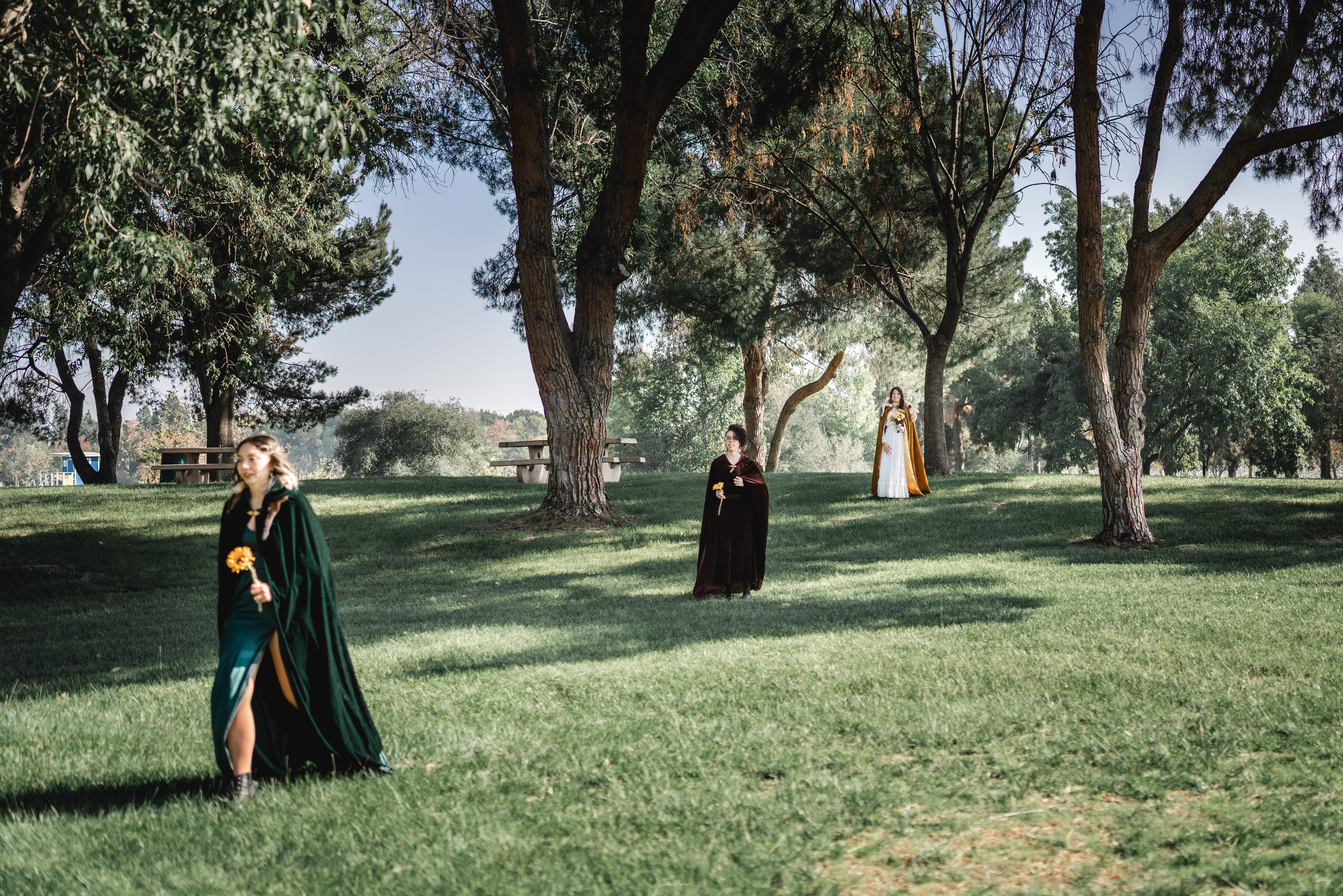




























 Yesterday, I deleted or deactivated almost all of my social media accounts — 500px, Flickr, Twitter, and Facebook.
 Journeying Home