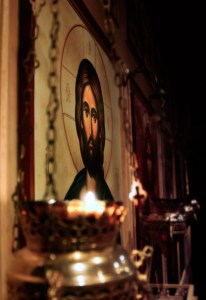
Revelation: Revisited – Telling The Story

rr-story

John’s ultimate purpose for Revelation is to encourage seven specific churches that are struggling within the Roman Empire to overcome through faithful living and sacrificial love. He accomplishes this task by creatively crafting a prophetic literary work based on an apocalyptic vision he had received. This literary work draws from hundreds of Old Testament allusions and contemporary imagery from the surrounding Roman culture to create a symbolic world that both provides a countercultural imagination and communicates how the church’s faithfulness is viewed from a heavenly perspective. And being that “seven” is a significant symbol for “fullness,” John’s use of seven churches expands to include all the churches.

In Revelation, John is revealing a world reborn. He is showing how God’s New Creation, inaugurated by the Risen King Jesus, is confronting the false and dark powers in the world and establishing God’s rightful reign through those faithfully loyal to the King.

This is how Revelation’s story unfolds:

John opens with an equally intimate and majestic vision of the Resurrected King Jesus. Jesus, embodying the Father’s incredible and terrifying glory, is the world’s true King and is confronting all the counterfeit tyrants and thrones. In fact, King Jesus holds the keys to Death and Hades, the ultimate weapons of false rulers. And this same Jesus is intimately walking among and interacting with his churches, speaking to and strengthening his people. John’s plan for Revelation is to evoke the faith and courage to live aligned with this vision of Jesus.

The vision of King Jesus shifts as he addresses seven specific churches. By addressing “seven” churches, John demonstrates that Jesus’ words both address unique issues specifically in seven churches but also symbolically in the entire Church.

While each church’s struggles are unique, Jesus’ encouragement is the same — overcome. By loyalty to Jesus expressed in sacrificial love, the Church continues Jesus’ incarnation, embodying the place where heaven and earth continue to meet. The call to overcome is the rallying cry for the struggling churches to continue what Jesus had started.

Next, the thin veil between heaven and earth is pulled away and John is allowed to see our earthly experiences from heaven’s perspective. This is the True Reality Jesus’ people must hold in their thoughts and imaginations. Behind life in ancient Turkey, behind the threats of Roman rulership, behind the seduction of false prophets, behind the struggles and temptations of ordinary life stands the heavenly throne room where the Creator and King eternally reigns. This vision is essential for Jesus’ people to make sense of everything taking place around and among them.

As we gaze into the throne room, we see God’s creation, embodied by remarkable creatures, worshipping him. Creation’s worship is magnified and given fuller expression by humanity’s worship. But amidst the praise, there is also a problem. No one can be found worthy to implement God’s plan for his creation, symbolized by the scroll. From the beginning, God is committed to run the world through humans. Humanity’s failure didn’t change his plan. God is committed to rescuing the world through Israel. Israel’s failure didn’t change his plan. Who, then, will open the scroll?

When all seems lost, John is told to behold “the lion from the tribe of Judah.” Here is God’s worthy and victorious King! But when John turns to view the lion, he sees a sacrificial lamb. The Lion, which symbolizes ultimate power and rulership, is now fused with the Lamb, which symbolizes vulnerability and weakness through sacrificial death. The two are the one and the same. God’s ultimate sovereignty is accomplished through sacrificial love. The Lamb’s sacrifice is the Lion’s victory.

In this startling revelation, the churches’ unique struggles as well as King Jesus’ encouragement make sense. We continue the Lion’s victory through the Lamb’s sacrifice. Through our sacrificial love, we overcome and are victorious like Jesus. In other words, Jesus implements God’s plan contained within the scroll, rescuing people to be a royal priesthood in order to carry out the Lion-Lamb’s worldwide victory.

We’ll conclude Revelation’s story next time…

Revelation: Revisited – Creative Storytelling

rr-storytelling

I think many people may be surprised by the following quote by NT Wright:

“The Book of Revelation tells the same story that the Gospels tell. It is the story of how Jesus of Nazareth, Israel’s Messiah, conquered the power of evil through his death and became the Lord of the world. The New Testament is not about how Jesus, on the one hand revealed he was divine, and then died so that we could go to heaven. That’s halfway to Gnosticism if you’re not careful. They are about how Jesus acted as the embodiment of Israel’s God to overthrow the usurping forces of evil and to establish through his death, resurrection and ascension God’s kingdom on earth as in heaven.” -NT Wright, “Revelation and Christian Hope: Political Implications of the Revelation of John”

When Revelation speaks for itself, we find that John’s “story” aligns itself with the overarching “story” of the Gospels and the New Testament — through Jesus’ embodiment of Israel’s God, God vanquishes evil, restores his creation and fully establishes his kingdom on earth as in heaven. Revelation is the natural continuation of the Gospels’ story, that Jesus’ people are continuing his incarnation as his body and therefore continue what he began. John creatively tells this story by combining three literary genres — apocalyptic, prophetic and pastoral.

At the heart of Revelation is an amazing vision given to John. In this vision, mysteries and secrets known only in heaven and not know on earth are revealed to John. Key to understanding this revelation is remembering that “heaven” and “earth” are two dimensions of the same reality. So the thin veil between these two dimensions is pulled back and John is shown present earthly reality from heaven’s perspective. And what’s revealed is God’s plan to restore his creation, fully and finally merging these two dimensions.

This is the apocalyptic genre of John’s book.

John is also a prophet and knows that Jesus was the fulfillment of Israel’s Story. He understands that this vision is the supreme culmination of Israel’s vast prophetic heritage. Israel’s prophetic story has led to Jesus’ kingship and this vision reveals that his reign is continually established through the Church’s life as they live and struggle. So John creatively communicates his vision in a way that proclaims God’s intention to God’s people. As Richard Bauckham states:

“Revelation is a literary work composed with astonishing care and skill. We should certainly not doubt that John had remarkable visionary experiences, but he has transmitted them through what must have been a lengthy process of reflection and writing into a thoroughly literary creation which is designed not reproduce the experience so much as to communicate the meaning of the revelation that had been given him.”

The prophetic role is to communicate meaning. Knowing his vision of Jesus is the climax of Israel’s prophetic heritage, John imparts deep meaning to his vision by saturating his work with over two hundred allusions to the Old Testament. He never directly quotes the Old Testament, but relies on his readers deep familiarity with its complex themes. John ties off the multiple threads of Old Testament prophetic themes to their fulfillment in Jesus and now being implemented in the ordinary lives of his people.

This is the prophetic genre of John’s book.

John is also a pastor. He takes his startling vision of heaven’s perspective of earthly events, crafts it into an amazing counter-cultural symbolic world in order to communicate God’s purposes and then applies it directly to specific situations faced by the churches that he shepherds. And he does so in a startling way.

Pastoral epistles were usually written to a specific church or intended to be a “circular” epistle passed on to several churches. If an epistle is written to a specific church, it usually addressed situations specific to that church’s context. Therefore, readers outside that church would have greater difficulty finding direct application to their own situations. If an epistle was “circular” and intended for many churches, it was usually more generic and didn’t address the specific situations in one particular church.

John does something very creative. He addresses Revelation to seven specific churches experiencing very different situations. Some are being persecuted. Some are in danger of compromising with the surrounding Roman culture. Some are rich. Some are poor. But each portion addressed to the specific church ends the same way — overcome! This is a military word for victory.

In other words, each church has it’s own experiences and obstacles. John’s pastoral word is “keep fighting the good fight because by doing so, God is vanquishing evil, restoring creation and establishing his reign.” This will look differently for each church. For some it will mean persecution and martyrdom. For others it will mean resisting temptation. For others it will mean not compromising with Roman culture. But for each church, it’s their part in a larger “cosmic” battle of establishing Jesus’ kingship in direct opposition to all the other “kings” vying for power and control.

And John’s seven pastoral encouragements to overcome are drawn into his one final encouragement to overcome at the end of Revelation. Those who faithfully participate in the battle for Jesus’ kingship through their faithful living will ultimately inherit the coming New Creation to which all of their efforts have been contributing.

But wait there’s more! John’s use of “seven” is a significant part of the symbolic world he’s creating. Seven represents fullness. So while John is addressing seven specific churches and their unique situations, he’s symbolically addressing the entire “full” church and all of her people’s unique situations. He’s not only pastoring seven specific churches, but providing encouragement to the entire church! And that encouragement in all situations is the same — overcome!

This is the pastoral genre of John’s book.

John weaves these three literary genres together to create a visual story to strengthen and encourage Jesus’ people to look beyond their culture, their puzzles, their pain, their temptations and to embody his sacrificial love in the midst of a world filled with calamities, monsters and chaos.

Revelation: Revisited – Overcome, Not Escape

rr-overcome

Revelation is a rallying cry for Jesus’ people. Despite the many false kingdoms that both tempt us to compromise or threaten us with persecution, God is on his glorious eternal throne and Jesus is worthy to implement God’s plan for his Creation. But that plan is implemented through Jesus’ people as they sacrificially live and love in the midst of the roiling conflict.

Revelation reveals that God’s plan to vanquish evil, restore his Creation and establish his full reign is being accomplished through his people as they live in the midst of the chaos. To put it another way, Jesus’ people is how God is answering Jesus’ prayer, “Your kingdom come, your will be done on earth as it is in heaven.”

Early Christians believed heaven and earth met in the person of Jesus of Nazareth and that his followers continued this project. We immediately discover in the opening verses of Revelation that Jesus has made us “to be a kingdom and priests to serve his God and Father” (Rev 1:6). As we move through Revelation, we are reminded repeatedly that we are a royal priesthood and an important part of God’s unfolding plan.

As NT Wright states:

“This book in fact offers one of the clearest and sharpest visions of God’s ultimate purpose for the whole creation, and of the way in which the powerful forces of evil, at work in a thousand ways but not least in idolatrous and tyrannous political systems, can be and are being overthrown through the victory of Jesus the Messiah and the consequent costly victory of his followers.” -NT Wright, Revelation for Everyone.

So the underlying message of Revelation is “overcome.” This is Jesus’ message to each of his seven churches in Revelation 2 and 3. We are God’s royal priesthood through whom God is performing his grand work of bringing heaven and earth together.

I think the idea of a Rapture has dominated the interpretative landscape of Revelation. So many Christians reading Revelation assume God will rescue his people from the chaos and conflict when actually he will rescue them through the chaos and conflict. In Revelation 1:18, King Jesus is holding the keys of death and hades. In other words, death has lost its power. Even though sacrificial love may lead Jesus’ people to death like their king, death is never the final answer. Jesus’ people will be rescued and raised through death.

As Jesus proclaims in Revelation 21:7, the person who overcomes (the same word to the seven churches) inherits the New Creation for which he has given his life and will be God’s child.

Overcome!

Revelation: Revisited – Symbols And Codes

rr-symbols

Perhaps both the beauty and mystery of Revelation come from John’s staggering use of symbols. As we read Revelation, we should not expect its symbols to act as codes. Symbols and codes are very different. Codes assume a direct one-to-one correspondence. Symbols do something much more powerful. They encapsulate powerful stories, often in ways that transcend words.

Every culture has symbols. For example, the American flag is a symbol. It doesn’t have a one-to-one correspondence to anything. Rather, it conveys a spectrum of images, emotions and values such as bravery, courage, sacrifice, and loyalty. Within that symbol are “codes.” The fifty stars represent the fifty states. The red and white stripes represent the original thirteen colonies. But the symbol of the American flag transcends any one-to-one correspondence. And its power is that it transcends words. It enforces deep emotions, values and a worldview. That’s why candidates from different political parties can use the American flag as a symbol in their campaigns, even though their agendas and priorities differ. They’re relying on the power of symbol to communicate beyond words.

We must keep the power of symbol in mind as we read Revelation. Richard Bauckham reminds us that Revelation creates “a symbolic world which its readers can enter and thereby have their perception of the world in which they live transformed.” This symbolic world provides a “set of Christian prophetic counter-images which impress on its readers a different vision of the world: how it looks from heaven to which John is caught up in chapter 4. The visual power of the book effects a kind of purging of the Christian imagination, refurbishing it with alternative visions of how the world is and will be.”

Revelation’s symbols are charged with perception-altering power because they draw from the original readers’ context within Roman culture as well as their vast familiarity with the Old Testament to create a “complex network of cross-references, parallels, contrasts, which inform the meaning of the parts and the whole.” Just like a country’s flag waving on a field of battle can strengthen weary troops, Revelation’s symbolic world stokes faith and courage for Jesus’ people to overcome in the midst of temptation and persecution.

So within this vibrantly visual world, we shouldn’t feel compelled to find a one-to-one correspondence for everything John writes. We don’t need to look for comparisons between Revelation’s symbols and current events in the news. Rather, like the original audience, we should let Revelation’s rich symbolic world shape our imaginations. This requires effort in learning the cultural symbols and Old Testament allusions familiar to John’s audience. But the rewards of immersing oneself in John’s rich imagery is worth the effort.

Revelation: Revisited – Biblical Inspiration

rr-inspiration

I think many people believe that the Bible is “inspired” because they assume God dictated his message to human authors. So when we read Revelation, which is a remarkable prophetic vision, we easily assume that John is simply scribbling down his vision as quickly as he’s seeing it.

But that’s not how biblical inspiration works. God works with the biblical authors. And every biblical author shapes the “story” he’s telling in order to accomplish a particular agenda.

A good example of this is the four Gospels. The authors of the three synoptic Gospels— Matthew, Mark and Luke — take the “raw material” available of the Jesus story and shape it with a theological and pastoral agenda. So these three Gospels include, revise or omit certain stories or details to communicate different agendas. John’s Gospel stands out from the other three because it’s crafted more creatively than the others. Have you ever noticed that the Jesus in John’s Gospel has long and complex speeches while the Jesus in the synoptic Gospels speaks in short pithy statements? The synoptic Gospels also have Jesus giving longer “sermons.” But in those Gospels he uses parables and short statements rather than more complex theological reflections in John’s Gospel.

All four authors are sharing the story of the same Jesus. But their theological and pastoral agendas are guiding how they portray Jesus.

The same is true for Revelation. John receives an incredible vision. But he then shapes that vision with a specific pastoral and prophetic agenda. This is especially apparent in the word choices, Old Testament allusions, and literary devices that he uses throughout Revelation. The final product of his literary efforts is work of great depth and reflection. His work is a well-crafted, well-thought piece of literature with a very unique purpose for ongoing Christian discipleship, not forecasting the future.

This is important because if we expect Revelation to be only a recitation of a glorious vision, than John is relegated to the role of observer. But if we let Revelation speak, we discover that John, both a faithful steward of God’s vision and a faithful shepherd of God’s people, works with God in communicating a beautiful symbolic world filled with Old Testament allusions and counter-cultural imagery to strengthen the faith and courage in Jesus’ people so they will follow him in a world filled with temptations, threats, persecutions, pain, sorrow and struggle.

Revelation: Revisited – False Expectations

rr-false-expectations

Based on a friend’s recommendation, I recently read Peter Enns’ book, The Bible Tells Me So… Why Defending Scripture Has Made Us Unable To Read It.

This book reminded me of a truism about reading the Bible that I find relevant to Revelation: “False expectations can lead to incorrect interpretations.”

For example, many people read the Gospels as though each account was an attempt to prove Jesus’ divinity and demonstrate how a person can “be saved” and “go to heaven.” That false expectation distorts the authors’ intentions.

The same is true for Revelation. Due to popular theology and the highly symbolic nature of the book, many people assume Revelation is a roadmap to the future. They either ignore the fact that it’s written to seven historical church or they “symbolize” those churches to represent stages of the Church throughout history. Either way, they view Revelation as the result of John peering into the far distant future and trying to describe what he sees from his ancient perspective.

It is essential that we try to set aside our presuppositions about Revelation and let it speak for itself. I remember how difficult this was back in 2005 when I studied the book. As I read and reread the book, the futurist interpretation from my early Christian formation kept whispering in my ear.

But any serious Bible reader must practice “exegesis” as best as possible. Exegesis means “to draw out.” This allows the author’s intent, and not our expectations, to determine the book’s agenda

Unfortunately, most of us are guilty of the opposite, which is “eisegesis,” reading into the text. This is understandable. Most of us have heard other people’s interpretations and those voices accompany us as we read. We just need to be aware of this and keep trying to let the text speak louder than the other voices.

I had mentioned in my first post in this series that I no longer accepted a futurist interpretation of Revelation. That’s because such an interpretation is blatant eisegesis. It requires a “dispensationalist” interpretative grid that is foreign to anything John intended.

When we set aside the false expectation that John is describing future events, John’s actual intention becomes clearer.

Revelation: Revisited – Introduction

rr-introduction

Recent conversations have rekindled my interest in Revelation. Back in 2005, I took a serious dive into this mysterious book and emerged with a very different understanding than what I held in my early Christian years. I was excited to discover that Revelation was immensely relevant to life and apprenticeship to Jesus.

(If you’re interested, I’ve consolidated the posts from my 2005 study into one document. You can get that document here: blog-posts-on-revelation-2005.)

Rereading my posts from that time has excited me about Revelation again. So I decided to do another series called Revelation: Revisited.

Where the original posts explored more of the details in Revelation, the goal in this series is simply to unpack some thoughts on Revelation. I’ll be upfront right now. I completely reject the futurist interpretation of Revelation made popular by dispensationalist theology. Except for the last two chapters, I don’t think Revelation is an outline of future events. Therefore, I do not believe in the Rapture, the Tribulation, the Millennium and all the other aspects of that interpretation.

I know this can be controversial for some. I apologize right now if I offend anyone. That’s not my intent. Nor is it my intent to engage in arguments nor to defend my stance. I simply want to unpack how I believe we should approach Revelation as well as its overall message for Christian discipleship.

Because of my different interpretation of Revelation, I’ve learned to avoid conversations about Revelation over the years. It’s tough answering questions like “Do you believe in a Pre-, Mid-, or Post-Tribulation Rapture?” when I don’t believe in the Rapture or the Tribulation. But saying that raises issues that are even more difficult to discuss in casual conversation. Conversations about Revelation always felt like a form of  “culture clash.”  I felt like a British citizen trying to discuss “football” with my American friends. We were using similar words, but discussing completely different games. And trying to explain the complexities and nuances of the game was too demanding.

But Revelation is too important for life to ignore. As I’ve come to understand its message and how its literary forms work to communicate its message, Revelation inspires me to follow Jesus in the here and now as much as the Gospels and other New Testament documents. So I hope this series will encourage others to revisit Revelation and experience the relevancy I’ve discovered in its pages.

BTW, a couple of books that have provided support in my original dive into Revelation in 2005 and in this series are:

  • The Theology of the Book of Revelation by Richard Bauckham
  • Revelation for Everyone by NT Wright

Both are short volumes. But don’t let their size fool you. They are explosive in their content.

Life-Giving Liturgy

“The Church, through the temple and Divine service, acts upon the entire man, educates him wholly; acts upon his sight, hearing, smelling, feeling, taste, imagination, mind, and will, by the splendor of the icons and of the whole temple, by the ringing of bells, by the singing of the choir, by the fragrance of the incense, the kissing of the Gospel, of the cross and the holy icons, by the prosphoras, the singing, and sweet sound of the readings of the Scriptures.” -St John of Kronstadt

gospel-book-2In my early years as a Christian, it was easy for me to dismiss liturgy as being ritualistic. Unfortunately, there are too many anecdotes that validated my belief. As I matured over the years, I observed two things. First, many who dismissed liturgy as ritualistic only replaced one form of liturgy with another, albeit a much simpler one. For example, at the Vineyard, we had an unspoken liturgy that we followed at virtually every service — 30-45 minutes of singing, announcements, sermon, altar call, and then prayer time. Similar liturgies were performed in other churches and denominations I attended.

The second thing I observed is that liturgy is truly life-giving. Within its well-thought movements, a community can commune with God. That’s because liturgy is a divine “drama,” an embodied story infused with God’s grace that is grounded in time and space and simultaneously spans across time and space.

Grounded within time and space, liturgy at its best, engages the entire person and community. As expressed in the quote above, God uses “everyday” tangible elements within the liturgy to transmit his presence to his worshippers. Simple things like bread, wine, oil, water, incense, and pictures combined with physical activities like crossing oneself, lighting a candle, and kissing an icon or the Gospel book join us with this grace-infused drama. Our entire being enters into worship and communion with God. And we experience this together as a community, young and old, carrying the entire spectrum of human thought, emotion and experience.

Transcending time and space, liturgy at its best, unites us with God’s family through the ages, generations who have come before and the generations who will come after. And it also unites us with our past younger worshipping selves as a child or young adult and with our future older worshipping selves. And ultimately, liturgy is a moment when God’s future New Creation manifests within the present creation. It’s when the “now and not yet” of God’s kingdom becomes tangibly more “now.” It’s that special moment that the Bible calls “kairos” when the New Creation manifests itself concretely within the fabric of history.

But all of this can be easily missed when one attends liturgy. Instead of flashing lights, one sees the flickering of candles. Instead of peals of thunders, one hears the quiet refrains of “Lord, have mercy.” Instead of a majestic vision of God’s throne room, one watches a humble priest praying for God’s people. Instead of saints glowing with glory, one sees normal people stretching their aching backs, fighting distraction, shuffling their tired feet, praying, bowing, crossing themselves, and eating bread and wine in reverence and devotion.

And through it all normal people receive Life as they commune with God, each other and all God’s worshippers through time and space.

Misguided Zeal

As the time approached for him to be taken up to heaven, Jesus resolutely set out for Jerusalem. And he sent messengers on ahead, who went into a Samaritan village to get things ready for him; but the people there did not welcome him, because he was heading for Jerusalem. When the disciples James and John saw this, they asked, “Lord, do you want us to call fire down from heaven to destroy them?” But Jesus turned and rebuked them. -Luke 9:51-55

This is another moment in a string of episodes demonstrating the inability of Jesus’ followers to truly understand the scope of his mission. Sometimes, I think we’re so quick to judge Peter for his many missteps, that we forget James and John, two of Jesus’ closest disciples, blundered as well.

Jesus is on his way to Jerusalem for his ultimate demonstration of God’s love. Yet, two of his closest followers want to call down divine judgment upon a village because the villagers won’t welcome their entourage. You can almost hear the slap of Jesus’ palm on his forehead.

Warning PoleChristian history is replete with this type of misguided zeal. A serious problem occurs when protecting the fidelity of the Faith eclipses the actual values of the Faith. While we may not literally call down fire, we resort to other tactics. We’ll label ourselves and others so that it creates an “us” vs “them” dichotomy. We’ll denounce others who are not in our group while we exalt ourselves as being genuine Christians. We’ll resort to “straw man” tactics or compare our group’s best with their group’s worst.

Every group has its overzealous members.

When I was a young Christian in Calvary Chapel, I remember some speaking of Roman Catholics as adherents to dead ritual, implying that they weren’t really Christians. And they described mainline denominations as “liberal” with a similar insinuation.

During my short involvement with YWAM, the organization’s evangelism efforts were focused in middle eastern countries like Turkey. I remember hearing some stating that Eastern Orthodox Christians needed to be evangelized because their religion was dead.

As part of the Charismatic movement, other Christians were viewed as not having the Holy Spirit and being spiritually dead. I remember some stating about non-charismatic churches, “If God didn’t show up to their church on Sunday morning, no one would notice.”

When I was part of the Emergent/House Church movement, I heard some speaking suspiciously of professional pastors because they actually made a living from pastoring.

As part of the Eastern Orthodox Church, I hear some using words like “heterodox” and “heretic” too easily to describe non-Orthodox forms of Christianity. Quite frankly, some of the Protestant-bashing I’ve heard in my limited experience in Orthodoxy is sickening.

I’m familiar with these incidents because, to my shame, I’ve participated in this misguided zeal.

It’s taken more time than necessary, but I’ve finally learned that Evangelicals have no more of a personal relationship with God than Roman Catholics, Eastern Orthodox and mainline Christians. Nor are Charismatics any more Spirit-filled than their other siblings. House churches are no more genuine than their institutional counterparts. Eastern Orthodoxy is no more truer, enlightened or faithful than any other form of Christianity. Everyone needs to be evangelized with God’s Good News.

In the midst of all this zealous craziness, Jesus demonstrates God’s love for everyone by dying upon a cross. Three days later, he bursts from the grave to launch God’s New Creation for all.

I’m not saying everyone simply needs to embrace a wishy-washy undefined faith. Quite the opposite. Our faith must develop, mature and become well-defined. As such, distinctions will always exist. But the more mature our faith becomes, the more it should align with the actual values of the Faith — faith, hope, love, joy, peace, patience, kindness, goodness, faithfulness, gentleness, self-control, holiness, compassion, humility, repentance… I think you get my point.

Jesus’ followers defend the faith by living the faith.

Part of living the faith means living in loving communion with all of Jesus followers — valuing each other and each other’s tradition so we can talk with and learn from each other.

Earlier this year, I wrote the following “classified ad” but never had the courage to post it on social media:

“Wanted: A small group of Christians who gather regularly with the sole agenda of becoming Jesus’ apprentices through spiritual formation. This group would welcome Jesus’ apprentices from all traditions — Roman Catholicism, Eastern Orthodoxy, and Protestantism. It would not be affiliated with any organization nor would it replace anyone’s local church or parish. Rather, it would be a group of friends committed to learning with and from one another about how to follow Jesus. This group would discuss Scripture and supplemental writings, pray for one another, support one another and learn from each other’s traditions, theology and practices in the ultimate effort of becoming like Jesus for the sake of the world.”

I would love to be part of a community whose members are learning to carry the cross rather than calling down fire.

Struggling In Prayer

Unto My Words-sRGB“I urge you, brothers and sisters, by our Lord Jesus Christ and by the love of the Spirit, to join me in my struggle by praying to God for me. Pray that I may be kept safe from the unbelievers in Judea and that the contribution I take to Jerusalem may be favorably received by the Lord’s people there.” -Romans 15:30-31

I have to be honest. After being a Christian for over 30 years, prayer is still a mystery to me. There are certain aspects I understand. For example, I know prayer is relational conversation with God. And in that conversation, I pour out my heart, be it praise, thanksgiving, remorse, confession, desperation, or petition.

But prayer is also more than that. So there are other aspects of prayer that are shrouded in mystery for me, even after all these years. The passage in Romans is one of them. How does one “fight the battle” for another in prayer? Is this just dramatic imagery for simply praying for a person’s needs? Or is there something more?

Throughout my Christian life, I’ve participated in groups that had their particular answer to these questions. I’ve been in some prayer meetings where praying was spiritual warfare performed by audibly “binding and loosing” spiritual powers influencing situations.

I’ve been in groups where lists of requests were gathered and a small group would pray over the various needs.

I’ve been in groups where the participants would physically lay their hands on a person and wait for the Spirit to bring specific prayers and prophetic messages to mind.

I’ve also been in groups where prayer is quietly whispering a liturgical prayer and lighting a candle for a person, requesting God’s mercy and presence in their life.

I suspect Paul and the early Christians understood something that is often missing in our modern concept of prayer. Too often we see prayer as petitioning God and expecting an answer. What if that isn’t necessarily the prayer’s primary purpose. What if prayer is more like training — learning to wait on God, sense his leading, praying appropriately, then rinse and repeat.

In most Christian traditions, the “Lord’s Prayer” is the model for prayer. But Jesus wasn’t giving us categories or words to pray. He was showing us how to become “mobile Temples,” how to become God’s presence where heaven and earth are stitched together through love.

What if prayer is like working out on an exercise machine at the gym. In this example, we don’t do a few reps and expect to have fully developed muscles. It takes months or years of training to hone our muscles.

So perhaps prayer transcends mere petition and answer. Perhaps prayer is working out in cooperation with God so our interior life is reshaped and renewed into the place where heaven and earth are joined and then expressed naturally through our exterior life.

So what if Paul’s request is similar to Jesus’ model prayer. Surely he needs their prayers on his behalf. And immediate answers would be greatly appreciated. But he’s a pastor. He knows there are tensions between between Christians and non-Christians. And there are tensions between the Roman Church and the Jerusalem Church.

So perhaps, Paul’s request gives the Roman Christians the opportunity to continually pray for both “unbelievers” and “God’s people” in Jerusalem so they may train into God’s love toward these people.

One of my earliest memories as a child was learning to swim. Every week, my mom would take us to Ms. Christie’s house for lessons. I remember clutching the side of the pool. Ms. Christie stood in the water several feet away, beckoning me. I would let go of the side, struggling with each stroke to reach her. But she always seemed just out of reach. With every few inches I achieved, she would move away from me. When I felt I couldn’t go any further, I was suddenly in her safe and secure arms as she quickly closed the distance between us and grabbed me. Over and over, we would do this. And I learned to swim.

Perhaps that’s what prayer is like. Perhaps our needs or our loved one’s needs force us to struggle toward God. But in love, he always remains slightly out of reach. By doing so, he’s helping us to grow into love, into the embodiment of his New Creation. And just when it seems like all is lost, we’re in his safe and secure arms. Perhaps we don’t have the answer we desired. But we have his presence and the transformation he intended all along.

So if love is the embodiment of God’s New Creation, then prayer is the exercise that develops it in our lives.

Not Chosen By God

PassionsThe other day I was reading Acts 1:21-26. This is the episode when the Apostles replace the fallen Judas as one of The Twelve.

Twelve is not just a nice round number. Twelve Apostles are necessary to continue Jesus’ work. Jesus is restoring Israel, God’s people, around himself. As the twelve tribes followed God’s presence in the pillar of fire, the twelve Apostles followed God’s presence in Jesus. They are embodying God’s renewed plan for Israel, so twelve Apostles are absolutely necessary to move forward.

So after a vetting process, the eleven Apostles find two qualified men — Mathias and Justus. And with a cast of lots, God chooses Mathias… and doesn’t choose Justus.

And the story quickly moves on. But I can’t.

My thoughts keep returning to Justus. Who was this man? What did he think and feel to be one of the two finalists to join The Twelve, only to watch God choose the other man?

Scripture provides us very little. He was known by three names — Joseph, Barsabbas and Justus.

Church tradition fills in some biographical gaps. Justus was a son of Joseph, Jesus’ stepfather, from his first wife Salome. In other words, Justus was Jesus’ step-brother.

Now some people may be scratching their heads and asking, “Wait a minute. You’re saying Jesus’ stepfather, Joseph, was married to someone else before Mary?” Yes. The image of a young Joseph and Mary depicted in our modern Christmas story is incorrect.

According to Church tradition, Joseph was previously married to Salome. They had four sons and two daughters before she died and left Joseph a widower. These are Jesus’ “brothers and sisters” mentioned in the Gospels and include James (author of the Book of James), Jude (author of the Book of Jude), and Justus.

What about Mary?

Dedicated to God by her parents, Joachim and Anna, Mary grew up as a little girl in the Temple. Young women could not live in the Temple once they reached puberty. An elderly Joseph, now a widower, is selected by lots to become young Mary’s husband-caretaker. After birthing Jesus, Mary remains a virgin the entirety of her life. Joseph and Mary never had any children together.

So back to Justus.

Justus was among the original members of Jesus’ ministry. He was eventually chosen by Jesus to be among The Seventy, who were sent out as part of his ministry (Luke 10). Justus ultimately became the Bishop of Eleutheropolis and died a martyr. So we know that he faithfully served Jesus and his people his entire life.

Beyond the biographical information, Church tradition is as silent as Scripture regarding Justus’ thoughts and feelings at not being chosen by God.

At this point one can only speculate. I think it’s safe to assume that Justus was like any other person. So I wonder if he experienced disappointment, doubt or depression. What was going on in his head? One cannot be passed over by God without asking introspective questions. Was I not worthy enough? Did I do something wrong? Am I disqualified? Why him and not me? What now?

I also wonder if inactivity increased the volume of that inner voice. Jesus had instructed his followers to wait in Jerusalem for the promised gift of the Father (Acts 1:4). And so they waited and prayed in the upper room. What did he feel when he saw Mathias now huddling with the other eleven Apostles? What were Justus’ prayers like? What was he saying to God? Was he repenting of envy over his friend’s new position? Was he praying for clarity over why he was passed over? Or was he praying for strength, safety and wisdom for his friend? From personal experience, I think his prayers were a mixture of everything.

Mere days later, God’s wind and fire would rest on Justus along with the other hundred-plus believers. In that moment, perhaps Justus’ thoughts and feelings of rejection are swept away in this amazing flurry of excitement and activity. Perhaps his questions are answered as he and the astounded community of believers realize they are now empowered to continue what Jesus had started. Regardless of position, there was new work to be done by all.

In a short reflection on Justus, NT Wright states, “Part of Christian obedience, right from the beginning, was the call to play (apparently) great parts without pride and (apparently) small parts without shame. There are, of course, no passengers in the kingdom of God, and actually no ‘great’ and ‘small’ parts either. The different tasks and roles to which God assigns us are his business, not ours.”

Knowing that Justus’ ultimate trajectory was to become Bishop and Martyr, I would like to think he quickly grasped that truth and found his fulfillment in whatever God placed before him. While God didn’t choose him to be one of The Twelve, he knew God had chosen him for service. And by embracing that vocation, he faithfully served God’s people and ultimately followed his Savior’s example, sacrificing his life in love.

And centuries later, Justus’ life still serves as a quiet example for all who feel they haven’t been chosen by God.

Father, some mornings I wake up wondering if I completely failed you and have been disqualified from your work. May Justus’ faithful life be an encouragement. There’s always work to be done in your kingdom. Keep my focus on that. And when necessary, remind me that whatever work you place before me, it is neither “great” nor “small”. It is work for which your Spirit has called and empowered me to do. May Justus remind me to be faithful to the end.

Farewell To Best Friends

img_6688Around 6pm tonight, Debbie, Chris and I watched our family’s best and dearest friends, Mark and Barbara Feliciano, drive away to begin a new phase in their lives in Idaho Falls. I’ve been dreading this day since October 1, 2015 when Mark and Barb shared with us the potential of moving to Idaho.
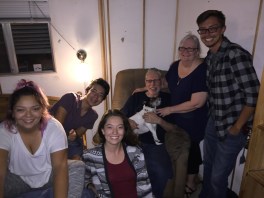
Almost a year later, that day has arrived. And our friends are gone.

I am so thankful that God brought our lives together twenty years ago. Who would have known when they first visited the Glendora Vineyard how deep our friendships and how entwined our families would become?

We worshipped and served together at the Glendora Vineyard. Some of my fondest memories were times of worship as the drummer on Mark’s team. Mark and Barb were an encouraging presence when I experienced burnout. Later, we would work together to create an experimental community at the Vineyard where we and dozens of others would explore authentic community and discipleship. Mark and Barb were also a light and comfort during our challenging last years at the Vineyard.

After leaving the Vineyard, our families launched a little faith community in their home and explored simply being God’s people together. We started a business together. And most recently, we joined the Orthodox Church together. But these are just milestone moments in our shared lives. Equally meaningful and cherished are all of the little details of life that filled in the nooks and crannies of our friendship together.

img_6772Mark and Barb’s home was like a second home to our family. My children were always welcome and  enjoyed authentic adult friendships from an early age. Our families have shared more meals, conversations, dreams, laughs and tears than I can count. And our family has benefited in untold ways from Mark and Barb’s wisdom, generosity, compassion, mercy, encouragement, and prayers. They have been such a constant source of love in our lives. Even as the last boxes were being loaded onto the trailer by the moving company, we shared a final meal filled with laughter and joy in their empty living room.
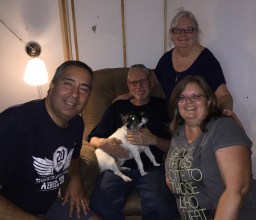
I always assumed we would live close to each other the rest of our lives. I imagined regular meals together, talking about life, looking forward to what God would do next, and slowly growing into our golden years together. But that is not meant to be.

img_6773As we helped Mark and Barb pack their last few belongings into their car, hugged them good-bye and watched them drive away, I was crushed by the reality that they will no longer be a few minutes away. Their home that was once filled with warmth and love is now an empty husk. There will be no more times of sharing stories from the past week, no more talking face-to-face about God’s activity in our lives, no more impromptu dinners, no more Super Bowl parties, no more hanging out and just being together.

Yet as much as my family and I will miss them, we are extremely excited for them. Not only are they beginning a new adventure together in a new home in a new city in a new state, but they will be surrounded by a strong and supportive network of family members. Now others will get to experience the joy, generosity, wisdom, and beauty that Mark and Barb embody. Their new home will become a place of love. Many will be blessed by spending time in their home, sharing meals, celebrating, conversing about God and life, and all the other relational gems our family has enjoyed for years. Mark and Barb embody God’s life in a precious and unique way and I’m glad others will now benefit from what God has created in them.

I am grateful beyond measure for the years we have shared with Mark and Barb. Our friendships are the closest thing to the New Testament idea of “fellowship” that I have ever experienced. And I love them more than I could ever express.

goodbyeA beautiful piece of our lives drove away today. There is a gaping hole in our hearts and I am sad beyond belief. We will miss them dearly.

Father, I cannot fully express my thanksgiving for joining our lives with Mark and Barb’s lives for all these years. Through them you have loved us, encouraged us, challenged us, and comforted us. Our family has experienced your amazing love in countless tangible ways through them. Be their companion, guide and protector during this new phase of their life. Fill their new home with your love and presence. And may many others receive the blessings our family has enjoyed through the years.

Present In The Moment Through Photography

I have quoted Zeb Andrews on this blog several times before. There are many photographers that inspire me to become a more skilled photographer. But there are a select few who actually inspire me to become a better person through photography. Zeb Andrews is one of those unique photographers.

One of the original reasons I fell in love with photography was because it helped me see normal, everyday things from a different perspective; to see details that I would have ordinarily overlooked. Photography has helped me to become more aware. And in the process of becoming aware, it helped me to become more thankful.

Yesterday on his Flickr account, Zeb posted the following image and reflection that shares my original passion for photography:

roundabouts-zeb_andrews_2016“Roundabouts” by Zeb Andrews

“I have said this before, but I have no problem talking about it again because good things have a tendency to come back around… and around… and around.

“I try not to be a photographer to do things. I mean, my goal isn’t to take photos. It isn’t even to make photos. It just so happens that in my normal course of photography that I make lots of pictures, but I see this as a side benefit. I am a photographer to be things, not do them. I want to be creative. I want to be inquisitive. I want to be attentive. I want to be in the moment and I want to be hopeful of the future. I want to be fascinated and awe struck at the myriad subtleties to life and the world. I want to be aware of the fact that no matter where I go or when I am that there are so many things that are different than where I came from… and there are also so many things that are the same. I want to enjoy the pattern that a leaf makes skittering across the road in a gust of wind. I want to look back in uncertain curiosity at that cat crouched in the windowsill watching me. I want to spend some portion of my life wondering about the coincidence of that red car parked in front of that red house with the bush full of red flowers right between them. Who thinks these things up, after all?

“Because then, regardless of whether photos come of the moment or not, I get something vastly more rewarding.

“Take revolving doors for a moment. This is a revolving door I have walked past countless times. It is a door I have barely noticed. I have never felt a shred of curiosity about it. I have never walked through… never been tempted to walk through it… never had a reason to be tempted to walk through it. But this is what photography helps me to be… curious, with reason and cause.

“I am well aware that there is a vast gulf of things we are blind to in our daily lives, things we take for granted or fail to notice. I know I never can, but I want to notice it all. I want a revolving door to be as fascinating as an ancient church in France.

“Anyway, that is what this image is really all about.”

Chris Turns Seventeen!

Chris' Seventeenth Birthday

Today, Chris turns seventeen. Being the youngest of our four children, he has carried the moniker “Baby of the Family” all his life. But he’s not the baby and hasn’t been for years.

Chris is a remarkable young man. He’s handsome, intelligent, witty, creative, perceptive, and compassionate. If there’s a Bible verse that summarizes Chris, it would be Micah 6:8, “To act justly and to love mercy and to walk humbly with your God.”

From an early age, he’s possessed a strong moral compass as well as compassion for people. He’s a deep thinker and continues to startle me with his thoughts and perspective. He also takes his relationship with God very seriously. And can that kid make me laugh!

Honestly, I wish I had a friend like him when I was growing up. And those who consider him a friend probably don’t know how fortunate they are to have someone like him in their lives.

As with all of my kids, I look through old photos and videos and wonder how they grew so quickly. But because Chris is our youngest, I think the nostalgia is felt more deeply. It seems like only yesterday that I was holding him in my arms. And now he towers over me both in physical and spiritual stature.

As a senior in high school, he will soon cross the threshold of graduation into a more adult world. But I’m confident that he will find his way, walk with God and do very well.

Chris is awesome! I love him and I am very proud of him! I love being his dad and his friend and he brings so much joy to our family.

Father, thank you for Chris. Thank you for creating him to be such a delightful and wonderful man. Please draw him close to you so that he may experience and know your abundant and intimate love. Continue to shape him so that his life is a living Gospel to all around him. Show him your ways so he may walk with you all his life. And thank you for the absolute privilege of being his dad and his friend.

Kids At Play

DizzyThis past weekend, I took a walk in Glendora and passed by Finkbiner Park. This park is filled with great memories of my children playing together. It reminded me of how much I loved watching my kids play when they were younger. I remember them playing tag at local parks or gobbling down their food and rushing to play on the slides, tubes and ball pit at McDonalds.

Walking past Finkbiner Park reminded me again of how blessed I am to have four kids who loved being and playing with each other all their lives.

And it’s something I miss now that they’re adults facing adult responsibilities, schedules and stress. I miss the anticipation in their body language as our car would approach a park, the youthful exuberance as they tumbled out of the car in their rush to the play equipment, the delight in their eyes as they gave themselves completely to whatever game they played.

This is probably one of the reason why I loved Pokemon GO when it was first released. Over the summer, I saw the old spark in their eyes when they would go to Claremont together. They would walk and scooter around the downtown area and explore the Claremont colleges together as they hunted these virtual critters. And they were playing together again.

Chris. Portrait-UCLAI enjoyed joining them on these excursions. Debbie and I would walk with them, watch them scooter ahead to scout for Pokemon and come zipping back with excitement.

And for a little window of time this summer, I got to watch my kids play together again.

Over the next few months, our family faces a crushing schedule, one that will pull all six of us in different directions. It’s my goal to create some space where we can just be together and maybe just play.

(Here’s a video I created in 2004 of my kids playing.)

The Air We Breathe

When we read Jesus’ words about forgiveness, it becomes shockingly and frighteningly clear that God’s forgiveness to us and our forgiveness to others are linked. Simply put, my unwillingness to forgive others prevents God from forgiving me. Matthew 6:15 and Matthew 18:21-35 are two prime examples.

This is very confusing to those taught that God can and will forgive us for everything. Apparently, that’s not the case.

NT Wright says the following in a commentary on Matthew 18:21-35:

Clouds over Horse Ranch-sRGB“Forgiveness is more like the air in your lungs. There’s only room for you to inhale the next lungful when you’ve just breathed out the previous one. If you insist on withholding it, refusing to give someone else the kiss of life they may desperately need, you won’t be able to take any more in yourself, and you will suffocate very quickly. Whatever the spiritual, moral and emotional equivalent of the lungs may be (we sometimes say ‘the heart’, but that of course is a metaphor as well), it’s either open or closed. If it’s open, able and willing to forgive others, it will also be open to receive God’s love and forgiveness. But if it’s locked up to the one, it will be locked up to the other.”

This makes complete sense from the “ontological” perspective I discussed in my last post. If you remember, death isn’t the consequence of sin, but the very definition of sin. In other words, sin isn’t the breach of a rule and then death its punishment. Rather, sin is severing communion with God who is true Being and thus the path toward non-being.

In this light, withholding forgiveness from others is not “bad behavior” punishable by God withholding his forgiveness from us, like some cosmic tit-for-tat. Instead, forgiveness is the very air we breathe in our communion with God, the consistent and automatic inhalation and exhalation of God’s Life and Being to us and through us.

The moment we hold our “breath” we suffocate ourselves. But the moment we breathe out, we are able to fill our lungs once again with the sweet life-giving air of God’s forgiveness.

Being Before Behavior

Hands b&w-sRGB“A Christian is: a mind through which Christ thinks, a heart through which Christ loves, a voice through which Christ speaks, and a hand through which Christ helps.” -St Augustine
St Augustine’s quote is a beautiful expression of an incarnational life, a life that genuinely embodies Jesus so that he naturally lives through that person.

An incarnational life expresses itself in behaviors, habits, thoughts, attitudes and feelings that naturally reflect Christ. But it doesn’t originate there. The incarnational life first and foremost embodies Christ in our very being. The fancy theological word for this is “ontological.”

Fr Stephen Freeman has written an article on the ontological approach to understanding salvation that provides the proper context for discussing life in God. I would highly recommend reading his article. This ontological perspective is one of the primary theological perspectives that attracted me to Eastern Orthodoxy.

God is the only true Being. God gives us being and is the continual source of our being. His goal is for us to move toward “well-being” and ultimately to “eternal being” in communion with him.

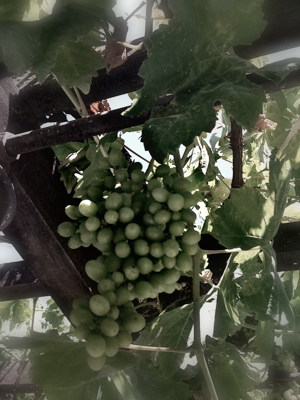
Cluster of GrapesIn this light, right or wrong is either the path toward eternal being or non-being. Or to borrow Jesus’ imagery, it’s either remaining connected to the vine and naturally thriving or being cut off and naturally withering.

In contrast, the popular, yet distorted theology views right and wrong from a legal perspective of obedience and reward or disobedience and punishment — behavior and consequence. Sin is seen as immoral behavior and death its punishment while salvation is viewed as obedience and living forever its reward.

But from an ontological perspective, life or death are not the reward or punishment of our behavior. Life and death are about our being. In this light, salvation defines life — salvation is life and life is salvation. And death defines sin — sin is death and death is sin.

So life is well-being and ultimately eternal being as one remains in communion with God, the Source of Being and Life. Death is sub-being and ultimately non-being as one severs communion with God.

This is the framework for understanding Christian life. The incarnational life, a life that naturally embodies Jesus, is first and foremost God’s life in our being that naturally expresses itself through my will, mind and body into my relationships and world. From this perspective, St Augustine’s vision of incarnational life is an expression of life and well-being and not only behavior.

Too often, the discussion of Christ’s likeness centers only on behavior. In other words, a person is considered to be like Christ if he or she avoids certain negative behaviors like drinking, smoking and lying and adhering to positive behaviors like feeding the poor, attending church, acting lovingly, and praying for people. From this perspective, I expend my energy modifying my behavior to adhere to a list of appropriate behaviors, usually determined by the specific faith community in which I live and associate.

But as good as that behavior might be, by itself it isn’t necessarily Christ’s likeness. Again, the incarnational life that naturally embodies Jesus is ontological. The core issue is being, not behavior. From our being, and thus our well-being and eternal being, springs behavior.

So I should expend my energy cooperating with God in the transformation of my being — to choose the ongoing path of life and well-being in intimate communion with God.

Fifty Years Of Memories

50th MemoriesLast week for my 50th birthday, I took on a personal project. On my birthday, I took a vacation day and visited several of the important locations from my past. For three hours, I visited my old homes, schools, churches and other important places.

I was flooded with memories at each locale. Most made me smile. Some brought tears. And a few made me cringe. All of these memories formed a mental tapestry that I’m still enjoying.

As I’ve reflected on this experience, I’m aware of three very vibrant threads woven into the tapestry. While my reflections aren’t profound or earth-shaking, they are very dear to me.

The first thread is love. Each location brought strong memories of being loved. Love fills my first memories all the way through to my present experiences. My parents were a source of constant love. Even though they had very little money, they loved my brother and me in generous and sacrificial ways.

I remember my mom spending long hours preparing homemade spaghetti or fried chicken. These meals mean even more to me knowing that as a Korean woman, she learned to prepare these meals in order to give my brother and me an “American” upbringing. I remember the occasional trips to McDonalds or Pompeii Pizza for special meals, even though we couldn’t afford them. I remember my special gifts like my first watch, my model train set, my telescope and my microscope. There are so many tangible memories of my parents’ love, that I risk boring you with too much.

I also remember the love of my small extended family. I have distinct memories as a little boy of my grandma taking me to a little diner for lunch. Even now, I can remember the aroma of burgers and sitting at the counter with her. I remember my grandpa buttering my toast for breakfast when I slept over. And as a new father, I remember him tenderly holding my babies.

My parents, grandparents, and aunt and uncle would gather weekly for game nights while my cousins, my brother and I would play together or watch TV. The adults would have bowls of chips and us kids would get one large bowl to share together. Our small extended family gathered regularly for birthdays, and every Easter, Thanksgiving and Christmas to eat, laugh and celebrate each other.

I also remember a couple of special teachers at Temple Elementary School — Mrs. Haraguchi and Mrs. Roeneke — whose care still brings fond memories decades later. I remember various swim coaches— Bob Mount, Kevin Reynolds, Mike Gautreau and Ed Spencer — who believed in me and challenged me to excel. I remember good neighbors throughout my life like the Reyes, the Yamadas, the Hardwicks, and many others. I remember so many members of the various churches I worked at — the Azusa First Baptist, the San Gabriel Valley Japanese Christian Church and the Glendora Vineyard — who generously loved my family in both small and great ways. I remember the members of our small faith community in Mark and Barbara’s home that constantly expressed their love — Mark, Barbara, Gary, Anne, Jennifer, Angela, David, Alan, Maribeth, Carol and others.

And for the last 27 years, I have been loved by the most amazing woman in the world. It takes a very special woman to join her life to a 22-year old boy trying to finish college with the hope of being a pastor and potentially poor the rest of his life. Yet she did and demonstrates her love to me and our kids virtually everyone moment of the day.

I am overwhelmed with the amount of people who have loved me and my family over the years. It’s absolutely amazing that God would surround me with such amazing people.

The second thread is loss. Time, by its very nature, brings change and loss. Each of the places I visited are now just memories because the people and, in some cases, the places are gone. For example, Industry Hills Aquatics Club, where I spent most of my free time training as a swimmer, has been completely razed to the ground. What was once a beautiful swimming facility filled with young dreams and hopes for excellence is nothing but a dirt field.

I felt loss as I visited my parents’ homes in La Puente and West Covina and experienced volumes of memories with my parents and brother. Even after all these years, it still seems weird that strangers are living in my homes.

I felt loss at my parents’ pizza parlor, Marvel Pizza, where they served pizza and Korean food. My parents poured their energy and hope into this small business. It garnered a small following, but not enough to remain a viable business. Now it’s an empty space in a strip mall waiting to be leased by a new generation of hopeful business owners.

I especially felt deep loss when I visited my grandparents’ home. Their home was my first home. My mom immigrated from Korea a week before my birth. She and I lived in my grandparent’s home until my dad returned from his military service and bought their own first home. My grandparents’ home was a part of my life for almost 50 years. I have so many memories of overnighters, holiday dinners, and family game nights. When my grandpa died in 2001, the extended family gatherings began to diminish. By the time my grandma died in 2014, they were virtually nonexistent. My dad and aunt sold my grandparents’ home in 2015. As I stood in front of their home, strange cars in the driveway, I was deeply saddened that this part of my life is forever gone.

And I felt crushing loss standing before my Glendora home, where Debbie and I spent almost 20 years raising our family.

There have been many other losses. At fifty, the wounds seem more tender than before.

The third thread is faith. As I visited my different homes, I was staggered by the memories of faith. I didn’t become a Christian until high school. But even at the home where I lived as a young boy, I remembered moments of faith, even if they were someone else’s. I remembered my great-grandma, who prayed for me and hand-crafted simple gifts of God’s love. I didn’t appreciate this as a child, but cherish it now as an adult.

I remember as a young elementary school boy contemplating the reality of death and weeping at its sheer finality. Even at a young age, that was the catalyst in my personal journey to find that Something or Someone out there.

As a young teenager, I remember attending a Southern Baptist Church because my mom felt a Christian training would be helpful. I remember hearing for the very first time that Jesus was returning and we needed to be ready. While I didn’t fully understand it or the implications to my life, I knew at that moment that Jesus was real and I needed to respond to him. Thus began a several year journey of discovering Jesus and finally giving him my life.

As a young husband and father, I remember Debbie and I trusting God for the most basic things. We learned to trust him for finances to make it through the month or to pay for repairs on our car. I remember a harrowing episode as a parent of two little children without insurance. Catherine was only a couple years old and had been coughing terribly. We went to a local clinic where the doctor informed us that she had bronchitis and was on the verge of pneumonia. We couldn’t afford any medicine, so they gave us a handful of samples to give to her. In that dark vulnerable moment, all we had was faith and the goodwill of strangers.

I remember when our growing family needing a larger car. Debbie, who led our family in faith, kept praying. And someone at church approached us to give us a van.

As I visited each home, I was flooded with memories of trusting God for finances, health, jobs, tuition, relationships and other aspects of daily living.

These memories made me examine my current faith, which seems to be just a shade of its former self. Not that it was that great before. But there’s something… missing. And I’m not quite sure what it is.

Even though this post has gone on longer than necessary, it’s only a sampling of fifty years of memories — memories of love, loss and faith. And woven through this tapestry is another thread — God’s faithfulness throughout my life. I have lived a good life, a blessed life, an undeserved life. I don’t know why I’m fortunate to have this life while others have so much pain and tragedy. But I am grateful beyond words. And these memories stoke my heart to worship God and to become a better person.

Not Worthy Of Them

“The world was not worthy of them.” -Hebrews 11:38

What a wonderful epitaph to have proclaimed over one’s life. The writer of Hebrews declares this after a lengthy list of people popularly called the “Faith Hall of Fame.”

Cloud of WitnessesOne of the beautiful aspects of Eastern Orthodoxy are the icons of the saints. The saints are those whom the Church recognizes to have lived a full life of actually enduring to the likeness of Christ. Most are apostles, martyrs, church fathers, and monastics. But for every recognized saint, there are thousands upon thousands of unknown and unmentioned saints.
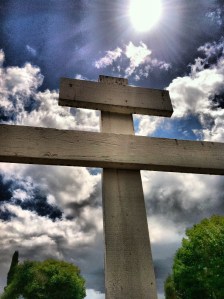
These unknown saints are the ordinary men and women who lived daily lives of faith, love and piety. They worked ordinary jobs and performed ordinary tasks. They are the “jars of clay” containing the unsurpassable treasure of God’s presence.

The other day, I heard a woman describe her 89-year old mother as a “saint” because she never drank, smoked or cussed. While I don’t doubt that her mom is a saint, I take issue with her measuring rod. A person is not a saint simply by adhering to a set of regulations or morality. A saint is someone who is set apart for God through his or her personal and loyal commitment to Jesus and his cause — to transform and renew this world into his Father’s New Creation.

Like a stubborn toddler resisting and fighting against bath-time, this world resists God’s renewal. Unfortunately, the world fights back with far more destructive and violent forces. And those committed to the world’s renewal suffer. They lose reputation, friends, jobs, homes, health and frequently, life.

But they endure. They endure with grief, sadness, pain and loss merged with an indescribable peace, joy and hope. They endure because the one who will transform and renew the world has already begun the process in them. And so, they carry in themselves the promise of God’s future here in the present. And so they trust him and follow him. It sets them apart. They are saints.

Saints aren’t perfect. They struggle, sin and suffer. They are real people. They have different color skin. They speak with different accents. They hold different values. They raise their kids differently. They attend different churches. They enjoy different movies and books. They prefer different genders. They have different life goals. They manage their money differently. They have different political views. They have different scientific views. They have different spiritual views.

But they have one thing in common. They love God. They’re loyal to Jesus and his cause. They are being renewed by God’s Spirit, tasting a bit of God’s future today. As such, they are beneficiaries and agents of God’s New Creation. And for this they struggle to live by the life of God’s future world here and now and suffer as the world around them resists.

Upon completing his “Faith Hall of Fame,” the writer of Hebrews makes direct application:

“Therefore, since we are surrounded by such a great cloud of witnesses, let us throw off everything that hinders and the sin that so easily entangles. And let us run with perseverance the race marked out for us, fixing our eyes on Jesus, the pioneer and perfecter of faith.”

Certainly this vast cloud is filled with those who have gone before us. The extraordinary and ordinary men and women who drew close to God and lived a life of intimate and loyal faith.

But the cloud also contains the aspiring saints around us. The extraordinary and ordinary men and women we encounter daily. They are our spouses. They are our kids. They are our friends. They are our co-workers. They are the single man or woman living a life of purity. They are the mom who works long hours to support her family. They are the dad who comforts his sick child in the late hours of night. They are the grandma who quietly and consistently prays for the people on her street. They are the cashier at Walmart smiling at every person. They are the UPS driver faithfully delivering our packages. They are the policewoman on patrol. They are the waiter at our favorite restaurant. They are the guy that cut us off on the freeway. They are the kids playing Pokemon GO.

Because God’s family overlaps the past, present and future, the great cloud of witnesses includes those who have successfully endured the struggle of loyal faith to Jesus and his transformative project, those who still struggle and suffer in their endurance, and even those who will yet endure.

And you and I are surrounded by this great cloud, this awesome community. We’re surrounded, because we are part of it. So, let’s throw off everything that hinders and entangles and run that race marked out specifically for us, with a deeply intimate and loyal commitment to Jesus and his cause.

Waxing Nostalgic – Finale

Orthodox CrossThis post concludes a short series that includes the following posts:

Waxing Nostalgic

Waxing Nostalgic – Raising Kids

Waxing Nostalgic – An Old Friend

Waxing Nostalgic – Worship

Waxing Nostalgic – My Kids’ Baptism

Waxing Nostalgic – Our Home

Waxing Nostalgic – My Blog

The future is a scary place. Some people love the unknown. I don’t. I can admit it. It frightens me terribly.

However, the past is not a safe place either. Certainly it’s familiar. But not safe.

I’ve never seen the Mona Lisa, but I’ve heard the bulletproof glass protecting this treasure also distorts it. When you gaze upon the famous portrait with the enigmatic smile, you also see your face and everyone else’s reflected in the glass.

Nostalgia is like that glass. It distorts the past with phantom reflections of ourselves. It twists old photos and journal entries into a fake reality of the “good ole days.” And when faced with the frightening unknown future, it’s tempting to lose oneself chasing this will-o’-the-wisp.

I mentioned in a previous post about Debbie’s comment to me, “Everything’s changing.” Those two words haunt me.

So perhaps it’s serendipitous that the Dormition Fast, in which we honor Mary, the birth-giver of God, overlaps with the writing of this series on “Waxing Nostalgic.”

Imagine the moment Mary heard Gabriel’s proclamation that she would carry and give birth to the Son of God. I know this sounds melodramatic, but time must have stopped in the silent moment before Mary responds. You can almost hear creation drawing and holding a collective breath in excited anticipation. God’s entire plan from Adam onward lay on the shoulders of this young maiden.

In that silence, what was going through Mary’s head? Although only a teenager, she knows what happens to unwed mothers — the gossip, the rumors, the spurning and the potential death.

But from a young age, her parents, Joachim and Anna, told her that she was a promise from God. She had lived in the Temple most of her life, dedicated to God. But she hadn’t expected her devotion to escort her into the disgrace and stigma of an unwed mother.

Then she breaks the silence. Facing an unknown and frightening future, she whispers. “I am the Lord’s servant. May it be to me as you have said.” Time restarts and the angels and creation let out their breath knowing God’s mysterious plan moves forward.

Imagine how thrilled and delighted God’s heart was at that moment?

Mary said “Yes” to God and became a home for Christ. She’s not an incubator, randomly chosen from Israel’s women. No. She’s a person in whom God finds favor. She has learned to say “Yes” to God all her life.

And God finds favor in each of us. He calls us to a similar destiny in his kingdom. Saying “Yes” to God, we become a home for Christ and “birth” him into our world as we embody him, becoming like him by grace.

“Waxing nostalgic” the last several weeks has been a wonderful experience. I have a life filled with fantastic memories and precious relationships. I know I am a rich man. And I am a tremendously thankful man.

The experience has also been fruitful. I’m learning that we prepare for our future by reflecting on and learning from our past. Too often, I’ve said “No” to God. I want to understand why. I want to grow in grace so that I naturally say “Yes” to God. I want Christ to live in me and through me.

I’m choosing to end this series on my fiftieth birthday. While this series ends, the process won’t. I’m sure there will be more posts reflecting on the past to prepare for the future.

The terrifying unknown future looms before us. God is next to us encouraging us to step forward. And he’s in the midst of the unknown calling us to him. His destiny, to bear Christ in the world, awaits us.

“I am the Lord’s servant. May it be to me as you have said.”

Waxing Nostalgic – My Blog

The Offramp Splash PageAs my time at the Vineyard and professional ministry drew to an end in 2003, I began blogging. Originally, several of us who left the Vineyard and started a faith community started blogging through our new community’s website, “The Offramp.”

Some of those blogs remain, untouched for several years. I keep them on the righthand bar and visit them occasionally. They bring memories of good times with good friends. For example, here’s a post by Debbie from June 2008. It highlights a walk she had with Chris, who was eight at the time. Reading it again reminded me of simpler times with younger kids, being part of their lives as they discovered and interacted with the world around them.

I have enjoyed my blogging experience. Back in 2010, I wrote this about my blog:

“I began this blog in March 2003 as our family left professional ministry and embarked on a journey of theological exploration. This blog has recorded our joys and struggles as we explored a different form of Christian community. It has allowed me to deconstruct and reconstruct my theology and wrestle with my new identity outside of professional ministry. It has marked special events in our family’s life. And recently, it has recorded our family’s journey into the Holy Orthodox Church.”

That post in 2010 was my last post on this blog. Or so I thought.

After joining the Orthodox Church, I struggled with what I should post on this blog. Entering the Orthodox Church signaled the end of our faith community and our exit from the Emergent Church/Home Church conversation. I was also experiencing difficulty with some aspects of Orthodoxy, but didn’t feel it was appropriate to openly post those struggles. As an Ortho-newbie, I became aware that I had less and less to say.

I was also struggling with depression, unable to reconcile years of calling, training and experience with no longer being in ministry.

So I sensed the need to go silent, to immerse myself in Orthodoxy and to let God bring some much-needed healing.

So after much prayer and thought, I said goodbye to my blog in May 2010.

Two years passed and I began sensing the need to write again. So in April 2012, I revived this blog. I will admit that I haven’t posted consistently the past four years. Months would pass between posts. Life had changed and its ebbs and flows would drift me back to this blog and then pull me away again.

I know my decision in 2010 was the right one. But looking at that two-year gap brings pangs of regret. There were significant moments that I wish I had processed and recorded on this blog.

There were vacations, celebrations, holidays and daily life. My firstborn, Michael, graduated high school in 2010. This was one of the proudest moments of my life. And it symbolically transitioned our family into a new phase as our first child stepped across the threshold into adulthood. Dan died in December 2010. I miss his voice and laugh. Danielle entered high school. Michael was admitted to the emergency room with a collapsed lung, which scared the hell out of me. Maribeth moved from California, and our family still misses her dearly. Chris saved and bought himself a bike. Michael, Danielle and Chris generously collected their monies and bought Cathy a bike for Christmas. And at the end of 2011, our family bought our first house, packed over 20 years of our life and moved to Pomona.

The other night, our family had a fun dinner at a local restaurant. As we were leaving, our kids walked out to the car ahead of Debbie and me. As we strolled out behind them, she leaned over and said, “Everything’s changing.”

This is something I’ve been sensing for months and has only been heightened as my fiftieth birthday draws near. I’m sensing the need to prepare for the next phase of my life and for whatever it brings. As I pray and ponder, there seem to be a couple of important facets to this preparation. First is redeveloping my intimacy with God. I mentioned in an earlier post about this urge for intimacy that occurred earlier this year during Lent and has only grown.

The second is remembering my past. I have started reading through my old journals as well as rereading my old blog posts and those of my friends. I believe I’m compelled by more than nostalgia.

White KeysThe recent activity on this blog is the expression of those two facets. I’m making room to pray and reflect. The activity and noise from daily life easily obstructs the internal currents of the soul. Writing clears the debris and increases my sensitivity to my inner life. It’s not always a pretty picture. But it is a necessary task.

I genuinely don’t know how this blog will develop in the months or years to come. Thirteen years of my thoughts, my reflections, and my life have been recorded here in over 700 posts. In some ways it has become an important part of me. And if I’m right, it will play an important part of my future. We shall see.

Sighing Is Praying

My oldest son told me a joke the other day:

Question: “What’s heavier — 200 pounds of feathers or 200 pounds of bricks?”

Answer, “The feathers. Because you also have to carry the weight of what you did to the birds.”

Without going into details, there’s a lot of heavy “stuff” happening in my life right now. Each thing by itself is common to normal life. But everything together forms a heavy weight.

So, I’ve noticed myself sighing a lot lately.

In an essay on “sighing” in the Bible, Arther Pink writes:

Maturing“The groanings of the believer are not only expressive of sorrow—but also of hope, of the intensity of his spiritual desires, of his panting after God, and his yearning for the bliss which awaits him on high (2 Corinthians 5:2, 4).”

I think that’s a good description of the internal forces inside me that express themselves as sighing. It’s an intermingling of stress and faith, of sorrow and hope, of loss and love. It’s a longing for what currently is to be shaped into how things should be.

St Paul writes a poignant portrayal of groaning in Romans 8. Creation groans. God’s people groan within creation. And God’s Spirit groans within God’s people. Like a woman in labor, everything is sighing and groaning toward the hope of God’s New Creation being birthed.

What Paul describes on a cosmic level, each of us experiences at a very personal level. All the little details of life — marriage, singleness, parenthood, friendships, careers, spiritual growth, societal justice, and so much more — are the contractions in which New Creation labors to be born in us and through us. And even though we may articulate prayers that petition God’s will, the deepest and most genuine prayer may be a sigh.

Before this season passes, I know there will much more sighing… and groaning and tears. And they will be my prayers.

Waxing Nostalgic – Our Home

I’ve lived in many places. Most of them have been in southern California. But I’ve lived in different homes.

I spent my childhood in La Puente and West Covina.

After high school I lived in Irvine for my first year in college. I then moved to Hawaii for about six months when I joined YWAM for their Discipleship Training School.

When I returned to southern California, I lived with my parents in West Covina for a couple of years until I was married. During the first few years of our marriage, Debbie and I lived in two places in Azusa and two places in West Covina. Currently, my family lives in Pomona.

IMG_6513The largest amount of time I lived in one place was in Glendora. Debbie and I moved to Glendora when Michael was about a year old. We lived in the same four-unit complex for almost 20 years. We started in a two-bedroom 1-1/2 bath unit from mid-1993 until late 1999. Then we moved into a three-bedroom 2-1/2 bathroom unit until February 2012. This home and city will always hold a dear place in my heart.

It was in this home that Debbie and I raised our four young children. We made friends with wonderful neighbors. We had a caring and generous landlord. The front lawn and courtyard became the playground for our kids and their friends. We would laugh and shout and sweat through rounds of dodgeball and tag and hide-and-seek.

And like any home filled with family life, there was a mixture of memories spanning the spectrum from momentous to mundane. We have memories of first steps and first days of school. We have memories of the mundane like homework, washing dishes, watching TV, and illnesses. We have memories of joy, laughter, giving and loving. And we have memories of arguments, timeouts, tears and tragedy.

As our children grew, Glendora was a small enough and safe enough town to let our children begin walking to friends homes, to the library, and to the park. In this safe environment, our children learned to stretch their wings and venture beyond our home on their own.

Debbie and I moved into our Glendora home as a young couple with a toddler and dreams of life and ministry together. By the time we left that home, we were an older couple with four adult children and twenty years of full life and invaluable family memories.

When I look at photos of our apartment, I can’t believe we fit six of us in that space for so long. It must explain why we love being together so much.

IMG_9374I remember our moving day on January 28, 2012. It had been difficult packing twenty-plus years of life into boxes and then a truck. It was simultaneously exciting and sad.

We visited the apartment in the following week to clean the unit and hopefully receive our security deposit from twenty years prior. Our landlord was visibly saddened to see us go and promised the full deposit. When the cleaning was finished, we visited each room and said good-bye to our home. Chris even said good-bye to the timeout corner. And then we stepped out and shut the door on twenty years of a blessed and fantastic life.

Four years later, we have transformed our Pomona house into a home. It doesn’t have the same kind of memories. It never will. And that’s okay. The new memories are a continuation of our full family life. We now have memories of sitting around our dining room table for dinners, laughing to the point of falling out of our chairs. We have memories of the two rescue dogs that have joined our family. We have memories of deep conversations about relationship, church, God and life. And most likely, we will eventually have memories of saying good-bye to our kids as they continue to grow and venture into a new life in the world beyond the safe haven of our home.

God, thank you for our homes. Thank you for the safety of four walls and a roof. And thank you for the life, love, and joy that continually spills out of those four walls.

Happy 19th Birthday!

Today, my youngest daughter, Danielle, turns nineteen years old. It’s her last full year as a teenager.

Zahariades Family 2001As a young girl, I loved watching her run around the house, her curly hair bouncing with each step. Her young infectious giggle made me laugh. Her tears broke my heart. She loves her sister and brothers. As you can see from an early family portrait, she absolutely bursts with personality.

Dani has grown into an amazing young woman. She is a fiercely loyal friend and cares deeply for those she loves. As a friend, she has your back. I wish I could have had a friend like her when I was a young man. I’m not sure if her friends know what a special person they have in Dani. But I do. And God does.

She is also very creative. I’m astounded by what she can do with needle, thread, and yarn. For the past several years, I would watch her spend hours hand-crafting beautiful and imaginative gifts for her friends during Pascha and Christmas. I don’t think her friends realize how much time and care Dani put into each gift. But I do. And God does.

Dani is extremely committed. When she puts her mind and will to something, she perseveres for the long haul. Years ago, Father Patrick assigned her “hand maiden” duties during Sunday services. And every Sunday since, I watch Dani quietly attend the candle box unnoticed and with no fanfare. She carefully tends the candles as an act of worship. I’m not sure anyone notices. But I do. And God does.

Danielle Wedding PortraitDani is an incredibly strong and courageous person. I don’t know if people ever see how the occasional stress and heartbreak chip away until there are tears. And then the resolve returns. But I do. And God does.

Debbie and I are so proud of our gorgeous, bold, creative, compassionate, strong, capable, faithful and amazing young woman. I don’t think anyone can love her more than us. And then I remember…

God does.

Authentic Sainthood

Peter's DenialI first saw this icon in a Facebook post by St John the Evangelist Orthodox Church.

I absolutely love this icon. For me, it captures a level of authenticity unlike other icons. This is an icon of Peter’s denial.

Four things immediately grabbed my attention when I saw this icon:

First, is the accusatory gaze of the rooster. If a bird ever looked at me like that, I would ring it’s neck. Or at least throw a rock at it. But Peter didn’t do either. Because in the sound of its crow and gaze of its eyes, he heard his friend’s voice, “Before the rooster crows today, you will deny three times that you know me.”

Second, is the despair on Peter’s face. This is a man at his absolute worst. Despite his bragging and posturing, he completely failed his friend. He has failed the movement. And as far as he knows, he has completely disqualified himself from everything Jesus spoke about and worked for. There are some failures from which you cannot recover, and this is one of them. And now, stared down by a lousy fowl, he’s curled into a shell of a man.

Third, is the smoldering fire. It’s barely burning, almost reduced to wisps of smoke. But those wisps ascend to heaven and are noticed by God. I think it’s very symbolic of this failed man. It reminds me of Isaiah’s prophecy, “A bruised reed he will not break, and a smoldering wick he will not snuff out.”

Fourth, is the halo. In the midst of failure, accusation, and despair, the halo remains. Peter doesn’t know it yet, but hope and holiness still shine in the darkness.

Peter was pretty familiar with failure. It seems to be one of the Gospels’ subplots. If it wasn’t so tragic, we would confuse Peter as the comedic sidekick to Jesus’ heroic journey. He’s brash. Quick to speak. Quicker to misstep. Sinks like a stone in the water. Called “Satan” by Jesus. Confuses flailing for swordsmanship and cuts off Malchus’ ear in an attempt to defend Jesus. And now, when his devotion counts the most, he denies Jesus three times.

But where any of these failures may have driven most men to quit and return home, Peter never walks away. Well… not until after his denial and Jesus’ torturous death on a Roman cross. At that point, it’s all over. Messiahs don’t get crucified. They don’t die at the hands of the army they’re supposed to rout.

So perhaps Peter’s failure was needed at that moment. I think Peter may have been brash enough to attempt to continue Jesus’ movement without him. And in doing so, he would have interfered with God’s far greater plan. So Peter’s ultimate failure in the courtyard when confronted by a young girl was the necessary breaking point in a man both to get him out of the way as well as to prepare him.

So disillusioned and stripped of self-confidence and grandiose plans, Peter returns to his life before Jesus called him to follow. Or so he thought.

I love how the scene plays out in John 21. Peter is trying to forget Jesus by immersing himself in his old life and work. Jesus appears on the shore and does the exact same thing he did the day he called Peter.

And Peter gets it.

His immediate response is still brash. But it’s a brashness similar to the prodigal son, a story Peter must have heard Jesus share many times. It’s a brashness that compels him to run to Jesus’ side. Well, actually swim, not run. I wonder if Peter thought to himself as he was struggling to the shore, “Now would be a great time to walk on water, Jesus.”

But there would be no divine assist this time. This time Peter needs to struggle to Jesus himself. Sometimes God needs to stand back and let us exercise our will and devotion.

What a morning that must have been for Peter. Breakfast with the resurrected Jesus. Jesus was not covered with bruises and blood like he was barely alive and somehow survived his torture and entombment. No this was a living, healed and vibrant Jesus.

And after breakfast, Peter takes a personal and painfully therapeutic walk with Jesus. He relives the failure from three days prior. And like his friend who was lain dead in the grave and now walks next to him with new life, Peter’s failure is resurrected and transformed into a commission.

Prior to his denial, Peter probably had the audacity to continue Jesus’ movement in the wake of his perceived failure at the hands of the Romans. Now commissioned, he is empowered to be the initial spokesperson and leader of Jesus’ movement in the wake of his glorious ascension forty days later.

And Peter’s transformation would not have been possible without crushing failure.

God does not extinguish the smoldering wick. In God’s New Creation, the smoldering wick can become the shining star.

Waxing Nostalgic – My Kids’ Baptism

Screen Shot 2016-07-30 at 9.01.22 AMThis October marks the ten-year anniversary of one of the most remarkable moments of my life — the day I baptized my kids.

I posted my thoughts about the event HERE a few days after it happened. You can also watch the short video HERE. On that day I offered my children to God and to his family. And while it was a dream come true for me as their dad, it was also a frightening moment.

During the worship that morning, I realized that my children would face a painful world without me. I couldn’t be with them during most of the moments of their daily lives. And as they matured, they would face a harsh and painful world without their daddy’s protection. But God cut through all of this by reminding me that my children were his. And then I heard his voice whispering “I will be there.”

Ten years later, as I reflect on God’s faithfulness to that promise, my heart wells with incredible gratitude. Thank you, God, for being there with them.

God has both protected them and formed, for which I am deeply thankful.

Ten years ago, my children’s ages ranged from 7 to 14. I understood each was making a commitment to Jesus at their personal level and that their commitment to him that would continue to grow and take new expression as they matured.

I don’t come from a Christian family. My parents became Christians after me, so I don’t have the personal experience of a faith handed down through generations. Passing down my faith to my kids has been a learn “by the seat of my pants” endeavor. But one thing I know from watching the Faith passed down in other families, it looks different in each generation. One generation’s values and preferences differ from the prior’s. But at its core, the faith in Jesus, the loyal commitment to him and his cause, is the same.

It’s fascinating to see how each my kids’ personal relationships with God have developed. It’s also a little unsetting. Their faith development doesn’t parallel mine or Debbie’s. So they don’t hold all of the values we hold. I’m learning how to coach and advise them from the resources of my personal faith. But most importantly, I’m learning to be content with that.

The important thing is that they belong to God and to his family that stretches time and space.

From personal experience, I know God will continue to speak to them and work through every part of their lives. Their faith will continue to change and develop, influenced by God’s Spirit, people’s influences and life circumstances.

As I look out upon the unknown of the next ten years and beyond, God’s promise to me for my children still rings true, “I will be there.”

The Love Of My Life

As I’ve revisited various aspects of my life, change has been the constant theme. On the cusp of my fiftieth year, it seems everything is different. My kids have grown up. Some friends have left. Some have died. We’ve left our home of twenty years. We have changed churches and tried different forms of Christianity. Careers has changed. Everything has shifted… except for two things.

The first is God. He has remained consistently awesome, good, loving, holy and comforting through everything the years have brought.

DebbieThe second is Debbie. I cannot state enough how rock-solid she has been throughout the years. While each year brings challenges and changes, she has remained a continual source of strength, love and joy.

Frankly, I’m still amazed that she chose me. Her positive outlook on life is astounding. I don’t understand how she hasn’t been completely crushed by my cynicism. Instead, her solid character has transformed me.

I could go on about her beauty, creativity, intelligence, wit, compassion, courage, generosity, imagination, gentleness, humor, faith and so many other qualities. But what astounds me the most is that by embodying Jesus to me for all these years, she has made me a better man and saved me from myself.

Debbie is the greatest expression of God’s love to me. I absolutely know he loves me because she chooses to be my wife. Any likeness to Christ that I exhibit is because of her — her steadfast faith to Jesus, her daily commitment to be my wife, her prayers for me, her long-suffering and endurance as my wife. I’m ashamed to say that she has seen me at my absolute worst. Not only seen me, but been hurt and wounded by me. I’m sure she carries unseen scars that will form her martyrs crown.

And despite everything I’ve put her through, she chooses to love me and say “I do” to me every day. And she can still give me a smile that I’ve never seen her give another person. That, my friends, is God’s love in the flesh.

BrideToday is our 27th anniversary. Twenty-seven years ago, I cried in front of a couple hundred people as the church doors opened and this amazing woman walked down the aisle to join her life with mine.

Recently, I’ve been nostalgic about so much in my life. However, I’m not nostalgic about my relationship with Debbie. Old photos and memories don’t make me long to return to something that’s changed or missing. Like I said, her love has been so rock-solid, that there’s nothing missing from prior years.

We have shared 27 wonderful years together. I love who she was when we started our journey together. I love her even more today. And I know I will love her more in our golden years and all the days in between.

I actually feel sorry for anyone who has not met Debbie and experienced the expression of God’s love that she is. She is the absolute bestest thing in my life. And like God’s grace, there isn’t a single thing I did to deserve her.

Debbie, I love you! I loved you more than I could imagine 27 years ago when we said “I do” to each other. And today, I love you even more! It fills our unknown future with hope and thanksgiving because I know whatever we encounter, we will love each other even more with each passing day, month and year.

IMG_6518

Why Are We Here?

The standing congregation sings the Cherubic Hymn. “Let us lay aside our earthly cares that we may receive the king of all.” The tune is accentuated by the chiming of each swing of the deacon’s censor. Fragrant incense fills the room. Icons of saints look on. This is a holy moment.

Then the harmonies are disrupted with the dissonant crying from a discontented child. This pulls my attention back to my surroundings. As I glance around, I notice people shuffling tired feet and stretching aching backs. Others, both children and adults, look distracted. One heads to grab a tissue. Another exits toward the bathrooms.

I wonder to myself, “Why are we here?” Why do we gather every week? What brings us together like this? Shouldn’t we ask that question before each service?

Maybe someone is here looking for absolution for a word or deed they regret. Or perhaps it’s to find the love of God. Maybe it’s to be embraced in the comfort of friends. Perhaps it’s the opportunity to serve God and others. Maybe it’s simply out of cultural obligation. Perhaps it’s to impress parents, friends or a potential suitor. Maybe it’s to express thankfulness for a joyful event this past week. Maybe it’s to soothe the pain of the past week or to prepare for the demands of the coming week. Maybe it’s to be a good example for ones children. Perhaps the fires of spiritual renewal need to be answered. The answers to the question are as varied as the people in the room.

Body & BloodAs the hymn draws to an end, the iconostasis doors open and the Great Procession begins. The priest carries Jesus’ body and blood into our midst. HE IS PRESENT RIGHT HERE, RIGHT NOW!

That’s why we’re here. The life and love of Jesus. His presence breathes onto all that we have carried into this place as he offers himself to us. Come. Eat and drink. My life for yours.

And we respond by offering him our lives with all of our joys and sadnesses, faith and fears, commitments and distractions.

In this holy moment he sweeps all of us and all we are and all we bring into a moment when heaven and earth kiss.

In the quiet, a mother near me hands her distracted toddler a graham cracker. She excitedly coos, “Coooookie!”

This is truly a holy moment.

Fulfillment

Friend-sRGBI read somewhere that there are two groups of photographers.

One group are professional photographers. They are spending only 10% of the their time shooting and the other 90% hustling, marketing, selling and servicing their clients.

The other group of photographers want to go pro because they imagined they would be spending 100% of their time doing what they love — shooting photos.

Both groups talk about how their current lives don’t allow them to do what they really want to do. An amateur thinks becoming a professional would allow you to practice photography full-time. And a professional realizes that it doesn’t.

Fulfillment doesn’t occur when one crosses the line into professional status. Rather, it’s develop a life that takes risks and makes room for that which fulfills.

I want to once again thank Mark for starting my love for photography and Debbie for helping me to make room for it in our lives.

Oh. And in case you missed the point. Making room for that which fulfills applies to pretty much everything important in life and not limited only to photography.

A Tough Question

YouI want to ask a tough question. “What’s God doing in and saying to you right now in your life?” I told you it’s a tough question. I’m not sure I could provide a stellar answer right now.

Sometimes the phrase “personal relationship with God” can become sterile and abstract. But ultimately, that question is the rubber-meets-the-road reality of an intimate and personal relationship with God.

Having to pause and think when I’m asked that question is a symptom of something amiss in my relationship with God. It shows I’m not aware of his work and voice, which is a constant in our lives. It is an indicator that my personal relationship may not be so “personal.” And in those moments, I can either honestly admit that or fabricate an answer in the attempt to appear more spiritual.

It would be similar if you asked me, “So how’s Debbie doing?” As her husband and friend, I should know. Not knowing is an indicator that our relationship may not be very personal at that time. The same is true for God.

A person that influenced my spiritual formation was Jean Pierre de Caussade. Here are a few quotes from him:

“The soul, light as a feather, fluid as water, innocent as a child, responds to every movement of grace like a floating balloon.”

“The present moment is always full of infinite treasure. It contains far more than you can possibly grasp. Faith is the measure of its riches: what you find in the present moment is according to the measure of your faith. Love also is the measure: the more the heart loves, the more it rejoices in what God provides. The will of God presents itself at each moment like an immense ocean that the desire of your heart cannot empty; yet you will drink from that ocean according to your faith and love.”

“Those who have abandoned themselves to God always lead mysterious lives and receive from him exceptional and miraculous gifts by means of the most ordinary, natural and chance experiences in which there appears to be nothing unusual. The simplest sermon, the most banal conversations, the least erudite books become a source of knowledges and wisdom to these souls by virtue of God’s purpose. This is why they carefully pick up the crumbs which clever minds tread underfoot, for to them everything is precious and a source of enrichment.”

A personal relationship with God is living aware of what God is doing and saying in the present moment. This doesn’t come naturally and requires us to develop a few skills.

Observation — We must learn to look around. We must develop eyes that look for God in everything.

Attention — We must learn to pay attention. This goes deeper than just looking. It’s looking at the details. It’s looking at the big picture. It’s noticing what may not be immediately apparent.

Reflection — We must learn to ponder and pray about what we see and notice. Many times we may see things that require us to then look at our own heart and ask tough questions.

Observation. Attention. Reflection. I know this is corny, but we need to take up our O.A.R. if we want to properly guide the raft of our lives through the rapids. Otherwise, we remain adrift and at the mercy of any random or destructive current.

God is moving and speaking constantly to us. His voice may come through a sermon, a Scripture, a song, a conversation, a circumstance, a whisper in our heart. Or sometimes simply in the silence.

A good place to begin practicing these skills are with the major movements in one’s life. Have you just experienced or are ready to begin a significant event? What might God be saying? Are you experiencing depression, stress, loneliness, or other pain? What might be God be saying in the middle of it? Are you in a life-changing relationship? What might God be saying? Did you hear a sermon that grabbed your attention? Are the ideas in a particular book captivating you? Did someone say something to you that keeps banging around in your head? Is there a Scripture passage that keeps grabbing your attention?

God is present in every facet of our lives. There’s not a single part in which he is absent. As we learn to sense his movement in the major moments, then we hone our skills to sense his presence in the more minute and mundane areas.

In every life’s detail, O.A.R. are skills that enable us to become more aware of God’s gentle movements and voice.

Waxing Nostalgic – Worship

Pink Rose copyBut may all who seek you rejoice and be glad in you; may those who love your salvation say continually, “Great is the Lord!” -Psalm 40.16

During Lent this year, I sensed an inner urging to draw closer to God. While I prayed and read Scripture virtually every day, I have become less intimate with God over the past years.

So during Lent, I decided to listen to my old worship music.

Hold on… a little context. Throughout my entire Christian formation, worship was a constant and dominant aspect of my life. Early in my Christian formation, I was taught that worship was far more than singing songs to God. Rather, it was a deeply intimate interaction with a loving and mighty God.

I loved worship! I loved worshipping at church. I loved worshipping personally using CDs. I collected virtually every worship CD I could. I owned every single Hosanna! Music and Vineyard release. I bought a wide-range of CDs by Delirious, Chris Tomlin, Matt Redman, Tim Hughes, Lincoln Brewster, The Passion Band, Darrell Evans, and Kent Henry. By the time I was in the Vineyard, I attended worship conferences and participated in the congregation for a few live recording of worship albums.

I had tried futilely to learn guitar several times in my youth prior to becoming a Christian. As a young youth pastor, I remember asking God to let me easily learn the guitar so I could glorify him through worship and by leading others in worship. Coincidentally or miraculously, I quickly learned guitar soon after that prayer and vowed only to play guitar in worship to God.

When things went terribly wrong at the Vineyard where I was the Associate Pastor, I left professional ministry. The wounds were so painful that I could not listen to worship music without feeling betrayed and depressed. That dark season lasted several years, until this past Lent.

The urge for deeper intimacy with God carried with it a need to reconnect to intimate worship again. So I began listening to my worship CDs during my commutes to work and home. The first couple of days were emotionally difficult. But then something happened. The negative feelings evaporated and were replaced with a newfound intimacy. But the intimacy was much different from what I previously experienced in worship.

The familiar songs brought to mind memories of past worship experiences. I recalled moments during worship conferences when thousands of worshippers sang their hearts to God in deep unity. I recalled worship team practices at the Vineyard with my friends. I recalled times of worship in children’s ministry, youth group, and home group settings. I recalled shouting and singing at the top of my lungs. I recalled moments of holy silence as God’s presence filled the room. I recalled recording worship songs that I had written at my friend’s home. I recalled God’s intimate and healing presence in worship during the darkest days of my burnout in professional ministry. I recalled promises he whispered, sins he convicted, wounds he comforted, delusions he lifted, and resolve he strengthened during countless moments of worship.

The familiar songs and fond memories brought a different kind of intimacy with God. The songs had become stones that fashioned a memorial like the ones ancient Israelites would erect to remind them of important events with God. This “memorial” of worship songs compelled me to remember those intimate moments with God experienced alone and with others. By doing so, it renewed my thanksgiving for God’s faithfulness through the difficult years; for God’s beauty in the midst of ugliness caused by others and myself; for God’s majesty transcending and transforming my personal pain. In all of it God is AWESOME.

I’m so thankful that God has allowed me to experience the joy of worship again. And the fond memories accompanying this renewal are some of the dearest to me. Now that I’m part of a Christian tradition that doesn’t practice that particular style of worship, I am even more mindful of how special and precious those moments were and will carry them reverently the rest of my life.

A Ray Of His Presence

What Is A WeedHere’s a quote from Archbishop Anastosios worth mulling over:
“The critical question for a mission in Christ’s way is to what extent others can discern in our presence something, a ray, of His own presence” (Mission in Christ’s Way).

The Gospel, the royal proclamation that Jesus is the world’s true king, requires embodiment. It is not enough to simply tell someone the Gospel. Nor is it enough to simply invite someone to church in the hopes they will hear or experience the gospel.

If we follow Jesus as his apprentices, then we must continue his mission in the same manner as him — we must incarnate or embody the life and love of God. We must go beyond actions and words. We must BE the Gospel.

I used to tell my kids, Jesus was the will of God even when he was doing mundane things like eating and sleeping. He didn’t just proclaim God’s will and do God’s will. He is God’s will. He IS God’s will, word, life, love and presence. We must learn this as well.

St Paul tells Timothy:

So, then, my child: you must be strong in the grace which is in King Jesus. You heard the teaching I gave in public; pass it on to faithful people who will be capable of instructing others as well. Take your share of suffering as one of King Jesus’ good soldiers. No one who serves in the army gets embroiled in civilian activities, since they want to please the officer who enlisted them. If you take part in athletic events, you don’t win the crown unless you compete according to the rules. The farmer who does the work deserves the first share of the crops. Think about what I say; the Lord will give you understanding in everything. -2Tim 2:1-7

All three images used by Paul illustrate the need for focused discipline and effort. It requires determination and work to become the kind of person that can embody God’s presence like Jesus did, even just a ray of his presence. A person doesn’t magically drift into the incarnational life. There are no shortcuts or hacks.

Waxing Nostalgic – An Old Friend

IMG_6490This is another post in a short series that began HERE and continues HERE.

The other day, I reconnected with an old friend. We haven’t seen each other for about 10 years. But like any good friendship, when we reconnected it was like no time had passed.

Ok. I’m kind of misleading you in that my “old friend” isn’t a person. It’s my preaching Bible. It’s the Bible I used especially when I delivered my sermons. I loved this Bible because the text was in a one-column format and didn’t contain any study notes that would clutter or distract me when I was reading Scripture during a sermon.

When I pulled my preaching Bible off the shelf and opened it up, I was thrilled to find my last two sermons tucked into the cover. That’s when the memories flooded back.

I loved telling stories, showing videos, and using object lessons in my sermons. One of my fondest “preaching” memories is when I brought Michael up during a sermon to help with an object lesson. It took only a couple of moments, but has remained one of those cherished memories for both of us.

When I prepared for a sermon, I would always use a digital Bible. I would then type up my sermon outline with Scripture references. But the final and most critical phase of my workflow was to allow a “simmer time.” This was when I would pray, reflect and let the Scriptures and main points “seep deep” into me. I would read the Scriptures in my preaching Bible during this essential phase.

You see a sermon wasn’t authentic to me if it wasn’t a part of me. I never wanted a sermon to simply be a speech or a study. It was a time when the family of God gathered to hear and obey God’s Word. So I believed it was my greatest responsibility to give a part of myself as the messenger. I was always exhausted and drained when I was done preaching.

Having found my preaching Bible, I’ve been enjoying times of reading Scripture from the page rather than the screen. I love and rely on my digital resources. But there’s something special about unplugging and reading Scripture from a book.

I’ve heard that we read differently from paper than from a screen. I’m not sure if that’s true, but it feels true. Reading Scripture from a book seems simultaneously more leisurely and less distracting. I feel more focused and can stop to reflect without sensing my mind being pulled in different directions.

I remember another object lesson I used in a sermon. I wrote out some  Scripture on a transparency. I then held it up before me to demonstrate that as we read Scripture, it should pull our focus through the text and onto the One standing behind the text.

That’s what I feel has happened since finding my preaching Bible. Reading Scripture from a book actually seems more intimate and relational. Reconnecting with my “old friend” seems to have added a missing dimension of intimacy with my True Friend.

Theology Of The Demons

If You're Going To Search For Something, It Might As Well Be Love“Theology without love is the theology of the demons.” -St Simeon the New Theologian
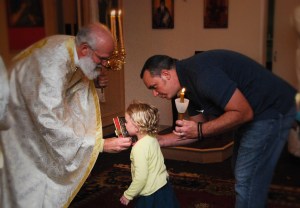
The other day I discovered that someone felt a comment I made on Facebook was unkind. I find this ironic (I think I’m using the term correctly) in that I was trying to demonstrate that a video was wrongly accusing Pope Francis and the Roman Catholic Church of calling Lucifer “God” in one of its Paschal hymns. I simply stated some historical facts and then called the video “shoddy reporting.” Frankly just a little bit of historical research, which is what a reporter is supposed to do, would have clarified everything. But clickbait always uses dramatic headlines and aspersions on a person or group.

But the quote from St Simeon was used during Sunday’s homily and caught my attention. I know I am guilty of loveless “demonic theology.” I was once told, that whenever I’m asked a question, I respond with a dissertation. That’s my personality and seminary training at work. By amassing an overwhelming counter-argument, I win.

And that’s my problem. There shouldn’t be a “winner” in theology. Being right doesn’t make me right, if that makes sense. Theology must be infused with love, which is willing the good for the other person. Sometimes the “good” might be correction. But correction doesn’t come by “winning” an argument. It comes incarnationally, by being and practicing good theology, which is ultimately love.

May God Grant You Many Years

Gospel Book1One of the things I dislike is “insider talk.” These are words and phrases that people in groups use to communicate with each other. Most of the time, these words and phrases simply become rote to those inside the group and confusing to those outside of the group.

Orthodox Christianity is no different. We have phrases that cause non-Orthodox people to ask, “What does that mean?”

One phrase we use is, “God grant you many years.” We say it or sing to people on their birthday, their saint’s day, and on other special occasions. I used to think it was simply the Orthodox version of, “Live long and prosper.”

My friend and I would joke around and say, “God grant you Minnie ears.” You know…  like Minnie Mouse. Anyways.

Yesterday at church, a friend and I were talking and he mentioned something very interesting. A priest told him that the phrase “God grant you many years,” doesn’t mean “May God let you live a long and healthy life.” Rather it means, “May God give you many healthy years so you can continue to repent.”

You see repentance is the inward condition that allows God to perform his work of transformation. (BTW, HERE’S a great quote on repentance.) Repentance is essential for spiritual formation. So by praying, “God grant you many years,” we’re asking God to give people as much time as possible to experience transformation into Christ’s likeness, which is our salvation.

So the Orthodox phrase, “God grant you many years” now makes more sense to me.

And it’s probably a nicer expression to say than, “May God give you lots of time to repent because, Buddy, you need it.”

What Do You Want With Us, Son Of God?

SunsetI enjoy rereading books. Even though I know how it will climax, the journey is so enjoyable that I return over and over. And sometimes knowing the ending enhances subsequent readings.

The same applies to the Gospels, Matthew’s in particular for this post. Here’s a climactic line from Matthew 8.

“What do you want with us, Son of God?”

I wonder what Jesus’ original disciple thought when they heard this. Frankly, they must have been freaking out just a little bit. Mere hours before, they thought they were going to drown in a storm. Then their Rabbi calms the tumultuous elements by simply speaking to them. WHAT!?

Now exhausted from rowing, they land the boat only to be confronted by two deranged and violent men screaming, “What do you want with us, Son of God?”  And as he did hours before to the raging forces of wind and waves, he does again to the raging forces of evil. WHAT!?

This is the big reveal to which Matthew has been building in the first part of his story. Jesus has defeated the devil on his own turf. He has called his twelve disciples, symbolically restructuring Israel’s twelve tribes around himself. He has begun teaching and healing and crowds have begun to follow him. Jesus then teaches of God’s imminent kingdom in chapters 5, 6 and 7. Matthew follows this up with individual moments that demonstrate Jesus’ authority over disease, creation and evil, like a poker player dramatically revealing each card in a winning hand. Now Matthew drops the final card and there’s a collective gasp. For the first time from a human being’s mouth, Jesus is called by by the title, “Son of God.”

I think it’s important to pause here and gather our historical bearings. In Israel, the title “Son of God” had layers of meaning. It was used for angelic beings (Gen 6.2). It was also used for the nation of Israel (Ex 4:22). It was later used for the Davidic king (Psalm 2.7). By Jesus’ day, it had developed into a messianic title. The Messiah was the “anointed one.” He was to be King David’s true heir, through whom YHWH would rescue Israel from pagan enemies, judge the world and set everything right. Also, in the surrounding Roman culture, “Son of God” was also a title for Caesar, the self-proclaimed Lord of the world.

All of this is to say, “Son of God,” in its historical context in Matthew’s story, referred to Israel’s true king and did not have any reference to deity. Throughout Israel’s history and in Jesus’ time, “Son of God” never meant “deity,” “second person of the Trinity” or “equal to God.” To oversimplify, “Son of God” is more of a political title. Israel’s king represented Israel’s God and was therefore called the “Son of God” (2Sam 7:14).

Now the title would gain its fullest meaning after Jesus’ resurrection. His followers would recognize that he was the true embodiment of YHWH. By the time of Paul’s writings, “Son of God” will have transitioned to its fullest meaning as the one who was already equal with God and was sent by him to become human and to become the Messiah.

Why bring this up? Because it’s too easy for the fullest meaning of the phrase to eclipse the nuances Matthew is using and therefore short-circuit the logic of the story. In this dramatic reveal in Matthew 8, the shadowy evil destroying these two men proclaim Jesus to be the “Son of God,” Israel’s true messianic king. Later Jesus’ disciples and then Peter will also declare him to be the “Son of God,” giving further validity to the claim. During Jesus’ trial, the chief priest asks him if he’s the “Son of God.” Knowing the end of the story, we know the answer that the chief priest cannot see. And finally at the foot of the cross, the Roman centurion, an enforcer of Caesar’s will (remember Caesar used the title “Son of God”) proclaims that the dying Jesus is the true “Son of God,” the true Caesar. But how can Jesus be the true messianic King of Israel if he’s dying at the hands of Caesar? His title “Son of God” will be validated in a few short days.

Israel believed that YHWH would resurrect his faithful people at the end of time as the first event of his New Creation. Now surprisingly, YHWH validates Jesus and all of his claims and demonstrations by resurrecting him. Jesus IS God’s Faithful One and all of his claims are true. He is Israel’s true messianic king.

Why is this seemingly roundabout journey so important? Because Matthew is telling the climax of Israel’s centuries-long story. Israel’s Scriptures declared that her true King was not only King of Israel, but Lord of the nations. Matthew has demonstrated that Jesus is the “Son of God,” Israel’s true king. By doing so, he’s therefore proven that Jesus is the true “Caesar,” the true Lord of the world. And as his followers continue to reflect on his words and life, they quickly realize that he actually embodied YHWH, saying and doing what only YHWH could say and do.

When modern Chrisitians proclaim Jesus as “Son of God” we are proclaiming him in the fullest sense of the title – the Only Begotten Son of God, second person of the Trinity, very God of very God. But the full meaning sweeps up the other meanings as well. We’re also declaring Jesus as Israel’s true King and the true Lord of the world.

This is important because the same evil force driving the two men in Matt 8 still works in our world. Personally, it drives our rage, lust, greed and fears. Socially, it drives companies, political parties and their candidates, governments, and even churches. Globally, it drives forces like economies, technologies, globalization, and trade. And like 2000 years ago, the evil asks, “What do you want with us, Son of God?”

Only by being the fulfillment of Israel’s story can Jesus be God’s answer to evil. God didn’t jump straightway from Genesis 3 to Matthew. Rather, he works with and through Abraham, Moses and all the characters, plot twists and promises in Israel’s long story — a story that climaxes with Israel’s King ascending his throne, a cross, in order to defeat evil and being raised from the dead in order to launch God’s New Creation. Now we are swept up into that story as well. We are both beneficiaries and agents of Israel’s true King and the world’s true Lord, who is also God in the flesh. How we live and continue his work must be shaped by this story and all its nuances so we we may live and work in the same manner he did.

Waxing Nostalgic – Raising Kids

Zahariades Family (1)This the second post that began HERE.

As I prepare to turn fifty, my four kids span from 16 to 24 years old. And I want to say upfront that I absolutely love and adore them. To borrow from someone’s Facebook post, they’re the reason I have gray hairs and the reason I have laugh lines.

I think every loving parent makes incredible sacrifices for their children. Some of those sacrifices are huge, momentous occasions. And most are those daily “putting their needs before ours” kind of decisions.

All of those sacrifices are made with the intention of giving our children a better chance than we ever had — to create wonderful memories, to provide for their needs, to bring them joy and happiness, and to shape them into men and women with good character.

In the Orthodox Church, there’s a daily prayer that has taught me a few lessons:

“O God, our heavenly Father, who loves mankind, and are most merciful and compassionate, have mercy upon our children, your servants, for whom I humbly pray you, and commend them to your gracious protection. O God, be their guide and guardian in all their endeavors; lead them in the path of your truth, and draw them near to you, that they may lead a godly and righteous life in your love and fear, doing your will in all matters.”

Here’s what I’ve learned:

Lesson #1. God loves my kids more than I love them. I don’t think I need to say much more on that one.

Lesson #2. Because he loves them more than I do, I have a constant decision to make in regards to their care. I can either worry about them or actively commend them into God’s care. As a young parent, I used to be plagued with graphic visions of my firstborn’s death. I used to worry for him constantly and lived in a low-level state of panic. He’s now 24 years old. I had to learn that I can’t be with him nor protect him constantly. So I had to choose either to worry about him and my other kids or actively commend them into God’s loving care.

Lesson #3. Just because God loves them and cares for them, doesn’t mean bad things won’t happen to them. Part of learning to commend them into God’s care was praying the aforementioned daily prayer only to learn hours later that something terrible had actually happened to one of my children. But the ultimate “goal” of the prayer is for children who have learned to lead godly and righteous lives. That sometimes requires painful lessons. Fortunately, lesson #1 encompasses lesson #3.

It’s can be heartbreaking being a parent of adult children. Sometimes I hear my kids share memories of their childhood. Some are good memories. But occasionally they will share an incident which I had intended to be a good experience. But because of a word or an action, what I planned to be a positive memory is actually a painful one that they have carried for years.

That’s a difficult thing to bear. It’s easy to become despondent and believe the inner voices that accuse me of being a bad parent. Believe me, there’s plenty of evidence to substantiate such claims.

As I attempt to parent adult children, I find that I don’t always have the words or advice they need. Their lives are taking a completely different trajectory than mine. I’m crushed by their experiences of stress and pain. My heart breaks when they share their doubts, fears and anxiety about relationships, education, career and life purpose. And I feel helpless and impotent, unable to give them what they need.

Michael & Cathy Playing 2 100_0210.JPG

These feelings are easily compounded when look through old photographs of my children smiling and playing. It’s easy to wish that I could have frozen time when they were young, innocent and fairly happy. Life seemed simpler then. But I know it wasn’t.

Then my mind drifts back to the prayer. And I’m learning a fourth lesson:

Lesson #4. God answers prayer. God has been and still is their guide and guardian. He has and still is leading them in the path of his truth. He has and still is drawing them near to him. And they are learning to lead godly and righteous lives.

Debbie and I are ultra-blessed with four great adult kids. They love God, each other, us and other people. They are truly great friends with each other. And they are friends with Debbie and me. And they are good friends with those in their lives.

When Debbie and I brought each child home from the hospital after their births, a huge unknown future loomed before us. We didn’t know what awaited our kids. But we knew we wanted them to grow into men and women of character who loved God, loved each other, loved us and loved people.

And all I can say is, “God, thank you so much for graciously answering our prayers.”

IMG_4568

He Rose Up

SunriseA telephone rings and a man answers, “Hello.” The voice on the other end asks, “Hi, is your refrigerator running?” “Uh… yes it is.” “Well, you should go catch it.”

Jokes like this highlight a word’s multiple meanings. The humor occurs when one meaning is used improperly in a different context.

Context is key. It determines a word’s meaning. An overused example in the English language is the word “love.” It’s use in popular language falls within a large spectrum of meaning depending on context. And when you throw in something like sarcasm, a word’s meaning can completely change. “I love spending time with my mother-in-law,” could mean different things depending on who is speaking, her personal story and her tone of voice.

Some words can also have stories “baked” into them depending on how they’re used over time. In our current social and political climate in the US, words and phrases like “police” and “build a wall” are becoming infused with different meanings in different contexts.

The same is true in the Bible. A writer will use the same word to mean different things. Or he may use the same word in different contexts as a way to build toward the story’s climax. So by the time you’ve reached the climax, the previous uses of the word become infused with the greater, overarching story. A great example occurs in Matthew 9:9:

“As Jesus was walking along, he saw a man called Matthew sitting at the tax-office. ‘Follow me!’ he said to him. And he rose up and followed him.”

If Matthew wrote this Gospel, then this is a fascinating story highlighting his own calling. Matthew recalls his response to Jesus’ call as “he rose up and followed him.” The Greek word for “rose up” is a fairly generic word that can simply mean “stand up.”

But Matthew will use the word a moment later in another story. In Matthew 9:25, Matthew recounts Jesus resuscitating a young girl from death:

“So when everybody had been put out, he went in and took hold of her hand, and she got up.”

There’s that word again, “got up.” But it definitely means something more than simply “standing up.” The little girl has been “raised up”  — she’s been miraculously resuscitated from the dead.

The word ultimately is used in describing Jesus’ own resurrection. More than a resuscitation, Jesus is the first of God’s faithful people to be bodily resurrected, thus launching God’s New Creation smack-dab in the midst of this startled creation. As such, the generic word becomes infused with overwhelming meaning and compels the reader to revisit Matthew’s previous uses of the word.

In the story of the young girl, it’s fairly clear that Matthew uses the word to powerfully link the girl’s extraordinary resuscitation to Jesus’ resurrection. The implications to Jesus’ proclamation and demonstration of God’s imminent kingdom are tremendous.

Now look at Matthew’s autobiographical description of his calling. Here’s a tax-collector, loathed by all and perhaps also himself. He’s colluding with Israel’s overlords in order to get rich off of the backs of his oppressed countrymen. Not only is he hated because of his job, but his very life is a constant reminder that Israel’s exodus has not truly ended. Yet, this repulsive life was his life every waking moment of every single day for years. Perhaps decades.

Then this young man appears, proclaiming the true end of Israel’s exile and the beginning of God’s Kingdom. And this young man asks Matthew to follow him. It’s a miracle. He’s been resuscitated from his dead life of collaborating with the enemy. In fact it’s even more than a resuscitation. He “rose up,” carries the undeniable tones that he was “resurrected” from a life of exile and death and now follows Jesus.

As we read Matthew’s short autobiographical recounting of his own calling, we can almost picture an old man filled with untold gratitude penning these short lines. He’s grateful for the resurrection miracle he experienced years ago, grateful to be part of the larger story of Jesus’ resurrection power as he followed with Jesus throughout Israel, grateful to be a surprised and confused eyewitness to Jesus’ own Creation-impacting resurrection about which he will soon write, grateful to be part of a “resurrection” community with others who have experienced the same life-altering power, and grateful to know the ultimate resurrection still awaits him, his community and all of creation.

“And he rose up and followed him.”

Waxing Nostalgic

50th-birthday-fifty-years-the-first-50-years-of-childhood-child-at-heart-t-shirt-b7247e72edfafcafce0798069270bec5In exactly one month I turn 50 years old. Good God, that’s a half century. Although Scripture says that a thousand years is like a day to God. So that’s only about one hour and 12 minutes for God.

I realize that many before me have crossed this line and would probably think, “Been there, done that.” But this is my first time and last time.

Anyways, this impending milestone has caused me to wax nostalgic as of late. So I thought I would blow off the dust on this blog and share my thoughts as I look back on important aspects of my life.

I’m not promising much as time and energy will dictate the number of posts. Nor am I promising anything deep. Since this blog is pretty obscure, I see it more as a “message in the bottle” scenario; tossing thoughts into the ocean to see who might find them. Over the years, I’m amazed at who actually stumbles across this blog.

I’m sure anyone who reflects on their life is filled with an unique mixture of regret and satisfaction. Needless to say, all of it shapes who we are. So while some of what I reflect upon might seem trivial, God has used all of it to shape who I am. So I believe it’s important to record some of the main stuff as I quickly approach the “Big Five-Oh”.

See, I told you it wouldn’t be very deep. Tossing the first bottle… <kersplash!>

My Photography

I am a fortunate guy. I realize that and thank God daily. Besides a great wife and kids, good friends, a nice job, and many, many other blessings that I don’t deserve, I also get to take pictures.

IMG_0801 Green at the Beach.JPG

I started exploring photography back in 2006. That’s when I purchased a Canon Powershot A620. It was a point-and-shoot camera. But I didn’t know what I was doing and shot in Auto. Occasionally I would get a decent image. I especially liked the macro feature on the camera.

Blue Glass-sRGB House In The Snow

Then in 2009, my best friend and lifelong photographer gave me a Nikon D40X. I purchased a used 18-200mm lens and jumped feet first into the DSLR world. While I still shot mostly in Auto, I started looking at “ordinary” things from a different perspective.


CFD Bulb Links

Also in 2009 came my first iPhone. I later heard a statement that summed up my experience with my iPhone, “The best camera is the one you have with you.” I became enthralled with the ease of taking and editing photos on my iPhone. While not having the quality of a DSLR, it allowed me to focus on capturing the “ordinary” in a more artistic way.


Yarn Cabrillo Shoreline

In 2015, my photography experience expanded when I purchased the Sony a6000. I started using prime lenses and learned to shoot in Manual. I’m learning posing and portraiture. I’m learning lighting techniques. What began ten years ago as a simple hobby as slowly turned into a something very rich and fulfilling.

I post my photos in different venues — Facebook, Instagram, Flickr & 500px. This weekend, I decided to launch a simple website (jasonzahariades.com). Frankly, I’m not sure where I want to go with all of this. My initial intention was to launch a small business that I could grow as I slowly approach retirement.

However, the thought of starting a photography business scares me. I love photography. I love freezing special moments to enjoy over and over. I also love seeing things from a different perspective. I love the creative process. And I especially love that there’s no stress associated with my photography. It’s just fun, plain and simple.

So, I’m afraid of what will happen if I turn something I love into a business. As with most things in my life right now, we’ll have to wait and see.

A Concise Summary

Jesus' LikenessThe other day on Facebook I posted a homily by Fr Barnabas Powell called “This IS Eternal Life.” I mentioned in my post that this homily was probably the most concise summary of why I became an Orthodox Christian. But that wasn’t entirely what I wanted to say.

What I wanted to say was Fr Barnabas’ homily was probably the most concise summary of why I became an Orthodox Christian AND why I’m very tempted to leave the Orthodox Church after almost eight years.

Our family entered the Orthodox Church because we saw the potential of what Fr Barnabas described. We are created in the image of God to be formed into the likeness of Jesus — to become by grace what Christ is by nature. My years as a Christian have brought me to a similar conclusion. And we saw the resources of the Orthodox Church as the “equipment” to aid us in that purpose.

But our experience has not synced with our expectations. I don’t want to unpack my issues here. Suffice it to say, after almost eight years, Debbie and I are still struggling with significant unmet expectations. As Fr Barnabas states in his homily, becoming by grace what Christ is by nature is the purpose of Orthodoxy. “If that ain’t happening in your life, then you’re not doing it right.”

I realize I must take full responsibility for my journey to Christ’s likeness. I am not blaming anyone for any deficit in my own life. My relationship with God is my responsibility. Yet, we expected to join our personal journeys into a community of other like-minded people. Unfortunately, this hasn’t been the case. And trust me, we’ve looked.

We have very good friends in the Orthodox Church. I’m sorry if I offend any of them with what I’ve written. This is something that has been weighing heavily on me for a long time and I wanted to give it expression. And again, I’m not attempting to dodge any personal responsibility.

Back when I was part of the Emergent/Home Church, I held some core values — the inward journey toward Christ’s likeness, the outward journey toward an incarnational and missional life and the corporate journey of a deep life-sharing community that supported and empowered all of this. I still hold those values. I’m looking for fellow Christ-followers who want to become like him, who want to implement God’s New Creation in this world that Jesus started, and who want to do it together.

At this point, I have no desire or plans to leave Orthodoxy. I still see the vision that Fr Barnabas proclaimed. I’m just not experiencing it and can’t find it in any other local parish. So I continue to focus on my personal responsibilities to become like Christ and hope to find others with whom we can join our lives.

Some Thoughts About Following Jesus

I’ve been reading through NT Wright’s book, After You Believe. It’s challenging me to think more intentionally about “following Jesus.”

Luke 9:31 states Jesus was speaking to Moses and Elijah on the Mount of Transfiguration about his “departure.” The Greek word is “exodus.” The fact that Luke chooses this word in conjunction to Jesus’ conversation with Moses is striking. Jesus’ death will enact an event like the Old Testament Exodus. But where Moses’ Exodus led the Israelites out of slavery to Egypt and into the Promised Land of Israel, Jesus’ Exodus will lead humanity out of slavery to sin and death and into the Promised Land of New Creation.

But how does this imagery impact our “discipleship” or “following Jesus”? In Moses’ Exodus, the people followed Moses through the sea on dry ground. Our imaginations have been shaped by the Cecil B. DeMille’s The Ten Commandments or more recently by Dreamworks The Prince of Egypt. Moses raises his staff, the waters split into towering walls and the people cross safely across the sea.

But Jesus’ Exodus is different. Imagine Jesus standing on the shore of the sea. But rather than splitting the waters, he wades into their midst, ever deeper until finally he is engulfed…. and drowns. We stand on the shore in horror as we watch his lifeless body bob to the surface and float facedown upon the currents. For three days the tides slowly carries his body to the far shore, where it’s washed up onto the sand. As we squint and peer at that lifeless speck on the other side, amazingly it stirs and stands and beckons us to follow.

With this image Jesus’ familiar words “Whoever wants to be my disciple must deny themselves and take up their cross and follow me,” are infused with the dread and foreboding they were intended. For most of us, the thought of drowning is terrifying. In Jesus’ day, crucifixion was equally if not more terrifying.

For me, I’ve allowed the idea of “following Jesus” to become a bit sterile, focusing more on “copying Jesus” or “imitating Jesus.” And while that’s an important element, at its core, following Jesus requires nothing less than death and resurrection. That is the only way out of slavery to sin and death and into the Promised Land of New Creation.

St Paul writes, “Thus, if anyone is in the Messiah, there is a new creation! Old things have gone, and look — everything has become new.” (2Corinthians 5:17) A human life that embodies God’s New Creation is only possible by being transformed by death and resurrection — the old is gone and everything has become new.

In another passage he writes, “But the fruit of the spirit is love, joy, peace, great-heartedness, kindness, generosity, faithfulness, gentleness, self-control. There is no law that opposes things like that! And those who belong to the Messiah, Jesus, crucified the flesh with its passions and desires. If we live by the spirit, let’s line up with the spirit.” (Galatians 5:22-25) Again, this is the life transformed by death and resurrection. Paul is not telling people to work harder at being loving and joyful, etc. He’s detailing the genuinely human New Creation life, a life transformed and empowered by God’s Spirit and available to those who follow Jesus into his death and resurrection.

Prayers & A Truck

Damaged TruckYesterday, my oldest child, Michael, was in a car accident. At 7:30 am, he was sitting at a stoplight when a car slammed into him from the rear. The force of the collision propelled Michael’s truck across the intersection. Fortunately, Michael kept his wits about him and quickly steered left to avoid a trash truck perpendicular to him in the intersection and then quickly steered right to avoid the cars facing him on the other side of the intersection. Michael walked away from that accident very sore but safe.
The other driver took full responsibility for the accident. He claimed his defroster wasn’t working quickly enough and he never saw the red stoplight or Michael’s truck or brake lights. The entire front of the other driver’s Honda was completely crumpled while only the rear bumper and muffler of Michael’s 1994 Chevy S10 was severely damaged.

Grandpa LeonardMichael’s truck has some history. It belonged to my Grandpa, who bought it new. When my Grandpa passed in 2001, it was handed down to my Dad. And he recently handed it down to Michael earlier this year. Michael loves the truck, even though it’s older and the air conditioner doesn’t work. He loves driving a piece of family history. I don’t blame him. It’s the last tangible piece of my Grandpa that remains.

So here’s where things get a little interesting. And I know there will be those who read what follows with a bit of skepticism. During Divine Liturgy this past Sunday, I felt a very strong compulsion to pray for my Grandpa and Grandma. This has only happened a couple of times in the past several years. Eastern Orthodox Christianity believes in a significant continuity between those who have passed and those who are currently on earth. It makes sense. Those who have passed are as alive, if not more alive than us who are presently on earth. So we pray for those who have passed and we ask them to pray for us.

I’ll be the first to admit that I don’t know how any of this works. But I strongly believe that the compulsion I had to pray for my Grandpa and Grandma was not a mere coincidence, especially when less than 24 hours later, Michael walks away virtually unscathed from an accident in my Grandpa’s truck.

My Grandpa was not a religious man in any way. In fact, he held a disdain for religion and anyone in religious authority. As I’ve gotten older and nurse my own wounds inflicted by Christian leaders, I realize that I have some of the same attitudes as him. But my Grandpa loved his great-grandkids. I have fond memories of him holding them as babies. I know this sounds extremely sentimental and a far-reaching stretch, but somehow through his truck, I imagine my Grandpa somehow holding Michael during that accident.

So, I’m very thankful today. I’m thankful to God for watching over my son. I’m thankful for all of the prayers on Michael’s behalf. And I’m thankful for my Grandpa’s truck that protected him.

For The Life Of The World

For_The_Life_Of_The_WorldWhen I was beginning my journey away from professional ministry, I came across the phrase, “for the sake of the world,” which I believe is attributed to Karl Barth. This phrase became a centerpiece of my reconstructed theology. Later, as I was beginning to explore Eastern Orthodoxy, I came across a similar phrase, “for the life of the world.” Not only is it the title of a quintessential book by Fr Alexander Schmemman, but more importantly, it’s also a line from one of the priest’s prayers during Divine Liturgy, “On the night when He was delivered up, or rather when He gave Himself up for the life of the world…”

These two phrases remind me that God’s mission, while having a personal dimension in our lives, is far larger than any of us. Remember, for God so loved the world. Everything God is accomplishing is for the life of the world. Christ was sent out of God’s love for the life of the world. We are being saved by Christ and into Christ for the life of the world. We are becoming truly human in Christ’s likeness for the life of the world. We are God’s image-bearers and creation’s stewards for the life of the world. Our lives are mobile temples of God’s presence, stitching heaven and earth together for the life of the world. Our experience of God’s forgiveness, mercy and transformation is for the life of the world.

I’ve mentioned this before, but in Romans 8:18-27, St Paul summarizes how the world is liberated and renewed. Creation is groaning. Redeemed humanity is embedded in creation and joins in the groaning. And God’s Spirit is embedded in redeemed humanity, also joining in the groaning. This groaning is the pain of childbirth and intercession. God’s New Creation is being birthed from within creation, redeemed humanity, and the Holy Spirit, each embedded in the other. Our role is to be the bridge between the world and the Spirit, giving expression to their groans through our own for the life of the world.

In Colossians 1:27, St Paul writes, “To them God has chosen to make known among the Gentiles the glorious riches of this mystery, which is Christ in you, the hope of glory.” Here’s the revealed mystery — Christ dwelling in us is the hope of Habakkuk’s prophecy fulfilled, “For the earth will be filled with the knowledge of the glory of the LORD as the waters covers the sea.” Christ dwells in us as a future-pointing sign that God’s glory will fill the earth. Christ dwells in us for the life of the world.

During Divine Liturgy, as the priest presents the Eucharist, Christ’s body and blood are offered for the life of the world. But it’s not only Christ. As his Body on earth, we, his redeemed community, join his offering. As Christ gave himself up for the life of the world, we too give up our lives for the life of the world. Where his life was offered to launch God’s New Creation for the life of the world, now our lives are offered to carry out God’s New Creation for the life of the world.

The Purpose of Pentecost

Prayer_CandlesToday the Eastern Orthodox Church celebrates the Feast of Pentecost. The following excerpt by NT Wright is longer than what I would normally post. But it’s a clear and succinct summary of Pentecost. The takeaway for me is the quote, “It’s about God giving to his redeemed people the way of life by which they must now carry out his purposes.”

So much has already been said from all quarters regarding Pneumatology. And many times, the focus has been misplaced, such as upon phenomena or an individual’s gifts. But whether the flame and wind of the Spirit come as a firestorm and hurricane or as a steady flicker and gentle breeze, it’s the same untamable Spirit working in and through God’s people to heal humanity and creation. It’s about God and his lavish Gift by which we, his redeemed people, carry out his purposes in the world he loves.

That’s the purpose of Pentecost.

———————————————

“Sometimes a name, belonging to one particular person, becomes so attached to a particular object or product that we forget where it originally came from. The obvious example is ‘Hoover’: in England at least we speak of ‘the Hoover’ when we mean ‘the vacuum cleaner’, happily ignoring the fact that quite a lot of vacuum cleaners are made by other companies which owe nothing to the original Mr Hoover. It is as though Henry Ford had been so successful in car production that people said ‘the Ford’ when they meant ‘the car’, even if in fact it was a Volvo.

Something similar has happened with the word ‘Pentecost’. If ‘Pentecost’ means anything at all to most people today, it is probably something to do with ‘Pentecostalism’. And that — again, if it means anything to people at all — probably signifies a somewhat wild form of Christian religious experience and practice, outside the main stream of church life, involving a lot of noise and waving of arms, and (of course) speaking in tongues. We often forget that all Christians, not only those who call themselves ‘Pentecostalists’, derive their meaning from the first Pentecost. We often forget, too, perhaps equally importantly, just what ‘Pentecost’ itself originally was and meant.

For a first-century Jew, Pentecost was the fiftieth day after Passover. It was an agricultural festival. It was the day when farmers brought the first sheaf of wheat from the crop, and offered it to God, partly as a sign of gratitude and partly as a prayer that all the rest of the crop, too, would be safely gathered in. But, for the Jew, neither Passover nor Pentecost were simply agricultural festivals. These festivals awakened echoes of the great story which dominated the long memories of the Jewish people, the story of the Exodus from Egypt, when God fulfilled his promises to Abraham by rescuing his people. Passover was the time when the lambs were sacrificed, and the Israelites were saved from the avenging angel who slew the firstborn of the Egyptians. Off went the Israelites that very night, and passed through the Red Sea into the Sinai desert. Then, 50 days after Passover, they came to Mount Sinai, where Moses received the law. Pentecost, the fiftieth day, isn’t (in other words) just about the ‘first fruits’, the sheaf which says the harvest has begun. It’s about God giving to his redeemed people the way of life by which they must now carry out his purposes.

All of that, and more besides, keeps peeping out from behind what the New Testament says about the spirit, and about Pentecost in particular. For Luke there is a kind of easy assumption that people would know about the first fruits. He can more or less take it for granted that readers will see this story, of the apostles being filled with the spirit and then going on to bear powerful witness to Jesus and his resurrection and to win converts from the very first day, as a sign that this is like the sheaf which is offered to God as the sign of the great harvest to come. And, when we look closely at the way some Jews told the story of the giving of the law on Mount Sinai, we can see some parallels there, too. When the Israelites arrived at Mount Sinai, Moses went up the mountain, and then came down again with the law. Here, Jesus has gone up into heaven in the ascension, and — so Luke wants us to understand — he is now coming down again, not with a written law carved on tablets of stone, but with the dynamic energy of the law, designed to be written on human hearts.

‘Pentecost’, then, is a word with very particular meaning, which Luke is keen that we should grasp. But of course the first day of Pentecost, and the experience of God’s spirit from that day to this, can no more be reduced to theological formulae and interesting Old Testament echoes than you can reduce a hurricane to a list of diagrams on a meteorologist’s chart. It’s important that someone somewhere is tracking the hurricane and telling us what it’s doing, but when it comes to Pentecost it’s far more important that you’re out there in the wind, letting it sweep through your life, your heart, your imagination, your powers of speech, and transform you from a listless or lifeless believer into someone whose heart is on fire with the love of God. Those images of wind and fire are of course what Luke says it was like on the first day. Many Christians in many traditions have used similar images to describe what it is sometimes like when the spirit comes to do new things in the lives of individuals and communities.

It is most significant, in the light of what we said before about the ascension, that the wind came ‘from heaven’ (verse 2). The whole point is that, through the spirit, some of the creative power of God himself comes from heaven to earth and does its work there. The aim is not to give people a ‘spirituality’ which will make the things of earth irrelevant. The point is to transform earth with the power of heaven, starting with those parts of ‘earth’ which consist of the bodies, minds, hearts and lives of the followers of Jesus — as a community: notice that, in verse 1, Luke stresses the fact that they were all together in one place; the spirit comes, not to divide, but to unite. The coming of the spirit at Pentecost, in other words, is the complementary fact to the ascension of Jesus into heaven. The risen Jesus in heaven is the presence, in God’s sphere, of the first part of ‘earth’ to be transformed into ‘new creation’ in which heaven and earth are joined; the pouring out of the spirit on earth is the presence, in our sphere, of the sheer energy of heaven itself. The gift of the spirit is thus the direct result of the ascension of Jesus. Because he is the Lord of all, his energy, the power to be and do something quite new, is available through the spirit to all who call on him, all who follow him, all who trust him.

The wind and the fire are wild, untameable forces, and the experience of the wind rushing through the house with a great roar, and the fire coming to rest on each person present, must have been both terrifying and exhilarating. Of course, there are many times later in this book, as there are many times in the life of the church, when the spirit works softly and secretly, quietly transforming people’s lives and situations without any big noise or fuss. People sometimes suppose that this is the norm, and that the noise, the force and the fire are the exception — just as some have supposed, within ‘Pentecostal’ and similar circles, that without the noise and the fire, and particularly the speaking in tongues, something is seriously lacking or deficient. We should beware of drawing either conclusion. Luke clearly intends to describe something new, something that launched a great movement, as a fleet of ships is launched by the strong wind that drives them out to sea or a forest fire is started by a few small flames. He intends to explain how it was that a small group of frightened, puzzled and largely uneducated men and women could so quickly become, as they undoubtedly did, a force to be reckoned with right across the known world.

In particular, Luke highlights this strange phenomenon of ‘speaking in tongues’. This has been a prominent feature of some parts of church life in the last century or so, though for many previous generations and in many parts of church history it has been virtually unknown. It occurs, it seems, in other religions, as Paul was aware (1 Corinthians 12.2–3). Some people try to sweep ‘tongues’ aside as if it was a peculiar thing which happened early on and which, fortunately, doesn’t need to happen any more. Sometimes this is combined with a sense of the need to control the emotions, both one’s own and other people’s. But ‘speaking in tongues’ and similar phenomena are, very often, a way of getting in touch with deeply buried emotions and bringing them to the surface in praise, celebration, grief or sorrow, or urgent desire turned into prayer. It is hard, seeing the importance of ‘tongues’ in the New Testament, and their manifest usefulness in these and other ways, to go along with the idea that they should be ruled out for today’s church.

In particular, it is precisely part of being a genuine human being, made and renewed in God’s image, that people should do that most characteristic thing, using words and language, in quite a new way. We are called to be people of God’s word, and God’s word can never be controlled by rationalistic schemes, or contained within the tight little frameworks that we invent to keep everything tidy and under control.

People sometimes feel guilty if they think they haven’t had such wonderful experiences as the apostles had on the first Pentecost. Or they feel jealous of those who seem to have had things like this happen to them. About this there are two things to say. First, as we saw in the first chapter, God moves mysteriously among his people, dealing with each individual in a different way. Some people are allowed remarkable experiences, perhaps (we can’t always tell) because they are going to have to go into difficult situations and need to know very directly just how dramatically powerful and life-transforming God can be. Other people have to work in quiet and patient ways and not rely on a sudden burst of extra power to fix all the problems which in fact need a much more steady, and perhaps much deeper, work. There is no room for pride or jealousy in a well-ordered fellowship, where everybody is as delighted with the gifts given to others as with those given to themselves.

Second, it is clear from words of Jesus himself (Luke 11.13) that God longs to give the holy spirit to people, and that all we have to do is ask. What the spirit will do when he comes is anybody’s guess. Be prepared for wind and fire, for some fairly drastic spring-cleaning of the dusty and cold rooms of one’s life. But we should not doubt that God will give his spirit to all who seek him, and that the form and direction that any particular spirit-led life will take will be (ultimately, and assuming obedience and faith) the one that will enable that person, uniquely, to bring glory to God.”

NT Wright, Acts For Everyone

Three Men & A Gym: A Parable… well an attempt at one

MuscleThree men were relaxing at a smoothie shop after one of their regular visits to the gym. The first man declared, “Do you know why I joined this gym? Since I’ve been going the past couple of years, I’ve lost 40 pounds of fat and I’m so much stronger. I’ve never looked or felt so good in my life. They have the newest equipment and play the music I like. This gym is the best.”

The second man nodded in agreement, “Do you know why I joined this gym? Because in the past couple of years since attending, I’ve been working out with a personal trainer. I know all about most of the muscle groups and which exercises and equipment strengthens them. I’m learning so much about various foods and how to maximize workout and diet to maintain peak fitness. This is the strongest I’ve felt in my entire life. This gym is the best.”

The third man looked at the other two men and stated, “Do you know why I joined this gym? Several years ago I was in the hospital, not sure if I would see tomorrow. I realized then that my wife, kids, friends, and others in my life needed me. I joined this gym so I could be healthy in order to be with them and serve them as long as I can.”

If You Would Have Looked Into His Eyes

EyesI encountered a jarring story this morning in Henri Nouwen’s The Wounded Healer. It’s a great reminder that even with the best intentions we can completely fail to see people.

“One day a young fugitive, trying to hide himself from the enemy, entered a small village. The people were kind to him and offered him a place to stay. But when the soldiers who sought the fugitive asked where he was hiding, everyone became very fearful. The soldiers threatened to burn the village and kill every man in it unless the young man were handed over to them before dawn. The people went to the minister and asked him what to do. The minister, torn between handing over the boy to the enemy or having his people killed, withdrew to his room and read his Bible, hoping to find an answer before dawn. After many hours, in the early morning his eyes fell on these words: ‘It is better that one man dies than that the whole people be lost.’

“Then the minister closed the Bible, called the soldiers and told them where the boy was hidden. And after the soldiers led the fugitive away to be killed, there was a feast in the village because the minister had saved the lives of the people. But the minister did not celebrate. Overcome with a deep sadness, he remained in his room. That night an angel came to him, and asked, ‘What have you done?’ He said: ‘I handed over the fugitive to the enemy.’ Then the angel said: ‘But don’t you know that you have handed over the Messiah?’ ‘How could I know?’ the minister replied anxiously. Then the angel said, ‘If, instead of reading your Bible, you had visited this young man just once and looked into his eyes, you would have known.’”

Be Eager To Walk This Path

“Snow can never emit flame.
Water can never issue fire.
A thorn bush can never produce a fig.
Just so, your heart can never be free
from oppressive thoughts, words, and actions
until it has purified itself internally.
Be eager to walk this path.
Watch your heart always.
Constantly say the prayer
‘Lord Jesus Christ, have mercy on me.’
Be humble.
Set your soul in quietness.”

–St Hesychios

TunnelAs Jesus’ apprentices, we are called to embody his life into our world. However, in order to embody Christ, we must walk the long journey of transformation into Christ’s likeness — to become by grace what God is by nature. This doesn’t occur automatically, but in communion and cooperation with God’s presence in our life.

St Hesychios provides us with some spiritual tools for the journey:

1. We must eagerly desire to become like Christ. This is our vocation and not our hobby. God uses every aspect of our lives in the process of transformation. We must receive this process with thanksgiving regardless of how painful the delivery system is at the time.

2. We must be genuinely self-aware. We must be honest about the monsters that lurk in the shadow of our heart and how they find expression in our lives. Self-delusion short-circuits the process.

3. Our lives must be marinated with prayer. Our lives must be steeped in prayer so that prayer becomes the natural default posture of our heart. One great tool provided by St Hesychios is the Jesus Prayer.

4. Practice humility. Learn to seek the good for others before yourself. This might express itself in being quiet so others can talk. Or it might be quietly serving someone without drawing attention to yourself. Or it might be learning to be thankful.

5. Learn to practice silence. Incorporate moments of silence as a regular part of your daily life.

It’s crucial to remember a couple of things about spiritual tools. First, St Hesychios doesn’t provide an exhaustive list of spiritual tools. The Church offers many indispensable tools on our journey to Christ’s likeness.

Second, practicing these disciplines does not automatically equate into Christ’s likeness. There is not a one-to-one correlation between practice and transformation. It’s similar to going to the gym. Using the equipment doesn’t automatically result in physical health. Surely, it can contribute toward a healthy lifestyle. But there are other essential factors as well.

When properly practiced, the specific tools provided by St Hesychios, as well as all of the resources provided by the Church, create an environment of communion and cooperation with God in our lives. It is this relationship that forms the structure for transformation into Christ’s likeness.

Coming To Grips With Calling

ObscureSince joining the Orthodox Church, I have wrestled with my sense of calling. For most of my adult life, I believed I was called to professional ministry. It was something that motivated me daily. I studied for it, trained for it, and poured everything I had into it. And even when I left professional ministry and co-founded a small home church, I continued to pursue the calling at a non-professional level. This calling formed the core of my identity.

However, joining the Orthodox Church threw everything into a state of internal turmoil. For several reasons, I immediately knew that I was not called to be a priest. My “talents” were in pastoral care and studying & teaching Scripture, not liturgics. I knew my life as a pastor prior to entering the Orthodox Church was led and ordained by God as I attempted to follow Jesus to the best of my ability. However, I could not synchronize from where I had come with what now lay before me.

For a couple of years I struggled deeply with my perceived calling. Was it real or was it fake? Did I waste my and my family’s life on pursuing something that was basically self-delusion or a need to provide my life with unique meaning? If it was real, I could not make sense of it as an Orthodox Christian.

For my own emotional health, I needed to end the inner wrestling I was experiencing. So I convinced myself that I had been mistaken and was never called into ministry. I convinced myself that all the good I did was basically God’s abundant grace at work in an immature and broken person who had deluded himself.

Through ongoing conversations with Debbie and friends, this stance eventually shifted to something a bit more balanced. I believed I was temporarily called for a period of my life and the calling was now revoked. And I was content to simply let it lie there. I chose not to seek avenues of ministry in my new parish because my theology and practices remain “too Protestant,” of which I’m not ashamed nor apologetic. But I respect my priest and Church traditions too much to cause any conflict. So, while I’m virtually useless in my parish, I’ve subtly directed my “pastoral” endeavors into my family.

However, life circumstances during the past month have shined a light back upon my life and calling. In addition, I’ve been reading The Crown and the Fire by N.T. Wright through Lent and Pascha, which serendipitously contains a chapter on “calling.” A couple of quotes are very germane:

“God’s call is not designed to make us supermen and superwomen, because that’s not what the world needs; it needs men and women who are humble enough, and often that means humbled enough, to work from within, from below, not to impose a solution on the world from a great height but to live within the world as it is, allowing the ambiguities and the perplexities of their own sense or absence of vocation to be nevertheless the place where they listen for the voice of God, and struggle to obey as best they can.”

“The call of God is not to become the heroine or hero in God’s new Superman story. It is to share and bear the pain of the world, that the world may be healed.”

The entire chapter has helped me to make better sense of my perceived calling. My calling has always been to help and to pastor people. For most of my adult life, this occurred through my career in professional ministry. But the calling still continues and I can no longer ignore it. As N.T. Wright states, the world needs men and women who are humble enough to work from within and from below, living in the world as it is and to share and bear the pain of the world that that world may be healed.

So what does this mean for me? A couple of things come to mind. First, I’ll continue to pastor my family. I still believe the Orthodox Church is the best place for my family to grow spiritually. My role is to help them understand and apply Scripture, Tradition and practices as Jesus’ apprentices within the world. Second, I will become more active in seeking ways of sharing and bearing the pain of the world from within and from below. I’ve already begun looking at opportunities to serve others and hope God will open the appropriate doors.

This may not seem like much, but it’s a step forward.

Thoughts On My Son’s Birthday

My_KidsI’m going to step from out of the shadows for a moment to type some thoughts. Today, Michael, my firstborn, turns 23.

Parenting classes and instruction never prepared me for this phase of parenting, when I look backwards into time at my adult children’s lives. As a young parent, my kids’ lives and my role in their young lives stretched out before me. Now their childhoods are just photos and memories. Sometimes those memories come rushing back like a flood, accompanied with a lot of emotions — joy, humor, regret, shame. From where I stand now, there is no reset button. There is no do-over. I can’t grab my babies and pull them into my lap. I can’t touch their tiny faces or hold their small hands or listen to their little voices.

Please don’t misunderstand me. I love my adult children. We are all friends and very close. But those precious childhood years are gone, never to return or to be relived. Now my kids are only a few years from moving out and starting their own families. Even our present experience of nightly family dinners, frequent car trips, family walks and other precious moments together will be quickly winding down.

As I was thinking about this on my drive to work this morning, another realization hit me. I will be 50 next year. If my family is blessed with long life, I have another 30 years or so. That means I’m quickly approaching the halfway point of my life with my wife and kids. Half of it is almost over. It blazed by so quickly. I can’t help feeling like I missed so much of it.

For what it’s worth, here’s my advise to all young parents. Don’t let anything steal you away from your children. Don’t let financial struggles, career choices, relational strife, hobbies, church, or anything good or bad rob you from the irretrievable years of your kids’ childhood. I know that with young children, the first 18 or so years of their lives can seem forever. But they are not. That time will be gone before you know it.

When you’re with your kids, be with your kids. Put everything away and just be with them. When you’re watching a movie with them, look at their faces and enjoy the wonder, laughter or surprise. When you’re on a walk with them, hold their hands, look at what captures their attention, and don’t rush. When you’re eating together, forget the mess and the volume and simply share the moment.

These last several years of family togetherness are so precious to me. I cherish them more than anything. I’m convinced that the best legacy of my life will be my kids. I’m blessed that my kids still make time to have family dinner together almost every night. Most of the times, I can’t stop laughing at their antics and jokes. I’m also blessed that my kids still like to watch TV and movies together. We laugh and cry as we watch the show together and repeat quotes after the credits have rolled by.

There’s no one else I would rather be than with my wife and kids.