 Since joining the Orthodox Church, I have wrestled with my sense of calling. For most of my adult life, I believed I was called to professional ministry. It was something that motivated me daily. I studied for it, trained for it, and poured everything I had into it. And even when I left professional ministry and co-founded a small home church, I continued to pursue the calling at a non-professional level. This calling formed the core of my identity.
However, joining the Orthodox Church threw everything into a state of internal turmoil. For several reasons, I immediately knew that I was not called to be a priest. My “talents” were in pastoral care and studying & teaching Scripture, not liturgics. I knew my life as a pastor prior to entering the Orthodox Church was led and ordained by God as I attempted to follow Jesus to the best of my ability. However, I could not synchronize from where I had come with what now lay before me.
For a couple of years I struggled deeply with my perceived calling. Was it real or was it fake? Did I waste my and my family’s life on pursuing something that was basically self-delusion or a need to provide my life with unique meaning? If it was real, I could not make sense of it as an Orthodox Christian.
For my own emotional health, I needed to end the inner wrestling I was experiencing. So I convinced myself that I had been mistaken and was never called into ministry. I convinced myself that all the good I did was basically God’s abundant grace at work in an immature and broken person who had deluded himself.
Through ongoing conversations with Debbie and friends, this stance eventually shifted to something a bit more balanced. I believed I was temporarily called for a period of my life and the calling was now revoked. And I was content to simply let it lie there. I chose not to seek avenues of ministry in my new parish because my theology and practices remain “too Protestant,” of which I’m not ashamed nor apologetic. But I respect my priest and Church traditions too much to cause any conflict. So, while I’m virtually useless in my parish, I’ve subtly directed my “pastoral” endeavors into my family.
However, life circumstances during the past month have shined a light back upon my life and calling. In addition, I’ve been reading The Crown and the Fire by N.T. Wright through Lent and Pascha, which serendipitously contains a chapter on “calling.” A couple of quotes are very germane:
“God’s call is not designed to make us supermen and superwomen, because that’s not what the world needs; it needs men and women who are humble enough, and often that means humbled enough, to work from within, from below, not to impose a solution on the world from a great height but to live within the world as it is, allowing the ambiguities and the perplexities of their own sense or absence of vocation to be nevertheless the place where they listen for the voice of God, and struggle to obey as best they can.”
“The call of God is not to become the heroine or hero in God’s new Superman story. It is to share and bear the pain of the world, that the world may be healed.”
The entire chapter has helped me to make better sense of my perceived calling. My calling has always been to help and to pastor people. For most of my adult life, this occurred through my career in professional ministry. But the calling still continues and I can no longer ignore it. As N.T. Wright states, the world needs men and women who are humble enough to work from within and from below, living in the world as it is and to share and bear the pain of the world that that world may be healed.
So what does this mean for me? A couple of things come to mind. First, I’ll continue to pastor my family. I still believe the Orthodox Church is the best place for my family to grow spiritually. My role is to help them understand and apply Scripture, Tradition and practices as Jesus’ apprentices within the world. Second, I will become more active in seeking ways of sharing and bearing the pain of the world from within and from below. I’ve already begun looking at opportunities to serve others and hope God will open the appropriate doors.
This may not seem like much, but it’s a step forward.
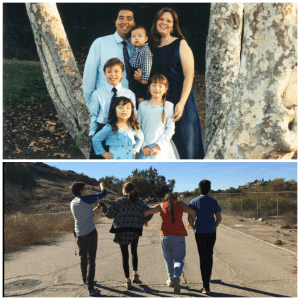 I’m going to step from out of the shadows for a moment to type some thoughts. Today, Michael, my firstborn, turns 23.
 I’m definitely not a DIY kind of person. But I do have a handful of favorite tools that I use frequently. There are two commonalities about these tools. First, they are well-designed to meet the most common repair challenges I encounter. And second, because of their constant use, they are well-worn.
 So much of our society focuses on superstars and celebrities. Whether sports stars, movie stars or pop stars, we follow their lives through glossy magazines and tacky TV shows. Many people dream of meeting them or having their lives.
 We see this “law” at work in
  “What is the greatest commandment of the New Testament?” This is the question with which
  Yesterday was the Sunday of the Prodigal Son. I love Jesus’ stories, and the Prodigal Son is his absolute best in my opinion. It weaves together beautiful themes of mercy, repentance, resurrection, and New Creation, while expertly exposing the condition of the reader’s heart.
 Let him be measured by this measure…
 Over the holidays, our family saw Saving Mr. Banks. Some have criticized it as “a Disney movie about a Disney movie.” However, we thoroughly enjoyed “the story behind the story” of one of our favorite movies, Mary Poppins.
 At its core, the Story in which we all live instills hope again, and again, and again. Saving Mr. Banks rekindled this in my imagination. And then immediately reading N.T. Wright’s, The Case for the Psalms, further fanned it into flames. In his book, Wright explains how Israel’s ancient poems tell an ongoing story of humans living at the convergence of our time, space and matter and God’s time, space and matter. It’s upon this knife’s edge that our stories make sense within the larger cosmic Story.
 This rendition of the Trisagion is absolutely beautiful and moves me to tears. If you have a few quiet moments, just let it wash over you.
 The blog, “On Behalf Of All,”
  “The inner conflict produced by life in the world is easily projected onto the screen of the universe, yielding an imaginary God. Only true stillness can allow the projection to dissipate.” Fr Stephen Freeman,
  During my first years of marriage over two decades ago, I was a selfish young man. Surely to the best of my abilities, I committed my life to Debbie. Yet, I viewed marriage as the environment where my needs, agendas and dreams were to be met. When they were met, I was happy. And when they weren’t met, I was miserable.
 My best friend, Mark, posted on Facebook these sayings from St Isaac the Syrian:
 Sometimes we can lose our focus on why we need the Church. Maybe we’ve been hurt or disappointed or disillusioned. Quotes like the one below remind us why God created his restorative family and community called the Church.
 I was listening to
  In my previous youthful zeal and optimism, it was so easy to proclaim my love of God as though it were a grand thing. My worship was a spiritual facsimile of Tom Cruise jumping up and down on a couch. But the older I become, the more I realize that the truth quoted above is woven into the very fabric of reality. And it has tempered my immature exuberance with what I hope is humility. For my love for God is not something that needs to be proudly proclaimed in public but humbly practiced in silence.
 Many people believe tradition to be a dead thing. Movies portraying a young man or woman kicking over the traces have become cliche. Tradition is depicted as the tool of the old or entrenched trying to retain social or political power over the young or disenfranchised.
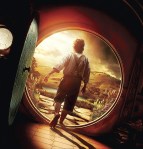 I’ve seen about every trailer and clip for The Hobbit: An Unexpected Journey. And yet I’ve remained a bit skeptical of the entire project. I loved The Lord of the Rings trilogy. But the thought of turning The Hobbit into another trilogy smacked of corporate greed more than artistic vision.
 It’s been quite some time since I’ve scattered any words upon this digital parchment. Life has been full. And I absolutely love it. The first half of 2012 was filled with a lot of anxiety and fear. Perhaps it was too many changes in too short a time. Or maybe it was simply the state of my own inner world taking its toll. Either way, things took a dark tone for awhile.
 Today is a significant milestone for my family. My second child, Catherine, graduates from high school.
 “Dad, when I grow up, I want to be a pastor and a hockey player.” That’s what my oldest son told me when he was in elementary school years ago. I’m not sure where the hockey player reference came from. But telling me that he wanted to be a pastor was his small expression of love for me and desire to be like me.

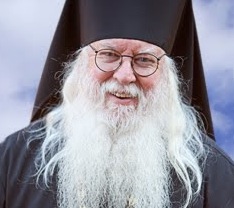
 Fr Stephen Freeman recently adopted a puppy, which has compelled him to



 Journeying Home