Fleeting Beauty

Bentley's SnowflakeI was listening to Radiolab this morning. (BTW, Radiolab has to be my favorite podcast!) They were talking about Wilson Bentley. Bentley was the first person to actually photograph snowflakes.

Bentley’s interest in snowflakes began as a teenager. At the age of 15, he would peer at snowflakes through a microscope and attempt to draw the complex images before they melted. By the age of 20, he had attached a camera to the microscope and spent the rest of his life capturing and photographing what he called “tiny miracles of beauty.” Mind you, this was 1885 and way before our modern era of digital photography.

Tragically, Bentley died of pneumonia after walking six miles in a blizzard in order to photograph more snowflakes.

Bentley’s life made me think about beauty. First, here’s a man who spent his entire life enraptured by a beauty that most would rarely ever notice. And he was not only enraptured, but dedicated to endure the hardships necessary to document this beauty. It has made me pause and reflect about what beauty has captured my attention and allegiance.

Second, beauty is not everlasting. Bentley’s snowflakes are the perfect example. Within minutes these “tiny miracles of beauty” evaporate and vanish forever. The vibrancy of a sunset quickly darkens as the sun slips below the horizon. The gleam in a lover’s eye dims with age or sickness.

Third, considering the gazillion unseen snowflakes that have fallen to earth through the ages, there is beauty that will always go unseen by any human eye. There are flowers on a mountain somewhere that will bloom and die, unwitnessed by any terrestrial being. And then I think of the untold beauty throughout our cosmos. Images from the Hubble Telescope can only hint at the beauty that lies far beyond our reach.

Our world has been intentionally infused with beauty, everything from a snowflake, a flower, a sunset to a smile and a caring hand. It makes me grateful that our Creator loves his world so much that he sent his Son. God came into our world to save it and renew it. And this makes me long for that ultimate Day of Renewal when Heaven and Earth will fully merge, all things will be made right and beauty will no longer be fleeting.

Quiet Love

“You love me more than I am able to love you.”

That line appears in one of Met Philaret of Moscow’s prayers. And it makes me pause every time I pray it.

On The CouchIn my previous youthful zeal and optimism, it was so easy to proclaim my love of God as though it were a grand thing. My worship was a spiritual facsimile of Tom Cruise jumping up and down on a couch. But the older I become, the more I realize that the truth quoted above is woven into the very fabric of reality. And it has tempered my immature exuberance with what I hope is humility. For my love for God is not something that needs to be proudly proclaimed in public but humbly practiced in silence.

God is love and perhaps the greatest expression of his love was the Incarnation. It was THE event of divine love that would heal humanity and creation and yet it was shrouded in quietude, humility and mystery.

Jesus taught that the greatest command is to love God with everything we have. Again, love is not proclaimed but practiced. But how? The Incarnation whispers an answer for those quiet enough to hear. “God became like us so we could become like him.”

God, who is love, became like us so we could become love like him.

St Paul encourages us to pursue love. This means far more than giving and receiving love, although  this would be a great start for many of us. Rather it’s pursuing Christ’s likeness, who embodied divine love as a real flesh-and-blood human being. We quietly love God by daily becoming the same kind of person he is.

The Incarnation isn’t just a historical event that we memorialize once a year. It’s a daily reality for those who love God. Just as God quietly and humbly slipped into his creation on that mysterious day, he still slips into his creation through our lives as we pursue love and become a little more like him.

Tradition & Reality

open-windowMany people believe tradition to be a dead thing. Movies portraying a young man or woman kicking over the traces have become cliche. Tradition is depicted as the tool of the old or entrenched trying to retain social or political power over the young or disenfranchised.

So Fr Stephen’s definition of Tradition is like stepping out of a stuffy room into a crisp winter morning. It jolts the idea with fresh vitality.

Tradition is not the tyranny of the past over the present: Tradition is the adherence to the same eternal reality throughout all time.

Behind Tradition is the eternal reality of an amazing God. He’s a Creating God, giving life abundant expression under his care. He’s an Incarnational God, loving his creation so he becomes part of it in order to renew it from the inside-out. He’s an Apocalyptic God, embodying the ultimate union of heaven and earth so creation is restored and redefined. He’s a Loving God, sharing his life with ours in order that we may be continually reformed into his life and likeness.

So Tradition is the temporal expression of this eternal reality. Tradition is alive, rich, relevant, interactive, invigorating, rejuvenating, renewing, energetic, dynamic and vibrant.

Reading Scripture. Praying prayers. Making the sign of the cross. Honoring the Saints. Receiving the Eucharist. Confessing our sins. All open the windows to the brisk breeze of eternity, shocking us back to what is truly real.

Can You Promise That I Will Come Back?

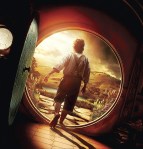
Hobbit-MTII’ve seen about every trailer and clip for The Hobbit: An Unexpected Journey. And yet I’ve remained a bit skeptical of the entire project. I loved The Lord of the Rings trilogy. But the thought of turning The Hobbit into another trilogy smacked of corporate greed more than artistic vision.

Then I saw THIS CLIP. I think this 1-minute clip is filled with same ethos that I love in the LOTR movies. What draws me to the LOTR movies are not the special effects, the fantasy, or the violence. It’s those startling moments when the curtain of reality is pulled back and we get a glimpse of true Reality. Moments of purpose, companionship, loyalty, and sacrifice that make sense of the pain and struggles we endure.

Those moments in LOTR continually move me to tears. And the last few sentences of the dialogue between Gandalf and Bilbo in this clip created a severe lump in my throat.

Gandalf: You’ll have a tale or two to tell of your own when you come back.

Bilbo: Can you promise that I will come back?

Gandalf: No… And if you do, you will not be the same.

There are moments in life when I can only shake my head in confusion and disbelief. And asking “Why?” provides no adequate answers. But it’s not those moments that are truly real or defining, despite how real they seem. It’s what, or better yet, Who awaits us at the End that is the True Reality and Purpose for everything.

I think it’s in our nature to want to make sense of what’s happening to us. Why am I sick? Why did I lose my loved one? Why am I lonely? But the meaning can’t be found in the moment. In many ways, it’s only after our life’s journey is complete that we will be able to look back with clear hindsight. But by then it’s too late. The paint on our life will have dried.

So the task in the moment is not to figure out Why but to be crafted through those moments into an ever-increasing image of Who. Because the only promise that awaits us is not that we’ll safely return from the journey, but that we’ll never be the same after the journey.

Small Things Matter

It’s been quite some time since I’ve scattered any words upon this digital parchment. Life has been full. And I absolutely love it. The first half of 2012 was filled with a lot of anxiety and fear.  Perhaps it was too many changes in too short a time. Or maybe it was simply the state of my own inner world taking its toll. Either way, things took a dark tone for awhile.

But through the help of various sources, I’ve been experiencing a significant turnaround. Perhaps the most notable is a sense of thanksgiving and gratitude I have for life, both the good and bad. I find myself thanking God each day for not only the perceived good in my life, but the potential challenges and struggles that I’m currently encountering and will potentially experience through the day

This change is subtle, yet alters the landscape of my perception. The crises that always seemed to loom before me don’t seem to be so “life-threatening” anymore. In turn, this has allowed me to focus on what God actually sets before me each day. You know, the “small” daily things like loving my wife and kids, performing with integrity and compassion at work, driving on southern California roads with patience and peace toward those around me

More and more I’m learning the myriad of small moments are what actually make up the fabric of real life. And how I live in those moments determines both who I am becoming inwardly and the “impact” I have upon my little portion in God’s world

In that light,  I want to share a couple of wonderful articles that paint portraits of genuine life far more beautiful than I can manage with my limited skills with words. The first is the blog post, “The Invisible Christian,” by Fr Stephen Freeman. And the second is “Pursuing God through the Small Things,” by Joel Miller. I would encourage you to spend a few moments reading these articles and allowing them to reframe your perception of what is important and valuable in life.

Why I’m Smiling

This morning’s epistle reading was Romans 16:1-16. I have to admit that my reaction to this passage surprised me. I discovered a huge smile spreading across my face as I read through Paul’s personal greetings to various individuals and families in the Roman Church.

The Epistle to the Romans is viewed as Paul’s theological masterpiece. NT Wright states in his commentary on Romans that while many will disagree on how to approach and interpret Romans, “What nobody doubts is that we are here dealing with a work of massive substance, presenting a formidable intellectual challenge while offering a breathtaking theological and spiritual vision.”

Yet, here at the end of Paul’s theological magnum opus, we find a small window into the genuine street-level embodiment of his theology — love. He greets people by name. He calls a few “beloved.” He proclaims with exuberance those who have risked much and served well. These are his genuine friends. These are loved ones for whom he prays. These dear ones of whom he thinks frequently.

Who knows how all of their lives first intersected. Who knows who introduced one person to another? Who knows who invited one person to dinner to meet another? And Paul is part of this intricate web of friendships. Yes, he’s an apostle. Yes, he’s a recognized leader. But most importantly, he’s their friend and co-worker in Christ. They have rejoiced together, cried together, prayed together, learned together, shared their lives together. Somehow in his wisdom, God brought all of them together into a loving and prayerful community of his Good News for the life of the world.

And that made me smile this morning.

Then it made me think about everyone whom God has brought into my life over the years.

And now I can’t stop smiling.

We Always Live In The Resurrection

Lately, I’ve been reminded that even though Pascha has passed on the Church’s calendar, we continually live in the Reality of Christ’s resurrection. It’s easy for the deterioration, brokenness, and tragedy of our present world to eclipse the startling Truth that God’s New Heaven and Earth have been inaugurated into our time and space. But God’s mission to renew His Creation, launched at Jesus’ resurrection and deployed by Jesus’ people, is on track and moving forward. To cement the point, here’s St John Chrysostom Paschal homily to refocus our vision on what is truly Real:

“Let no one bewail his poverty, for the universal kingdom has been revealed. Let no one weep for his iniquities, for pardon has shown forth from the grave. Let no one fear death, for the Savior’s death has set us free. He that was held prisoner of it has annihilated it. By descending into Hell, He made Hell captive. He embittered it when it tasted of His flesh. And Isaiah, foretelling this, did cry: Hell, said he, was embittered, when it encountered Thee in the lower regions. It was embittered, for it was abolished. It was embittered, for it was mocked. It was embittered, for it was slain. It was embittered, for it was overthrown. It was embittered, for it was fettered in chains. It took a body, and met God face to face. It took earth, and encountered Heaven. It took that which was seen, and fell upon the unseen.

“O Death, where is your sting? O Hell, where is your victory? Christ is risen, and you are overthrown. Christ is risen, and the demons are fallen. Christ is risen, and the angels rejoice. Christ is risen, and life reigns. Christ is risen, and not one dead remains in the grave. For Christ, being risen from the dead, is become the first fruits of those who have fallen asleep. To Him be glory and dominion unto ages of ages. Amen.”

AMEN!!!

And now with St John’s word still echoing, read St Paul’s exhortation in Colossians 3:

“Since, then, you have been raised with Christ, set your hearts on things above, where Christ is seated at the right hand of God. Set your minds on things above, not on earthly things. For you died, and your life is now hidden with Christ in God. When Christ, who is your life, appears, then you also will appear with him in glory… Therefore, as God’s chosen people, holy and dearly loved, clothe yourselves with compassion, kindness, humility, gentleness and patience. Bear with each other and forgive whatever grievances you may have against one another. Forgive as the Lord forgave you. And over all these virtues put on love, which binds them all together in perfect unity.”

Cathy’s Graduation

Today is a significant milestone for my family. My second child, Catherine, graduates from high school.

I cannot say enough how much I enjoy being her dad. She is such a creative, energetic, joyful, intelligent, gorgeous young woman. A little over 18 years ago, Debbie and I brought her home as a tiny little baby. Watching her grow from an infant into a young adult has been a wondrous experience filled with laughter, tears, prayers, delight and regrets. I love the person she has become and look forward to watching God use her in his world. She easily fills any room with her abundant exuberance. I cannot imagine a day without her smile and presence in our lives.

But Catherine’s graduation, as with Michael’s graduation two years ago, forces me to reflect on the ongoing changes occurring in my family. In five short years, all four of my children will have graduated high school.

I remember when my children were very young. Their adulthood seemed so far in the future that I rarely thought about it. And now in what seems like a flash, that future is here. My cherished babies are gone, replaced by equally cherished emerging adults.

I’m amazed at how fast this part of our family’s life has gone. Yet, more startling than the quickness of time’s passage is the permanence. It’s gone. My babies turned into toddlers, went to school, grew up and are sprinting toward their adult lives. Each day brings Debbie and me closer to when we have to say “Good-bye” to each one as their hearts transition from our family and home to begin their own.

Over the past few years, if I could have been granted one wish, I would have asked for time to stop so that my family could be suspended as is. I would have given virtually anything to spend the rest of my life with my family. But then after having such a thought, I would immediately realize how selfish such a wish is. My children need to grow and become who God created them to be, even if that means I had to let them go. In fact, it requires that I do let them go. And I absolutely hate it.

In several hours, my daughter will step over this threshold into adulthood. And I will sit in the stands and cheer for her. Afterwards, I will hug and kiss her and celebrate her entrance into this new phase of life with unspeakable pride and joy.

But right now, in the shadow of this looming moment, I miss my little girl. In my heart and memories, I hold my little baby in my arms. I feel her tiny hand wrap around my finger. I feel her curl on my lap to watch TV with me. I watch her play with her dolls and dress up as a princess. I see her twirl and dance and sing. I hear her say, “I love you, Daddy.”

I love you too, Sweetie. I love you too. I don’t want to let you go. But I will.

Present In The Mundane

“The holiness to which the Church is called is not a matter of escape from the mundane course of human events, from time, or from everything that is not explicitly Christian. The Eucharist is an incarnational meal in which the risen Lord becomes present in the rude stuff of this life, even as he became present in human history through the womb of the Theotokos. The line between the mundane and the holy is here erased because it is precisely as the ordinary, whether a baby or bread and wine, that the Son of God comes to us. The connection to moral theology should be obvious. God claims the physical and mundane things of life as His own in the incarnation. The mystery of the Incarnate Word as fully God and fully human shows that every bit of human nature has been claimed by God in Jesus Christ. A continued participation in that process of claiming occurs when Christ becomes present to us in the Eucharist, when we sacramentally take His body and blood into our body and blood.” (Philip LeMasters PhD, Towards a Eucharistic Vision of Church, Family, Marriage & Sex)

The above quote was posted this morning by Fr Ted. It is so good that I think it bears reposting. God makes himself known through the fabric of daily life. He can be found in the mundane and even the monotonous and thus transforms it into the holy. This is how I want to live life.

All Men Want Peace

“All men want peace; but they do not know how to attain it. Paissy the Great, having lost his temper, begged the Lord to deliver him from irritability. The Lord appeared to him and said, ‘Paissy, if thou dost not wish to get angry, desire nothing, neither criticize nor hate any man, and thou wilt have no anger.’ Thus every one who renounces his own will before God and other people will always be at peace in his soul; but the man who likes to have his own way will never know peace. The soul that has surrendered herself to the will of God bears every affliction and every ill with ease, because in times of sickness she prays and contemplates God, saying: ‘O Lord, Thou seest my sickness; Thou knowest how weak and sinful I am. Help me to endure my sufferings and to thank Thee for Thy goodness.’ And the Lord relieves her pain, and the soul feels God’s help and is glad in the sight of God, and gives thanks. If some misfortune befalls you, reflect in this wise: ‘The Lord sees my heart, and if this is His will all will be well, both for me and for others.’ And thus your soul will always be at peace. But if a man murmurs against his fate he will never have peace in his soul, even though he fast and spend much time in prayer. The Apostles were deeply attached to the will of God. In this manner is peace preserved. All the great Saints likewise bore with every affliction, submitting themselves to the will of God.” Staretz Silouan, Wisdom from Mount Athos

Heaven & Hell Are Not Places

“We are made whole (healed) by the grace of God, and brought into a relationship with Him that is our true inheritance. Heaven and hell are not places created by God for those who were good, or bad, but rather about relationship. The Fire of God is heaven for those who have responded to God’s love, and hell for those who have remained in the darkness of sin (sickness), and whose ego has shut out God, for self. Heaven and hell are not places, but all about relationship.” Abbot Tryphon

I’ve written about this before, but it’s worth revisiting. Our culture’s understanding of heaven and hell is severely distorted. Too often, heaven and hell are viewed as future destinations either to reward the good or punish the bad.

However, as Fr Stephen Freeman is fond of saying, “Jesus did not come to make bad men good, but dead men alive.” What is at stake is the transformation of human nature, which is so fractured, distorted and sick that it’s dead. And in this dead state, we shut out God. That is hell. In our brokenness, we constantly live in hell.

So the issue isn’t ethics or morality. You can’t tell a corpse to behave better. The only hope is Resurrection. For the Resurrection is the inauguration of God’s Renewed Creation. And the power of the Resurrection brings life to all of us who are dead. This is the point of Ezekiel 37 and Jesus’ retelling of that vision in the Story of the Prodigal Son. The son wasn’t restored because he “got his act together” or because he apologized to the Father. He experienced Resurrection. He returned from exile and back into relationship with his father and his household.

When a person experiences the Resurrection, the process of transformation begins. And this is heaven. Heaven is being loved by God and being able to love him back, regardless of circumstance. Heaven is loving and living God’s will regardless of the pain or sacrifice one experiences. Heaven is being transformed into Christ’s likeness from the inside-out.

As Jesus hung upon the cross absorbing the world’s sin and evil upon himself, he was in heaven. In the midst of hell, he was in heaven.

So heaven and hell are descriptions primarily of our relationship with God. But are there future destinations of heaven and hell? I believe so. It’s called the New Creation. One day, God will renew his Creation. He will set all things right. Jesus’ prayer will fully be answered as heaven and earth finally overlap and God’s reign will be on earth (the human realm) as it is in heaven (God’s realm). And in the New Creation, God’s glory will cover the earth as the water covers the seas. This will be the ultimate and eternal experience of heaven and hell.

And on that day when God renews his Creation and drenches it with his undiminished glory, his very love and presence will be like an eternal inextinguishable lake of fire for those who shut him out. And that same love and presence will be indescribable joy for those who have been transformed into his likeness and live only for his will.

So heaven and hell begin now. Each of us is on that journey every day.

Dad, When I Grow Up…

“Dad, when I grow up, I want to be a pastor and a hockey player.” That’s what my oldest son told me when he was in elementary school years ago. I’m not sure where the hockey player reference came from. But telling me that he wanted to be a pastor was his small expression of love for me and desire to be like me.

That moment fills my mind when I read Ephesians 5:1-2:

“Be imitators of God, therefore, as dearly loved children and live a life of love, just as Christ loved us and gave himself up for us as a fragrant offering and sacrifice to God.”

I’ve been reflecting on this passage for the last couple of weeks. But every time I try to write something, it feels like I’m pinning this Scripture to a laboratory table. This is one of those portions of Scripture in which we must fully immerse ourselves rather than dissect with an expositor’s words.

So perhaps the only thing worth saying is, “Father, when I grow up, I want to love just like you.”

The Humble Soul

“The soul of the humble man is like the sea: throw a stone into the sea — for a moment it will ruffle the surface a little, and then sink to the bottom. Thus do afflictions disappear down in the heart of the humble man because the strength of the Lord is with him.” Staretz Silouan, Wisdom From Mount Athos

Resurrection of the Prodigal

The parable of the prodigal son in Luke 15 is one of my favorite parables. Not only does it contain levels of interpretation and application, but it depicts our Heavenly Father in such an intimate way. He is the Father who graciously concedes to his younger son’s outrageous request for his portion of the inheritance. And rather than holding a grudge against his son or even maintaining the cultural detachment of a patriarch, he sees his returning son from a distance, runs to greet him, and compassionately restores him.

I am moved virtually every time I reflect on this parable. It strikes a deep and unspoken place within me.

This parable has meant even more to me as I’ve come to realize that this is a resurrection passage. Twice the Father says, “For this son of mine/brother of yours was dead and is alive again; he was lost and is found.” You can almost hear the faint echoes of Ezekiel 37.

In Ezekiel 37, the prophet receives a vision of Israel’s return from exile. Israel is depicted as a valley of bones. God tells Ezekiel that he will open their graves and bring them back to the land of Israel (Ezek 37:12). This is the first primary image of resurrection in the Old Testament and it represents Israel’s return from exile. They were dead and are alive.

In the time of Jesus, while Israel had returned geographically to the land, they had not spiritually returned from their long exile. Through this parable, Jesus is putting an intimate face on Ezekiel 37. Israel is the younger son, dead and lost in exile. But by simply returning to the Father’s house, Israel meets the compassionate and intimate Father, who is quick to restore. They are resurrected, alive once again.

As a parable of salvation, the prodigal son enforces the fact that our “problem” is not a legal, moral or ethical breaking of some abstract code or law. In other words, the prodigal son didn’t do something wrong or bad and then needed to be expunged of the guilt of his crime. Rather, the son was dead. Life and hope were gone. An apology like he had planned would not solve the problem. He needed to be resurrected and restored.

And this resurrection takes place in relationship with the Father. The son simply hoped for a place as a servant in his Father’s house. But the life he needed was in the restored relationship with his Father. The Father states, “For this son of mine was dead and is alive again.”

And the resurrectional relationship isn’t just a “God and me” thing. The Father tells the embittered elder son, “Everything I have is yours. But we had to celebrate and be glad, because this brother of yours was dead and is alive again.” The older brother also has a role in the resurrection of his brother. Everything in the Father’s house belongs to the older brother. While he views the resources of the Father’s house as potential personal blessings, the Father implies something more in the statement “Everything I have is yours.” These resources should not only flow to the older brother, but through the older brother. The older brother should use these resources as the Father uses them. So the Father encourages him to celebrate and in so doing, the resources of restoration will flow to the younger brother. The Father is inviting the older son into the “ministry of reconciliation,” to practice resurrection and thus to be a blessing rather than expecting only to receive a blessing.

In other words, blessings are not intended to simply flow to a person but through a person to others.

But Jesus leaves the parable hanging. In some ways the fate of the older brother is more at stake than his younger sibling’s who is now alive and restored. And we realize that the older brother, despite never having left his Father’s house, is like Israel currently occupying the Land. He too is still in exile. He is also dead and in need of resurrection.

Abbot Tryphon & “The ER for the Soul”

Abbot Tryphon posts a great summary on how the Orthodox Church functions like a hospital in the therapeutic process of salvation. His opening paragraph is a good reminder that simply joining the Orthodox Church does not guarantee that we have entered the healing process. We must engage in the life of the Church in order to enter into communion with God and thus “work out our salvation” (Phil 2:12) and “train ourselves to be godly” (1Tim 4:7).

“Orthodoxy offers a very precise way in which to enter into communion with God. It is a way that must be learned, for simply “becoming Orthodox” will not lead the seeker into an inner life that will transform, and enlighten. Membership in the Church is simply not enough, for the Church is not about beautiful services, icons, or mystical theology. As a hospital for the soul, the Church is a place wherein we can receive healing for that which ails us. It is the place where we can be cured, and made whole.”

Read the rest HERE.

Fr Stephen & “All Dogs Go To Heaven”

Fr Stephen Freeman recently adopted a puppy, which has compelled him to post a wonderful reflection about creation, fallenness, prayer, and human nature. Wow!

Here’s an excerpt:

“Do dogs pray (does creation pray)? Absolutely! “Let everything that has breath praise the Lord” (Psalm 150:6). But how do they pray? Their very existence is prayer. Every created nature is made to live in communion with God. Human nature itself lives in communion with God. Our fall does not consist in becoming something other than human – we have yet to become truly human.”

You can read the rest HERE.

Sin Can’t Sing


“All is blessed by the hand of God, and all things are the ‘songs’ of God’s glory: even things that humans find odd, and perhaps disgusting. Ugly insects are as much part of the song of glory as graceful trees. Sin alone is not part of the song of glory. Alone in the creation it cannot sing at all.”

John Anthony McGuckin, The Orthodox Church

I enjoy watching The Voice and The Sing-Off. Yet, I can’t stand American Idol. One reason is that I absolutely hate the initial auditions. The cringe-factor is too high for me. It seems too many people think they can sing, get furious when confronted with the actual reality by professionals, and then have their delusions broadcasted for all to see.

McGuckin’s quote reminds me of those awkward American Idol moments. Sin believes it can sing. Yet try as it might, it only screeches and shrieks. Painfully. Agonizingly. Sadly, sin compounds itself, forming a choir of clamorous voices, and very quickly, it can become the dominant voice in our ears.

But we don’t have to yield to sin’s delusions. If we listen carefully, we can hear the harmonies of God’s creation, resonating with the melody of God’s glory. And since the song is in the key of Incarnation, all of us can easily find our parts and join in the chorus.

Although sin can’t sing, we can!

All Health Broke Loose

Sunday’s Gospel reading contained this passage from John 20, “‘Peace be with you! As the Father has sent me, I am sending you.’ And with that he breathed on them and said, ‘Receive the Holy Spirit. If you forgive anyone his sins, they are forgiven; if you do not forgive them, they are not forgiven.'”

Shortly after Jesus inaugurated his Father’s New Creation by his resurrection, he commissioned his disciples to continue what he has started. Jesus instructs them to participate in the missio dei with, “As the Father has sent me, I am sending you.” I truly believe this statement forms the core of any missional engagement. The New Creation is implemented by continuing Jesus’ incarnation of God’s Presence and Life into the world.

So that there is no mistake, Jesus summarizes the essential components of an incarnational mission. They must receive the Holy Spirit and they must forgive sins. They cannot engage in this daunting task solely relying on their own strength and strategies. Human participation in the missio dei requires Christ’s likeness and God’s divine energies. This is especially apparent when one reflects on what is involved in forgiving sins.

Jesus means far more than simply declaring to a person forgiven from personal sins. To Jesus’ contemporaries, the forgiveness of sins meant the return from exile. Based on their covenant with God, Israel’s sins had sent them into exile and it would be God’s forgiveness of their sins that would initiate their return. But Jesus offered more than a geographical relocation or deliverance from foreign rule. When Jesus offered the forgiveness of sin, he was offering a new world order from the desolation of death into the eschatological kingdom of God.

And that is our ongoing role in God’s mission. To borrow a phrase from my priest, “All health broke loose” at Jesus’ resurrection. I really like that. At the resurrection, the renewal of God’s creation is launched. As we are sent as Jesus was sent, as we forgive sins and offer the return from exile, as we embody God’s kingdom, all health should break loose in us and around us.

Truth & Love

I’ve been thinking a bit more about Truth. This isn’t a new thought, but more of a slight restatement of a thought from yesterday’s post. Jesus is The Truth. Truth is a person. Therefore, we know The Truth through sharing lives (koinonia, communion) with Him. And since this deep life-sharing relationship is the primary way to know The Truth, then the same kind of deep life-sharing relationships with others is the environment through which we share The Truth. We know The Truth through Love and we share The Truth through Love.

Truth is incarnated through Love. Truth is known through Love. Truth is shared through Love.

A Good Lesson For Photography… And Life

I’m an amateur photographer, so I don’t have much by which to judge someone as a great photographer. But I’ve noticed that while most photographers make beautiful photos, there are those exceptional ones that transcend making beautiful photos and actually capture life’s beauty. In my opinion, Zeb Andrews is one of those kind of photographers.

I’ve posted before about how inspiring Zeb is to me. He makes photography (and I cringe at how cheesy this sounds) magical. His images aren’t “perfect.” Nor do they look like something you’d find on a magazine cover. He doesn’t use fancy processing techniques. From what I gather from his comments on his Flickr Photostream and website, he carries a variety of cameras and film wherever he goes and intentionally looks. He has honed the art of observation. And he’s honed the art of photography to capture the beauty in what he sees. He states, “I enjoy the process of photography much more than the results.” And it shows. I think the results are pretty phenomenal. But what I love most about Zeb are the insights he shares about the process. Sometimes, I wonder if he’s sharing more about the “process” of living than photography.

Here’s some advice he gave recently that captured my attention:

“And another helpful piece of advice, don’t forget that there are many more ways than one to photograph anything. Or put another way, don’t settle with photographing anything one way. There is really an infinite number of ways to photograph everything. And this seems obvious, but trust me, it is easy to forget. Just look at Multnomah Falls. How many photographers avoid that waterfall because they think it has all been done? The same with the Eiffel Tower. Sure, there are lots of photos out there of both of these and many of these photos tend to look really similar. It is easy to make the first photo one finds and then move on to other things.

“Don’t do this. Stop. Look around. Keep looking. Move. Look some more. Wait. Then find a second and a third and a fourth different way to photograph your subject. Trust me, the perspectives are out there, it is just a matter of finding them, if you can. And sometimes you cannot. Sometimes you don’t have the equipment, or the experience or technical prowess. Sometimes you just don’t have the vision. But just because you cannot find those additional ways does not mean they don’t exist, which also means that you shouldn’t not look for them. Give it a try.”

I know firsthand how easy it is to get locked into only one perspective — in photography and especially in life. In the zealousness of my youth, it was so easy to accept what I was taught as “The Truth” and appoint myself as a spokesperson for “The Truth.” That meant I was right and everyone else who disagreed with me was wrong. I had to learn over time that what I believed to be “The Truth” was usually an opinion, a perspective. It took me years to learn that one of the beautiful aspects of life is that there is a wide variety of perspective.

I’m not saying that there isn’t absolute Truth. Nor am I saying that Truth is subjective. I’m saying that what most people proclaim as “The Truth” is usually just an opinion and all of us would benefit if we would put away our prophet’s mantle and learn to listen and appreciate the variety of perspectives that exist. To paraphrase Zeb a bit:

“It is easy to make the first opinion one forms to be the only opinion and then call it “The Truth” and then move on to other things. Don’t do this. Stop. Look around. Keep looking. Move. Look some more. Wait. Then find a second and a third and a fourth different way to understand your subject.”

Here’s something that always gives me pause. Jesus called himself “The Truth.” Truth is a person, not an abstract idea. Jesus embodied Truth in loving, gracious, life-producing relationships. That’s Truth in human form. Therefore, Truth is both known and expressed primarily in relationship, not proclamation.

What shames me is that my life is in such stark contrast to Jesus. Sometimes, my first reaction to a person with a perspective different than mine is to feel angry or threatened. That last thing on my mind is relationship. Why? I’ve said it before and I’ll say it again: Any negative reaction I experience is caused by something within me. So I need to ask, “What is inside of me that is angered or threatened by a different perspective?” What causes this “fight or flight” mechanism in me?

I don’t have an answer for that yet. But I do know this: If Truth is embodied in loving, gracious relationship and if my reaction to a different perspective is anger or defense, then I probably don’t really know the Truth.

There is a popular saying in the Orthodox Church credited to the fourth-century monk, Evagrius the Solitary, “The one who prays is a theologian; the one who is a theologian, prays.” To me, an implication of this saying is that a person is only capable of knowing the Truth if he or she is in deep fellowship with the One who is The Truth. And a corollary to this saying is that a person can only embody the Truth to others through deep fellowship.

The Lenses Through Which I See

I read a beautiful Paschal reflection by Fr Ted Bobosh. His reflection reminded me of how God has shaped me to view life through a few crucial lenses.

First, salvation, as experienced personally, is the entire process of God rescuing me from sin and death and restoring me as his image-bearer. In other words, salvation is the actual process of being transformed into Christ’s likeness. As such, “forgiveness of sins” is the doorway to salvation, but not salvation itself. Forgiveness is a necessary aspect of a far larger process of renewal, restoration and transformation. Therefore, I don’t possess salvation. Rather, I’m on a journey of salvation, a journey toward becoming like Christ in his life and likeness.

Second, God is saving his entire creation. There is a global dimension to salvation. The promised New Creation is this creation renewed and overflowing with God’s glory. The New Creation was inaugurated at Jesus’ resurrection and God is actively restoring his creation, primarily through the renewal of creation’s stewards — the human race.

Third, Jesus’ very being and life saves us. God’s salvific activity cannot be pinpointed to just one event in Jesus’ life. All of the events save us. He saves us through his birth, his circumcision, his baptism, his ministry, his miracles, his teaching, his crucifixion, his resurrection, his ascension, his return, his ongoing kingship, and all the bits in between.

Fr Stephen Freeman summarizes nicely, “The Incarnation of Christ and the whole of His work – suffering, death, burial, descent among the dead, resurrection, ascension – serve the same singular purpose – to deliver all of creation (including humanity) from its bonds and establish it in the freedom for which it was created – manifest in Christ’s own resurrection.”

The convergence of these lenses bring the world into pin-sharp focus for me and have helped me to shed much of the delusion from my past.

Clearing My Throat, Finding My Voice

Reviving my blog after a couple of years has me feeling like a singer preparing for a performance after a long hiatus. I need to cough and clear my throat as well as do some vocal exercises. So please forgive the phlegm as I try to warm up. 😉

So what am I hoping to accomplish now that I’m blogging again? Like I said last time, I want this blog simply to reflect my life as I live. Important aspects of my life are my family, theology, writing, reading, movies, music and photography. So I hope all of those things will find their way into my posts.

Here are some general “bloggy” things I’ve learned as I anticipate future posts.

Keep it short. A lot of blogs I read are long and tedious. And I too have been very guilty of being tedious. I’m trying to learn the art of brevity. One blog I read is The Morning Offering by Abbot Tryphon. He provides the most nourishing spiritual nuggets in small portions. Granted, his wisdom flows from a life of devoted, ascetical life to Christ. But he shares his profundity with great concision, something I desire to learn.

Keep it kind. I also find many blogs to be angry. Differences and disagreements provide ample fodder for blog posts. Being critical of others is just too easy. Yet, God is merciful to all. So I want to avoid rants and critiques and find beauty, grace and truth.

Keep it humble. I’m not here to convince anyone of anything. Honestly. I’m not a pastoral or prophetic voice. I hold no leadership position. I have no secret message that the world needs to hear. I’m just a man. If I had to describe myself, I guess I would say I’m striving to be Jesus’ apprentice as both a member of the Eastern Orthodox Church and a collaborator with God’s restorative mission in the world. So the majority of my posts will probably reflect this as I ponder life and other things.

Reviving My Blog

First of all, Christ is Risen! Truly He is Risen!

And next, Hello again!

This is weird. I walked away from this blog almost two years ago. I said my farewells and had no intention of ever returning. And yet I could never bring myself to remove this blog’s presence from the Internet. Now I wonder if part of me secretly hoped for or even planned for a return. Who knows?

The time away has been good. I didn’t have any major theological insights or spiritual breakthroughs. Nor did I accomplish some monumental earth-shaking task. I’ve simply endeavored to become what I’ve mentioned in my blog for years — I’ve tried to be a good man.

So why return to blogging? I’m stilling piecing that one together. But here’s what I know.

Two years ago, I was becoming increasingly aware that my voice was only contributing to the narcissistic noise that defines our culture. I wanted to be heard and therefore I knew I needed to be silent.

Now, I just want to live. And for me, an essential part of living is reflecting and writing. It’s a subtle difference, but an important one.

So I’m back. I’m grateful for what has been. I’m content with what is. And I’m excited about what is to be.

Space: 2099

Back in the 1970s, during my youth, I used to love a British SciFi series called Space: 1999. The premise was that on September 13, 1999, the nuclear waste being stored on the moon exploded, knocking the moon out of its orbit, hurtling it and the inhabitants of Moonbase Alpha into outer space.

I loved everything about the show — the flared-leg costumes, the Eagle Transporters, the transportation tubes, the stun guns, even the cheesy 1970s theme music.

So imagine my delight when I learned of Space: 2099! No, it’s not a remake like J.J. Abram’s Star Trek or SciFi Channel’s Battlestar Galactica. Rather, Eric Bernard has rebooted Space: 1999 by condensing each original episode of Space: 1999 into a 2-3 minute episode. He’s also added more special effects and edited the dialogue so that all of the original characters say “2099” instead of “1999.” You can watch all of the new episodes HERE.

It’s the “perfect storm” convergence of my nostalgia and geekiness. Memories of my brother and I playing with the Moonbase Alpha Adventure Playset cascaded my mind. That Adventure Playset was pure awesomeness! The entire set, including cast and aliens, was assembled out of punchout fiberboard and occupied hours of imaginative playtime. I also remember playing with my Space: 1999 Stun Gun Water Gun. That was one fun summer!

But soon nostalgia gave way to reflection. As a SciFi geek, I’m fascinated with the various visions of the future that the genre offers, especially since many of the visions are really attempts to address contemporary social and political issues. Lately, I’ve been wondering about what is generating so many horrific post-apocalyptic visions of the future in recent months — Terminator: Salvation, 9, Daybreakers, 2012, Avatar, and The Book of Eli. As a culture, have we become so cynical that we can only envision a devastated future? In the new movie, Legion, even the ever-patient, all-loving God is now depicted as the ultimate cynic, completely giving up on humanity and sending his demonic-looking angels to wipe us out.

Frankly, I’m getting tired of watching visions of the future that are either inhabited by zombies, vampires or killer automatons or filled with images of natural disasters and post-apocalyptic devastation. It’s boring.

I’m not necessarily looking for movies that depict an utopian vision. It’s just that global hopelessness is becoming too cliche for the genre.

Silence of the Lips

I found this great quote on Cameron’s  “We Live and Move and Have Our Being” blog.

“Silence of lips is better and more wonderful than any edifying conversation. Strive to acquire humility and submissiveness. Never insist that anything should be according to your will, for this gives birth to anger. Do not judge or humiliate anyone, for this gives birth to anger. Do not judge or humiliate anyone, for this exhausts the heart and blinds the mind, and thereon leads to negligence and makes the heart unfeeling.”
– St Barsanuphius

Okay. I know quotes like these can evoke a “Yeah, but…” response in us. But I would encourage you to reflect on the truth contained there and let it seep deep.

Could Bad Theology Get Any Worse?

I just watched a preview for a new movie called, Legion. Here’s the synopsis from the website:

In the supernatural action thriller Legion, an out-of-the-way diner becomes the unlikely battleground for the survival of the human race. When God loses faith in Mankind, he sends his legion of angels to bring on the Apocalypse. Humanity’s only hope lies in a group of strangers trapped in a desert diner and the Archangel Michael.

Ooookay…

So God gets fed up with humanity and sends his angels, who are led by the Archangel Gabriel and who all look pretty demonic, to exterminate us. But thank God (or perhaps not) the Archangel Michael likes us more than God enough to rebel against Him to save our collective butts.

I’m not even sure where to begin with this one.

Violence or Humility

Fr Stephen Freeman has written another great post today. (Quite frankly, when does he NOT write a great post.) Please take five minutes to read it.

Part of his post was an outstanding quote by Stanley Hauerwas, theologian and professor at Duke University:

“The Christian community’s openness to new life and our conviction of the sovereignty of God over that life are but two sides of the same conviction. Christians believe that we have the time in this existence to care for new life, especially as such life is dependent and vulnerable, because it is not our task to rule this world or to “make our mark on history.” We can thus take the time to live in history as God’s people who have nothing more important to do than to have and care for children. For it is the Christian claim that knowledge and love of God is fostered by service to the neighbor, especially the most helpless, as in fact that is where we find the kind of Kingdom our God would have us serve.”     A Community of Character

This quote was followed by another:

“So soon as Christians agree to take responsibility for the outcome of history, we have agreed to do violence.”

This thought is worth some serious reflection on both political and personal levels: It is neither the Christian’s nor the Church’s task to rule this world nor make our mark on history. And the moment we shoulder that responsibility, we have agreed to do violence.

Now this does not mean we simply huddle in a corner and gnaw on our fingernails with dread and worry. Rather, we are to take up our proper responsibility, marked first by the conviction of God’s sovereignty over life and second by the “downward Way” of humility.

In hindsight, it seems my entire adult Christian life was aimed, although unintentionally, at obscuring the true Gospel. I had one fiery passion. I wanted to change the world. I wanted the Church to change the world. I wanted to build a local church with members who would join its leadership in changing the world. I taught and programmed our church with the intent on helping others change the world. My life had purpose and I had big hairy audacious goals.

And I was a man of violence.

Sure, if you had confronted me with that accusation, I would have denied it. Angrily denied it. I was doing God’s work of bringing his kingdom to earth. So please get the heck out of my way.

And those around me suffered violence. Sure I didn’t physically abuse anyone. But my wife and kids had a husband and father that was constantly absent. And when I was physically present with them, I was usually mentally and emotionally absent as I mulled over ways of improving my leadership and ministry or impatient with them for taking up my valuable time. My volunteer leadership suffered violence as I subtly forced my agenda upon their ministries or downright replaced them when they didn’t live up to my expectations. I mentally categorized people by what they could offer to our church by their strengths, wealth, and gifts. And I suffered violence at my own hands through stress, imbalance and a lack of any inward formation.

Now, I wasn’t a task master. I was a really nice man of violence.  I tried treating people with respect. I tried to protect people from overworking in and overgiving to the church. I tried to pray for and care for everyone who came into and served our church. But my relationship with everyone was primarily shaped by my goals of building a church that would change the world. And so, my life and ministry incarnated the way of violence and took its toll on those around me.

I’m happy to say that God is rescuing me from that path. I can thoroughly appreciate Hauerwas’ quote:

“We can thus take the time to live in history as God’s people who have nothing more important to do than to have and care for children.”

I have been experiencing and continue to experience a worldview change. I no longer live each day with the passion to change the world. The well-being and care of my wife and my kids are the most important things to me. I “simply” (in quotes because it’s not a simple thing) want to be a good man to my family, friends, coworkers and any others God brings my way. I have a long way to go in this goal. And the only way to truly accomplish this is to enter into and follow Christ into his humility — the downward Way.

I used to measure my personal success by the amount of people I was influencing through conversations, preaching and writing. I’m now understanding what Fr Stephen says, that our goals should be measured by the “measure of the stature of the fullness of Christ” (Eph 4:13).

I still have goals, but they are very, very different than my previous ones. One of my personal goals is for my wife and kids to look back upon their lives and know that they were genuinely, unconditionally and constantly loved by me. That may sound simple, especially in a world that is wrestling with some dire issues. But in reality, authentic love is such a rare thing today. It doesn’t happen naturally because it requires a certain kind of life that most avoid.

Fr Stephen ends his post by speaking of the Tradition of the Holy Elders who embrace, live and embody the downward Way:

“Their lives, frequently hidden from the larger view of the world, are the continuing manifestation of the Kingdom of God in our midst – fellows of the sufferings of Christ – who freely and voluntarily bear with Christ the weight of all humanity. It is this secret bearing that forms the very foundation of the world – a foundation without which the world would long ago have perished into nothing. It is the emptiness of Christ, also shared in its depths by His saints, that is the vessel of the fullness of God, the source of all life and being. We can search for nothing greater.”

During my journey here, I will most likely never experience this fullness of humility and life in Christ. But I hope and dream to enter it a bit. For my wife and children, I yearn to wet my feet on the shores of this mighty river, even if I can’t swim in it. For them, I hope to become a humble sampling of true life and love.
Milestones

Well, this is interesting. I’m quickly approaching three minor and one ginormous milestone.

First, after posting several iPhone Photos to my Flickr account this evening, I realized that I’m one image shy of 100 posted iPhone Photos. When I began the endeavor, I didn’t predict how fun it would be to take photos with my iPhone everyday. Not every photo is great. But learning to look constantly at life with different eyes is a wonderful exercise. You can view the entire set of iPhone Photos in my Flickr account HERE.

Second, I’m quickly approaching my 75th image on my photoblog, “Images from the Journey.” This has been a more serious endeavor of developing my skills at digital photography by trying to capture the beauty in the world around me along with some simple reflections about the image.

Third, this post is my 599th post on this blog. I know 600 is a random number, but it’s the nearest 100th and I thought it worth noting. I began this blog in March 2003. A lot has happened in the past six years. But as we say in the Orthodox Church, “It’s unto our salvation.” And quite frankly, I wouldn’t change a thing because I’m actually enjoying the person into which God is making me.

So what’s the major milestone? I think I’m going to save that one for the 600th post! See you then.

Steeping in Orthodoxy

Author and Orthodox Christian, Frederica Mathewes-Green stated in a recent podcast that there are generally two genres of books that Orthodox Christians prefer to read — explanations or experiences. This statement was an “aha” moment for me. Lately, I’ve been pondering the reasons for my relative silence on this blog. Believe me, I’ve tried writing many posts about Orthodoxy, either its theology or my experiences as a new Orthodox Christian. However, upon starting these posts, I find myself ultimately deleting them.

While standing in Matins this past Sunday morning, I realized that I have been an Orthodox Christian for seven months. During these past seven months, and the year of exploration prior to joining the Orthodox Church, I intentionally refrained from doing a lot of reading and studying. This may seem counterproductive, but due to my personality and training, I can easily over-theorize my faith. In other words, my conceptual understanding of the faith can easily overreach my actual life experience. I’ve been guilty of this as an evangelical and I wanted to avoid this as an Orthodox Christian. So my strategy was to soak myself in the life of the Orthodox Church.

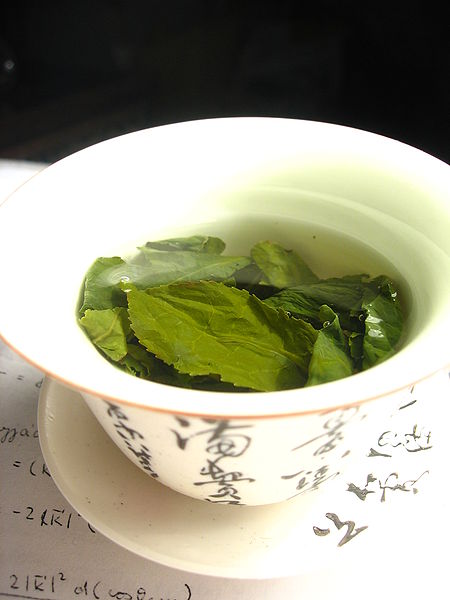
SteepingI can only relate my experiences thus far to a steeping cup of tea. There is something soothing and satisfying about tea steeping in hot water. The wafting steam carries the aroma of flavor being released from the dried leaves. My “steeping” in Orthodoxy is occurring in the normal ebbs and flows of life within the Orthodox Church. This may not sound like much to those unfamiliar with Orthodoxy, but trust me, it’s life-immersing.

And over this period of time, I’ve noticed that the water of my life is beginning to carry a subtle, yet very distinct flavor as new thoughts, values and feelings are being gently coaxed out of me through the Holy Spirit’s activity within the Church.

Prior to coming to Orthodox Christianity, I steeped for 25 years in evangelical Christianity, which included fourteen years of professional ministry and an undergraduate and graduate degree in pastoral preparation and theology. Yet, having transitioned into Orthodoxy, I’m discovering that I need to consciously set aside much of my past experiences and training.

Eastern Orthodox Christianity, in its theology and practice, is very different from and occasionally incompatible with western Protestant Christianity. Just like it would be wrong for me to experience and judge a new culture into which I’ve moved with my American values, so it is wrong to experience and judge Orthodox Christianity with my old Protestant evangelical values. For example, historically speaking alone, Orthodoxy never encountered the issues and abuses that led to the Protestant Reformation. So what right do I have to use the Protestant theology that flowed from the Reformation as some sort of plumb line for my new life as an Orthodox Christian?

This places me in a somewhat awkward position as one who enjoys writing. As the theological concepts and spiritual practices that dominated most of my evangelical life fade away, I’m trying to write less and less from an evangelical perspective so as to allow the new worldview of Orthodoxy to seep deep within me.

Yet in light of Frederica’s comment, I have not learned enough to explain much about Orthodox Christianity in this blog. And I’m committed not to reading and studying a lot for several more months. But having only steeped for seven months, I don’t feel my experiences in Orthodoxy are very flavorful yet either. So, do I remain silent, or write about things of which I know little, or write about my extremely limited experiences?

Frankly, I haven’t decided what I will do yet. (My indecision toward this blog probably explains the additional activity on my photoblog and Flickr account lately.) Although I’m leaning toward writing about my minimal experiences as a new Orthodox Christian, I’m aware of the need for caution. Heeding Fr. Stephen Freeman’s words, I desire to guard the Secret Place by not turning my blog into a vehicle of full self-disclosure. Proper steeping and formation in Orthodoxy requires learning and practicing wise silence.

So bottom-line, I’m very content with where I am right now. I’m not fretting about my indecision. Nor am I in any hurry to make a decision, because I’m in this for life. Not just life now, but life forever. Seven months down and eternity to go. With that in mind, I’m going to relax and soak in the warmth.

Good-bye MissionalStew.com

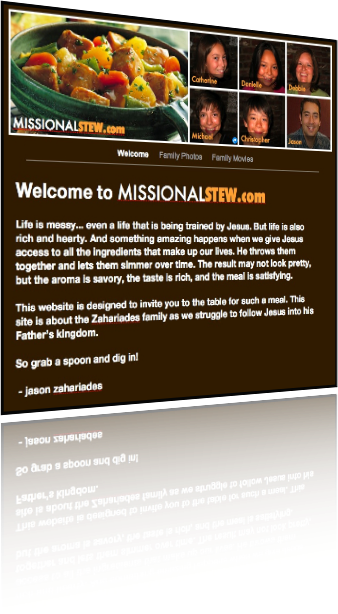
Missional Stew smallToday, I decided to close our family’s website, MissionalStew.com. I began the site a couple of years ago with the hopes of highlighting our family’s continual journey in Christ. However, Debbie and I became more cautious about posting photos and videos of our children on the web. Plus, I’ve concentrated my small amount of time on this blog and my photoblog. Throw in Twitter and Facebook and I think there is plenty of opportunity for friends and family to stay updated with our family.

Debbie came up with the name for the website and I still love it. It communicates the messiness and the robustness of walking with Jesus and how it should impact the world in an authentic and hearty way. So, while the website ends, I hope our family continues to follow Jesus in a way that nourishes the world with God’s goodness and beauty.

Steve Robinson is Disappearing… and Reappearing

SteveI’m always saddened when I learn that someone who has been a great influence in my life decides to stop their ministry. Even though I may have never met that person, I still feel like a small, but important part of me is disappearing. I guess it’s the finality of it that ultimately saddens me.

I’m feeling these emotions this morning as I read Steve Robinson latest post. Steve is the cohost of the “Our Life in Christ” podcast, which is perhaps one of the most influential Orthodox Christian podcasts on the web. For years, he and Bill Gould have shared the richness of Orthodox Christianity through their microphones. On top of that, Steve’s internet contributions also include his own podcast on Ancient Faith Radio and his personal blog.

While I’m sad that Steve is ending his podcasts, I’m thrilled about his reasons. Having given himself so much to public ministry in the past, he is now choosing to refocus his time to be with his family. He plans to spend more time with his aging parents, wife, kids and dog. That is so cool. I am very glad for him and respect his decision.

Steve, your voice on the Internet will be missed. But your decision honors the God we love and serve. May God grant you many, many years of fruitful ministry to your family and those he brings into your life.

Inflicting Death

Today, I inflicted death. Not metaphorically, but literally. I killed a living creature.

I accidentally ran over a cat with my car.

It was a horrific moment. It seemed to happen in an instant, yet play out in slow motion. The flash of white and brown fur. The sickening thud. The even more sickening lurch as my car’s tire rolled over the cat. Then watching the cat try to stagger away, only to collapse with spasms. A few seconds later it was gone. Dead.

Ironically, I was probably at my best behavior as a driver. I was awake and alert. I had both hands on the steering wheel. I was well under the speed limit. And I wasn’t distracted by my radio or phone. And yet, in that moment, my best still inflicted death.

That’s a very disturbing thought. My best resulted in death. A life was snuffed out by my hands even though everything I was and did in that moment was good.

And the effects will continue rippling outward. Later tonight, a family will wait in vain for their pet to return home. Tomorrow morning they will continue to worry. Perhaps over the next few days they will tape pictures of their cat throughout the neighborhood, hoping someone has found their pet. But, there will be no happy ending to this story.

All I could do in the aftermath was call the police so they could dispatch animal control and leave with a sober reminder of my deficiencies, sorry for what I had done.

Surprised by Rhino

rhinoSeveral weeks ago, my family watched Bolt on DVD. While titled after the movie’s main character, it seemed the movie was created to showcase Rhino the hamster. If my family’s outbursts of laughter are any measurement, Rhino virtually stole every scene.

***** Spoiler Alert begins! *****

But one scene caught me totally off guard. At the movie’s climax, Penny, Bolt’s owner, is trapped in a movie studio that is engulfed in flames. Bolt the dog, Mittens the cat and Rhino the hamster rush toward an entrance to the movie studio. Mittens asks, “What should we do?” Bolt responds, “Just make sure I get in there.” Surprisingly, Rhino speeds through the door in his hamster ball and uses his plastic ball to bear the weight of the building’s collapsing metal frame while Bolt shoots past to find Penny. As his plastic ball begins to splinter under the weight, Rhino cries out, “It’s a good day to die!” And in the following seconds of that scene, you realize that he was actually willing to die so that Bolt could go on to save Penny.

***** Spoiler Alert ends (maybe) *****

As the movie’s action continued, my eyes welled with tears and my mind lingered on that scene. Okay, okay, I know it was a cartoon. But there was something poignantly relevant in that moment that needs to be unpacked. Throughout the movie, Rhino gives himself wholeheartedly to the adventure. And at the most crucial moment, when the other side character wonders how to respond, Rhino instinctively and naturally acts. At the instant when everything counts, he automatically does what’s needed. He responds with what the ancient fathers called “virtue.” His courage and self-sacrifice had become second-nature, so embedded in his flesh and bones that he throws himself into certain death on behalf of his friends without even hesitating to think about it. His body and mind operate as a single self-sacrificing unit, “It’s a good day to die!”

Rhino’s character reminds me of something St Paul says in Colossians. He says that he and his compatriots are praying for the Christians in Colossae so that they may lead lives worthy of the Lord, fully pleasing to him, bearing fruit in every good work and growing in the knowledge of God. Lives worthy of the Lord, in which goodness and knowledge of God are second nature and embedded in flesh and bone so as to be ready to act instinctively in the moment.

So, what does a life worthy of the Lord look like? If the self-help titles available at the local bookstore are any indication, such a life would be success in all areas of living. But is Jesus’ life, ministry, death, resurrection and glorification all about my success in relationships, money and business? I don’t think so. In fact, and this might sound sacrilegious, I don’t think Jesus cares a whole lot about my success. There are much more important things, such as my salvation.

So, if Scripture and the Church’s teaching are the final assessment of a life worthy of the Lord, then such a life should personify sacrifice — instinctive readiness to give myself for the good of others. A life worthy of the Lord is a cruciform life, a life in which every thought, feeling, and action is shaped by Christ’s cross.

In the movie, Rhino yearns to have Bolt’s signature lightning bolt branded upon his fur. Perhaps I need to yearn more for Christ’s cross branded upon my heart.

Word-Chef

I enjoy writing. Yet, this hasn’t always been the case. I hated writing as a kid. Up through high school, I was a “math geek” and would take equations over essays any time.

My attitude toward writing began evolving sometime in college, after I had changed my major from Information and Computer Science to Pre-Ministry. By the time I graduated from college, I was enjoying the craft more.

Although I’ve enjoyed writing for a couple of decades now, my appreciation for the craft has continued to transform. Upon graduating from college and entering the full-time pastorate, I was filled with youthful zeal and arrogance. I believed writing would be my key to success and notoriety. I dreamed of writing the next book that would unlock spiritual mysteries and capture the hearts of American Christians.

As I matured in my ministry a little, writing became more utilitarian. Words were the tools for teaching, inspiring and leading. I studied great communicators and their techniques in order to become more successful in my own attempts to impart ecclesiastical vision and theological instruction.

Several years ago, writing shifted into a more reflective craft. I was enamored with the idea of wordsmithing. There was something romantic in the vision of a master wordsmith, a skilled artisan of prose who could sense the grain and texture of words and intuitively assemble them into a masterpiece.

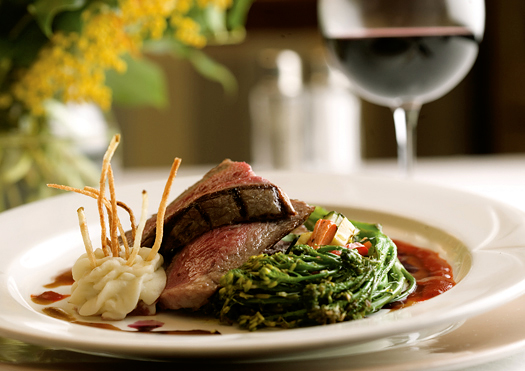
Fine DiningThe other day I was thinking about writing and I thought about a new image for a writer — a word-chef. For me, this concept captures the mastery and innovation of a wordsmith, but adds a relational dimension. Like a smith, a chef must also be skilled in his or her craft. She must master tastes, textures and temperatures and know how to combine and present them in artistic and palatable ways. This generates layers of complexity since her creation must play upon all of the senses. Yet, ultimately, a chef’s craft is for another person. As much as she loves creating in her medium, her final product is to be consumed and enjoyed by another. Another will admire the blending of colors, inhale the enticing aromas, detect the subtle textures, and have their palate caressed by the flavors.

That’s the direction I want to progress in my writing. I want to put voice to the inherent beauty around me in such a way that it impacts all of the senses. I dream of working with savory words that will roll around in another’s mouth and evoke images that allow them to experience the tang or sweetness of the moment.

This desire bore itself deeply into my thoughts the other day as I was finishing a walk around my neighborhood. In the warm light of a setting sun, I saw a young man and woman saying goodbye to each other. They held each other, kissed and parted. As the young man rode off on his bike and the girl walked down the street, I noticed a slight smile light upon her face.

It was a touching moment that no one else would witness and I wanted to frame it with words, to write a few sentences that would express the ardor and pathos of young love. And all I could do in that moment was fumble with my inability as the words remained just beyond my reach.

Moments like this occur frequently. And as providence allows me to observe them, I’m hoping beyond measure that I will learn to recount those moments with words like a verbal chef, fashioning a sumptuous meal filled with aroma and flavor that unleashes the magic of imagination.

Another Surprise!

Back in 2007, Paul Potts stunned the world with his incredible operatic voice on Britain’s Got Talent. The surprise wasn’t his voice, but such a beautiful voice unexpectedly springing from the kind of person everyone assumed Paul was from just his looks.

Well, it’s happened again. This video of Susan Boyle on Britain’s Got Talent, has circulated around the internet and TV, but it’s worth watching repeatedly. It’s a great metaphor of God’s kingdom and an appropriate reminder that authentic beauty can be found in the most unassuming places. I love sneak-attacks by beauty.

If you missed the link above, click HERE to view the YouTube video.

What Day Is It Again?

Because of my long background as a Protestant, I have to admit that there are a lot things about Orthodoxy that I’ve categorized as “strange.” Don’t misunderstand me. It’s all beautiful and filled with incredible meaning and mystery. In fact, I’m sure it’s “strange” to me only because of my context. The more acclimated I become to life in the Orthodox Church, the more natural everything seems. For example, I can no longer imagine a Christian life or worship without icons, incense, chanting, liturgy and a priest, just to name a few aspects.

But I think the one thing that will take much more time to become natural is being out of sync with the rest of my culture in celebrating Easter. The Orthodox Church uses a different calendar in regards to Easter than pretty much the rest of Western Christianity. So rarely does Orthodox Pascha (Easter) fall on the same Sunday as Western Easter. Some years, like this year, the two Easters are a week apart (Orthodox Easter is April 19th while everyone else celebrates Easter on April 12th). Some years, like last year, the two Easters are almost a month apart. Frankly, it’s really weird.

Both my family and Debbie’s family are evangelical Christians. Many of our friends are evangelical Christians. And so, as we approach this weekend, there have been many well-wishes of a “Happy Easter.” I see signs and banners everywhere for Easter services this weekend. My kids have been on Spring break this week. I even get a 1/2 day holiday at work for Good Friday. We’ll probably get together with our families this Sunday, and maybe even have an Easter egg hunt for the kids.

I’m glad Easter is celebrated in our culture. And I’m so thrilled that many people in our lives truly know and celebrate Christ’s resurrection. But it’s so strange delaying our actual celebration while the “rest of the world” prepares for this holiday. As I just mentioned, we’ll join in some of our families’ celebration, but not fully. For what’s Easter’s joy without first journeying through Holy Week?

While Holy Week is climaxing this weekend for those around us, it’s just starting for my family and parish tomorrow with Lazarus Saturday and then moving into Palm Sunday this coming Sunday. Now that I think about it, it’s going to be odd this Sunday morning when our parish processes outside with palm branches the same day all the surrounding churches will be celebrating Easter. And on that same day, my family will move from Palm Sunday and the anticipation of Christ’s death directly into the joy of Easter with our families and then back into the somberness of Holy Week with our parish through the rest of the week.

This weekend is a microcosm of our family’s life as new Orthodox Christians. We always feel just slightly out of sync with the rest of our Christian family members and friends. I’m not complaining, mind you. Debbie and I value the people God has placed in our lives and we have chosen to live closely with them. So that often means coping with quizzical looks when we try to explain why we pray differently, worship differently, eat differently, celebrate strange feasts days, go to confession, use odd words (like Pascha), and say and do a host of other things that are part of our Orthodox life.

Yet I wouldn’t have it any other way. I love Orthodoxy. I love being an Orthodox Christian. Journeying through Lent this year as part of the Orthodox Church has reminded me how much I need the fullness of Christ’s life that is in Holy Orthodoxy. As I’ve alluded in my last several posts, I sense something has “clicked” inside of me. In fact, it’s probably more accurate to say that something that was hindering me “broke” a couple of weeks ago. As I continue settling into Orthodoxy, I’m sensing increasing clarity and stability in my relationship with God, his people and myself. The fears that have whispered to me these last several years are becoming silent, replaced with a growing confidence to move boldly back into life.

Learning to Run Again

One of my favorite photographers is Zeb Andrews. I love looking at his work. What he does with a camera and his imagination is inspiring. He’s written a wonderful post on his website speaking about what makes photography worthwhile. And while his post is photography-specific, I believe the ideas behind it apply to many areas of life. Here’s some of what he has to say:

“Your photography is not limited by your camera, nor your lens.  It is not limited by shutter speeds, aperture, film, focus, flash, white balance, color, black and white, grain, noise, etc.  It is not limited by your budget nor your education.  It is not, and I repeat, not, limited by light.  It is certainly not limited by where you live or where you go.  Your photography is limited simply and quite importantly, only by your own imagination and vision.  All those factors I mentioned (and more) can certainly affect your photography, but ultimately you make of it what you will.  Photography begins and ends with the photographer, the best light in the world, or most advanced metering system will not change that…

“What matters most happens before the picture is even taken, not after.  The worth of your photography is in what gets you up at 4 am in the morning to brave freezing conditions in hopes of a sunrise.  It is what makes you follow your children around all day long patiently snapping frame after frame.  It is what causes you to drive for miles, or walk them, in search of that moment, be it in the middle of a sprawling urban landscape or a natural one.  It is significantly in what keeps you picking up that camera as the fractions of seconds become days, the days months, the months pool into years, and beyond.  It is in this desire to see, to experience, to feel, to celebrate, to remember, to be a part of, to be amazed or amused, that you will find what makes your photography worthwhile.  Everything that comes after the snap of the shutter is merely added drama, and it is never as important as you think it is.”

This isn’t the first time something in photography has opened a window into other areas of my life. As I ponder Zeb’s words, I realize that it’s too easy to slip into laziness. Sure I could give it another name and make up excuses, but bottom-line it’s simple laziness. My slothfulness is one of the areas of my life that I’ve become painfully and shamefully aware of during this Lent.

Years ago, I had a fire within me. I had a passion similar to what Zeb describes. I possessed what I believed to be a calling in my life and I pursued that calling with everything within me. I felt like I was a long-distance runner. With almost two decades of practice, I had found my stride as I stretched ever-forward toward my goal.

And then I stumbled. Or was I tripped? Does it even matter any more? All I know is that I hurt. All I could feel was pain and confusion. When before I had run, now I could only walk and limp. I was no longer confident that everything I had been pursuing was worthwhile anymore. And I chose to become lazy, to stop running and to cast off much of the discipline and structure that had helped me to run.

Recently, I’ve come to realize that if I don’t change, I will become the very thing I’ve always dreaded — nominal. I hear St Paul speaking familiar words:

“Do you not know that in a race all the runners run, but only one gets the prize? Run in such a way as to get the prize.  Everyone who competes in the games goes into strict training. They do it to get a crown that will not last; but we do it to get a crown that will last forever. Therefore I do not run like a man running aimlessly; I do not fight like a man beating the air. No, I beat my body and make it my slave so that after I have preached to others, I myself will not be disqualified for the prize.” — 1Cor 9:24-27

Now mere days away from Holy Week and the hope of Christ’s transfiguring Pascha before me, I hear the cry (ala Forrest Gump), “Run, Jason, run.” I know the destination is much different than before as are the necessary disiplines and training. And I know I will face much soreness as I use atrophied muscles. But I choose to run again.

Repentance

“It is easy indeed to confess that I have not fasted on prescribed days, or missed my prayers, or become angry. It is quite a different thing, however, to realize suddenly that I have defiled and lost my spiritual beauty, that I am far away from my real home, my real life, and that something precious and pure and beautiful has been hopelessly broken in the very texture of my existence.”

Alexander Schmemann, Great Lent

This is the heart of repentance. This is where God’s grace really performs its work during times like Great Lent. Not only do our attitudes, words and actions bob to the surface of my life, but I actually come to grips with the fact that the very waters of my life are turbid and rancid. As Fr Schmemann puts it, I’ve lost my spiritual beauty and something precious, pure and beautiful has been hopelessly broken in the very texture of my existence. I live with this keen awareness during Great Lent. And yet, even this is God’s abundant grace. For it compels my heart to cry out, “Lord, have mercy on me a sinner” and to strain toward the renewed life and creation of Pascha.

Developing Proper Habits

“Our culture prefers effortless spontaneity with occasional divine intervention in emergencies.”

So states NT Wright in a recent lecture on Christian virtue called, “Learning the Language of Life.” That one sentence describes most of my early Christian formation, so I feel like I’ve been playing “catch-up” the last decade as a Christian.

One of the reasons why I love Lent is that it exposes my bad habits that interfere with my development into Christ’s likeness — my laziness, gluttony, pride, lust, depression, anger, and greed. And those are just the ones I’m aware of. Sheesh. Most of the time, these things remain hidden in the murky shadows of my heart. But during times like Lent, and especially during Lent, I become aware of this foulness within me.

But to use a sports metaphor, the pain of having these areas exposed is like the soreness I feel when I increase my exercise regimen. The tearing down of my physical muscles is required for the rebuilding of newer, stronger muscles.

It’s similar in the spiritual life. As Wright also states in his lecture, “Everything we do is habit-forming.” Unfortunately, I’ve developed a lot of bad habits. They need to be torn down in order for new ones to be developed. And every year, Lent plays an important role in this ongoing process.

But you may ask, “What about grace?” And the simple answer is that the entire process is grace. By grace, God saw the world’s plight and acted. By grace, God forgives. By grace, God summons us to him. By grace, God immerses us into his Church. By grace, God fills us with his Spirit. By grace, God calls us to participate with him in ours and the world’s continuing renewal.

God’s grace and my effort go hand-in-hand. Not equally, mind you. God’s grace far surpasses any effort I exert. But my exertion and concentration are necessary. It’s how my will, mind, body and emotions actually get face-time with God’s grace. And one day, the proper habits that require so much effort now, will become second nature. They will require less exertion and less concentration as they become deeply embodied within who I am. As that happens, I will be increasingly prepared to live in God’s renewed world, not just in the future, but even here in the present.

The Human Vocation

I’ve been rereading parts of Bishop Kallistos Ware’s The Orthodox Way, specifically the chapter entitled “God as Creator.”

There are some ideas and quotes in this chapter that keep pinging around in my head. Ware states that God has formed two levels of created things: the “noetic” or “spiritual” level and the “material” or “bodily” level. He then states, “Man, and man alone, exists on both levels at once.” This is fascinating to me. In all of God’s vast creation, humanity alone is created to exist and interact on both levels of creation.

Ware then states that by being designed to participate on both levels of creation, humanity is a microcosm of the entirety of creation. And as such, humanity is also the mediator of creation:

“It is his [humanity’s] God-given task to reconcile and harmonize the noetic and the material realms, to bring them to unity, to spiritualize the material, and to render manifest all the latent capacities of the created order… As microcosm, then, man is the one in whom the world is summed up; as mediator, he is the one through whom the world is offered back to God.”

I love what this implies. At the ontological level, humanity is created uniquely to live and play simultaneously on both dimensions of creation. At the operational level, humanity’s vocation is, in Ware’s words, “to manifest the spiritual in and through the material.”

I am designed to manifest the spiritual in and through all of the details and activities of my material life. Talk about “fear and trembling!” How I talk, relate, work, think, eat, drive, pray, write, listen, play, rest, and much more are to be ways in which I manifest the spiritual in and through the material. That means I must learn to live every part of my life beyond the material or bodily level of my existence — beyond passions, reason, and even will.

But wait there’s more! Not only are humans designed to be miniature creations, the places where the two dimensions of creation — heaven and earth — come together and are offered back to God, but we are also made in God’s image. Ware states, “Man is the finite expression of God’s infinite self-expression.” My life is to reflect the life and character of God.

In other words, we are not only the image and expression of creation to God, we are also the image and expression of God to creation.

There is so much that can and should be said beyond the scope of this simple post. However, my intention was to refocus my own vision back onto what human life and vocation are all about.

I’m ashamed to admit that I’m easily distracted. I too easily let busyness, worries, fears, desires and other “bright and shiny things” distract me. So I’m hoping that during this Great Lent, my Lord takes me a couple of small steps closer to realizing my vocation in his kingdom. My life is to be both the image of creation and the the image of God. My life is to be the place where heaven and earth are stitched back together. My vocation is to participate in Christ’s ultimate vocation of bringing together and reconciling all things in heaven and earth (Eph 1:10 & Col 1:19-20). And my life is to be his life, the very life of Christ surging and spilling out of me like rivers of living water (Gal 2:20 & John 7:38).

New Photoblog

images-from-the-journey

I love looking at good photography. Images can communicate in ways that words cannot. A few years ago I bought a Canon PowerShot A620 with the intention of developing basic skills in digital photography. I admit that I’m not great, but I’ve had a lot of fun taking pictures. Recently, I was gifted with a Nikon D40x. The move from a point-and-shoot to a DSLR is very exciting for me and has injected me with a lot of enthusiasm to take my basic skills to the next level.

So… in anticipation of the photos I’ll be taking, I’ve started a simple photoblog. I’ve already posted  a couple of images that I took over the last couple of years on my PowerShot. I’ll probably be posting several more of these older shots during this time that I learn to use my Nikon as well as learn to use Pixelmator and Capture NX2.

Fr Stephen & “Kalomiros on the Orthodox Life”

Fr Stephen has posted a wonderful excerpt from Dr. Kalomiros’ book, Nostalgia for Paradise. These thoughts on the Orthodox life are so balanced and come to me at such an appropriate time. Just a couple of nights ago, Debbie and I were talking about my self-imposed spiritual disciplines as a Protestant. And just the other day, Fr Patrick was reminding me of our family’s need to spend time learning a new rhythm of being Orthodox.

Now I read Dr. Kalomiro’s words and quite frankly, I just want to cry. I want to cry out of repentance for the pride and hardness created by imposing practices upon myself that were beyond the measure of grace given to me. I want to cry out of joy for the beautiful vision of what a true human life in Christ looks like. And I want to cry out of thankfulness for now being a member of a Church that can actually nurture me with wisdom into the life in Christ for which I have longed. 

There is so much in this short excerpt that grips me. If I were to cut and paste good quotes, I would need to simply paste the entire excerpt. But this one paragraph is the clincher for me. I dream of living this kind of life:

“It is a modest soul that is out of its waters in the limelight of men but blooms in solitude and quiet. It is a heart free to its very roots, impervious to every kind of pressure, far from every kind of stench, untouched by any kind of chains. It distinguishes truth from falsehood with a certain mystic sense. Its every breath offers gratitude for all of God’s works that surround it and for every joy and every affliction, for every possession, and for every privation as well. Crouching humbly on the Cornerstone which is Christ, it drinks unceasingly of the eternal water of Paradise and utters the Name of Him who was and is ever merciful. Such a soul is like a shady tree by the running waters of the Church, with deep roots and a high crown where kindred souls find comfort and refuge in its dense branches.”

Fr Stephen & “It Is But a Small Thing”

Fr Stephen posts a great reminder of how the small thoughts, attitudes and actions in our daily lives are so important. When I was a younger man, my goal was to do great things for God. I dreamt of leaving a magnificent legacy that would far outlive my earthly life. My sight was always straining toward the horizon, waiting for that moment when I would do something big for God.

Now I’m a bit older and hopefully a bit wiser. And with some age, my goals have changed. I strive to be a good husband, a good father, a good friend and hopefully a good man. And this is lived out not by great momentous deeds, but by the many small, insignificant moments in my life. An encouraging smile. An attentive ear. A compassionate hand. And as my gaze shifts from the horizon to the present moment, I can better see what Fr Stephen describes in his closing thought:

“This is the day of salvation. It may come in a thousand discreet moments, every one of which is alive with the fire of God.”

May I learn more and more to be warmed and ignited by the fire within these moments.

Fr Gregory’s Reflection on the Walmart Tragedy

I’m sure everyone who has heard about death of the Walmart employee on Friday morning is sickened by what happened. I had originally decided not to blog about it because, while I had some thoughts forming, I felt I had nothing substantial to offer but my own sadness and revulsion at what happened.

This morning, Fr Gregory posted a thoughtful reflection on that event that I believe is worth reading. We simply can’t shake our heads at this tragedy as if we’re innocent and then go on with our consumerist lives as usual. Sure, we can tell ourselves that we would never have participated in such an atrocity. But we all participate in the same spirit of the age that caused Friday’s event. That’s why Fr Gregory’s call to both contemplation and action must be heard, especially during the Nativity season. For it is this very darkness and death that resides in all of us that Christ came to conquer.

Met. Kallistos Ware & “The Cosmic Christ”

Fr Stephen posts a meditation offered by Met. Kallistos Ware. You can read the entire post HERE. The quote below contains the final thoughts of that meditation:

“Do we reflect sufficiently, I wonder, upon the environmental implications of our Lord’s Incarnation, upon the way in which Jesus is ecologically inclusive, embedded in the soil like us, containing within His humanity what has been termed ‘the whole evolving earth story’?

“Do we allow properly for the fact that our Savior came to redeem, not only the human race, but the fullness of creation? Do we keep constantly in mind that we are not saved from but with the world?

“Such, then, is our Orthodox vision of creation; such is our vocation as priests of the created order; such is our Christian reponse to the ecological crisis. Such is the deeper meaning implicit in the words that we say daily at the beginning of Vespers: ‘Bless the Lord, O my soul’.”

I love the thought of Jesus being “ecologically inclusive, embedded in the soil like us.” I am so thrilled that Orthodoxy has such a vibrant understanding of Creation. The Church’s understanding of Christ’s Incarnation provides the ultimate framework for a sound theology of and ministry toward Creation.

In fact, since 1989, much of the Orthodox Church observes September 1, the first day of the Church’s liturgical year, as the Feast of Creation. In a paper called, “Orthodox Liturgy and the Care for Creation,” Bishop Irineu offers the following thought:

“The vocation of humanity, as shown in liturgical theology, is not to dominate and exploit nature, but to transfigure and hallow it. In a variety of ways – through the cultivation of the earth, through craftsmanship, through the writing of books and the painting of icons – humanity gives material things a voice and renders the creation articulate in praise of God.”

Christ’s Incarnation fulfills humanity’s divine mandate in Genesis to be the stewards and caretakers of Creation. He is the ultimate steward of Creation, rescuing both his eternal family of co-stewards and Creation itself from the clutches of brokenness, sin and death. Jesus tramples down death and offers his life, which enables us to embrace our true vocation as Creation’s cultivators and craftsmen that gives it a voice of praise to God.

Visit to Oak Glen

This past weekend, Debbie attended a Women’s Retreat in Santa Barbara. David called me up and asked if I wanted to take the kids out to Oak Glen with him. We agreed and am I’m glad we did! The weather was beautiful and we had a fun time. Click HERE to view pictures in my MobileMe Gallery.

And if you want to see the kids making Apple Cider, click HERE.

Saying “Good-bye” and “Hello”

Since tomorrow is a holiday (Veteran’s Day), I decided to take today as a vacation day and thus extend my weekend. This afternoon both closed a chapter in my life and revisited another.

logo-1About five years ago, upon leaving full-time pastoral ministry, a few of us in our newly-founded faith-community decided to start a wedding video business called inFocus Video Productions. This endeavor was to provide supplemental income for us as well as to provide a way to incarnate Christ’s presence through our lives and skills. Earlier this year, we decided to close our business. We filmed our last wedding in late October and officially closed our virtual doors early this month. Today, I cleaned and packed all of my video equipment to sell on Ebay. While being a wedding videographer was physically demanding and took me away from my family on many Saturdays, I enjoyed the last five years. I got to work closely with two of my best friends, hone my creative skills, and quietly serve and pray for the various couples on their wedding day. Now, as I type this, there is a vacant spot in a small corner of my bedroom where I stored my video equipment. I’m glad we decided to close our business, but today I’m also a bit sad that it’s over.

hale-spAfter packing my video equipment into my car, I drove to the Asian Access offices where I worked for three years after leaving professional ministry. Today, the office staff celebrated 25 years of wonderful service of the office receptionist, Ellen Hale. Ellen is an incredible person and is literally the voice of Asian Access as she answers the office phones. She has impacted hundreds, if not thousands, of people by incarnating Jesus’ life through her joy, her gentle disposition and her faithful prayer. I am so glad I was able to celebrate this great milestone with her. I was moved as I watched a video of Asian Access missionaries personally thank Ellen for her impact in their lives and ministry. This past year, I have missed my Asian Access friends. This afternoon was a nice time visiting with them as well as meeting Dana, who replaced me as the Staff Accountant, Joe, Silk and Margaret.

Rainbow at Work

My co-worker told me to come outside when she arrived at the office. This is what I saw:

A few minutes later, it turned into a double rainbow.

Perhaps today will be a pot-of-gold kind of day!

Aaahhh… Summer!

Debbie’s already posted a couple of times about how summer is progressing for our family. (You can read them HERE and HERE.) I am so glad that she gets a few weeks off this summer. She’s worked so hard non-stop for the last few years. I know she has missed spending leisurely time with our kids. And I know they have missed it with her as well.

I am also enjoying the slower pace. I feel that as I age, my body quickly acclimates to a more relaxing schedule than when I was younger. Yesterday was a good example. I got home from work about 4:30 pm. Debbie and the kids were swimming at their cousins’ home, so I exercised and went for a nice walk. Later, I took Debbie out for Garden Burgers at one of the family-owned restaurants in Glendora. We’ve gotten to know the owner’s wife, who is Greek Orthodox. So while waiting for our burgers, we had a nice conversation with her about fasting (we’re currently in the Apostle’s Fast) and how to help our kids learn the spiritual importance about fasting. During dinner, Debbie and I had a nice relaxing conversation. After we arrived home from dinner, I went out to water the grass in front of our apartment complex. For some reason, the sprinklers haven’t been turning on, so the grass and bushes are like crispy bacon without the cool bacon aroma. So I spent a nice time in the cool evening, watering the lawn and listening to John Grisham’s Playing for Pizza. Then later, Debbie, Michael and I watched a good cowboy movie called Crossfire Trail, which is based off of a Louis L’amour novel.

No stress. No rush. No scurrying to finish homework or scrambling to get to a meeting.

And as I thought about the slower rhythm of summer, it reminded me that we’re also experiencing a slower rhythm at Church. The Paschal season ended on Pentecost a couple of weeks ago. And as wonderful as Lent, Holy Week and Pascha were, I am enjoying the slower rhythm of the Church. It’s as if the Church is making room for all of us to take the victory and beauty of Pascha and to live it out in the world personally — in our normal rhythms of prayer, fasting, family, friends, work, and play. For me, this is what being a Christ-follower is all about — learning to grow into and embody Jesus’ fullness in real life, to become by grace what Christ is by nature. That’s salvation. That’s mission. That’s life. It really is that simple because Jesus is my salvation, my mission and my life. And being in a Church where this is just normal life for everyone is absolutely awesome!

So, I feel like I’m walking through life more thoughtful and contemplative right now. And while there are things I’d like to write about, even feel compelled to write about at times, to do so without restraint would risk engaging in a flurry that is alien to what is best for this moment and season.

 Subscribe through Feedburner