Favorite Tools

ToolsI’m definitely not a DIY kind of person. But I do have a handful of favorite tools that I use frequently. There are two commonalities about these tools. First, they are well-designed to meet the most common repair challenges I encounter. And second, because of their constant use, they are well-worn.

God’s cosmic project, initiated in and by Jesus and now continually implemented by Jesus’ apprentices, is the New Creation. Heaven and earth are being stitched together as God answers through our lives our communal prayer, “Your kingdom come; your will be done on earth as it is in heaven.”

I think you see where this is going. We are God’s tools in his ongoing project. First, we are being formed to meet the common repair challenge of building toward the New Creation. St Paul writes in 2Cor 5:17, “Therefore, if anyone is in Christ, the New Creation has come: The old has gone, the new is here!” In Christ, we are God’s New Creation in bodily human form. As such, we train cooperatively with God so he continues to form us further into Christ’s likeness.

Second, as we become properly shaped into Christ’s likeness we discover, usually to our amazement, that God uses us to build toward his New Creation. But this is not a simple and pristine endeavor. Sacrifice and struggle are common in building toward God’s New Creation. And they leave their marks on us. So over time, we will become well-worn.

It’s good to remember that all of God’s saints have carried the scars of service.

Blessed Are The Ordinary

CrowdSo much of our society focuses on superstars and celebrities. Whether sports stars, movie stars or pop stars, we follow their lives through glossy magazines and tacky TV shows. Many people dream of meeting them or having their lives.

Sadly, this perception permeates the modern Church as well. Many Christians have their favorite pastors, Bible teachers and music leaders. And because the modern pulpit has been replaced with a stage, everyone who ascends the platform is inevitably compared to other Christian superstars.

It’s obvious from headlines that the average human being does not possess the character to sustain the weight of stardom. Yet, whether it’s in our culture at large or the smaller Christian culture, we continue to place intense weight upon deficient shoulders by our fandom.

Our culture’s perspective isn’t unique. It infested Jewish culture at the time of Jesus. His students inquired, “Who is the greatest in the kingdom of heaven?” Matt 18:1. You can almost sense them jostling each other for the prime position, hoping Jesus would highlight a quality or trait they possessed that would mark them above the others.

As usual, Jesus performs a complete reversal, turning their expectations and understanding inside-out. He beckoned a little child to join him. In that society, a child was worth virtually nothing.

The more I read the Gospels, the more convinced I become that God cherishes the ordinary. In a great blog post, Fr Stephen Freeman makes an interesting observation. The second creation story ties humanity’s first sin to the rather mundane and ordinary act of eating. Think about that for a moment. Humanity’s and subsequently creation’s damage was caused by such a small ordinary action.

Throughout the New Testament and into the Church’s life, the acts through which we cooperate with God’s grace toward our ongoing salvation and the subsequent renewal of creation are equally ordinary. Fr Stephen names these classical exercises in his blog post — fasting, prayer, generosity, and watchfulness.

There are other equally ordinary tasks. In fact, Jesus summarizes the entire Law into two ordinary commands — love God and love your neighbor. As the ordinary act of eating impacted humanity and creation, our ordinary acts likewise can impact our lives and world. Here’s a list of ordinary moments in which we might cooperate with God’s abundant grace:

  • Thank God immediately upon waking each morning.
  • Move over slightly for the motorcyclist beside you on the freeway.
  • Chat with a co-worker or neighbor about their life so you can secretly pray for them.
  • Remain at peace in the midst of a crisis or deadline at work.
  • Be polite to everybody.
  • Stop and notice what’s happening around you.
  • Don’t overindulge with food, TV or online activities.
  • Listen to your spouse and children talk about their day’s activities.
  • Exercise a little each day.
  • Attend church services.
  • Give to someone asking for a handout.
  • Read the Bible regularly.
  • Spend some time being quiet every day.
  • Get plenty of sleep every night.
  • Apologize when you’ve done something wrong.
  • Forgive when you’ve been wronged.

St Paul encourages Timothy to “Train yourself to be godly” (1Tim 4:7). Training to be godly occurs through ordinary actions by ordinary people in ordinary circumstances.

Repenting Of Repentance

The life of God’s son or daughter is a humble life of being God’s servant. It’s a life of following Christ’s example, learning from him how to be like him. Our life of apprenticeship to Jesus should be permeated by what Archimandrite Zacharias calls the greatest commandment of the New Testament:

“So you also, when you have done everything you were told to do, should say, ‘We are unworthy servants; we have only done our duty.’” Luke 17:10

The humility exemplified by this commandment can only come through repentance. Elder Paisios of Mount Athos instructs:

“Ask for repentance in your prayer and nothing else, neither for divine lights, nor miracles, nor prophecies, nor spiritual gifts—nothing but repentance. Repentance brings humility, and humility will bring grace of God, because it is a law: grace of God always comes to the humble.”

Prodigal SonWe see this “law” at work in Jesus’ story of the Prodigal Son. Both sons have the same selfish heart. But it is the youngest son who experiences the mercy and grace of his father. Humility released grace. And it was repentance that humbled the son.

The eldest son stands in contrast to his younger brother. His distorted heart was hidden behind a life of “being the good son.” He worked hard and obeyed his father. But his father’s grace toward his younger brother exposed the deep shadows of his heart — anger, resentment, entitlement, and pride. Despite living in the father’s home and doing the father’s work, without repentance the older son lacked humility and completely missed participating in the free grace of his father.

Unfortunately, the idea of repentance has itself become distorted in our culture. It has accumulated a narrow definition, something like “remorse toward ones bad behavior.” But this is not what Jesus was communicating.

During Jesus’ time, repentance had layers of meanings. It meant something like, “Think about everything that you value and trust both personally and as a community. Think about the core of what shapes you and the repercussions. And come to terms that none of it is working.” This larger context encompasses things like individual behavior, but so much more.

It’s my opinion that aligning our perspective of repentance to Jesus’ exhortation (i.e. repent of our culture’s version of repentance) is essential if we want to truly understand his teaching and ministry.

Jesus was not calling “bad” people to repent of their bad behavior. He was calling all people — “good” and “bad” — to repent, to rethink everything that they value and believe and that shapes and directs them as a person and as a people. And frankly, the core of what they needed to repent were things that they would have considered “good,” such as how to be God’s people. Through parables and actions, Jesus was calling people to take a hard look at the symbols, stories, and values that shaped their understanding of being God’s people, God’s children.

Jesus was embodying and demonstrating what God had originally intended for all of Israel to be — how to be a nation of priest so as to bless the other nations. And he did it by embodying and demonstrating how to be truly human. By being truly human as God intended, one can truly be a blessing to the nations and to creation.

Returning to the Prodigal Son, the youngest son’s repentance was not primarily remorse over his attitude toward his dad, the waste of his inheritance, nor his despicable behavior, although all of this and more would have been included. Rather, it was a complete rethinking of his core, of what it meant to be a son. And the conclusion at which he arrived was to be a servant in his father’s home. This humble insight is what transformed everything else and compelled him to return home.

And as he did, he found his gracious father not just waiting for him, but running towards him, eager to restore him back to the very position of which his internal disposition had been transformed.

The Greatest Commandment

Unto My Words“What is the greatest commandment of the New Testament?” This is the question with which Archimandrite Zacharias ended his recent lecture at St Vladimir’s Theological Seminary. I’ve learned that when spiritual fathers ask what seems like an easy question, the answer is rarely the popular or presumed one.

So after the audience shouted out the standard answers such as, “To Love God,” “To love one another,” and “To be holy as your heavenly Father is holy,” Father Zacharias told the audience to open their Bibles and read Luke 17:10.

Luke 17:10 is the punchline to Jesus’ parable on faithfulness as an expression of true faith. The parable is his response to the disciples’ request to “Give us greater faith!”

He replied, “If you have faith as small as a mustard seed, you can say to this mulberry tree, ‘Be uprooted and planted in the sea,’ and it will obey you. Suppose one of you has a servant plowing or looking after the sheep. Will he say to the servant when he comes in from the field, ‘Come along now and sit down to eat’? Won’t he rather say, ‘Prepare my supper, get yourself ready and wait on me while I eat and drink; after that you may eat and drink’? Will he thank the servant because he did what he was told to do? Luke 17:6-9

So are you ready for the greatest commandment of the New Testament?

“So you also, when you have done everything you were told to do, should say, ‘We are unworthy servants; we have only done our duty.’” Luke 17:10

In other words, all of the other New Testament commandments are expected of Christ’s apprentices. But the greatest commandment, the one that is probably the most essential, is a constant attitude of humility as we endeavor to embody all of the commands.

This ties directly to the eldest son in the Story of the Prodigal Son. Remember his complaint to his father?

“Look! All these years I’ve been slaving for you and never disobeyed your orders. Yet you never gave me even a young goat so I could celebrate with my friends. But when this son of yours who has squandered your property with prostitutes comes home, you kill the fattened calf for him!” Luke 15:29-30

On the surface, the eldest son has been working diligently and faithfully for his father. On the outside, he’s the perfect picture of “the good son.” But beneath the external loyalty is a dangerous undercurrent of pride and entitlement. And it corrupts him and causes him to miss perhaps the most important event in his family’s life — his brother has returned from the dead!

Yes, we have been adopted into God’s family and have been embraced as his sons and daughters. But we must not be deceived by a false sense of entitlement, like the stereotypical spoiled brats of royalty. As God’s children, we are called to become truly and fully human as embodied by Jesus. God’s commandments are not arbitrary rules and restrictions, but road signs that lead us to a truly human life. Being God’s children means following Jesus out of our subhuman existence and into the truly human life God intended and that Jesus embodied. It’s not an optional life, but one that is expected of all of God’s children.

To return to Jesus’ parable in Luke 17, the disciples requested a greater quantity of faith. Jesus redirected them to a greater quality of faith. And that quality is humble faithfulness, letting Jesus lead and train us into an obedient and truly human life. This is the mustard seed that can move mountains.

And like servants and apprentices of old, our constant attitude must be, “We are unworthy servants; we have only done our duty.” This is what it means to be God’s sons and daughters.

Sunday Of The Prodigal Son

Stitching Together Heaven and EarthYesterday was the Sunday of the Prodigal Son. I love Jesus’ stories, and the Prodigal Son is his absolute best in my opinion. It weaves together beautiful themes of mercy, repentance, resurrection, and New Creation, while expertly exposing the condition of the reader’s heart.

While the story arc of the younger son is beautiful and moving, I always find affinity to the older son. So much is said about the younger son’s attitude to his father. His request for his half of the inheritance was a “middle finger” in his father’s face. Yet, yesterday, I realized that the older son’s attitude was exactly the same. In fact, it was worse because he hid it behind a thin veneer of obedience and moral superiority.

And it’s only exposed by his younger brother’s transformation.

The older son is just as selfish and disrespectful as his younger brother. Despite the remarkable repentance of his brother and miraculous mercy of his father, the older son can only think, “I’ve been slaving for you and you never gave me a party.” Slaving!? The property upon which he worked was solely his inheritance! The other half had been cashed out and given to his younger brother. This was his land, his flocks, his servants — everything his father owned was his!

Now his younger brother had been resurrected from the dead! He had been delivered from the long exile of selfishness and self-destructive behavior and returned home a transformed person. The father is now embodying mercy and joy, offering his best for a coming-home party, and thus demonstrating how one truly blesses others. And all the older son can think is “I’ve been slaving for you and now you’re using my inheritance for this jerk and you’ve never thrown me a party.”

Think about to what the father is inviting his older son. The younger brother is being reconciled back into the father’s home and family on the older brother’s inheritance. The younger brother wasted his half of the inheritance.

Yet, the inheritance given to the older son was as freely given as to his younger brother. And while his younger brother wasted it in self-destructive behavior, the older brother was cooperating with his father to further develop his inheritance. But notice the different perspectives of the father and his eldest son. The father viewed his possessions as the means to bless and reconcile his younger son. The eldest son viewed it as his own personal reward for his diligent work.

This is how Israel was to be the blessing to the nations. It’s how Jesus’ followers become “mobile temples” of God’s presence and stitch heaven and earth back together. The mercy and joy of reconciling others is paid for by the grace freely given to us. The problem occurs when we start viewing God’s grace to us as our possession. Grace flows. It’s not owned or possessed. Grace is for others, not for ourselves.

We are called to grow in grace, but not for our own benefit. It’s for the sake of others and for the life of the world.

Let Him Be Measured By This Measure

Fr Stephen Freeman has provided a beautiful excerpt from Dr Alexander Kalomiros’ Nostalgia for Paradise. I would like to start with the final paragraph from that excerpt:

Such is the true theologian. If anyone wishes to be so named, let him be measured by this measure. Even he who simply wishes to be a disciple of such theologians must walk in their exact footsteps if he desires their words to be echoed in himself, and his eyes to see light.

Blessing Of The WatersLet him be measured by this measure…

When I was a professional pastor, I would have the occasional conversation with a lay-person who possessed either theological training or perceived a divine calling on their lives to be a pastor or teacher in the Church. The person’s self-perception was always the same — their education, calling or leading of the Spirit should entitle them to some form of recognition or position in the local church.

As a pastor in the local church, part of my responsibility was to discern not only knowledge or calling, but also the character of Christ’s likeness. And one of the hallmarks of a person who wasn’t ready for a leadership position was the sense of entitlement for a leadership position.

Let him be measured by this measure…

Here’s the catch: I knew then that I didn’t possess the Christlikeness to be a theologian, teacher or pastor despite my own theological training and perceived calling to ministry. While I never possessed any kind of entitlement for a leadership position, I was well aware of my own undeveloped virtue. In fact, this was one of the unspoken motivations of not returning to professional ministry. This decision took a few painful years to reconcile. Yet, I believe it was one of the best and healthiest decisions I ever made.

Let him be measured by this measure…

I am also well aware that removing myself from professional ministry doesn’t discharge me from the responsibility of following Christ, to yearn to be transformed into his likeness. In fact, it is for the very life of the world around me that I strain toward that which Christ has called me — the fullness and maturity of his likeness. To become by grace what he is by nature.

For this reason, I am always grateful for people like Dr Kalomiros, who can create fresh expression to what Christ’s likeness can be in ordinary human life. May the description below ultimately be formed within me.

Let him be measured by this measure…

Do not seek to understand God for it is impossible. Simply open the door of your soul so His presence may fill you and illumine your mind and heart, warm your body, and enter your veins. Theology is not a cerebral knowledge but a living knowlege that is directly relevant to man and sustains and possesses the whole man. A cold, cerebral man cannot know and discourse on divine things, even if his head contains an entire patristic library. He who is not moved by a sunset, a tree, or a bird cannot be stirred even by the Creator of these things. In order to grasp God and be able to talk about Him to others you must be a poetic soul. It means that you must have a heart that is noble, sensitive, and pure. You must be as an ear that is turned to the whisperings of the Infinite, and as an eye that sees through the bottomless depths while all other eyes see only pitch blackness. It is impossible for timorous souls and stingy hearts to discourse on divine things.

The heart that grasps the mysteries is one that is naive enough to think all souls worthy of Paradise, even souls who may have drenched their heart’s life with bitterness. It is a heart that feels and sings like a bird, without caring if there is no one there to hear it. It rejoices over everything that is beautiful, everything that is true, because truth and beauty are two aspects of the same thing and can never be separated. It has compassion for every living thing that is animate or has roots, and even for every seemingly lifeless stone.

It is a modest soul that is out of its waters in the limelight of men but blooms in solitude and quiet. It is a heart free to its very roots, impervious to every kind of pressure, far from every kind of stench, untouched by any kind of chains. It distinguishes truth from false hood with a certain mystic sense. Its every breath offers gratitude for all of God’s works that surround it and for every joy and every affliction, for every possession, and for every privation as well. Crouching humbly on the Cornerstone which is Christ, it drinks unceasingly of the eternal water of Paradise and utters the Name of Him who was and is ever merciful. Such a soul is like a shady tree by the running waters of the Church, with deep roots and a high crown where kindred souls find comfort and refuge in its dense branches.

Humility

“A truly humble person never behaves like a teacher; he will listen, and, whenever his opinion is requested, he responds humbly. In other words, he replies like a student. He who believes that he is capable of correcting others is filled with egotism.” Elder Paisios the Athonite (via Eclectic Orthodoxy)

The above quote really struck me when I read it this morning. When I was a pastor in my previous life, I felt it was my responsibility to always be teaching people. In fact, that was the primary reason I was a pastor. I thought I had a “gift of teaching.” I believed God has prepared me through my experience and education to share my wisdom with people. I dreamt of speaking at conferences and writing books that would illuminate others to grow deeply in their faith. And the Christian culture in which I was immersed encouraged this.

And one of my favorite modes was to shock and clarify. In order to make a point, I would sometimes make an overstatement for impact and then explain what I actually meant.

While I think my intentions were good, what I lacked was true spiritual discernment and the humility to wield it properly. What I failed to realize is that knowledge is power and power corrupts. And that corruption occurs slowly and most times without notice. In hindsight, I can see where pride crept in and easily found a haven in my heart.

Now I’m not saying teachers or pastors are bad. Nor am I saying that their knowledge shouldn’t be shared. I am saying that the mark of a “good” teacher isn’t his or her knowledge or presentation skills. It’s humility. It’s knowing what is appropriate for what context. It’s discerning what is actually needed. And many times, knowledge isn’t the primary need. And at least in my life, if my first impulse is “I need to teach this” rather than “I need to listen and learn,” then it’s an indicator that humility may not be at work in that moment.


Storytellers

Saving Mr. BanksOver the holidays, our family saw Saving Mr. Banks. Some have criticized it as “a Disney movie about a Disney movie.” However, we thoroughly enjoyed “the story behind the story” of one of our favorite movies, Mary Poppins.

While there are some rather emotional scenes in Saving Mr. Banks, the one moment that put my heart in my throat was during a dialogue between Walt Disney and P. L. Travers. Disney states, “That’s what we storytellers do. We instill hope again, and again, and again.”

I’ve written about this aspect of the Christian faith in the past. We human beings live in the midst of an amazing Story filled with unpredictable twists in plot that evoke passion, misery, and joy. This Story is epic in every sense of the word, enveloping the entire cosmos. And it also contains as many subplots as there are individual lives throughout history.

The Case For The PsalmsAt its core, the Story in which we all live instills hope again, and again, and again. Saving Mr. Banks rekindled this in my imagination. And then immediately reading N.T. Wright’s, The Case for the Psalms, further fanned it into flames. In his book, Wright explains how Israel’s ancient poems tell an ongoing story of humans living at the convergence of our time, space and matter and God’s time, space and matter. It’s upon this knife’s edge that our stories make sense within the larger cosmic Story.
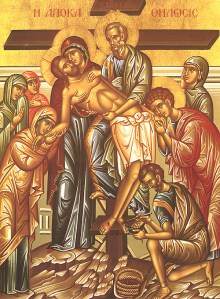
So, we not only live within this astonishing Story, but like Israel’s poets, we must learn to become its storytellers too so our words, deeds and lives can instill hope again, and again, and again.

Pascha & Pain

From The Cross

Christ is risen from the dead, trampling down death by death. And upon those in the tomb, bestowing LIFE!

Today is Pascha or Easter for us Orthodox Christians. At midnight, we greeted this momentous event with the hymn above, along with others, extolling the wondrous work of Christ’s resurrection.

The Gospel reading at every Paschal service is John 1. John begins his Gospel as a Creation story, echoing the themes of Genesis 1. For in Christ and His Pascha, God’s New Creation has begun. The resurrection of God’s people, which is to inaugurate God’s New Creation in the future, has suddenly and surprisingly broken into the here and now through one Man. In the quiet morning hours at a tomb outside of Jerusalem almost two millennia ago, creation’s trajectory was forever altered. The River of Life, as depicted in Ezekiel 47 and proclaimed later by Jesus in John 7, began to trickle from the empty tomb.

I did something a little different this Pascha morning. As my family slept, I watched Blood Diamond. And I prayed and cried. For me, this movie is not entertainment. Rather, it is a stark reminder that two “creations” overlap. God’s New Creation has been injected into a creation festering with greed, violence, lust, hatred, and pain. The very nooks and crannies of God’s good creation and the people he created to care for that creation writhe with evil and death.

The pain of evil is not abstract. It grinds against all of us. It throbs through our news, our communities and our lives. No one is immune.

But neither is the triumph and jubilation of Christ’s resurrection abstract. Nor is it a pie-in-the-sky dream we hold for some distant future. It is here. Where? In those who choose to embrace Christ’s life, to become people increasingly like him. For he is God’s Temple where heaven and earth intersect. And as we become more like him, we too are the Temple. We are God’s Temple from which streams of Living Water begin to trickle and swell, bringing health to a septic and feverish creation.

At the Paschal service, we sing anthems of Christ’s victory over evil and death and we hear about God’s New Creation in John 1. But more importantly, we receive Christ’s Body and Blood. We consume his very LIFE. As he offered his LIFE to his Father for the life of the world, it now empowers us to do the same.

And so Christ’s Pascha transfigures the world’s pain.

Christ is Risen! Truly He is Risen!

Stop Generalizing

prophet_muhammad_charter_of_privileges_to_christians_ad628The blog, “On Behalf Of All,” has posted a letter written by Muhammad, the founder of Islam, eternally vowing to protect all Christians. I found the post to be very interesting. I haven’t had time to verify its authenticity, but it’s a good reminder for all those who claim to follow Jesus. It is time for us to stop generalizing about various groups of people. Whether they are Republicans, Democrats, Muslims, Mormons, Catholics, Protestants or any other group, we must remember firstly that all people are made in God’s image and secondly, every group has members with a variety of values, beliefs and agendas.

I think many genuine Christians loathe the unjust stereotype of being hypocritical, unthinking people. Similarly, I would think many genuine Muslims hate the unjust stereotype of being fanatical terrorists.

But here’s my personal conviction: I think the fear-mongering regarding Obama, Democrats in general, and Muslims in entirety practiced by many Christians in the wider network of relationship to which I belong is just plain evil and opposes anything Jesus practiced or taught. Jesus’ apprentices are called to embody, demonstrate and announce a radical love for all people, even those who would consider us as enemies.

I’m not saying that we turn a blind eye to what is truly happening in the world. There are current governments in our world aimed at destroying Christianity. Some are Muslim, some are not. But the call to love everyone requires a reasoned and inspired response.

Imaginary God

Self-reflection“The inner conflict produced by life in the world is easily projected onto the screen of the universe, yielding an imaginary God. Only true stillness can allow the projection to dissipate.” Fr Stephen Freeman, “Unspeakably Speaking”

How true. A cursory, yet honest glance inward provides ample demonstration of this statement’s validity. A period of ministerial burnout and I recast spirituality as strictly an individual inner journey. A sense of betrayal by church leadership and disillusionment and suspicion of leadership reshape my ecclesiology into a non-hierarchical structure. Frustration at fundamentalist interpretations of the Bible reforge a personal hermeneutic of authority and obedience. And the list can go on.

The common theme in the list is that my inner conflict generates ideas about God, usually a God of my own imagination. Yet they are only ideas. They are like thin transparencies lit by a projector of my own inner turmoil. I look toward God and see a slight reflection of my own image. And that should be the warning that I travel in treacherous territory.

The answer isn’t new or different ideas. True theology isn’t about rational ideas. It’s about God. And his invitation is, “Be still and know that I am God.”

What Is To Come

GlimpsesDuring my first years of marriage over two decades ago, I was a selfish young man. Surely to the best of my abilities, I committed my life to Debbie. Yet, I viewed marriage as the environment where my needs, agendas and dreams were to be met. When they were met, I was happy. And when they weren’t met, I was miserable.

I’ve grown up a bit in the last twenty-something years (or at least I hope so). My view of my marriage is now shaped by the future; not what what I hope to get out of the marriage, but what we anticipate our lives will be together. We both dream of growing old together, wrinkled hands entwined, thoroughly enjoying each other. We dream of doing hobbies together, working on the house together, eating out together, serving together. Truly best friends.

That future shapes our present. It’s not just something for which we hope. Rather, in some ways that future comes rushing into our present and determines how we speak and act toward each other now. The vision of that future reality sets the trajectory of our present reality so we will eventually land in that future. In theological terms, we’re experiencing “inaugurated eschatology.”

As Christ’s apprentices, that’s how we should always live our lives on an even grander scale. Through his resurrection, Jesus has released his Father’s New Creation within this present creation. St Paul states that if anyone is in Christ, the person is the New Creation (2Cor 5:17). And in another passage, he states that what truly matters is the New Creation (Gal 6:15). Finally, St John describes the ultimate future reality as the first heaven and earth giving way to the New Heaven and New Earth (Rev 21:1).

Through Scripture, we’re given glimpses of what God’s New Creation will be like. It will be the answer to Jesus’ prayer, “Your kingdom come, your will be done on earth as it is in heaven.” God’s justice will roll like a mighty river as he sets everything right. Evil will finally be vanquished and God will dwell with his people and truly be their King. Creation will be restored and God’s glory will cover the earth as the waters cover the seas. God’s humanity will be resurrected and ready to live in this new environment as modeled by Jesus’ own resurrection.

One can only imagine how God’s restored Creation will impact society, technology, politics, economics, business, domestic and foreign policies, environmental issues, medicine, law, education, relationships and all other facets of society.

As we view signposts in Scripture pointing toward God’s New Creation, we are challenged and compelled to embrace “inaugurated eschatology.” As the New Creation in human form, we are to let even the vaguest imaginations of God’s restored future shape our present.

While the myriad applications exceed the purpose of this post, I would like to offer one application with which I’ve been challenged. In his commentary, Hebrews for Everyone, NT Wright states:

“True gratitude both for the present world and for the world to come is the deepest and truest form of worship… When you bow down before the living God and thank him from the bottom of your heart for what he’s done and for what he will do, it is as though you are a priest in the Temple, offering the purest, most unblemished sacrifice. Only much, much more so. That is the privilege of the being a follower of Jesus the Messiah. That is the life to which our fiery God now calls us.”

Not only am I to thank God for what he’s done and is doing, but what he will do. As a I’m being restored by Christ into a Eucharistic being, my gratitude must expand to encompass what God will do. And as I learn to be genuinely thankful for God’s future, even when my personal brokenness prevents me from being ready for it myself, I’m discovering that it’s shaping me and altering my current trajectory. In other words, being thankful for what is to come is making want to be ready for what is to come and more willing to cooperate with Jesus’ transformation in my life.

When The Paint Dries

St Isaac the SyrianMy best friend, Mark, posted on Facebook these sayings from St Isaac the Syrian:

“Rebuke no one, criticize no one, not even those who live very wickedly.”

“Spread your robe over those who fall into sin, each and every one, and shield them.”

“And if you cannot take the fault on yourself and accept their punishment in their place, do not destroy their character.”

I’ve recently had several conversations about a saying that John Wimber made popular in the Vineyard movement. He used to say, “I want to grow up before I grow old.” This pithy statement would always evoke a laugh from the audience. But now in my 40’s, I’m realizing how important a life-goal this should be.

Most of the posts on my blog basically say the same thing. The core desire of my life is to be reformed into a person that naturally and easily embodies Jesus’ character into the world.

Through his resurrection, Jesus has inaugurated his Father’s restoration of the world he created and loves. That project is being further implemented by those who answer Jesus’ radical call to follow him and become his apprentices.

From a human standpoint, Jesus’ call seems absolutely crazy. Love God with everything you are. Forgive everyone for everything. Be joyful always. Pray continually. Give thanks in every circumstance. And the list could go on.

But this list is not a checklist of things to do. Rather, it’s a description, even a promise, of the kind of person we can be under Jesus’ tutelage.

Based on the average life expectancy of a man in the United States, I’m past the halfway point. This has caused a lot of internal reflection over the past couple of years. Much of my youth, even with my best intentions, was spent pursuing the wrong values; painting my life with colors I thought were attractive. But as the paint has begun to dry, I’ve realized I don’t like how it looks.

Sayings such as St Isaac’s, one of Jesus’ successful apprentices, remind me that there is a better way to live, a better way to be. And they compel me to repaint my life, hoping that when the paint finally dries in the latter part of my life, I will have chosen the proper colors that reflect Christ into the world and that help a bit in the renewal of this world that he loves.

Googly Eye

Googly

As I was leaving home for work this morning, I was greeted by a sight that made me pause. On a little shelf near our front door sat one small googly eye. You know the kind. The little white plastic eye with a black disc that you find on stuffed toys.

I have no idea from which toy this eye originated or how long it’s been quietly watching my family’s comings and goings. But for the slightest of moments, with my briefcase and lunchbox in one hand and door keys in the other, I paused… and was bathed with the sensation of thankfulness.

It’s difficult to explain how a simple plastic thing like that would carry such meaning other than to say that it reminded me that my home is filled with abundant LIFE and JOY. Every day I look forward to returning home from work to be greeted by the sights and sounds of my beautiful wife and four awesome kids and two rambunctious puppies. I love walking into our kitchen knowing that our nourishment and refreshment is lovingly prepared by our hands. I love walking into our living room and seeing our icon corner with images of Christ, his Mother, the cross and several saints, reminding me that we are truly surrounded and supported by a cloud of witnesses. I love sitting at our dining room table and sharing a nightly meal filled with talk and laughter with the ones I adore or having conversations over coffee in the morning. I love walking into our backyard and playing with our puppies.

In moments like these you almost expect to hear the social networking cliche, “Life is good!” But life is ALWAYS good, whether one is experiencing chaos or calmness. This isn’t a “Look at how good life is for me” post. Rather, it’s a reminder that I’m being restored as a Eucharistic being. Eucharist is thanksgiving. Christ’s life in me is restoring my core being as a person filled and living with thanksgiving toward God. And this is expressed in the minutest daily moments and in love for those all around me.

Now don’t you go rolling your googly eye at me. 🙂

Why Church?

The ChurchSometimes we can lose our focus on why we need the Church. Maybe we’ve been hurt or disappointed or disillusioned. Quotes like the one below remind us why God created his restorative family and community called the Church.

“The Church has been established in the world to celebrate the Eucharist, to save man by restoring his Eucharistic being. The Eucharist is impossible without the Church, that is, without a community that knows its unique character and vocation — to be love, truth, faith and mission — all of these fulfilled in the Eucharist; even simpler, to be the Body of Christ. The Eucharist reveals the Church as a community — love for Christ, love in Christ — as a mission to turn each all to Christ. The Church has no other purpose, no ‘religious life’ separate from the world. Otherwise the Church would become an idol. The Church is the home each of us leaves to go to work and to which one returns with joy in order to find life, happiness and joy, to which everyone brings back the fruits of his labor and where everything is transformed into a feast, into freedom and fulfillment, the presence, the experience of this ‘home’ — already out of time, unchanging, filled with eternity, revealing eternity. Only this presence can give meaning and value to everything in life, can refer everything to that experience and make it full.”  The Journals of Father Alexander Schmemann 1973-1983, p. 25

Why I Love Her

Happy New Year! Wow! It’s 2013.

So, yesterday turned into an interesting day. Debbie and I ended up spending four hours in the emergency room. It wasn’t life-threatening. Urgent care was closed and the ER was our only option.

“What happened?” you ask. Deb and Chris were out walking our puppies around the block. Deb was walking fast and her foot caught a raised part of the sidewalk. She partially slowed her fall with her knee and wrist, but her chin and mouth hit the sidewalk. The impact tore two deep gashes in her bottom lip and chipped one of her front teeth.

Four hours in ER and she left with two stitches on her lip. She vows she will be hiring a stunt double for the remainder of her stunts.

But here’s the reason for this post’s title. While in ER experiencing a lot of pain herself, Deb saw an older lady who was sitting alone and obviously struggling with intense pain. So with a cold and bloody compress applied to her gashed lip, Deb limped over to the lady, put her arm around her and engaged her in conversation to comfort her.

And that, my friends, is why I love this woman who has chosen to share her life with me. I get to see and experience this unique woman everyday. And 23 years of marriage have only deepened my love and respect for her.

I don’t know about you, but I don’t think about the emergency room unless I have to go to one. Through most of my life, I forget they even exist. By their very nature, they are places of pain, misery, and fear. Yesterday reminded me that on holidays, when most people are with family and friends, emergency rooms are filled with people who are afraid, sometimes alone, and in agony.

During our four hours, I heard an infant screaming in pain for our entire visit. As we were preparing to leave, I watched his young parents hovering over him with worry as he was hooked up to tubes and wires and wheeled away on a gurney to another location in the hospital. I watched an older man who had fallen and was writhing in pain from something broken inside his body. And there were dozens more who were sick and suffering.

And all of us can be mere moments from being in the same place. Our day was spent fulfilling our busy plans. Walking the puppies is a normal activity we do a couple times a day. It was a simple way to spend five minutes before we moved onto our next activity. But a misplaced step on a crack less than an inch high suddenly causes life to spiral in a completely different direction.

Yet despite our day’s new trajectory and through her own pain, Deb showed compassion to a lonely and suffering lady, connecting a bit of heaven to a broken earth in the ER. And that’s why I love her.

Fleeting Beauty

Bentley's SnowflakeI was listening to Radiolab this morning. (BTW, Radiolab has to be my favorite podcast!) They were talking about Wilson Bentley. Bentley was the first person to actually photograph snowflakes.

Bentley’s interest in snowflakes began as a teenager. At the age of 15, he would peer at snowflakes through a microscope and attempt to draw the complex images before they melted. By the age of 20, he had attached a camera to the microscope and spent the rest of his life capturing and photographing what he called “tiny miracles of beauty.” Mind you, this was 1885 and way before our modern era of digital photography.

Tragically, Bentley died of pneumonia after walking six miles in a blizzard in order to photograph more snowflakes.

Bentley’s life made me think about beauty. First, here’s a man who spent his entire life enraptured by a beauty that most would rarely ever notice. And he was not only enraptured, but dedicated to endure the hardships necessary to document this beauty. It has made me pause and reflect about what beauty has captured my attention and allegiance.

Second, beauty is not everlasting. Bentley’s snowflakes are the perfect example. Within minutes these “tiny miracles of beauty” evaporate and vanish forever. The vibrancy of a sunset quickly darkens as the sun slips below the horizon. The gleam in a lover’s eye dims with age or sickness.

Third, considering the gazillion unseen snowflakes that have fallen to earth through the ages, there is beauty that will always go unseen by any human eye. There are flowers on a mountain somewhere that will bloom and die, unwitnessed by any terrestrial being. And then I think of the untold beauty throughout our cosmos. Images from the Hubble Telescope can only hint at the beauty that lies far beyond our reach.

Our world has been intentionally infused with beauty, everything from a snowflake, a flower, a sunset to a smile and a caring hand. It makes me grateful that our Creator loves his world so much that he sent his Son. God came into our world to save it and renew it. And this makes me long for that ultimate Day of Renewal when Heaven and Earth will fully merge, all things will be made right and beauty will no longer be fleeting.

Quiet Love

“You love me more than I am able to love you.”

That line appears in one of Met Philaret of Moscow’s prayers. And it makes me pause every time I pray it.

On The CouchIn my previous youthful zeal and optimism, it was so easy to proclaim my love of God as though it were a grand thing. My worship was a spiritual facsimile of Tom Cruise jumping up and down on a couch. But the older I become, the more I realize that the truth quoted above is woven into the very fabric of reality. And it has tempered my immature exuberance with what I hope is humility. For my love for God is not something that needs to be proudly proclaimed in public but humbly practiced in silence.

God is love and perhaps the greatest expression of his love was the Incarnation. It was THE event of divine love that would heal humanity and creation and yet it was shrouded in quietude, humility and mystery.

Jesus taught that the greatest command is to love God with everything we have. Again, love is not proclaimed but practiced. But how? The Incarnation whispers an answer for those quiet enough to hear. “God became like us so we could become like him.”

God, who is love, became like us so we could become love like him.

St Paul encourages us to pursue love. This means far more than giving and receiving love, although  this would be a great start for many of us. Rather it’s pursuing Christ’s likeness, who embodied divine love as a real flesh-and-blood human being. We quietly love God by daily becoming the same kind of person he is.

The Incarnation isn’t just a historical event that we memorialize once a year. It’s a daily reality for those who love God. Just as God quietly and humbly slipped into his creation on that mysterious day, he still slips into his creation through our lives as we pursue love and become a little more like him.

Tradition & Reality

open-windowMany people believe tradition to be a dead thing. Movies portraying a young man or woman kicking over the traces have become cliche. Tradition is depicted as the tool of the old or entrenched trying to retain social or political power over the young or disenfranchised.
So Fr Stephen’s definition of Tradition is like stepping out of a stuffy room into a crisp winter morning. It jolts the idea with fresh vitality.

Tradition is not the tyranny of the past over the present: Tradition is the adherence to the same eternal reality throughout all time.

Behind Tradition is the eternal reality of an amazing God. He’s a Creating God, giving life abundant expression under his care. He’s an Incarnational God, loving his creation so he becomes part of it in order to renew it from the inside-out. He’s an Apocalyptic God, embodying the ultimate union of heaven and earth so creation is restored and redefined. He’s a Loving God, sharing his life with ours in order that we may be continually reformed into his life and likeness.

So Tradition is the temporal expression of this eternal reality. Tradition is alive, rich, relevant, interactive, invigorating, rejuvenating, renewing, energetic, dynamic and vibrant.

Reading Scripture. Praying prayers. Making the sign of the cross. Honoring the Saints. Receiving the Eucharist. Confessing our sins. All open the windows to the brisk breeze of eternity, shocking us back to what is truly real.

Can You Promise That I Will Come Back?

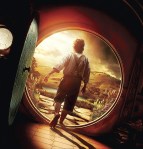
Hobbit-MTII’ve seen about every trailer and clip for The Hobbit: An Unexpected Journey. And yet I’ve remained a bit skeptical of the entire project. I loved The Lord of the Rings trilogy. But the thought of turning The Hobbit into another trilogy smacked of corporate greed more than artistic vision.

Then I saw THIS CLIP. I think this 1-minute clip is filled with same ethos that I love in the LOTR movies. What draws me to the LOTR movies are not the special effects, the fantasy, or the violence. It’s those startling moments when the curtain of reality is pulled back and we get a glimpse of true Reality. Moments of purpose, companionship, loyalty, and sacrifice that make sense of the pain and struggles we endure.

Those moments in LOTR continually move me to tears. And the last few sentences of the dialogue between Gandalf and Bilbo in this clip created a severe lump in my throat.

Gandalf: You’ll have a tale or two to tell of your own when you come back.

Bilbo: Can you promise that I will come back?

Gandalf: No… And if you do, you will not be the same.

There are moments in life when I can only shake my head in confusion and disbelief. And asking “Why?” provides no adequate answers. But it’s not those moments that are truly real or defining, despite how real they seem. It’s what, or better yet, Who awaits us at the End that is the True Reality and Purpose for everything.

I think it’s in our nature to want to make sense of what’s happening to us. Why am I sick? Why did I lose my loved one? Why am I lonely? But the meaning can’t be found in the moment. In many ways, it’s only after our life’s journey is complete that we will be able to look back with clear hindsight. But by then it’s too late. The paint on our life will have dried.

So the task in the moment is not to figure out Why but to be crafted through those moments into an ever-increasing image of Who. Because the only promise that awaits us is not that we’ll safely return from the journey, but that we’ll never be the same after the journey.

Small Things Matter

It’s been quite some time since I’ve scattered any words upon this digital parchment. Life has been full. And I absolutely love it. The first half of 2012 was filled with a lot of anxiety and fear.  Perhaps it was too many changes in too short a time. Or maybe it was simply the state of my own inner world taking its toll. Either way, things took a dark tone for awhile.

But through the help of various sources, I’ve been experiencing a significant turnaround. Perhaps the most notable is a sense of thanksgiving and gratitude I have for life, both the good and bad. I find myself thanking God each day for not only the perceived good in my life, but the potential challenges and struggles that I’m currently encountering and will potentially experience through the day

This change is subtle, yet alters the landscape of my perception. The crises that always seemed to loom before me don’t seem to be so “life-threatening” anymore. In turn, this has allowed me to focus on what God actually sets before me each day. You know, the “small” daily things like loving my wife and kids, performing with integrity and compassion at work, driving on southern California roads with patience and peace toward those around me

More and more I’m learning the myriad of small moments are what actually make up the fabric of real life. And how I live in those moments determines both who I am becoming inwardly and the “impact” I have upon my little portion in God’s world

In that light,  I want to share a couple of wonderful articles that paint portraits of genuine life far more beautiful than I can manage with my limited skills with words. The first is the blog post, “The Invisible Christian,” by Fr Stephen Freeman. And the second is “Pursuing God through the Small Things,” by Joel Miller. I would encourage you to spend a few moments reading these articles and allowing them to reframe your perception of what is important and valuable in life.

Why I’m Smiling

This morning’s epistle reading was Romans 16:1-16. I have to admit that my reaction to this passage surprised me. I discovered a huge smile spreading across my face as I read through Paul’s personal greetings to various individuals and families in the Roman Church.

The Epistle to the Romans is viewed as Paul’s theological masterpiece. NT Wright states in his commentary on Romans that while many will disagree on how to approach and interpret Romans, “What nobody doubts is that we are here dealing with a work of massive substance, presenting a formidable intellectual challenge while offering a breathtaking theological and spiritual vision.”

Yet, here at the end of Paul’s theological magnum opus, we find a small window into the genuine street-level embodiment of his theology — love. He greets people by name. He calls a few “beloved.” He proclaims with exuberance those who have risked much and served well. These are his genuine friends. These are loved ones for whom he prays. These dear ones of whom he thinks frequently.

Who knows how all of their lives first intersected. Who knows who introduced one person to another? Who knows who invited one person to dinner to meet another? And Paul is part of this intricate web of friendships. Yes, he’s an apostle. Yes, he’s a recognized leader. But most importantly, he’s their friend and co-worker in Christ. They have rejoiced together, cried together, prayed together, learned together, shared their lives together. Somehow in his wisdom, God brought all of them together into a loving and prayerful community of his Good News for the life of the world.

And that made me smile this morning.

Then it made me think about everyone whom God has brought into my life over the years.

And now I can’t stop smiling.

We Always Live In The Resurrection

Lately, I’ve been reminded that even though Pascha has passed on the Church’s calendar, we continually live in the Reality of Christ’s resurrection. It’s easy for the deterioration, brokenness, and tragedy of our present world to eclipse the startling Truth that God’s New Heaven and Earth have been inaugurated into our time and space. But God’s mission to renew His Creation, launched at Jesus’ resurrection and deployed by Jesus’ people, is on track and moving forward. To cement the point, here’s St John Chrysostom Paschal homily to refocus our vision on what is truly Real:

“Let no one bewail his poverty, for the universal kingdom has been revealed. Let no one weep for his iniquities, for pardon has shown forth from the grave. Let no one fear death, for the Savior’s death has set us free. He that was held prisoner of it has annihilated it. By descending into Hell, He made Hell captive. He embittered it when it tasted of His flesh. And Isaiah, foretelling this, did cry: Hell, said he, was embittered, when it encountered Thee in the lower regions. It was embittered, for it was abolished. It was embittered, for it was mocked. It was embittered, for it was slain. It was embittered, for it was overthrown. It was embittered, for it was fettered in chains. It took a body, and met God face to face. It took earth, and encountered Heaven. It took that which was seen, and fell upon the unseen.

“O Death, where is your sting? O Hell, where is your victory? Christ is risen, and you are overthrown. Christ is risen, and the demons are fallen. Christ is risen, and the angels rejoice. Christ is risen, and life reigns. Christ is risen, and not one dead remains in the grave. For Christ, being risen from the dead, is become the first fruits of those who have fallen asleep. To Him be glory and dominion unto ages of ages. Amen.”

AMEN!!!

And now with St John’s word still echoing, read St Paul’s exhortation in Colossians 3:

“Since, then, you have been raised with Christ, set your hearts on things above, where Christ is seated at the right hand of God. Set your minds on things above, not on earthly things. For you died, and your life is now hidden with Christ in God. When Christ, who is your life, appears, then you also will appear with him in glory… Therefore, as God’s chosen people, holy and dearly loved, clothe yourselves with compassion, kindness, humility, gentleness and patience. Bear with each other and forgive whatever grievances you may have against one another. Forgive as the Lord forgave you. And over all these virtues put on love, which binds them all together in perfect unity.”

Cathy’s Graduation

Today is a significant milestone for my family. My second child, Catherine, graduates from high school.

I cannot say enough how much I enjoy being her dad. She is such a creative, energetic, joyful, intelligent, gorgeous young woman. A little over 18 years ago, Debbie and I brought her home as a tiny little baby. Watching her grow from an infant into a young adult has been a wondrous experience filled with laughter, tears, prayers, delight and regrets. I love the person she has become and look forward to watching God use her in his world. She easily fills any room with her abundant exuberance. I cannot imagine a day without her smile and presence in our lives.

But Catherine’s graduation, as with Michael’s graduation two years ago, forces me to reflect on the ongoing changes occurring in my family. In five short years, all four of my children will have graduated high school.

I remember when my children were very young. Their adulthood seemed so far in the future that I rarely thought about it. And now in what seems like a flash, that future is here. My cherished babies are gone, replaced by equally cherished emerging adults.

I’m amazed at how fast this part of our family’s life has gone. Yet, more startling than the quickness of time’s passage is the permanence. It’s gone. My babies turned into toddlers, went to school, grew up and are sprinting toward their adult lives. Each day brings Debbie and me closer to when we have to say “Good-bye” to each one as their hearts transition from our family and home to begin their own.

Over the past few years, if I could have been granted one wish, I would have asked for time to stop so that my family could be suspended as is. I would have given virtually anything to spend the rest of my life with my family. But then after having such a thought, I would immediately realize how selfish such a wish is. My children need to grow and become who God created them to be, even if that means I had to let them go. In fact, it requires that I do let them go. And I absolutely hate it.

In several hours, my daughter will step over this threshold into adulthood. And I will sit in the stands and cheer for her. Afterwards, I will hug and kiss her and celebrate her entrance into this new phase of life with unspeakable pride and joy.

But right now, in the shadow of this looming moment, I miss my little girl. In my heart and memories, I hold my little baby in my arms. I feel her tiny hand wrap around my finger. I feel her curl on my lap to watch TV with me. I watch her play with her dolls and dress up as a princess. I see her twirl and dance and sing. I hear her say, “I love you, Daddy.”

I love you too, Sweetie. I love you too. I don’t want to let you go. But I will.

Present In The Mundane

“The holiness to which the Church is called is not a matter of escape from the mundane course of human events, from time, or from everything that is not explicitly Christian. The Eucharist is an incarnational meal in which the risen Lord becomes present in the rude stuff of this life, even as he became present in human history through the womb of the Theotokos. The line between the mundane and the holy is here erased because it is precisely as the ordinary, whether a baby or bread and wine, that the Son of God comes to us. The connection to moral theology should be obvious. God claims the physical and mundane things of life as His own in the incarnation. The mystery of the Incarnate Word as fully God and fully human shows that every bit of human nature has been claimed by God in Jesus Christ. A continued participation in that process of claiming occurs when Christ becomes present to us in the Eucharist, when we sacramentally take His body and blood into our body and blood.” (Philip LeMasters PhD, Towards a Eucharistic Vision of Church, Family, Marriage & Sex)

The above quote was posted this morning by Fr Ted. It is so good that I think it bears reposting. God makes himself known through the fabric of daily life. He can be found in the mundane and even the monotonous and thus transforms it into the holy. This is how I want to live life.

All Men Want Peace

“All men want peace; but they do not know how to attain it. Paissy the Great, having lost his temper, begged the Lord to deliver him from irritability. The Lord appeared to him and said, ‘Paissy, if thou dost not wish to get angry, desire nothing, neither criticize nor hate any man, and thou wilt have no anger.’ Thus every one who renounces his own will before God and other people will always be at peace in his soul; but the man who likes to have his own way will never know peace. The soul that has surrendered herself to the will of God bears every affliction and every ill with ease, because in times of sickness she prays and contemplates God, saying: ‘O Lord, Thou seest my sickness; Thou knowest how weak and sinful I am. Help me to endure my sufferings and to thank Thee for Thy goodness.’ And the Lord relieves her pain, and the soul feels God’s help and is glad in the sight of God, and gives thanks. If some misfortune befalls you, reflect in this wise: ‘The Lord sees my heart, and if this is His will all will be well, both for me and for others.’ And thus your soul will always be at peace. But if a man murmurs against his fate he will never have peace in his soul, even though he fast and spend much time in prayer. The Apostles were deeply attached to the will of God. In this manner is peace preserved. All the great Saints likewise bore with every affliction, submitting themselves to the will of God.” Staretz Silouan, Wisdom from Mount Athos

Heaven & Hell Are Not Places

“We are made whole (healed) by the grace of God, and brought into a relationship with Him that is our true inheritance. Heaven and hell are not places created by God for those who were good, or bad, but rather about relationship. The Fire of God is heaven for those who have responded to God’s love, and hell for those who have remained in the darkness of sin (sickness), and whose ego has shut out God, for self. Heaven and hell are not places, but all about relationship.” Abbot Tryphon

I’ve written about this before, but it’s worth revisiting. Our culture’s understanding of heaven and hell is severely distorted. Too often, heaven and hell are viewed as future destinations either to reward the good or punish the bad.

However, as Fr Stephen Freeman is fond of saying, “Jesus did not come to make bad men good, but dead men alive.” What is at stake is the transformation of human nature, which is so fractured, distorted and sick that it’s dead. And in this dead state, we shut out God. That is hell. In our brokenness, we constantly live in hell.

So the issue isn’t ethics or morality. You can’t tell a corpse to behave better. The only hope is Resurrection. For the Resurrection is the inauguration of God’s Renewed Creation. And the power of the Resurrection brings life to all of us who are dead. This is the point of Ezekiel 37 and Jesus’ retelling of that vision in the Story of the Prodigal Son. The son wasn’t restored because he “got his act together” or because he apologized to the Father. He experienced Resurrection. He returned from exile and back into relationship with his father and his household.

When a person experiences the Resurrection, the process of transformation begins. And this is heaven. Heaven is being loved by God and being able to love him back, regardless of circumstance. Heaven is loving and living God’s will regardless of the pain or sacrifice one experiences. Heaven is being transformed into Christ’s likeness from the inside-out.

As Jesus hung upon the cross absorbing the world’s sin and evil upon himself, he was in heaven. In the midst of hell, he was in heaven.

So heaven and hell are descriptions primarily of our relationship with God. But are there future destinations of heaven and hell? I believe so. It’s called the New Creation. One day, God will renew his Creation. He will set all things right. Jesus’ prayer will fully be answered as heaven and earth finally overlap and God’s reign will be on earth (the human realm) as it is in heaven (God’s realm). And in the New Creation, God’s glory will cover the earth as the water covers the seas. This will be the ultimate and eternal experience of heaven and hell.

And on that day when God renews his Creation and drenches it with his undiminished glory, his very love and presence will be like an eternal inextinguishable lake of fire for those who shut him out. And that same love and presence will be indescribable joy for those who have been transformed into his likeness and live only for his will.

So heaven and hell begin now. Each of us is on that journey every day.

Dad, When I Grow Up…

“Dad, when I grow up, I want to be a pastor and a hockey player.” That’s what my oldest son told me when he was in elementary school years ago. I’m not sure where the hockey player reference came from. But telling me that he wanted to be a pastor was his small expression of love for me and desire to be like me.

That moment fills my mind when I read Ephesians 5:1-2:

“Be imitators of God, therefore, as dearly loved children and live a life of love, just as Christ loved us and gave himself up for us as a fragrant offering and sacrifice to God.”

I’ve been reflecting on this passage for the last couple of weeks. But every time I try to write something, it feels like I’m pinning this Scripture to a laboratory table. This is one of those portions of Scripture in which we must fully immerse ourselves rather than dissect with an expositor’s words.

So perhaps the only thing worth saying is, “Father, when I grow up, I want to love just like you.”

The Humble Soul

“The soul of the humble man is like the sea: throw a stone into the sea — for a moment it will ruffle the surface a little, and then sink to the bottom. Thus do afflictions disappear down in the heart of the humble man because the strength of the Lord is with him.” Staretz Silouan, Wisdom From Mount Athos

Resurrection of the Prodigal

The parable of the prodigal son in Luke 15 is one of my favorite parables. Not only does it contain levels of interpretation and application, but it depicts our Heavenly Father in such an intimate way. He is the Father who graciously concedes to his younger son’s outrageous request for his portion of the inheritance. And rather than holding a grudge against his son or even maintaining the cultural detachment of a patriarch, he sees his returning son from a distance, runs to greet him, and compassionately restores him.

I am moved virtually every time I reflect on this parable. It strikes a deep and unspoken place within me.

This parable has meant even more to me as I’ve come to realize that this is a resurrection passage. Twice the Father says, “For this son of mine/brother of yours was dead and is alive again; he was lost and is found.” You can almost hear the faint echoes of Ezekiel 37.

In Ezekiel 37, the prophet receives a vision of Israel’s return from exile. Israel is depicted as a valley of bones. God tells Ezekiel that he will open their graves and bring them back to the land of Israel (Ezek 37:12). This is the first primary image of resurrection in the Old Testament and it represents Israel’s return from exile. They were dead and are alive.

In the time of Jesus, while Israel had returned geographically to the land, they had not spiritually returned from their long exile. Through this parable, Jesus is putting an intimate face on Ezekiel 37. Israel is the younger son, dead and lost in exile. But by simply returning to the Father’s house, Israel meets the compassionate and intimate Father, who is quick to restore. They are resurrected, alive once again.

As a parable of salvation, the prodigal son enforces the fact that our “problem” is not a legal, moral or ethical breaking of some abstract code or law. In other words, the prodigal son didn’t do something wrong or bad and then needed to be expunged of the guilt of his crime. Rather, the son was dead. Life and hope were gone. An apology like he had planned would not solve the problem. He needed to be resurrected and restored.

And this resurrection takes place in relationship with the Father. The son simply hoped for a place as a servant in his Father’s house. But the life he needed was in the restored relationship with his Father. The Father states, “For this son of mine was dead and is alive again.”

And the resurrectional relationship isn’t just a “God and me” thing. The Father tells the embittered elder son, “Everything I have is yours. But we had to celebrate and be glad, because this brother of yours was dead and is alive again.” The older brother also has a role in the resurrection of his brother. Everything in the Father’s house belongs to the older brother. While he views the resources of the Father’s house as potential personal blessings, the Father implies something more in the statement “Everything I have is yours.” These resources should not only flow to the older brother, but through the older brother. The older brother should use these resources as the Father uses them. So the Father encourages him to celebrate and in so doing, the resources of restoration will flow to the younger brother. The Father is inviting the older son into the “ministry of reconciliation,” to practice resurrection and thus to be a blessing rather than expecting only to receive a blessing.

In other words, blessings are not intended to simply flow to a person but through a person to others.

But Jesus leaves the parable hanging. In some ways the fate of the older brother is more at stake than his younger sibling’s who is now alive and restored. And we realize that the older brother, despite never having left his Father’s house, is like Israel currently occupying the Land. He too is still in exile. He is also dead and in need of resurrection.

Abbot Tryphon & “The ER for the Soul”

Abbot Tryphon posts a great summary on how the Orthodox Church functions like a hospital in the therapeutic process of salvation. His opening paragraph is a good reminder that simply joining the Orthodox Church does not guarantee that we have entered the healing process. We must engage in the life of the Church in order to enter into communion with God and thus “work out our salvation” (Phil 2:12) and “train ourselves to be godly” (1Tim 4:7).

“Orthodoxy offers a very precise way in which to enter into communion with God. It is a way that must be learned, for simply “becoming Orthodox” will not lead the seeker into an inner life that will transform, and enlighten. Membership in the Church is simply not enough, for the Church is not about beautiful services, icons, or mystical theology. As a hospital for the soul, the Church is a place wherein we can receive healing for that which ails us. It is the place where we can be cured, and made whole.”

Read the rest HERE.

Fr Stephen & “All Dogs Go To Heaven”

Fr Stephen Freeman recently adopted a puppy, which has compelled him to post a wonderful reflection about creation, fallenness, prayer, and human nature. Wow!

Here’s an excerpt:

“Do dogs pray (does creation pray)? Absolutely! “Let everything that has breath praise the Lord” (Psalm 150:6). But how do they pray? Their very existence is prayer. Every created nature is made to live in communion with God. Human nature itself lives in communion with God. Our fall does not consist in becoming something other than human – we have yet to become truly human.”

You can read the rest HERE.

Sin Can’t Sing


“All is blessed by the hand of God, and all things are the ‘songs’ of God’s glory: even things that humans find odd, and perhaps disgusting. Ugly insects are as much part of the song of glory as graceful trees. Sin alone is not part of the song of glory. Alone in the creation it cannot sing at all.”

John Anthony McGuckin, The Orthodox Church

I enjoy watching The Voice and The Sing-Off. Yet, I can’t stand American Idol. One reason is that I absolutely hate the initial auditions. The cringe-factor is too high for me. It seems too many people think they can sing, get furious when confronted with the actual reality by professionals, and then have their delusions broadcasted for all to see.

McGuckin’s quote reminds me of those awkward American Idol moments. Sin believes it can sing. Yet try as it might, it only screeches and shrieks. Painfully. Agonizingly. Sadly, sin compounds itself, forming a choir of clamorous voices, and very quickly, it can become the dominant voice in our ears.

But we don’t have to yield to sin’s delusions. If we listen carefully, we can hear the harmonies of God’s creation, resonating with the melody of God’s glory. And since the song is in the key of Incarnation, all of us can easily find our parts and join in the chorus.

Although sin can’t sing, we can!

All Health Broke Loose

Sunday’s Gospel reading contained this passage from John 20, “‘Peace be with you! As the Father has sent me, I am sending you.’ And with that he breathed on them and said, ‘Receive the Holy Spirit. If you forgive anyone his sins, they are forgiven; if you do not forgive them, they are not forgiven.'”

Shortly after Jesus inaugurated his Father’s New Creation by his resurrection, he commissioned his disciples to continue what he has started. Jesus instructs them to participate in the missio dei with, “As the Father has sent me, I am sending you.” I truly believe this statement forms the core of any missional engagement. The New Creation is implemented by continuing Jesus’ incarnation of God’s Presence and Life into the world.

So that there is no mistake, Jesus summarizes the essential components of an incarnational mission. They must receive the Holy Spirit and they must forgive sins. They cannot engage in this daunting task solely relying on their own strength and strategies. Human participation in the missio dei requires Christ’s likeness and God’s divine energies. This is especially apparent when one reflects on what is involved in forgiving sins.

Jesus means far more than simply declaring to a person forgiven from personal sins. To Jesus’ contemporaries, the forgiveness of sins meant the return from exile. Based on their covenant with God, Israel’s sins had sent them into exile and it would be God’s forgiveness of their sins that would initiate their return. But Jesus offered more than a geographical relocation or deliverance from foreign rule. When Jesus offered the forgiveness of sin, he was offering a new world order from the desolation of death into the eschatological kingdom of God.

And that is our ongoing role in God’s mission. To borrow a phrase from my priest, “All health broke loose” at Jesus’ resurrection. I really like that. At the resurrection, the renewal of God’s creation is launched. As we are sent as Jesus was sent, as we forgive sins and offer the return from exile, as we embody God’s kingdom, all health should break loose in us and around us.

Truth & Love

I’ve been thinking a bit more about Truth. This isn’t a new thought, but more of a slight restatement of a thought from yesterday’s post. Jesus is The Truth. Truth is a person. Therefore, we know The Truth through sharing lives (koinonia, communion) with Him. And since this deep life-sharing relationship is the primary way to know The Truth, then the same kind of deep life-sharing relationships with others is the environment through which we share The Truth. We know The Truth through Love and we share The Truth through Love.

Truth is incarnated through Love. Truth is known through Love. Truth is shared through Love.

A Good Lesson For Photography… And Life

I’m an amateur photographer, so I don’t have much by which to judge someone as a great photographer. But I’ve noticed that while most photographers make beautiful photos, there are those exceptional ones that transcend making beautiful photos and actually capture life’s beauty. In my opinion, Zeb Andrews is one of those kind of photographers.

I’ve posted before about how inspiring Zeb is to me. He makes photography (and I cringe at how cheesy this sounds) magical. His images aren’t “perfect.” Nor do they look like something you’d find on a magazine cover. He doesn’t use fancy processing techniques. From what I gather from his comments on his Flickr Photostream and website, he carries a variety of cameras and film wherever he goes and intentionally looks. He has honed the art of observation. And he’s honed the art of photography to capture the beauty in what he sees. He states, “I enjoy the process of photography much more than the results.” And it shows. I think the results are pretty phenomenal. But what I love most about Zeb are the insights he shares about the process. Sometimes, I wonder if he’s sharing more about the “process” of living than photography.

Here’s some advice he gave recently that captured my attention:

“And another helpful piece of advice, don’t forget that there are many more ways than one to photograph anything. Or put another way, don’t settle with photographing anything one way. There is really an infinite number of ways to photograph everything. And this seems obvious, but trust me, it is easy to forget. Just look at Multnomah Falls. How many photographers avoid that waterfall because they think it has all been done? The same with the Eiffel Tower. Sure, there are lots of photos out there of both of these and many of these photos tend to look really similar. It is easy to make the first photo one finds and then move on to other things.

“Don’t do this. Stop. Look around. Keep looking. Move. Look some more. Wait. Then find a second and a third and a fourth different way to photograph your subject. Trust me, the perspectives are out there, it is just a matter of finding them, if you can. And sometimes you cannot. Sometimes you don’t have the equipment, or the experience or technical prowess. Sometimes you just don’t have the vision. But just because you cannot find those additional ways does not mean they don’t exist, which also means that you shouldn’t not look for them. Give it a try.”

I know firsthand how easy it is to get locked into only one perspective — in photography and especially in life. In the zealousness of my youth, it was so easy to accept what I was taught as “The Truth” and appoint myself as a spokesperson for “The Truth.” That meant I was right and everyone else who disagreed with me was wrong. I had to learn over time that what I believed to be “The Truth” was usually an opinion, a perspective. It took me years to learn that one of the beautiful aspects of life is that there is a wide variety of perspective.

I’m not saying that there isn’t absolute Truth. Nor am I saying that Truth is subjective. I’m saying that what most people proclaim as “The Truth” is usually just an opinion and all of us would benefit if we would put away our prophet’s mantle and learn to listen and appreciate the variety of perspectives that exist. To paraphrase Zeb a bit:

“It is easy to make the first opinion one forms to be the only opinion and then call it “The Truth” and then move on to other things. Don’t do this. Stop. Look around. Keep looking. Move. Look some more. Wait. Then find a second and a third and a fourth different way to understand your subject.”

Here’s something that always gives me pause. Jesus called himself “The Truth.” Truth is a person, not an abstract idea. Jesus embodied Truth in loving, gracious, life-producing relationships. That’s Truth in human form. Therefore, Truth is both known and expressed primarily in relationship, not proclamation.

What shames me is that my life is in such stark contrast to Jesus. Sometimes, my first reaction to a person with a perspective different than mine is to feel angry or threatened. That last thing on my mind is relationship. Why? I’ve said it before and I’ll say it again: Any negative reaction I experience is caused by something within me. So I need to ask, “What is inside of me that is angered or threatened by a different perspective?” What causes this “fight or flight” mechanism in me?

I don’t have an answer for that yet. But I do know this: If Truth is embodied in loving, gracious relationship and if my reaction to a different perspective is anger or defense, then I probably don’t really know the Truth.

There is a popular saying in the Orthodox Church credited to the fourth-century monk, Evagrius the Solitary, “The one who prays is a theologian; the one who is a theologian, prays.” To me, an implication of this saying is that a person is only capable of knowing the Truth if he or she is in deep fellowship with the One who is The Truth. And a corollary to this saying is that a person can only embody the Truth to others through deep fellowship.

The Lenses Through Which I See

I read a beautiful Paschal reflection by Fr Ted Bobosh. His reflection reminded me of how God has shaped me to view life through a few crucial lenses.

First, salvation, as experienced personally, is the entire process of God rescuing me from sin and death and restoring me as his image-bearer. In other words, salvation is the actual process of being transformed into Christ’s likeness. As such, “forgiveness of sins” is the doorway to salvation, but not salvation itself. Forgiveness is a necessary aspect of a far larger process of renewal, restoration and transformation. Therefore, I don’t possess salvation. Rather, I’m on a journey of salvation, a journey toward becoming like Christ in his life and likeness.

Second, God is saving his entire creation. There is a global dimension to salvation. The promised New Creation is this creation renewed and overflowing with God’s glory. The New Creation was inaugurated at Jesus’ resurrection and God is actively restoring his creation, primarily through the renewal of creation’s stewards — the human race.

Third, Jesus’ very being and life saves us. God’s salvific activity cannot be pinpointed to just one event in Jesus’ life. All of the events save us. He saves us through his birth, his circumcision, his baptism, his ministry, his miracles, his teaching, his crucifixion, his resurrection, his ascension, his return, his ongoing kingship, and all the bits in between.

Fr Stephen Freeman summarizes nicely, “The Incarnation of Christ and the whole of His work – suffering, death, burial, descent among the dead, resurrection, ascension – serve the same singular purpose – to deliver all of creation (including humanity) from its bonds and establish it in the freedom for which it was created – manifest in Christ’s own resurrection.”

The convergence of these lenses bring the world into pin-sharp focus for me and have helped me to shed much of the delusion from my past.

Clearing My Throat, Finding My Voice

Reviving my blog after a couple of years has me feeling like a singer preparing for a performance after a long hiatus. I need to cough and clear my throat as well as do some vocal exercises. So please forgive the phlegm as I try to warm up. 😉

So what am I hoping to accomplish now that I’m blogging again? Like I said last time, I want this blog simply to reflect my life as I live. Important aspects of my life are my family, theology, writing, reading, movies, music and photography. So I hope all of those things will find their way into my posts.

Here are some general “bloggy” things I’ve learned as I anticipate future posts.

Keep it short. A lot of blogs I read are long and tedious. And I too have been very guilty of being tedious. I’m trying to learn the art of brevity. One blog I read is The Morning Offering by Abbot Tryphon. He provides the most nourishing spiritual nuggets in small portions. Granted, his wisdom flows from a life of devoted, ascetical life to Christ. But he shares his profundity with great concision, something I desire to learn.

Keep it kind. I also find many blogs to be angry. Differences and disagreements provide ample fodder for blog posts. Being critical of others is just too easy. Yet, God is merciful to all. So I want to avoid rants and critiques and find beauty, grace and truth.

Keep it humble. I’m not here to convince anyone of anything. Honestly. I’m not a pastoral or prophetic voice. I hold no leadership position. I have no secret message that the world needs to hear. I’m just a man. If I had to describe myself, I guess I would say I’m striving to be Jesus’ apprentice as both a member of the Eastern Orthodox Church and a collaborator with God’s restorative mission in the world. So the majority of my posts will probably reflect this as I ponder life and other things.

Reviving My Blog

First of all, Christ is Risen! Truly He is Risen!

And next, Hello again!

This is weird. I walked away from this blog almost two years ago. I said my farewells and had no intention of ever returning. And yet I could never bring myself to remove this blog’s presence from the Internet. Now I wonder if part of me secretly hoped for or even planned for a return. Who knows?

The time away has been good. I didn’t have any major theological insights or spiritual breakthroughs. Nor did I accomplish some monumental earth-shaking task. I’ve simply endeavored to become what I’ve mentioned in my blog for years — I’ve tried to be a good man.

So why return to blogging? I’m stilling piecing that one together. But here’s what I know.

Two years ago, I was becoming increasingly aware that my voice was only contributing to the narcissistic noise that defines our culture. I wanted to be heard and therefore I knew I needed to be silent.

Now, I just want to live. And for me, an essential part of living is reflecting and writing. It’s a subtle difference, but an important one.

So I’m back. I’m grateful for what has been. I’m content with what is. And I’m excited about what is to be.

Space: 2099

Back in the 1970s, during my youth, I used to love a British SciFi series called Space: 1999. The premise was that on September 13, 1999, the nuclear waste being stored on the moon exploded, knocking the moon out of its orbit, hurtling it and the inhabitants of Moonbase Alpha into outer space.

I loved everything about the show — the flared-leg costumes, the Eagle Transporters, the transportation tubes, the stun guns, even the cheesy 1970s theme music.

So imagine my delight when I learned of Space: 2099! No, it’s not a remake like J.J. Abram’s Star Trek or SciFi Channel’s Battlestar Galactica. Rather, Eric Bernard has rebooted Space: 1999 by condensing each original episode of Space: 1999 into a 2-3 minute episode. He’s also added more special effects and edited the dialogue so that all of the original characters say “2099” instead of “1999.” You can watch all of the new episodes HERE.

It’s the “perfect storm” convergence of my nostalgia and geekiness. Memories of my brother and I playing with the Moonbase Alpha Adventure Playset cascaded my mind. That Adventure Playset was pure awesomeness! The entire set, including cast and aliens, was assembled out of punchout fiberboard and occupied hours of imaginative playtime. I also remember playing with my Space: 1999 Stun Gun Water Gun. That was one fun summer!

But soon nostalgia gave way to reflection. As a SciFi geek, I’m fascinated with the various visions of the future that the genre offers, especially since many of the visions are really attempts to address contemporary social and political issues. Lately, I’ve been wondering about what is generating so many horrific post-apocalyptic visions of the future in recent months — Terminator: Salvation, 9, Daybreakers, 2012, Avatar, and The Book of Eli. As a culture, have we become so cynical that we can only envision a devastated future? In the new movie, Legion, even the ever-patient, all-loving God is now depicted as the ultimate cynic, completely giving up on humanity and sending his demonic-looking angels to wipe us out.

Frankly, I’m getting tired of watching visions of the future that are either inhabited by zombies, vampires or killer automatons or filled with images of natural disasters and post-apocalyptic devastation. It’s boring.

I’m not necessarily looking for movies that depict an utopian vision. It’s just that global hopelessness is becoming too cliche for the genre.

Silence of the Lips

I found this great quote on Cameron’s  “We Live and Move and Have Our Being” blog.

“Silence of lips is better and more wonderful than any edifying conversation. Strive to acquire humility and submissiveness. Never insist that anything should be according to your will, for this gives birth to anger. Do not judge or humiliate anyone, for this gives birth to anger. Do not judge or humiliate anyone, for this exhausts the heart and blinds the mind, and thereon leads to negligence and makes the heart unfeeling.”
– St Barsanuphius

Okay. I know quotes like these can evoke a “Yeah, but…” response in us. But I would encourage you to reflect on the truth contained there and let it seep deep.

Could Bad Theology Get Any Worse?

I just watched a preview for a new movie called, Legion. Here’s the synopsis from the website:

In the supernatural action thriller Legion, an out-of-the-way diner becomes the unlikely battleground for the survival of the human race. When God loses faith in Mankind, he sends his legion of angels to bring on the Apocalypse. Humanity’s only hope lies in a group of strangers trapped in a desert diner and the Archangel Michael.

Ooookay…

So God gets fed up with humanity and sends his angels, who are led by the Archangel Gabriel and who all look pretty demonic, to exterminate us. But thank God (or perhaps not) the Archangel Michael likes us more than God enough to rebel against Him to save our collective butts.

I’m not even sure where to begin with this one.

Violence or Humility

Fr Stephen Freeman has written another great post today. (Quite frankly, when does he NOT write a great post.) Please take five minutes to read it.

Part of his post was an outstanding quote by Stanley Hauerwas, theologian and professor at Duke University:

“The Christian community’s openness to new life and our conviction of the sovereignty of God over that life are but two sides of the same conviction. Christians believe that we have the time in this existence to care for new life, especially as such life is dependent and vulnerable, because it is not our task to rule this world or to “make our mark on history.” We can thus take the time to live in history as God’s people who have nothing more important to do than to have and care for children. For it is the Christian claim that knowledge and love of God is fostered by service to the neighbor, especially the most helpless, as in fact that is where we find the kind of Kingdom our God would have us serve.”     A Community of Character

This quote was followed by another:

“So soon as Christians agree to take responsibility for the outcome of history, we have agreed to do violence.”

This thought is worth some serious reflection on both political and personal levels: It is neither the Christian’s nor the Church’s task to rule this world nor make our mark on history. And the moment we shoulder that responsibility, we have agreed to do violence.

Now this does not mean we simply huddle in a corner and gnaw on our fingernails with dread and worry. Rather, we are to take up our proper responsibility, marked first by the conviction of God’s sovereignty over life and second by the “downward Way” of humility.

In hindsight, it seems my entire adult Christian life was aimed, although unintentionally, at obscuring the true Gospel. I had one fiery passion. I wanted to change the world. I wanted the Church to change the world. I wanted to build a local church with members who would join its leadership in changing the world. I taught and programmed our church with the intent on helping others change the world. My life had purpose and I had big hairy audacious goals.

And I was a man of violence.

Sure, if you had confronted me with that accusation, I would have denied it. Angrily denied it. I was doing God’s work of bringing his kingdom to earth. So please get the heck out of my way.

And those around me suffered violence. Sure I didn’t physically abuse anyone. But my wife and kids had a husband and father that was constantly absent. And when I was physically present with them, I was usually mentally and emotionally absent as I mulled over ways of improving my leadership and ministry or impatient with them for taking up my valuable time. My volunteer leadership suffered violence as I subtly forced my agenda upon their ministries or downright replaced them when they didn’t live up to my expectations. I mentally categorized people by what they could offer to our church by their strengths, wealth, and gifts. And I suffered violence at my own hands through stress, imbalance and a lack of any inward formation.

Now, I wasn’t a task master. I was a really nice man of violence.  I tried treating people with respect. I tried to protect people from overworking in and overgiving to the church. I tried to pray for and care for everyone who came into and served our church. But my relationship with everyone was primarily shaped by my goals of building a church that would change the world. And so, my life and ministry incarnated the way of violence and took its toll on those around me.

I’m happy to say that God is rescuing me from that path. I can thoroughly appreciate Hauerwas’ quote:

“We can thus take the time to live in history as God’s people who have nothing more important to do than to have and care for children.”

I have been experiencing and continue to experience a worldview change. I no longer live each day with the passion to change the world. The well-being and care of my wife and my kids are the most important things to me. I “simply” (in quotes because it’s not a simple thing) want to be a good man to my family, friends, coworkers and any others God brings my way. I have a long way to go in this goal. And the only way to truly accomplish this is to enter into and follow Christ into his humility — the downward Way.

I used to measure my personal success by the amount of people I was influencing through conversations, preaching and writing. I’m now understanding what Fr Stephen says, that our goals should be measured by the “measure of the stature of the fullness of Christ” (Eph 4:13).

I still have goals, but they are very, very different than my previous ones. One of my personal goals is for my wife and kids to look back upon their lives and know that they were genuinely, unconditionally and constantly loved by me. That may sound simple, especially in a world that is wrestling with some dire issues. But in reality, authentic love is such a rare thing today. It doesn’t happen naturally because it requires a certain kind of life that most avoid.

Fr Stephen ends his post by speaking of the Tradition of the Holy Elders who embrace, live and embody the downward Way:

“Their lives, frequently hidden from the larger view of the world, are the continuing manifestation of the Kingdom of God in our midst – fellows of the sufferings of Christ – who freely and voluntarily bear with Christ the weight of all humanity. It is this secret bearing that forms the very foundation of the world – a foundation without which the world would long ago have perished into nothing. It is the emptiness of Christ, also shared in its depths by His saints, that is the vessel of the fullness of God, the source of all life and being. We can search for nothing greater.”

During my journey here, I will most likely never experience this fullness of humility and life in Christ. But I hope and dream to enter it a bit. For my wife and children, I yearn to wet my feet on the shores of this mighty river, even if I can’t swim in it. For them, I hope to become a humble sampling of true life and love.

Milestones

Well, this is interesting. I’m quickly approaching three minor and one ginormous milestone.

First, after posting several iPhone Photos to my Flickr account this evening, I realized that I’m one image shy of 100 posted iPhone Photos. When I began the endeavor, I didn’t predict how fun it would be to take photos with my iPhone everyday. Not every photo is great. But learning to look constantly at life with different eyes is a wonderful exercise. You can view the entire set of iPhone Photos in my Flickr account HERE.

Second, I’m quickly approaching my 75th image on my photoblog, “Images from the Journey.” This has been a more serious endeavor of developing my skills at digital photography by trying to capture the beauty in the world around me along with some simple reflections about the image.

Third, this post is my 599th post on this blog. I know 600 is a random number, but it’s the nearest 100th and I thought it worth noting. I began this blog in March 2003. A lot has happened in the past six years. But as we say in the Orthodox Church, “It’s unto our salvation.” And quite frankly, I wouldn’t change a thing because I’m actually enjoying the person into which God is making me.

So what’s the major milestone? I think I’m going to save that one for the 600th post! See you then.

Steeping in Orthodoxy

Author and Orthodox Christian, Frederica Mathewes-Green stated in a recent podcast that there are generally two genres of books that Orthodox Christians prefer to read — explanations or experiences. This statement was an “aha” moment for me. Lately, I’ve been pondering the reasons for my relative silence on this blog. Believe me, I’ve tried writing many posts about Orthodoxy, either its theology or my experiences as a new Orthodox Christian. However, upon starting these posts, I find myself ultimately deleting them.

While standing in Matins this past Sunday morning, I realized that I have been an Orthodox Christian for seven months. During these past seven months, and the year of exploration prior to joining the Orthodox Church, I intentionally refrained from doing a lot of reading and studying. This may seem counterproductive, but due to my personality and training, I can easily over-theorize my faith. In other words, my conceptual understanding of the faith can easily overreach my actual life experience. I’ve been guilty of this as an evangelical and I wanted to avoid this as an Orthodox Christian. So my strategy was to soak myself in the life of the Orthodox Church.

SteepingI can only relate my experiences thus far to a steeping cup of tea. There is something soothing and satisfying about tea steeping in hot water. The wafting steam carries the aroma of flavor being released from the dried leaves. My “steeping” in Orthodoxy is occurring in the normal ebbs and flows of life within the Orthodox Church. This may not sound like much to those unfamiliar with Orthodoxy, but trust me, it’s life-immersing.

And over this period of time, I’ve noticed that the water of my life is beginning to carry a subtle, yet very distinct flavor as new thoughts, values and feelings are being gently coaxed out of me through the Holy Spirit’s activity within the Church.

Prior to coming to Orthodox Christianity, I steeped for 25 years in evangelical Christianity, which included fourteen years of professional ministry and an undergraduate and graduate degree in pastoral preparation and theology. Yet, having transitioned into Orthodoxy, I’m discovering that I need to consciously set aside much of my past experiences and training.

Eastern Orthodox Christianity, in its theology and practice, is very different from and occasionally incompatible with western Protestant Christianity. Just like it would be wrong for me to experience and judge a new culture into which I’ve moved with my American values, so it is wrong to experience and judge Orthodox Christianity with my old Protestant evangelical values. For example, historically speaking alone, Orthodoxy never encountered the issues and abuses that led to the Protestant Reformation. So what right do I have to use the Protestant theology that flowed from the Reformation as some sort of plumb line for my new life as an Orthodox Christian?

This places me in a somewhat awkward position as one who enjoys writing. As the theological concepts and spiritual practices that dominated most of my evangelical life fade away, I’m trying to write less and less from an evangelical perspective so as to allow the new worldview of Orthodoxy to seep deep within me.

Yet in light of Frederica’s comment, I have not learned enough to explain much about Orthodox Christianity in this blog. And I’m committed not to reading and studying a lot for several more months. But having only steeped for seven months, I don’t feel my experiences in Orthodoxy are very flavorful yet either. So, do I remain silent, or write about things of which I know little, or write about my extremely limited experiences?

Frankly, I haven’t decided what I will do yet. (My indecision toward this blog probably explains the additional activity on my photoblog and Flickr account lately.) Although I’m leaning toward writing about my minimal experiences as a new Orthodox Christian, I’m aware of the need for caution. Heeding Fr. Stephen Freeman’s words, I desire to guard the Secret Place by not turning my blog into a vehicle of full self-disclosure. Proper steeping and formation in Orthodoxy requires learning and practicing wise silence.

So bottom-line, I’m very content with where I am right now. I’m not fretting about my indecision. Nor am I in any hurry to make a decision, because I’m in this for life. Not just life now, but life forever. Seven months down and eternity to go. With that in mind, I’m going to relax and soak in the warmth.

Good-bye MissionalStew.com

Missional Stew smallToday, I decided to close our family’s website, MissionalStew.com. I began the site a couple of years ago with the hopes of highlighting our family’s continual journey in Christ. However, Debbie and I became more cautious about posting photos and videos of our children on the web. Plus, I’ve concentrated my small amount of time on this blog and my photoblog. Throw in Twitter and Facebook and I think there is plenty of opportunity for friends and family to stay updated with our family.

Debbie came up with the name for the website and I still love it. It communicates the messiness and the robustness of walking with Jesus and how it should impact the world in an authentic and hearty way. So, while the website ends, I hope our family continues to follow Jesus in a way that nourishes the world with God’s goodness and beauty.

Steve Robinson is Disappearing… and Reappearing

SteveI’m always saddened when I learn that someone who has been a great influence in my life decides to stop their ministry. Even though I may have never met that person, I still feel like a small, but important part of me is disappearing. I guess it’s the finality of it that ultimately saddens me.

I’m feeling these emotions this morning as I read Steve Robinson latest post. Steve is the cohost of the “Our Life in Christ” podcast, which is perhaps one of the most influential Orthodox Christian podcasts on the web. For years, he and Bill Gould have shared the richness of Orthodox Christianity through their microphones. On top of that, Steve’s internet contributions also include his own podcast on Ancient Faith Radio and his personal blog.

While I’m sad that Steve is ending his podcasts, I’m thrilled about his reasons. Having given himself so much to public ministry in the past, he is now choosing to refocus his time to be with his family. He plans to spend more time with his aging parents, wife, kids and dog. That is so cool. I am very glad for him and respect his decision.

Steve, your voice on the Internet will be missed. But your decision honors the God we love and serve. May God grant you many, many years of fruitful ministry to your family and those he brings into your life.

Inflicting Death

Today, I inflicted death. Not metaphorically, but literally. I killed a living creature.

I accidentally ran over a cat with my car.

It was a horrific moment. It seemed to happen in an instant, yet play out in slow motion. The flash of white and brown fur. The sickening thud. The even more sickening lurch as my car’s tire rolled over the cat. Then watching the cat try to stagger away, only to collapse with spasms. A few seconds later it was gone. Dead.

Ironically, I was probably at my best behavior as a driver. I was awake and alert. I had both hands on the steering wheel. I was well under the speed limit. And I wasn’t distracted by my radio or phone. And yet, in that moment, my best still inflicted death.

That’s a very disturbing thought. My best resulted in death. A life was snuffed out by my hands even though everything I was and did in that moment was good.

And the effects will continue rippling outward. Later tonight, a family will wait in vain for their pet to return home. Tomorrow morning they will continue to worry. Perhaps over the next few days they will tape pictures of their cat throughout the neighborhood, hoping someone has found their pet. But, there will be no happy ending to this story.

All I could do in the aftermath was call the police so they could dispatch animal control and leave with a sober reminder of my deficiencies, sorry for what I had done.

Surprised by Rhino

rhinoSeveral weeks ago, my family watched Bolt on DVD. While titled after the movie’s main character, it seemed the movie was created to showcase Rhino the hamster. If my family’s outbursts of laughter are any measurement, Rhino virtually stole every scene.

***** Spoiler Alert begins! *****

But one scene caught me totally off guard. At the movie’s climax, Penny, Bolt’s owner, is trapped in a movie studio that is engulfed in flames. Bolt the dog, Mittens the cat and Rhino the hamster rush toward an entrance to the movie studio. Mittens asks, “What should we do?” Bolt responds, “Just make sure I get in there.” Surprisingly, Rhino speeds through the door in his hamster ball and uses his plastic ball to bear the weight of the building’s collapsing metal frame while Bolt shoots past to find Penny. As his plastic ball begins to splinter under the weight, Rhino cries out, “It’s a good day to die!” And in the following seconds of that scene, you realize that he was actually willing to die so that Bolt could go on to save Penny.

***** Spoiler Alert ends (maybe) *****

As the movie’s action continued, my eyes welled with tears and my mind lingered on that scene. Okay, okay, I know it was a cartoon. But there was something poignantly relevant in that moment that needs to be unpacked. Throughout the movie, Rhino gives himself wholeheartedly to the adventure. And at the most crucial moment, when the other side character wonders how to respond, Rhino instinctively and naturally acts. At the instant when everything counts, he automatically does what’s needed. He responds with what the ancient fathers called “virtue.” His courage and self-sacrifice had become second-nature, so embedded in his flesh and bones that he throws himself into certain death on behalf of his friends without even hesitating to think about it. His body and mind operate as a single self-sacrificing unit, “It’s a good day to die!”

Rhino’s character reminds me of something St Paul says in Colossians. He says that he and his compatriots are praying for the Christians in Colossae so that they may lead lives worthy of the Lord, fully pleasing to him, bearing fruit in every good work and growing in the knowledge of God. Lives worthy of the Lord, in which goodness and knowledge of God are second nature and embedded in flesh and bone so as to be ready to act instinctively in the moment.

So, what does a life worthy of the Lord look like? If the self-help titles available at the local bookstore are any indication, such a life would be success in all areas of living. But is Jesus’ life, ministry, death, resurrection and glorification all about my success in relationships, money and business? I don’t think so. In fact, and this might sound sacrilegious, I don’t think Jesus cares a whole lot about my success. There are much more important things, such as my salvation.

So, if Scripture and the Church’s teaching are the final assessment of a life worthy of the Lord, then such a life should personify sacrifice — instinctive readiness to give myself for the good of others. A life worthy of the Lord is a cruciform life, a life in which every thought, feeling, and action is shaped by Christ’s cross.

In the movie, Rhino yearns to have Bolt’s signature lightning bolt branded upon his fur. Perhaps I need to yearn more for Christ’s cross branded upon my heart.

Word-Chef

I enjoy writing. Yet, this hasn’t always been the case. I hated writing as a kid. Up through high school, I was a “math geek” and would take equations over essays any time.

My attitude toward writing began evolving sometime in college, after I had changed my major from Information and Computer Science to Pre-Ministry. By the time I graduated from college, I was enjoying the craft more.

Although I’ve enjoyed writing for a couple of decades now, my appreciation for the craft has continued to transform. Upon graduating from college and entering the full-time pastorate, I was filled with youthful zeal and arrogance. I believed writing would be my key to success and notoriety. I dreamed of writing the next book that would unlock spiritual mysteries and capture the hearts of American Christians.

As I matured in my ministry a little, writing became more utilitarian. Words were the tools for teaching, inspiring and leading. I studied great communicators and their techniques in order to become more successful in my own attempts to impart ecclesiastical vision and theological instruction.

Several years ago, writing shifted into a more reflective craft. I was enamored with the idea of wordsmithing. There was something romantic in the vision of a master wordsmith, a skilled artisan of prose who could sense the grain and texture of words and intuitively assemble them into a masterpiece.

Fine DiningThe other day I was thinking about writing and I thought about a new image for a writer — a word-chef. For me, this concept captures the mastery and innovation of a wordsmith, but adds a relational dimension. Like a smith, a chef must also be skilled in his or her craft. She must master tastes, textures and temperatures and know how to combine and present them in artistic and palatable ways. This generates layers of complexity since her creation must play upon all of the senses. Yet, ultimately, a chef’s craft is for another person. As much as she loves creating in her medium, her final product is to be consumed and enjoyed by another. Another will admire the blending of colors, inhale the enticing aromas, detect the subtle textures, and have their palate caressed by the flavors.

That’s the direction I want to progress in my writing. I want to put voice to the inherent beauty around me in such a way that it impacts all of the senses. I dream of working with savory words that will roll around in another’s mouth and evoke images that allow them to experience the tang or sweetness of the moment.

This desire bore itself deeply into my thoughts the other day as I was finishing a walk around my neighborhood. In the warm light of a setting sun, I saw a young man and woman saying goodbye to each other. They held each other, kissed and parted. As the young man rode off on his bike and the girl walked down the street, I noticed a slight smile light upon her face.

It was a touching moment that no one else would witness and I wanted to frame it with words, to write a few sentences that would express the ardor and pathos of young love. And all I could do in that moment was fumble with my inability as the words remained just beyond my reach.

Moments like this occur frequently. And as providence allows me to observe them, I’m hoping beyond measure that I will learn to recount those moments with words like a verbal chef, fashioning a sumptuous meal filled with aroma and flavor that unleashes the magic of imagination.